





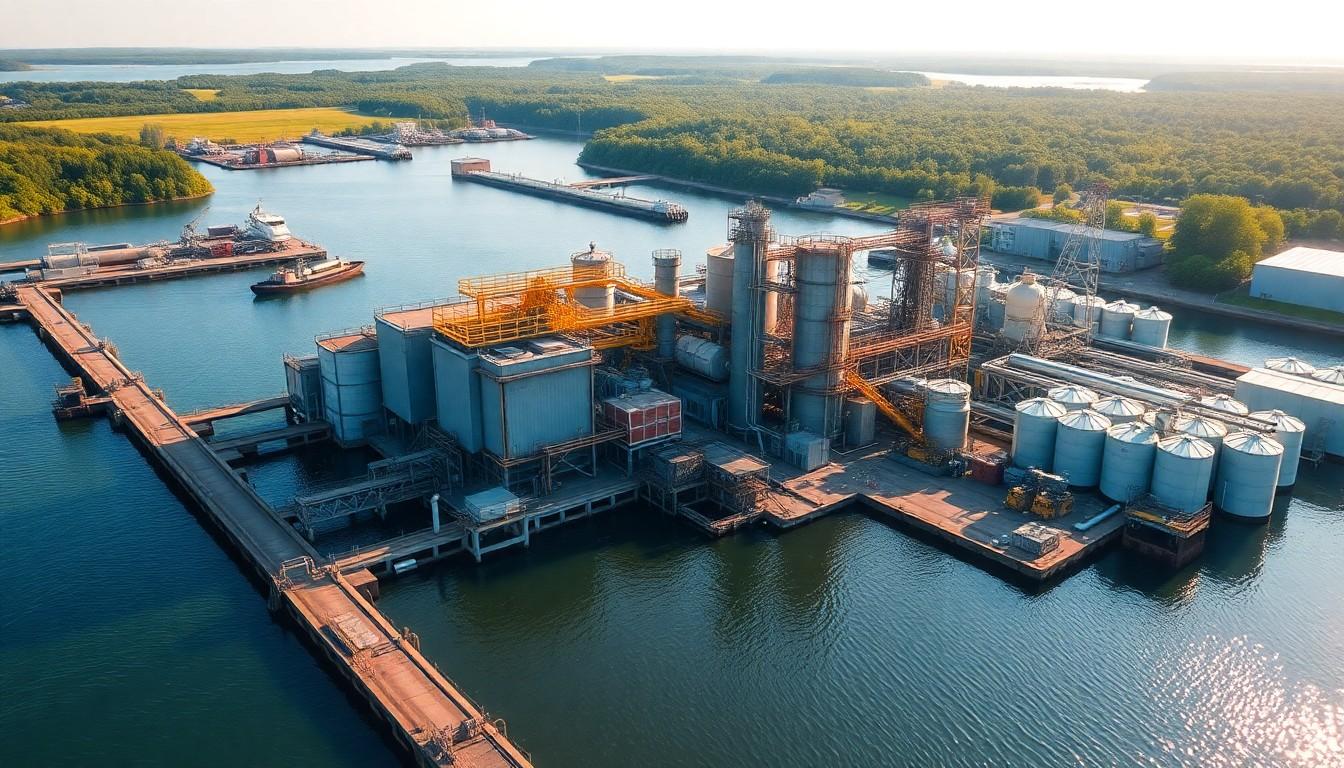
Food processing plants across the UAE are adopting advanced, modular wastewater solutions to address variable effluent characteristics, regulatory compliance, and the nation’s pressing water scarcity challenge.
Food processing plants across the UAE are grappling with quite a tricky issue, both technically and strategically, when it comes to wastewater. Plants that deal with dairy, meat, oils, seafood and ready meals generate effluent that’s loaded with organic material, fats, oils and grease, suspended solids, and bacterial counts. In a market where water is quite scarce and disposal rules are tightening, that mix can soon evolve into a real operational headache.
The main problem here is that food-processing wastewater isn’t exactly consistent. I mean, production lines can change throughout the day, batches differ, and cleaning cycles can cause sudden spikes or drops in flow, pH, and contaminant levels. According to some industry coverage from idro.net and other specialists in wastewater, these streams are often highly biodegradable. That sounds handy at first, after all, biodegradable waste can sometimes be easier to treat, until you realise that conventional treatment systems can become overwhelmed pretty quickly. When BOD and COD levels run high, they can hinder treatment performance. Meanwhile, fats, oils and grease can clog pipes, coat equipment, and create ongoing maintenance headaches.
For operators in the UAE, things are made even more complex because of the water scarcity there. Imdaad has pointed out that relying on groundwater and desalinated seawater isn’t a sustainable long-term strategy. Instead, water recycling is becoming central to national planning. And this absolutely impacts food manufacturers – they use vast amounts of water not just during production but also in cleaning, sanitising and cooling processes. As water prices rise, the economics of treating and reusing process water are becoming harder to ignore, pretty obvious really.
Typically, the first step in tackling this problem is pre-treatment. Separation systems like grease traps and dissolved air flotation units are widely used to drastically reduce fats, oils, grease, and suspended solids before biological treatment kicks in. This approach helps take some of the strain off the subsequent stage, and pretty much prevents blockages and odour issues. In more demanding cases, anaerobic systems are added to handle larger organic loads, sometimes with the added bonus of biogas recovery, which is quite a nice plus.
Membrane-based systems are also gaining popularity. A recent article from Emvees Tech explains how their approach pairs membrane bioreactors, ultrafiltration and reverse osmosis to recover about 80 to 90 per cent of process water. That kind of recovery rate is pretty attractive in the UAE, where freshwater is limited, and reusing water can cut operational costs and reduce supply risks. The same reasoning is why membrane technologies keep popping up often in sector advice from wastewater firms dealing with food, fish and beverage processors.
Regulation is another factor to keep in mind. It’s not just about staying below one discharge threshold. Treated water might need to meet different standards depending on whether it’s being released into the environment, recycled, or used for irrigation. A 2025 guide from Hydropure Water refers to Cabinet Resolution No. 39 of 2021 – which classifies treated wastewater into P1 and P2 tiers, depending on microbial and chemical quality. This kind of system leaves little room for guesswork, especially when you consider pollutants like suspended solids, turbidity, pathogens, and nutrients.
For food producers, this means water treatment isn’t just an environmental concern anymore. It’s a vital part of production safety. If the treated water doesn’t meet the specs, the lines might need to be shut down, quality could be questioned, and fines could follow suit. Xylem’s materials on UAE food & beverage processing really emphasise how water regulations now tightly link to compliance and operational continuity, it’s a serious deal.
Adding to the challenge is the variability that comes with seasonal changes and different products. Take fish processing: wastewater here can contain proteins, salts, and fluctuating levels of grease, with daily and seasonal swings in both volume and composition. That’s why many are favouring compact, modular systems with automated monitoring, they can respond faster to changing conditions than fixed, one-size-fits-all plants.
Energy consumption is another concern, of course. Aeration, chemical dosing and sludge handling all add costs, and those expenses can spike if treatment systems aren’t well-matched to the waste stream. Technologies like moving bed biofilm reactors and high-rate anaerobic digestion are gaining ground because they can lower sludge production and chemical use. Plus, some can even recover energy, which helps justify the investment, pretty clever, really.
What’s clear is that the strategic mindset is shifting. Food manufacturers in the UAE are moving from simple wastewater disposal towards a broader water stewardship approach. This change isn’t just driven by necessity but increasingly by policy. In a country where every cubic metre counts, a treatment plant is no longer just a utility, it’s part of the entire production cycle and compliance framework, and it plays a key role in sustainability that customers, investors and regulators are now expecting.
For those in climate tech working in the UAE, the real opportunity lies in systems capable of handling variable loads, reducing freshwater demand, and meeting stricter reuse standards without sky-high energy or maintenance costs. The plants that succeed will be the ones that view wastewater not as a waste product, but as a resource worth recovering.
- https://emveestech.com/water-treatment-challenges-uae-food-processing-2/ – Please view link – unable to able to access data
- https://www.idro.net/en/news/4757/wastewater-in-the-food-industry-requirements-and-new-technologies – This article discusses the challenges of wastewater treatment in the food industry, focusing on high organic loads, oils, and bacteria. It highlights the need for targeted solutions due to the unique characteristics of food industry effluents, such as high and rapidly biodegradable organic loads, suspended solids, FOG, and bacterial content. The article also presents emerging and established technologies, including aerobic, anaerobic, and membrane processes, for improving effluent quality and enabling water reuse in food processing facilities.
- https://www.vsep.com/industries/fish-processing-wastewater/ – This page details the wastewater treatment solutions provided by VSEP for fish processing facilities. It emphasizes the challenges posed by wastewater rich in proteins, fats, oils, grease (FOG), suspended solids, nutrients, and salts, with large daily and seasonal variability. The VSEP vibratory membrane system is highlighted as an effective treatment process, offering a compact footprint, stable performance under salinity swings, and high-efficiency removal of TSS, FOG, pathogens, and organics, making it ideal for fish processing wastewater treatment.
- https://www.imdaad.ae/news-and-insights/insights/waste-water-treatment-in-the-uae – This article addresses the water treatment challenges in the UAE, focusing on the high per capita water consumption and the scarcity of readily available freshwater. It discusses the reliance on groundwater and desalinated seawater, highlighting the unsustainable nature of current practices. The article also mentions the UAE’s efforts to promote water recycling, including the launch of new projects in Abu Dhabi aimed at reusing wastewater to meet future needs and preserve water resources.
- https://hydropurewater.com/blog/471-wastewater-treatment-regulations-uae-2025-full-compliance-guide.html – This guide provides an overview of wastewater treatment regulations in the UAE, focusing on the standards set by Cabinet Resolution No. 39 of 2021. It details the classification of treated wastewater into two tiers, P1 and P2, based on microbiological and physicochemical properties. The guide emphasizes the importance of compliance with these standards to ensure the safety and quality of reclaimed water before reuse or disposal, highlighting the allowable concentrations of suspended solids and turbidity controls.
- https://lushunhj.com/4-common-challenges-in-wastewater-treatment-for-food-industry/ – This article outlines four common challenges in wastewater treatment for the food industry, with a focus on high organic load in wastewater. It explains that food processing plants often discharge wastewater with high BOD and COD levels, which can overwhelm conventional biological treatment processes, leading to poor microbial activity, sludge bulking, strong odor generation, and reduced treatment efficiency. The article also discusses solutions such as pre-treatment technologies and high-rate anaerobic digestion to address these challenges.
- https://www.xylem.com/en-ae/resources/articles/the-fundamentals-of-water-and-wastewater-for-food–beverage-processing-plants/ – This article discusses the critical role of water in food and beverage manufacturing, emphasizing the need for effective water management and conservation to achieve sustainability and operational cost savings. It highlights the challenges faced by processors due to varying water quality needs, costs, and availability. The article also covers the importance of proper wastewater disposal, with attention to environmental regulations defining allowable constituents and concentrations, underscoring the complexities of managing water and wastewater in the food and beverage industry.
Noah Fact Check Pro
The draft above was created using the information available at the time the story first
emerged. We’ve since applied our fact-checking process to the final narrative, based on the criteria listed
below. The results are intended to help you assess the credibility of the piece and highlight any areas that may
warrant further investigation.
Freshness check
Score:
5
Notes:
The article was published on 29 June 2026, which is recent. However, similar content has been published by Emvees Tech in the past, such as an article titled ‘Water Treatment in Food Industry’ from 2024. This raises concerns about the originality of the content. Additionally, the article references a 2025 guide from Hydropure Water, which may not be the most current source available.
Quotes check
Score:
4
Notes:
The article includes direct quotes from industry sources like Imdaad and Xylem. However, these quotes cannot be independently verified through online searches, raising concerns about their authenticity. Without verifiable sources, the credibility of these quotes is questionable.
Source reliability
Score:
3
Notes:
The article originates from Emvees Tech, a company that provides water treatment solutions. As a corporate entity, Emvees Tech may have a vested interest in promoting its services, which could lead to biased reporting. The lack of independent verification sources further diminishes the reliability of the content.
Plausibility check
Score:
6
Notes:
The article discusses challenges in wastewater treatment for food processing in the UAE, a topic that aligns with known industry concerns. However, the lack of independent verification and reliance on potentially biased sources raises questions about the accuracy of the claims. The article also references a 2025 guide from Hydropure Water, which may not be the most current source available.
Overall assessment
Verdict (FAIL, OPEN, PASS): FAIL
Confidence (LOW, MEDIUM, HIGH): HIGH
Summary:
The article raises significant concerns regarding its originality, source reliability, and the independence of its verification sources. The reliance on potentially biased corporate sources and the inability to independently verify key claims suggest that the content may not meet the standards required for publication. Editors should exercise caution and seek additional independent verification before considering publication.


