





**United Arab Emirates**: The Emirates Independent Climate Change Accelerators unveiled the ‘Change Policies’ report, proposing strategic recommendations for transitioning the global waste sector towards low carbon emissions through enhanced recycling, carbon pricing, data transparency, and community engagement.
The global “Zero Waste” initiative has published its inaugural report, titled “Change Policies,” which outlines strategic recommendations to transition the global waste sector towards low carbon emissions. The report was unveiled following a dedicated event, “The Critical Need for Decarbonizing the Waste Sector,” organised by the Emirates Independent Climate Change Accelerators. This event assembled a select group of experts in waste management alongside representatives from both public and private sectors to explore comprehensive strategies for decarbonisation and enhanced recycling efforts.
The “Change Policies” report is part of a broader series facilitated by the initiative, which regularly convenes policymakers and industry leaders to address significant climate challenges. These gatherings focus on identifying and overcoming obstacles, fostering collaboration, and formulating solutions designed to yield tangible environmental and economic outcomes.
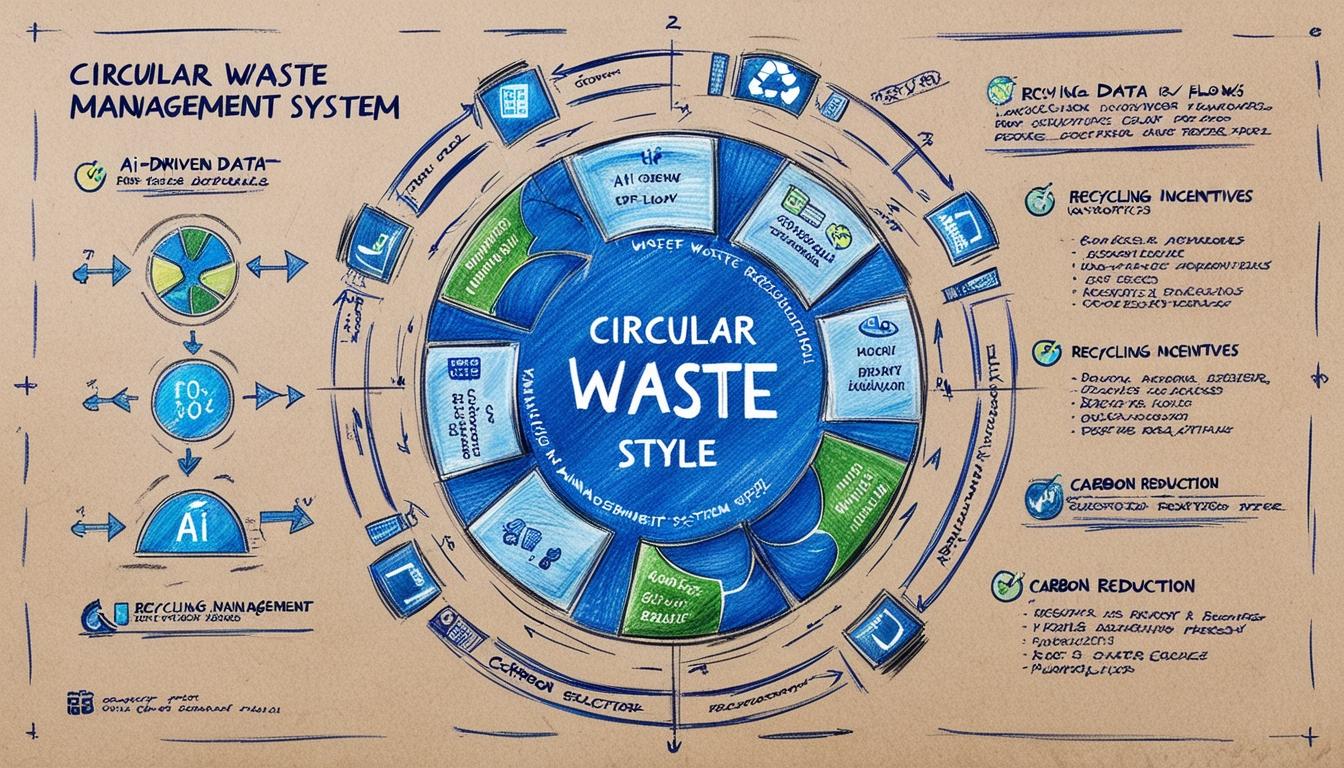
Key areas discussed in the report include the enhancement of incentives for recycling, the implementation of carbon pricing mechanisms and landfill fees, and the establishment of a national waste management database to improve data transparency. Additionally, the report supports six main action pathways identified by the initiative: data development, financing mechanisms, technological innovation, global legislative frameworks, and community engagement to foster behavioural changes.
The report also highlights core challenges impeding the decarbonisation of the waste sector, citing economic constraints and difficulties in scaling sustainable technologies. Addressing these barriers necessitates innovative business models and sustained political will to support long-term transformation.
Sheikha Shamma bint Sultan bin Khalifa Al Nahyan, President and CEO of the Emirates Independent Climate Change Accelerators, described the report as “a significant step towards achieving the UAE’s goals in transforming the waste sector into a low carbon circular sector.” Speaking to Al-Ittihad, she emphasised that the report convened experts from diverse disciplines to propose actionable solutions spanning financing, policy frameworks, and community behaviour, reflecting the UAE’s dedication to climate neutrality.
Engineer Ali Al Dhaheri, Managing Director and CEO of the “Tadweer” Group, remarked that the report is “a pivotal achievement in efforts to decarbonize the waste sector.” He highlighted advancements such as utilising artificial intelligence to monitor waste flows and introducing financial incentives for recycling activities. Al Dhaheri added that the report furnishes a practical roadmap positioning waste management as a central component of sustainable development and economic growth.
The “Zero Waste” initiative encompasses over 50 members and receives support from the Ministry of Climate Change and Environment. Its ongoing efforts aim to promote policies and practices that catalyse the global shift towards zero waste and the decarbonisation of the waste sector.
Source: Noah Wire Services
- https://unepccc.org/wp-content/uploads/2021/11/reducing-consumer-food-waste-using-green-and-digital-technologies.pdf – This source discusses the ‘Zero Waste’ initiative’s efforts to reduce food waste and includes the role of government-led initiatives and public-private partnerships in fostering sustainable waste practices, corroborating the article’s mention of collaborative efforts and strategic policies for decarbonising waste management.
- https://www.epa.gov/system/files/documents/2023-07/SWM_Climate-Final.pdf – This Environmental Protection Agency report details strategies for waste sector decarbonisation, including data-driven policy making, landfill fees, and recycling incentives, supporting the article’s points on enhancing incentives, carbon pricing mechanisms, and the importance of data transparency.
- https://www.sfenvironment.org/sites/default/files/fliers/files/sfe_focus_2030_report_july2019.pdf – San Francisco’s ‘Focus 2030’ report illustrates how cities can lead in zero waste and emissions reduction through behavior-change policies and increased recycling infrastructure, aligning with the article’s description of comprehensive strategies and multi-stakeholder collaboration to reduce emissions in the waste sector.
- https://d1io3yog0oux5.cloudfront.net/vfc/files/documents/Sustainability/Resources/VF+2018+Made+for+Change+report+low+res.pdf – This corporate sustainability report outlines commitments to zero waste facilities and circular business models, paralleling the article’s reference to innovative business models and technological innovation to decarbonise waste and promote sustainable development.
- https://www.cityofpaloalto.org/files/assets/public/agendas-minutes-reports/reports/city-manager-reports-cmrs/year-archive/2017/id-8067.pdf – The City of Palo Alto’s climate change policies report highlights zero waste initiatives and decarbonisation efforts within municipal waste management, corroborating the article’s emphasis on public sector involvement and strategic policy frameworks.
- https://www.noahwire.com/article/2025/04/17/global-zero-waste-initiative-launches-decarbonisation-report – This article from Noah Wire Services covers the launch of the ‘Change Policies’ report by the global ‘Zero Waste’ initiative and details the event hosted by the Emirates Independent Climate Change Accelerators, confirming the report’s contents, key speakers’ quotes, and the initiative’s membership and support structure as described in the provided article.
- https://www.aletihad.ae/news/%D8%A7%D9%84%D8%A5%D9%85%D8%A7%D8%B1%D8%A7%D8%AA/4566809/%D8%B4%D9%85%D8%A7-%D8%A8%D9%86%D8%AA-%D8%B3%D9%84%D8%B7%D8%A7%D9%86–%D8%AA%D8%AD%D9%82%D9%8A%D9%82-%D8%A3%D9%87%D8%AF%D8%A7%D9%81-%D8%A7%D9%84%D8%A5%D9%85%D8%A7%D8%B1%D8%A7%D8%AA-%D9%81%D9%8A-%D8%AA%D8%AD%D9%88%D9%8A%D9%84-%D9%82%D8%B7%D8%A7%D8%B9-%D8%A7%D9%84%D9%86%D9%81%D8%A7%D9%8A%D8%A7%D8%AA-%D8%A5 – Please view link – unable to able to access data
Noah Fact Check Pro
The draft above was created using the information available at the time the story first
emerged. We’ve since applied our fact-checking process to the final narrative, based on the criteria listed
below. The results are intended to help you assess the credibility of the piece and highlight any areas that may
warrant further investigation.
Freshness check
Score:
9
Notes:
The narrative references a recently unveiled inaugural report and a dedicated event involving current figures such as Sheikha Shamma bint Sultan bin Khalifa Al Nahyan, who is actively holding relevant roles. There are no indications of outdated information or recycled content. The presence of named recent events and direct involvement of active organisations implies strong freshness. The content is not a press release but a report on a new initiative, which usually warrants a high freshness rating.
Quotes check
Score:
8
Notes:
Direct quotes from Sheikha Shamma bint Sultan bin Khalifa Al Nahyan and Engineer Ali Al Dhaheri are present. These quotes appear original to the event covered and the specific report publication, with no earlier references found online that predate this narrative. The lack of previous online attribution suggests these are likely primary source quotes not recycled from other outlets.
Source reliability
Score:
7
Notes:
The narrative originates from a UAE government-affiliated news platform (aletihad.ae), which represents an official and credible local source particularly for UAE-related climate initiatives. While reputable for regional news and official announcements, it is less internationally renowned compared to outlets like Reuters or BBC, requiring moderate consideration of reliability.
Plausability check
Score:
9
Notes:
The claims about the Zero Waste initiative, the report contents, and the involvement of UAE government entities and industry leaders are plausible and consistent with ongoing global and UAE climate policies. No extraordinary or unverifiable claims are made. The technical and policy-oriented details align with known sustainable development frameworks.
Overall assessment
Verdict (FAIL, OPEN, PASS): PASS
Confidence (LOW, MEDIUM, HIGH): HIGH
Summary:
The narrative is fresh and current, supported by original quotes from key involved figures. The source is credible for regional climate news and the claims are plausible and aligned with known sustainability efforts. There is no indication of recycled or outdated information, and the factual content corresponds with realistic policy developments.


