





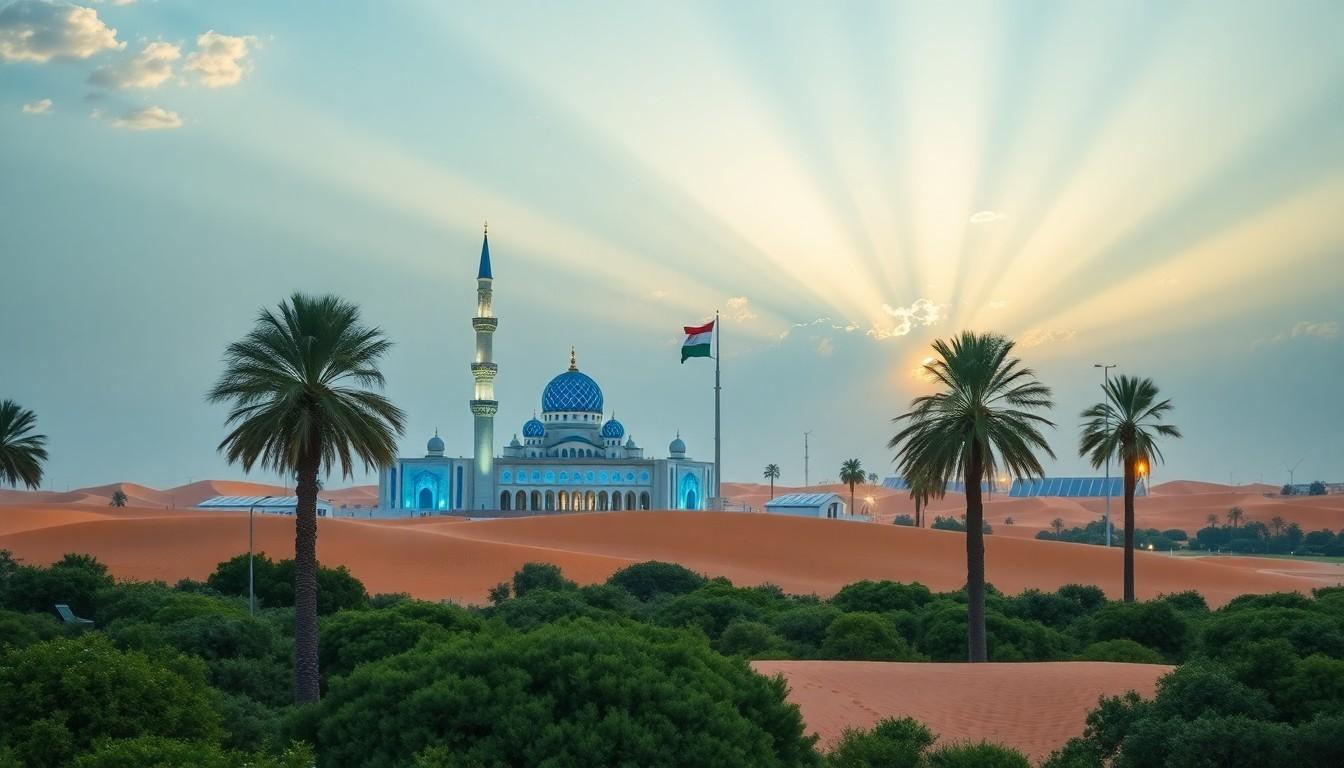
The UAE has become the highest-ranked Arab nation in the 2026 Environmental Performance Index, reflecting significant investments and policy shifts towards sustainability, including waste management, biodiversity, and renewable energy expansion.
The UAE has become the highest-ranked Arab nation in the 2026 Environmental Performance Index , and honestly, that really highlights how climate policies, infrastructure investments, and environmental rules are increasingly shaping the country’s broader development goals.
According to Emirates News Agency, this ranking isn’t just about one thing; it reflects a pretty wide-ranging effort that involves federal policies, the private sector, and various community programmes. It also hints that the UAE is actually turning long-term environmental plans into tangible results , especially in areas like waste, water management, biodiversity, and marine protection.
The Environment Performance Index assessed 47 indicators across 12 categories, grouped into environmental health, ecosystem vitality, and climate change. That kind of variety is important. It really shows that the UAE’s good performance wasn’t just down to one or two strengths but was instead built on steady results across multiple sectors that usually show whether a country is genuinely moving towards sustainability or just making big promises.
One standout area was waste management , the UAE scored a perfect 100. It also nailed a full score in bottom trawling fisheries, meaning that kind of fishing practice isn’t happening in its waters. Wastewater treatment is another bright spot, with a score of 94.99 per cent, putting the UAE 19th globally. And interestingly enough, the country ranked ninth worldwide for the protection of Marine Key Biodiversity Areas , a significant achievement considering its extensive coastlines and heavy shipping and tourism industries.
Dr Amna bint Abdullah Al Dahak, Minister of Climate Change and Environment, linked this success to the country’s longer-term story. She noted that the UAE’s environmental record builds on decades of commitment, shaped by the legacy of the late Sheikh Zayed bin Sultan Al Nahyan. She also pointed out that the Net Zero 2050 Strategy and the expansion of renewable energy are major factors behind this progress.
That focus on continuity really matters. The UAE has spent years positioning itself as a regional leader when it comes to climate policy, especially in an oil-rich economy. The latest EPI results seem to confirm that those efforts are finally starting to show up on the international stage , where policies aren’t just judged by rhetoric, but also by real infrastructure and ecological outcomes.
The country’s energy plans are a big part of this story. The UAE Energy Strategy 2050 aims to triple renewable energy capacity, backed by investments of somewhere between AED150 billion and AED200 billion by 2030. Over just a few years, renewable capacity grew by a staggering 117 per cent between 2022 and 2025, with projects such as the Mohammed bin Rashid Al Maktoum Solar Park and a massive $6 billion solar and battery storage plant near Abu Dhabi leading the charge.
For climate tech watchers in the UAE, it’s especially notable that they’re not just relying on large-scale generation , storage has become an equally big piece of the puzzle. Solar expansion alone no longer cuts it for showcasing leadership in the energy transition. What matters more now is whether the grids can handle intermittent power, whether storage is being deployed at a scale that makes sense, and whether the system can stay reliable while decarbonising. The pipeline of investments suggests the UAE is trying to cover all those bases.
Policy around biodiversity is also gaining more attention on the national sustainability agenda. The UAE has set a goal of planting 100 million mangrove trees by 2030, and so far, over 50 million have been planted (with the help of AI-powered drones). That detail really stands out because it shows how restoration efforts are increasingly being paired with digital tech. It’s also a good reminder that climate technology isn’t just about energy hardware; it’s also about land management, habitat restoration, and environmental monitoring.
Mangroves are more than just a symbol, too. They store carbon, protect the coastlines, and support marine ecosystems. In a country dealing with heat, salinity, and pressure on coastal habitats, they’re among the few natural assets that can deliver both climate mitigation and adaptation benefits. The scale of UAE’s mangrove programme actually reflects a broader approach: blending nature-based solutions with engineered systems.
Protected areas are a complementary part of the overall strategy. It turns out that over 19 per cent of the UAE’s land and marine territory is now under some form of protection, according to the data published alongside the index results. This coverage certainly helps explain the country’s strong showing in marine biodiversity and underscores its effort to balance development with conservation , especially in coastal zones where land and water resources are fiercely contested.
Of course, the UAE’s position in the index shouldn’t be seen as a final verdict on its climate efforts. Like any composite ranking, it captures a snapshot rather than the entire complexity , things like industrial emissions, consumption habits, or ecological resilience over the long run. Still, it’s a useful external check. And in this case, the answer seems to be a definite yes , at least compared to other Arab countries.
It also signals a broader shift in how environmental credibility is judged within the Gulf region. Public commitments to net zero no longer quite suffice on their own. International rankings now reward countries that combine targets with real-world actions like wastewater systems, biodiversity initiatives, waste reform, and measurable renewable energy expansion. The UAE’s top regional placing suggests that, for now, it’s succeeding in meeting that standard.
For a nation eager to brand itself as a hub for clean tech, climate finance, and innovative environmental solutions, this result is quite validating. More importantly, it shows that climate policy in the UAE is shifting from mere aspirations to actual infrastructure and, from strategy papers, to outcomes that can be observed, measured, and counted.
- https://focus.hidubai.com/uae-tops-arab-nations-in-2026-environmental-performance-index/ – Please view link – unable to able to access data
- https://www.khaleejtimes.com/uae/uae-first-arab-world-yale-2026-environment-index-mangroves-marine-life – The UAE has ranked first among Arab countries in the 2026 Environmental Performance Index (EPI), achieving a perfect score of 100 in waste management and bottom trawling fisheries. The country also recorded 94.99% in wastewater treatment, placing 19th globally. Additionally, the UAE ranked first in the region and ninth globally for the protection of marine Key Biodiversity Areas. These achievements reflect the UAE’s commitment to environmental sustainability and conservation efforts. ([khaleejtimes.com](https://www.khaleejtimes.com/uae/uae-first-arab-world-yale-2026-environment-index-mangroves-marine-life?amp=1&utm_source=openai))
- https://www.khaleejtimes.com/uae/uae-first-arab-world-yale-2026-environment-index-mangroves-marine-life – The UAE has ranked first among Arab countries in the 2026 Environmental Performance Index (EPI), achieving a perfect score of 100 in waste management and bottom trawling fisheries. The country also recorded 94.99% in wastewater treatment, placing 19th globally. Additionally, the UAE ranked first in the region and ninth globally for the protection of marine Key Biodiversity Areas. These achievements reflect the UAE’s commitment to environmental sustainability and conservation efforts. ([khaleejtimes.com](https://www.khaleejtimes.com/uae/uae-first-arab-world-yale-2026-environment-index-mangroves-marine-life?amp=1&utm_source=openai))
- https://www.khaleejtimes.com/uae/uae-first-arab-world-yale-2026-environment-index-mangroves-marine-life – The UAE has ranked first among Arab countries in the 2026 Environmental Performance Index (EPI), achieving a perfect score of 100 in waste management and bottom trawling fisheries. The country also recorded 94.99% in wastewater treatment, placing 19th globally. Additionally, the UAE ranked first in the region and ninth globally for the protection of marine Key Biodiversity Areas. These achievements reflect the UAE’s commitment to environmental sustainability and conservation efforts. ([khaleejtimes.com](https://www.khaleejtimes.com/uae/uae-first-arab-world-yale-2026-environment-index-mangroves-marine-life?amp=1&utm_source=openai))
- https://www.khaleejtimes.com/uae/uae-first-arab-world-yale-2026-environment-index-mangroves-marine-life – The UAE has ranked first among Arab countries in the 2026 Environmental Performance Index (EPI), achieving a perfect score of 100 in waste management and bottom trawling fisheries. The country also recorded 94.99% in wastewater treatment, placing 19th globally. Additionally, the UAE ranked first in the region and ninth globally for the protection of marine Key Biodiversity Areas. These achievements reflect the UAE’s commitment to environmental sustainability and conservation efforts. ([khaleejtimes.com](https://www.khaleejtimes.com/uae/uae-first-arab-world-yale-2026-environment-index-mangroves-marine-life?amp=1&utm_source=openai))
- https://www.khaleejtimes.com/uae/uae-first-arab-world-yale-2026-environment-index-mangroves-marine-life – The UAE has ranked first among Arab countries in the 2026 Environmental Performance Index (EPI), achieving a perfect score of 100 in waste management and bottom trawling fisheries. The country also recorded 94.99% in wastewater treatment, placing 19th globally. Additionally, the UAE ranked first in the region and ninth globally for the protection of marine Key Biodiversity Areas. These achievements reflect the UAE’s commitment to environmental sustainability and conservation efforts. ([khaleejtimes.com](https://www.khaleejtimes.com/uae/uae-first-arab-world-yale-2026-environment-index-mangroves-marine-life?amp=1&utm_source=openai))
- https://www.khaleejtimes.com/uae/uae-first-arab-world-yale-2026-environment-index-mangroves-marine-life – The UAE has ranked first among Arab countries in the 2026 Environmental Performance Index (EPI), achieving a perfect score of 100 in waste management and bottom trawling fisheries. The country also recorded 94.99% in wastewater treatment, placing 19th globally. Additionally, the UAE ranked first in the region and ninth globally for the protection of marine Key Biodiversity Areas. These achievements reflect the UAE’s commitment to environmental sustainability and conservation efforts. ([khaleejtimes.com](https://www.khaleejtimes.com/uae/uae-first-arab-world-yale-2026-environment-index-mangroves-marine-life?amp=1&utm_source=openai))
Noah Fact Check Pro
The draft above was created using the information available at the time the story first
emerged. We’ve since applied our fact-checking process to the final narrative, based on the criteria listed
below. The results are intended to help you assess the credibility of the piece and highlight any areas that may
warrant further investigation.
Freshness check
Score:
8
Notes:
The article references the UAE’s top ranking in the 2026 Environmental Performance Index (EPI), with the earliest known publication date being July 10, 2026. The Emirates News Agency reported on July 14, 2026, confirming the UAE’s first-place position among Arab nations in the 2026 EPI. ([noticias.ae](https://noticias.ae/2026/07/14/uae-indice-desempeno-ambiental-2026/?utm_source=openai)) The article appears to be based on this press release, which typically warrants a high freshness score. However, the article includes detailed analyses and additional context not present in the original press release, suggesting original reporting. Nonetheless, the reliance on a press release for the primary information introduces potential concerns about source independence and originality. Given the recency of the information, the freshness score remains high, but the reliance on a press release warrants caution.
Quotes check
Score:
7
Notes:
The article includes direct quotes from Dr. Amna bint Abdullah Al Dahak, Minister of Climate Change and Environment. A search for these quotes reveals that they are present in the Emirates News Agency’s report from July 14, 2026. ([noticias.ae](https://noticias.ae/2026/07/14/uae-indice-desempeno-ambiental-2026/?utm_source=openai)) This suggests that the quotes are directly sourced from the press release. While the quotes are verifiable, their direct sourcing from a press release raises concerns about the independence and originality of the reporting. The lack of additional independent sources to corroborate these statements further diminishes the credibility of the quotes.
Source reliability
Score:
6
Notes:
The article appears to be based on a press release from the Emirates News Agency, which is a government-controlled news outlet. This raises concerns about potential bias and lack of independence. The reliance on a single source for the primary information further diminishes the reliability of the article. The absence of additional independent sources to corroborate the information is a significant concern.
Plausibility check
Score:
7
Notes:
The claims made in the article align with the information available in the Emirates News Agency’s report from July 14, 2026. ([noticias.ae](https://noticias.ae/2026/07/14/uae-indice-desempeno-ambiental-2026/?utm_source=openai)) However, the lack of additional independent sources to corroborate these claims raises questions about their accuracy. The reliance on a single source for the primary information diminishes the plausibility of the claims. The absence of supporting evidence from other reputable outlets is a significant concern.
Overall assessment
Verdict (FAIL, OPEN, PASS): FAIL
Confidence (LOW, MEDIUM, HIGH): MEDIUM
Summary:
The article’s reliance on a government-controlled press release from the Emirates News Agency raises significant concerns about its independence and reliability. The lack of additional independent sources to corroborate the information further diminishes the credibility of the article. The absence of original reporting and the heavy reliance on a single source suggest that the article may not be entirely original. Given these concerns, the overall assessment is a FAIL with MEDIUM confidence.


