





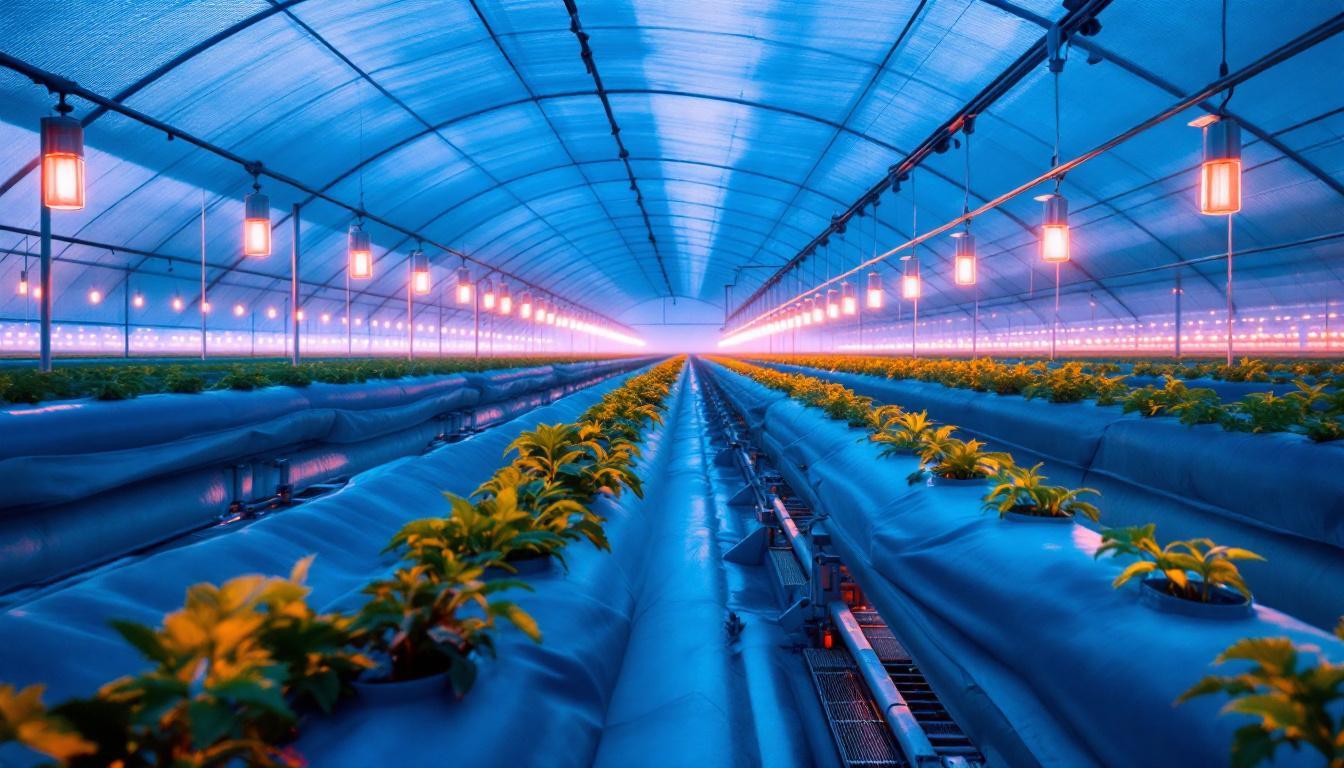
A new 10,000-square-metre greenhouse in Al Ain harnesses AI, hydroponics, and digital monitoring to produce fresh tomatoes year-round, reinforcing the UAE’s push for sustainable, local food production amid climate challenges.
A fresh tomato greenhouse in Al Ain is adding yet another piece to the puzzle of the UAE’s efforts to boost local food production, as agritech companies keep investing in controlled-environment farming that’s well-suited for the Gulf’s climate.
UNS Vertical Farms, which is part of the Speedex Group, has recently opened a 10,000-square-metre facility aimed at producing roughly 150,000 kilograms of tomatoes each year. The company’s saying this project will help strengthen local supplies, cut down reliance on imports, and support the availability of fresh produce all year round, perfect for households, retailers, and the foodservice sector alike.
This launch also signals a broader shift in the UAE’s agriculture scene. Instead of depending solely on open-field farming, growers are increasingly turning to greenhouses, hydroponic setups, and digital monitoring systems to shield crops from extreme heat, water scarcity, and seasonal fluctuations. You see, in a country with limited arable land, these kinds of technologies are quickly becoming central to the nation’s food security planning.
According to UNS Farms, the Al Ain site uses a controlled-environment approach, think hydroponic systems supported by internet-connected sensors, AI, and automated climate controls. These systems constantly monitor temperature, humidity, CO₂ levels, lighting, and nutrients, adjusting irrigation, airflow, and cooling all within a unified setup. The company claims this precise method aims to boost yields while minimizing waste.
Water efficiency really is a key advantage here. UNS Farms states the facility can cut water use by as much as 90 percent compared to traditional farming methods. That’s a pretty huge claim, especially in a country where freshwater resources are under serious strain, and agriculture has to compete with other sectors for limited water supplies.
The focus is on premium tomato varieties, think cherry and bunch tomatoes. UNS emphasizes that all produce is grown without pesticides or herbicides, aiming to deliver flavors and freshness that often surpass imported options, which are usually chosen more for durability during long transport rather than for taste.
They’re also adopting a direct-to-consumer approach. Customers can place orders through UNS Farms’ online platform, and for retail, hotels, restaurants, and catering businesses, produce is routed through a distribution chain designed to get harvests to shelves within 24 to 48 hours. This quick turnaround is intended to preserve quality and cut down on wastage.
Mehlam Murtaza, the director of UNS Vertical Farms, pointed out that the project isn’t just about producing as much as possible. During an official statement, he described food security as a matter of resilience, sustainability, and planning for the long haul, not just having enough food now. The Al Ain facility, he explained, was built to support the UAE’s national vision by providing consistent local produce with precision and care.
This new greenhouse also signals an expansion for UNS Farms, which was set up in 2018 as part of the Speedex Group. The company already runs an almost 8,000-square-metre controlled-environment farm in Dubai, where it produces up to 1,500 kilograms daily of herbs, microgreens, salads, and edible flowers. Moving into tomatoes suggests a strategic shift in their crop variety and customer base.
This diversification is pretty interesting for the UAE’s burgeoning agritech scene. Leafy greens and herbs have historically been the main products of vertical farms because they grow quickly and fit well into enclosed systems. Tomatoes are a bit trickier, they’re more complex, but they’re also among the most widely eaten vegetables in the region. So, building a local supply chain for them could potentially have a notable market impact.
The Al Ain project aligns closely with the UAE’s National Food Security Strategy 2051, which aims to make the country’s food system more resilient. It also ties into the country’s broader Net Zero 2050 ambitions. While greenhouses do require a fair amount of energy, industry players argue that the environmental footprint can be offset by using less water, reducing transport emissions, and minimizing post-harvest waste.
Industry analysts have highlighted that the farm’s reliance on data and automation is just as significant as the horticulture itself. Reports from Tahawul Tech and FreshPlaza note that this operation showcases how controlled-environment agriculture could be scaled up beyond leafy greens to staple crops in harsh, arid regions.
For the UAE’s climate tech sector, what’s notable isn’t just the output but also the model itself. It blends food production with digital control systems and resource efficiency, designed to thrive even in tough conditions. If the Al Ain farm performs as expected, it might become a key example of how agriculture in the Gulf is evolving: less dependent on the weather, more dependent on smart software, and increasingly aligned with national resilience objectives.
- https://uaenews247.com/2026/04/08/new-high-tech-tomato-farm-in-al-ain-boosts-uae-food-security/ – Please view link – unable to able to access data
- https://www.unsfarms.com/ – UNS Farms is a UAE-based agritech company established in 2018 as a division of the Speedex Group. The company operates a controlled-environment facility in Dubai, producing up to 1,500 kilograms daily of fresh, pesticide-free herbs, microgreens, salads, and edible flowers using data-driven technologies. UNS Farms focuses on sustainable urban agriculture through advanced vertical farming and innovative hydroponic production systems, aiming to strengthen local food production and food security in the UAE.
- https://iranianuae.ae/en/tech/world-of-tech/A-Significant-Step-in-UAE-Food-Security-Opening-of/ – UNS Vertical Farms, a subsidiary of Speedex Group, has launched a state-of-the-art 10,000-square-meter farm in Al Ain, UAE. This facility is designed to produce approximately 150,000 kilograms of fresh tomatoes annually, contributing to the UAE’s food security and self-sufficiency. The farm employs advanced controlled-environment agriculture technologies, combining hydroponics with IoT and AI, creating a highly efficient and sustainable farming environment.
- https://www.tahawultech.com/news/new-farm-in-al-ain-to-produce-150000-kgs-of-fresh-tomatoes-using-latest-tech-tools/ – UNS Vertical Farms has launched a high-tech tomato farm in Al Ain, UAE, aiming to boost local tomato supply and food security. The 10,000-square-meter facility is designed to produce approximately 150,000 kilograms of fresh tomatoes annually. The farm utilizes smart farming technology to enhance yields while reducing water use by up to 90%. Fresh produce is available direct-to-consumer via UNS Farms’ online platform, and for retail and HORECA, a streamlined supply chain ensures delivery within 24–48 hours, preserving freshness and minimizing losses.
- https://www.verticalfarmdaily.com/article/9828341/food-security-today-is-about-building-a-resilient-sustainable-and-future-ready-uae-food-ecosystem/ – UNS Vertical Farms, a commercial vertical farming operation founded in 2018 as a division of the Speedex Group, is scaling its operations into tomato production with a new greenhouse in Al Ain. The 10,000-square-meter facility marks a strategic diversification from the company’s focus on microgreens and leafy greens. The new farm will produce approximately 150,000 kilograms of fresh tomatoes annually, targeting domestic retail and HoReCa channels, adding to its existing Dubai facility’s commercial production of up to 1,500 kilograms of microgreens and leafy greens per day across nearly 8,000 square meters.
- https://pantimearabia.com/new-tomato-farm-in-al-ain-to-produce-150000-kgs-of-fresh-tomatoes-annually-strengthening-uaes-local-food-production/ – UNS Vertical Farms has launched a high-tech tomato farm in Al Ain, UAE, aiming to boost local tomato supply and food security. The 10,000-square-meter facility is designed to produce approximately 150,000 kilograms of fresh tomatoes annually. The farm employs smart farming technology to enhance yields while reducing water use by up to 90%. Fresh produce is available direct-to-consumer via UNS Farms’ online platform, and for retail and HORECA, a streamlined supply chain ensures delivery within 24–48 hours, preserving freshness and minimizing losses.
- https://www.freshplaza.com/north-america/article/9827151/new-tomato-facility-in-al-ain-designed-to-grow-150-000-kg-tomatoes-annually/ – A newly commissioned tomato facility in Al Ain shows the UAE’s ongoing adoption of controlled-environment agriculture. Developed by UNS Vertical Farms, part of the Speedex Group, the 10,000 m² installation is designed to grow approximately 150,000 kg of tomatoes annually. The project is expected to contribute to local supply, particularly in a region characterized by arid growing conditions. The farm operates on a fully integrated controlled-environment agriculture model, combining hydroponic systems with IoT-enabled monitoring and AI-supported analytics.
Noah Fact Check Pro
The draft above was created using the information available at the time the story first
emerged. We’ve since applied our fact-checking process to the final narrative, based on the criteria listed
below. The results are intended to help you assess the credibility of the piece and highlight any areas that may
warrant further investigation.
Freshness check
Score:
8
Notes:
The article reports on a new tomato facility in Al Ain, UAE, developed by UNS Vertical Farms, part of the Speedex Group. The facility is designed to produce approximately 150,000 kilograms of tomatoes annually. This information has been reported by multiple sources, including FreshPlaza ([freshplaza.com](https://www.freshplaza.com/north-america/article/9827151/new-tomato-facility-in-al-ain-designed-to-grow-150-000-kg-tomatoes-annually/?utm_source=openai)) and TahawulTech ([tahawultech.com](https://www.tahawultech.com/news/new-farm-in-al-ain-to-produce-150000-kgs-of-fresh-tomatoes-using-latest-tech-tools/?utm_source=openai)), both dated April 8, 2026. The earliest known publication date of this information is April 8, 2026, indicating that the content is fresh and original. However, the article’s reliance on a press release from UNS Vertical Farms raises concerns about source independence and potential bias. Additionally, the article includes specific figures and claims that are consistent with other reports, suggesting a lack of independent verification.
Quotes check
Score:
6
Notes:
The article includes a direct quote from Mehlam Murtaza, Director of UNS Vertical Farms: “Food security today goes beyond availability, it is about building a resilient, sustainable, and future-ready UAE food ecosystem.” This quote is also present in other sources, such as the FreshPlaza article ([freshplaza.com](https://www.freshplaza.com/north-america/article/9827151/new-tomato-facility-in-al-ain-designed-to-grow-150-000-kg-tomatoes-annually/?utm_source=openai)). The repetition of this quote across multiple sources suggests potential reuse of content. Additionally, the lack of independent verification of this quote raises concerns about its authenticity.
Source reliability
Score:
5
Notes:
The article originates from UAE News 24/7, a niche publication. While it provides detailed information about the new tomato facility, the source’s limited reach and potential biases due to its focus on UAE news are concerns. The article also heavily relies on a press release from UNS Vertical Farms, which may not offer an independent perspective. The lack of citations from major news organisations or independent sources further diminishes the reliability of the information presented.
Plausibility check
Score:
7
Notes:
The claims made in the article, such as the facility’s capacity to produce 150,000 kilograms of tomatoes annually and the use of advanced technologies like hydroponics, IoT, and AI, are plausible and align with current trends in controlled-environment agriculture. However, the absence of independent verification and the reliance on a press release from the company raise questions about the accuracy of these claims. The article also lacks specific details about the technology used and the operational aspects of the facility, which are crucial for assessing the feasibility of the project.
Overall assessment
Verdict (FAIL, OPEN, PASS): FAIL
Confidence (LOW, MEDIUM, HIGH): MEDIUM
Summary:
The article presents information about a new tomato facility in Al Ain, UAE, developed by UNS Vertical Farms. While the content is fresh and the claims are plausible, the heavy reliance on a press release from the company and the lack of independent verification raise significant concerns about the article’s credibility. The repetition of quotes across multiple sources suggests potential reuse of content, and the absence of citations from major news organisations or independent sources further diminishes the reliability of the information presented. Given these issues, the article does not meet the standards required for publication under our editorial indemnity.


