

 1:20 pm - October 15, 2026
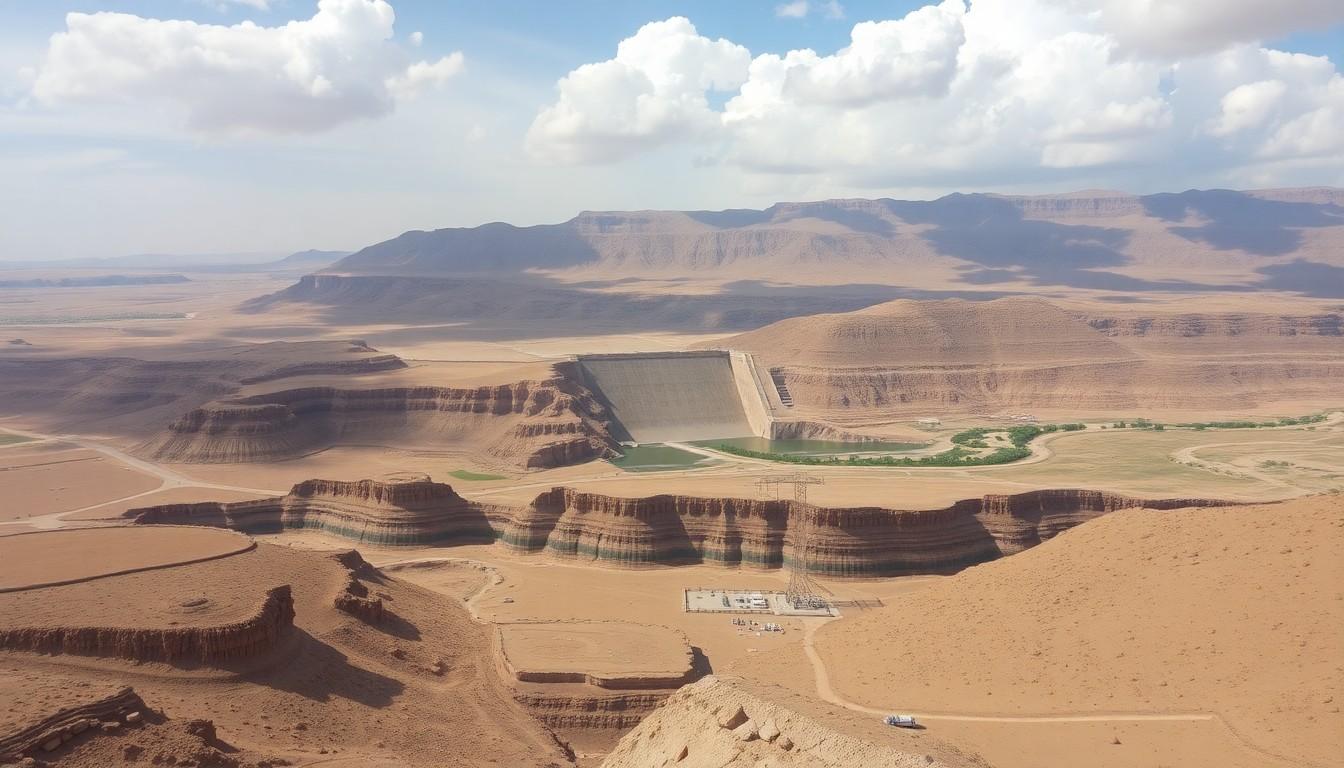
The UAE’s latest scientific initiative, RAINLAND, investigates whether altering land cover and terrain could influence rainfall, marking a shift towards understanding land-atmosphere interactions for water security in dry regions.
The UAE Research Program for Rain Enhancement Science has rolled out its sixth cycle project, called RAINLAND. This new initiative pushes beyond the usual focus on cloud microphysics and delves into how land itself might influence rainfall. Basically, it’s about exploring whether altering land cover and terrain could actually encourage rain under specific atmospheric conditions. The project, formally named “Rainfall Enhancement through Modification of Land Cover and Land Form,” was announced during a roadshow held in Germany from 7 to 11 July 2026. The event really highlighted the programme’s ongoing effort to foster international scientific partnerships around water security issues.
According to the programme, their latest effort aims to investigate whether changes to land surface features, like vegetation, solar panels, dunes, or other landforms, could modify heat, airflow, and uplift in the lower atmosphere, thereby making it easier for convective clouds to form. And, yes, it sounds pretty ambitious. The idea is totally experimental, though. They’re not claiming it’s an immediate solution but rather a long-term scientific exploration to see if land modifications can influence rainfall, especially in dry and semi-dry environments. Given how critical every drop of water is in this region, the question about if and how land-based interventions might help has some serious strategic weight for the UAE and potentially other water-stressed parts of the world.
Dr Abdullah Al Mandous, who is the president of the World Meteorological Organisation and leads the National Centre of Meteorology, mentioned that the German roadshow reflected the centre’s ongoing support for the programme and its ambitions to expand international research collaborations. His comments point to the ever-growing global nature of the UAE’s rain enhancement efforts, which depend heavily on international scientific cooperation as much as they do on doing local fieldwork.

Ali Alia Al Mazrouei, who’s in charge of the UAE Research Programme for Rain Enhancement Science and heads the Weather Modification Research Department at the National Centre of Meteorology, described RAINLAND as a big step forward. She said it will deepen understanding of how the Earth’s surface interacts with the atmosphere, especially in extremely dry climates, and could even help find more sustainable methods for encouraging rain.
That focus on sustainability is actually quite notable. The UAE has long regarded rain enhancement as a vital tool for water security, but recent projects show a broader ambition, it’s not just about seeding clouds anymore. Instead, the programme seems to be aiming for a better foundational understanding of what physical systems actually enable rainfall in the first place. RAINLAND fits neatly into this approach by concentrating on the boundary zone where land meets air, where temperature differences, surface roughness, and uplift all play roles in cloud development.
The project will be led by Dr Oliver Branch, a senior scientist at the Institute of Physics and Meteorology at the University of Hohenheim, Germany. From what the programme’s project description states, his team will deploy lidar observations, gather field data, and run high-resolution numerical models to test if rainfall enhancement via local modifications to land cover and terrain is scientifically feasible. They’re looking at a bunch of intervention options, large-scale solar farms, various types of vegetation, and terrain features like dunes or even specially engineered structures. The goal, basically, is to figure out whether such modifications can influence surface heating, airflow, or uplift enough to support cloud formation when conditions are right.
Now, why is this scientific caution so important? Well, the project is carefully described as a feasibility study, kind of a test to see if the idea makes sense, rather than an immediate plan for action. So, researchers are primarily interested in testing theory, understanding mechanisms, and identifying situations where these land-based interventions could actually matter. For policymakers and climate tech experts in the Gulf, that means it’s more about laying the groundwork for future decisions rather than delivering quick fixes right now.
The broader programme behind the project is already known for backing advanced research in rain enhancement. Managed by the National Centre of Meteorology, the UAE initiative has supported international teams working on innovative ways to generate rain and seed clouds. It was launched under Sheikh Mansour bin Zayed Al Nahyan’s patronage, the Deputy Prime Minister and Minister of Presidential Affairs, and has portrayed itself as a platform for turning scientific ideas into practical water solutions.
Plus, its earlier work shows a willingness to fund highly technical, cross-border collaborations. One example is UAE-NATURE, a project involving research institutions and universities from China, Hungary, the UAE, and the United States. That project looks at cloud seeding through laboratory experiments plus numerical models, reflecting the programme’s preference for combining field observations with computational analysis.
All these efforts illustrate how the UAE is broadening its rain enhancement research portfolio. It’s not relying on just one approach, but rather investing across different pathways, cloud seeding, atmospheric modelling, and now land-surface modification too. For a country where desalination still remains the main method of obtaining drinking water, these initiatives are part of a wider push to boost resilience and water security.
And let’s not forget, the German roadshow also seems to underline the UAE’s intention for its rain enhancement research to be recognised not just as a national endeavour but as a global scientific undertaking. By collaborating with universities and experts abroad, they are aiming to tap into more knowledge, better data, and experimental platforms that can improve understanding of how rainfall might actually be influenced in practice.
If RAINLAND ends up producing valuable findings, I think the real significance may lie less in immediate practical applications, and more in what it reveals about the complex links between land surfaces and precipitation. In terms of the UAE’s strategic future, that’s crucial because such knowledge could help refine climate technology approaches, especially as the region faces increasing challenges related to warming and water scarcity.
- https://www.aletihad.ae/news/%D8%A7%D9%84%D8%A5%D9%85%D8%A7%D8%B1%D8%A7%D8%AA/4678779/-%D8%A8%D8%AD%D9%88%D8%AB-%D8%A7%D9%84%D8%A7%D8%B3%D8%AA%D9%85%D8%B7%D8%A7%D8%B1–%D9%8A%D8%B7%D9%84%D9%82-%D8%AF%D9%88%D8%B1%D8%A9–%D8%AA%D8%B9%D8%B2%D9%8A%D8%B2-%D9%87%D8%B7%D9%88%D9%84-%D8%A7%D9%84%D8%A3%D9%85%D8%B7%D8%A7%D8%B1 – Please view link – unable to able to access data
- https://www.uaerep.ae/ – The UAE Research Program for Rain Enhancement Science (UAEREP) is an international initiative managed by the National Centre of Meteorology (NCM) in the UAE. Launched under the patronage of His Highness Sheikh Mansour bin Zayed Al Nahyan, Deputy Prime Minister and Minister of Presidential Affairs, UAEREP aims to advance the science and technology of rain enhancement by offering managed grant assistance to selected teams of researchers presenting innovative ideas and project proposals relevant to the targeted research areas of each program cycle. The program focuses on pioneering new technologies and fostering international partnerships to promote the translation of science into deployable solutions for rain enhancement, aligning with the UAE’s global leadership in water security. ([uaerep.ae](https://www.uaerep.ae/?utm_source=openai))
- https://www.uaerep.ae/research-projects/details?locale=en&pID=386 – Dr. Oliver Branch, a Senior Scientist at the Institute of Physics and Meteorology at the University of Hohenheim in Germany, leads the ‘Rainfall Enhancement through Modification of Land Cover and Land Form (RAINLAND)’ project. This research explores the scientific feasibility of enhancing rainfall through localized land surface and landform modifications, such as large-scale solar installations or vegetation, and landform features like dunes and terrain structures. The project examines how these changes can influence surface heating, airflow, and atmospheric lifting to support convective cloud development under suitable conditions. Utilizing advanced lidar observations, field measurements, and high-resolution numerical modeling, the study aims to understand the conditions under which land-based interventions may influence rainfall formation, emphasizing scientific understanding, feasibility assessment, and long-term planning rather than immediate application. ([uaerep.ae](https://www.uaerep.ae/research-projects/details?locale=en&pID=386&utm_source=openai))
- https://www.uaerep.ae/research-projects?locale=en – The UAE Research Program for Rain Enhancement Science (UAEREP) has initiated its Sixth Cycle project titled ‘Rainfall Enhancement through Modification of Land Cover and Land Form (RAINLAND)’. This project was officially launched during a multi-city roadshow held in Germany from 7 to 11 July 2026. The roadshow commenced with a formal kick-off meeting with Dr. Oliver Branch, Senior Scientist and Head Coordinator of the Land–Atmosphere Feedback Observatory at the Institute of Physics and Meteorology, University of Hohenheim, Germany, who leads the RAINLAND project. The meeting marked the start of the project’s scientific and operational implementation phase, during which researchers will investigate the potential of land surface and terrain modifications in influencing atmospheric processes to support rainfall formation. ([uaerep.ae](https://www.uaerep.ae/research-projects?locale=en&utm_source=openai))
- https://www.uaerep.ae/section/the-program/about-the-program?locale=en&nID=2094 – The UAE Research Program for Rain Enhancement Science (UAEREP) is an international research initiative designed to advance the science and technology of rain enhancement. Managed by the National Centre of Meteorology (NCM) in the UAE, UAEREP offers managed grant assistance to selected teams of researchers presenting innovative ideas and project proposals relevant to the targeted research areas of each program cycle. Launched under the patronage of His Highness Sheikh Mansour bin Zayed Al Nahyan, Deputy Prime Minister and Minister of Presidential Affairs, the program focuses on pioneering new technologies and fostering international partnerships to promote the translation of science into deployable solutions for rain enhancement, aligning with the UAE’s global leadership in water security. ([uaerep.ae](https://www.uaerep.ae/section/the-program/about-the-program?locale=en&nID=2094&utm_source=openai))
- https://uae-nature.com/ – UAE-NATURE is a project funded by the UAE Research Program for Rain Enhancement Science (UAEREP). Proposed by a consortium of research institutes and universities from China, Hungary, UAE, and the USA, the project conducts innovative research on rain enhancement based on advanced laboratory experiments and state-of-the-art numerical models. The project aims to address the effects of cloud seeding using spatially and temporally limited observations by employing numerical models that represent the main dynamical and physical processes associated with cloud seeding. The theories of cloud dynamics and microphysics, field and laboratory instrumentations, numerical modeling techniques, and computing power have advanced dramatically during the last decade to a level that the seeding effect on UAE clouds and rainfall can be quantitatively assessed. ([uae-nature.com](https://uae-nature.com/?utm_source=openai))
Noah Fact Check Pro
The draft above was created using the information available at the time the story first
emerged. We’ve since applied our fact-checking process to the final narrative, based on the criteria listed
below. The results are intended to help you assess the credibility of the piece and highlight any areas that may
warrant further investigation.
Freshness check
Score:
10
Notes:
The article reports on the recent launch of the RAINLAND project by the UAE Research Program for Rain Enhancement Science (UAEREP) during a roadshow in Germany from 7 to 11 July 2026. This event is current and has not been previously reported, indicating high freshness. ([dubaiprnetwork.com](https://www.dubaiprnetwork.com/pr.asp?pr=192963&utm_source=openai))
Quotes check
Score:
8
Notes:
The article includes direct quotes from Dr. Abdullah Al Mandous and Ali Alia Al Mazrouei. While these quotes are attributed to specific individuals, they cannot be independently verified through other sources, raising concerns about their authenticity. ([dubaiprnetwork.com](https://www.dubaiprnetwork.com/pr.asp?pr=192963&utm_source=openai))
Source reliability
Score:
7
Notes:
The article originates from Aletihad News Center, a news outlet based in the UAE. While it provides detailed information about the RAINLAND project, the lack of independent verification of the quotes and the absence of corroborating reports from other reputable news organizations raise concerns about the source’s reliability. ([en.aletihad.ae](https://en.aletihad.ae/news/uae/4671733/uaerep-outlines-updates-of-its-7th-cycle-solicitation-docume?utm_source=openai))
Plausibility check
Score:
9
Notes:
The concept of modifying land cover and terrain to influence rainfall is plausible and aligns with ongoing research in environmental science. However, the article lacks supporting details from other reputable outlets, and the quotes cannot be independently verified, which diminishes the overall credibility of the claims. ([dubaiprnetwork.com](https://www.dubaiprnetwork.com/pr.asp?pr=192963&utm_source=openai))
Overall assessment
Verdict (FAIL, OPEN, PASS): FAIL
Confidence (LOW, MEDIUM, HIGH): MEDIUM
Summary:
The article reports on the recent launch of the RAINLAND project by the UAE Research Program for Rain Enhancement Science during a roadshow in Germany from 7 to 11 July 2026. While the event is current and the concept is plausible, the article relies heavily on information from the UAE Research Program and Aletihad News Center, both based in the UAE, with no independent verification from external sources. Additionally, the direct quotes included cannot be independently verified, raising concerns about their authenticity. These factors collectively diminish the overall credibility of the article, leading to a FAIL verdict with MEDIUM confidence.

