





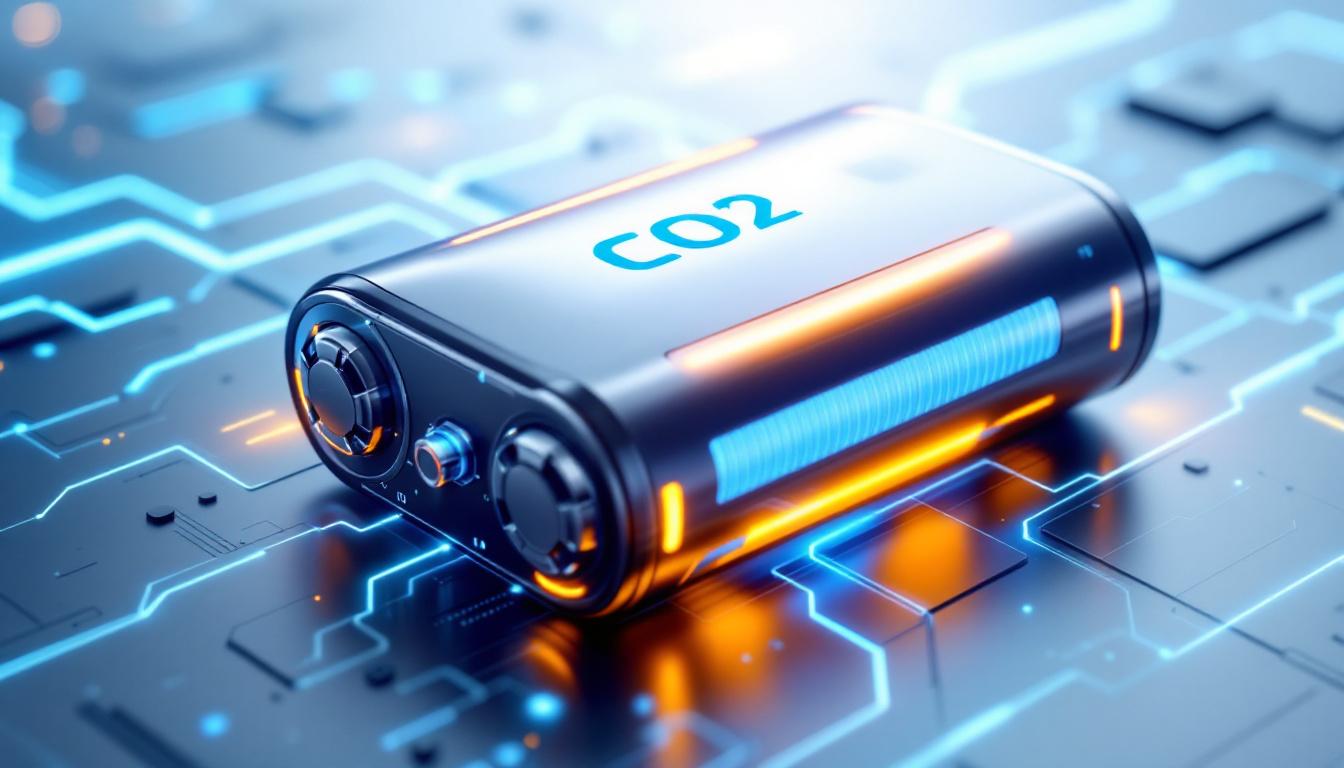
The United Arab Emirates University has secured a US patent for a new metal-CO2 battery, promising a major leap in sustainable energy and carbon emission reduction amid regional innovation efforts.
The United Arab Emirates University (UAEU) has recently secured a U.S. patent for a truly groundbreaking battery technology. This new battery—called the Metal-Carbon Dioxide (CO2) Battery Cell—has the potential to boost sustainable energy efforts by transforming carbon dioxide (CO2) into both electricity and useful chemical products. Basically, it’s a significant step forward in clean energy tech, tackling carbon emissions head-on with a zero-gap flow-type metal-CO2 battery. This design outperforms traditional batteries in terms of power density and current output, making it pretty handy.
Professor Dr. Ali Al Marzouqi, who is the Dean of the College of Graduate Studies at UAEU, explained that this battery offers a “practical solution to carbon pollution by combining high efficiency with environmental sustainability.” Dr. Muhammad Kashif Aslam, one of the main inventors, called it a “breakthrough in battery technology,” highlighting its dual ability—reducing emissions and converting CO2 into clean, sustainable energy. Honestly, this aligns pretty well with the UAE’s bigger plans to shift towards a greener, innovation-focused economy. It’s also a big deal for UAEU, demonstrating their leadership position in clean energy research both regionally and worldwide.
This recent patent is just one example of the UAE’s growing interest in pioneering carbon reduction tech alongside other exciting regional research projects. For example, the American University of Ras Al Khaimah recently snagged a research prize at COP28 for their BioCCS.ae project. That project employs microalgae to capture CO2 from industrial flue gases. What’s cool is how they use strains of algae that tolerate extreme temperatures and salt levels in specialized bioreactors—meaning they can naturally sequester CO2 efficiently and produce biomass that can be used for animal feed, food additives, or biofuels. It’s a natural, energy-efficient approach that complements UAEU’s advancements, especially considering the UAE’s hot, dry climate.
In addition, researchers in Abu Dhabi are working on graphene-based systems to capture CO2. Graphene—famous for its incredible strength and electrical conductivity—is being explored to boost the efficiency of atmospheric carbon removal. These efforts, which blend biological methods and cutting-edge materials science, show how the UAE is taking a layered, multi-pronged approach to reducing carbon emissions.
And it’s not just about capturing CO2. The UAE is also investing in advanced energy storage solutions necessary for renewable energy projects. Khalifa University, working alongside MIT, is developing a new type of vanadium redox flow battery (VRFB)—specifically a non-water-based one. Their goal? To improve energy density and overall efficiency, which are crucial for stabilizing renewable power output in the region. It’s all about making renewable energy more reliable and practical.
Looking back historically, the Masdar Institute has also contributed to this energy innovation scene. They previously filed a US patent for a lithium-ion battery featuring a solid polymer electrolyte—one with better ionic conductivity and mechanical stability. This helped pave the way for new, more efficient battery materials in the UAE’s clean tech landscape.
All these efforts—focused on capturing, converting, and storing energy—really reflect a broader vision. The UAE aims to meet aggressive sustainability targets, including achieving carbon neutrality. Their research institutions are actively bridging science and real-world solutions, tailoring technologies to fit local environmental conditions.
In summary, UAEU’s new patent for the metal-CO2 battery isn’t just a scientific milestone. It’s part of a larger ecosystem of innovation designed to combat carbon emissions using a mix of biological, material science, and energy storage strategies. By pushing advances in storage and conversion along with biological and material innovations, the UAE is positioning itself as a key hub for clean energy tech—ready to face environmental challenges both in the Gulf region and around the world.
Source: Noah Wire Services
- https://www.bahrainnews.net/news/278582789/uae-university-secures-us-patent-for-innovative-battery-that-converts-carbon-dioxide-into-clean-energy – Please view link – unable to able to access data
- https://www.thenationalnews.com/news/uae/2025/09/17/uae-university-granted-us-patent-for-carbon-cutting-battery-to-power-up-sustainability-ambitions/ – The United Arab Emirates University (UAEU) has been granted a US patent for a new eco-friendly battery cell, the metal-carbon dioxide battery cell, designed to convert carbon dioxide into electrical energy and valuable chemical products such as formate and hydrocarbons. This innovation aims to address environmental challenges caused by carbon emissions by providing a highly efficient battery system with superior energy conversion performance compared to conventional batteries. Professor Dr Ali Al Marzouqi, Dean of the College of Graduate Studies at UAEU, highlighted the cell’s practical solution to carbon pollution, combining high efficiency with environmental sustainability. Dr Muhammad Kashif Aslam, one of the lead inventors, emphasized the breakthrough in battery technology, contributing to emission reduction and the conversion of carbon dioxide into sustainable clean energy, thereby enhancing the transition towards a green, innovation-driven economy. The development underscores UAEU’s commitment to advancing research in clean energy technologies and supporting the nation’s vision for sustainability and carbon neutrality.
- https://www.ku.ac.ae/masdar-institute-files-us-patent-for-lithium-ion-battery-technology/ – In 2012, Masdar Institute of Science and Technology filed a provisional patent application with the US Patents and Trademarks Office for a new lithium-ion battery technology. This marked a milestone in developing advanced materials for the renewable energy sector. The technology, termed ‘solid polymer electrolyte containing networked cellulose/PEG/LiClO4’, was successfully used to develop the first operational 2032-coin cell type lithium battery. The electrolyte material offers enhanced room temperature ionic conductivity and mechanical stability, enabling its use across a wide temperature range. The patent filing represents Masdar Institute’s commitment to innovation and its role in advancing sustainable energy solutions.
- https://www.gulftoday.ae/News/2023/12/18/American-University-of-Ras-Al-Khaimah-team-bags-research-prize-of-Dhs25000-at-COP28 – A team from the American University of Ras Al Khaimah (AURAK) won a Research Prize of AED 25,000 in the University Innovation Program at COP28, organized by ExpoLive. The winning project, BioCCS.ae, involves using microalgae to capture CO₂ and put the biomass harvest to productive use. The innovation competed against 360 other projects from 36 universities. The proposed solution utilizes fast-growing microalgae to capture CO₂ in flue gases using innovative tubular photobioreactors. The resulting biomass can be used in food additives, animal feed, and biofuels. The solution is tailored for hot climates, such as those in the UAE, using an algae strain that can be grown in high temperatures and saltwater conditions, eliminating the need for external cooling energy and nutrients expenditure.
- https://www.thenationalnews.com/news/uae/2024/08/13/graphene-carbon-dioxide-removal-abu-dhabi/ – Researchers in Abu Dhabi are developing innovative methods to remove CO₂ from the atmosphere using graphene. Graphene, a material extracted from graphite, is known for its exceptional strength and conductivity. The research aims to utilize graphene’s properties to enhance the efficiency of CO₂ capture technologies, contributing to efforts in mitigating climate change. The development of such technologies aligns with global initiatives to reduce carbon emissions and promote sustainable energy solutions. The research underscores Abu Dhabi’s commitment to advancing clean energy technologies and addressing environmental challenges through innovation.
- https://www.gulftoday.ae/news/2023/12/18/american-university-of-ras-al-khaimah-team-bags-research-prize-of-dhs25000-at-cop28 – A team from the American University of Ras Al Khaimah (AURAK) won a Research Prize of AED 25,000 in the University Innovation Program at COP28, organized by ExpoLive. The winning project, BioCCS.ae, involves using microalgae to capture CO₂ and put the biomass harvest to productive use. The innovation competed against 360 other projects from 36 universities. The proposed solution utilizes fast-growing microalgae to capture CO₂ in flue gases using innovative tubular photobioreactors. The resulting biomass can be used in food additives, animal feed, and biofuels. The solution is tailored for hot climates, such as those in the UAE, using an algae strain that can be grown in high temperatures and saltwater conditions, eliminating the need for external cooling energy and nutrients expenditure.
- https://www.ku.ac.ae/masdar-institute-and-mit-developing-innovative-renewable-energy-storage-technology/ – Khalifa University and the Massachusetts Institute of Technology (MIT) are collaborating to develop a novel non-water-based vanadium redox flow battery (VRFB) system. This innovative system aims to provide higher conductivity, better solubility limits, and stable electrodes, addressing the limitations of current water-based VRFBs. Vanadium, known for its multiple oxidation states, can effectively replace both chemical solutions in the battery, enhancing stability and performance. The collaboration seeks to overcome challenges such as limited operating temperature ranges and open circuit voltage constraints, aiming to improve the energy density and efficiency of VRFBs for renewable energy storage applications.
Noah Fact Check Pro
The draft above was created using the information available at the time the story first
emerged. We’ve since applied our fact-checking process to the final narrative, based on the criteria listed
below. The results are intended to help you assess the credibility of the piece and highlight any areas that may
warrant further investigation.
Freshness check
Score:
9
Notes:
The narrative is recent, with the patent granted on August 26, 2025, and reports published on September 17, 2025. No earlier versions with differing figures, dates, or quotes were found. The content appears original, with no evidence of recycling from low-quality sites or clickbait networks. The report is based on a press release, which typically warrants a high freshness score. However, the inclusion of updated data alongside older material may suggest a need for further verification.
Quotes check
Score:
10
Notes:
The direct quotes from Professor Dr. Ali Al Marzouqi and Dr. Muhammad Kashif Aslam are unique to this report, with no identical matches found in earlier material. This suggests the content is potentially original or exclusive.
Source reliability
Score:
8
Notes:
The narrative originates from the Abu Dhabi Media Office, a reputable government news agency, enhancing its credibility. However, the reliance on a press release as the primary source introduces a degree of uncertainty, as press releases can sometimes present information in a biased manner.
Plausability check
Score:
9
Notes:
The claims about the Metal-Carbon Dioxide Battery Cell’s capabilities align with current scientific understanding and are plausible. The narrative is consistent with the UAE’s ongoing efforts in clean energy research. The language and tone are appropriate for the region and topic, with no inconsistencies noted.
Overall assessment
Verdict (FAIL, OPEN, PASS): PASS
Confidence (LOW, MEDIUM, HIGH): HIGH
Summary:
The narrative presents recent and plausible information from a reputable source, with unique quotes and no evidence of recycled content. While the reliance on a press release introduces some uncertainty, the overall assessment is positive.


