





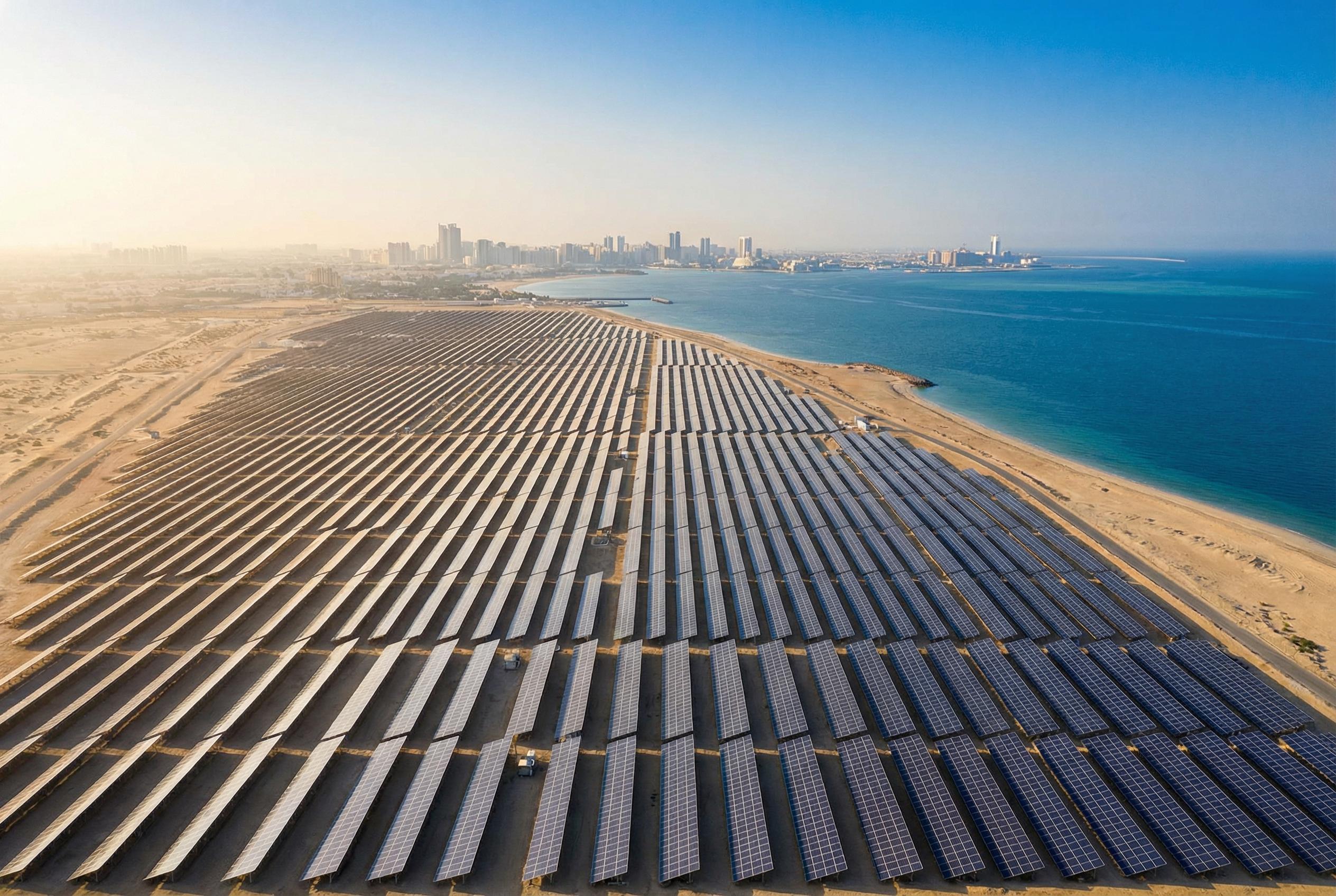
The emirate unveils a decade-long, $300 billion plan to overhaul its energy and water systems, aiming for over 60% renewable energy by 2030 and positioning itself as a regional leader in clean energy innovation.
Abu Dhabi has revealed a massive $300 billion plan, stretching over the next decade, aimed at transforming its energy and water systems. At the heart of this strategy lies a focus on clean energy, all within a new, capital-heavy development approach. The announcement, made during Abu Dhabi Sustainability Week 2026, signals a clear move away from small, yearly spending routines toward large-scale infrastructure investments. These are designed to create resilient, low-carbon services across power, water, food, and climate sectors.
The plan builds upon the emirate’s swift progress in shifting its power generation mix. Just ten years ago, renewables made up less than 1 percent of Abu Dhabi’s energy production. Fast forward to now, and clean energy accounts for nearly 45 percent, and officials project it will surpass 60 percent by 2030. This growth, they say, is about a sixty-fold increase in under 15 years. According to Gulf News coverage of the announcement, the strategy includes adding over 3 gigawatts of solar capacity annually and aims for more than 33 gigawatts of renewable energy by 2035.
Essential components of the programme include widespread solar energy installations, expanding nuclear power, deploying up to 20 GWh of storage capacity, and upgrading smart-grid and digital systems. Industry data points out that storage will be key to balancing the increasingly variable solar output as renewables take a bigger slice of the energy pie. The authorities see these investments as part of a comprehensive system approach, acknowledging that energy, water, climate, and food security are more interconnected than ever.
The initiative also highlights the importance of institutional strength and human talent. Officials emphasized the need for engineers, project developers, regulators, and system designers to make this transition happen. The Abu Dhabi Department of Economic Development’s guidance on clean energy notes that strategic partnerships, for instance, with the Emirates Water and Electricity Company and international tech firms, are already supporting storage deployment, carbon capture, and energy efficiency projects.
Masdar, Abu Dhabi’s flagship clean-energy company, plays a central role in the emirate’s outward-looking strategy. It’s expanded its global footprint to include tens of gigawatts of renewable projects, and at the World Future Energy Summit, Masdar highlighted that the green hydrogen market could reach $11 trillion worldwide by 2040. Reports from the summit also showcased the UAE’s rising position as a regional hub for energy innovation and deal-making.
This plan comes on the heels of increased international cooperation. Coverage from the summit’s opening notes that the European Union intends to raise its Connecting Europe Facility for energy to €30 billion, seeing the Gulf as a key partner for Europe’s clean-energy needs. These cross-region investments could accelerate projects linking Gulf-based clean power and hydrogen with global supply chains.
Abu Dhabi’s commitment also ties into ongoing operational innovations. Last year, the UAE launched a $6 billion facility combining 5 GW of solar with 19 GWh of battery storage, an effort to deliver reliable, around-the-clock renewable energy. As reported by The National, this project demonstrated how combining storage with solar can provide uninterrupted clean electricity at scale. The new $300 billion plan aims to expand on that model, integrating digital tools and artificial intelligence to optimize grid management and reliability.
Resilience is positioned as a key goal. Officials state these investments are meant to develop systems capable of weathering global shocks, providing affordable power through advanced technology, and attracting private investment by offering clear policies. Industry watchers note that such a massive capital infusion won’t just transform energy generation but also reshape supply chains, manufacturing capacity, and skill development across the Gulf.
Abu Dhabi’s influence isn’t limited to its own borders either. State-backed developers and sovereign investors are increasingly mobilizing capital for projects abroad. Recent proposals include green-hydrogen facilities in Europe and the Middle East’s first commercial waste-to-hydrogen plant, reflecting a strategy of exporting both technology and expertise along with capital. Early reports from 2025 show a noticeable growth in renewable and hydrogen ventures backed by Gulf funds.
The economic motivation behind this push is partly defensive, given the predicted rise in global electricity demand driven by data centers and AI, and partly opportunistic. The $300 billion plan positions Abu Dhabi nicely to meet both regional and international demand while developing the regulatory and technical ecosystems necessary for scaling green fuels like hydrogen.
However, the tone remains cautious. While local officials see this as a solid and decisive commitment, outside experts warn that actual execution will be challenging. Large-scale projects require stable policies, skilled labor, smooth permitting processes, and robust supply chains. According to the Abu Dhabi economic guidance, forming strong partnerships and offering targeted incentives will be essential to attract private capital and speed up technological adoption.
If all goes well, this ambitious programme could shift Abu Dhabi’s role from just a major oil and gas exporter to a pioneer in integrated, low-carbon energy systems. The model, combining state-led investment with private sector expertise, global collaborations, and investments in storage and digital technologies, could serve as a blueprint for many other governments.
As Abu Dhabi transitions from announcing plans to actually delivering projects, the focus will shift to how quickly they can reach financial closure, where investments are distributed across different sectors, and how effectively local skills and manufacturing can be scaled up. The World Future Energy Summit served as an early platform for partnerships and support, but now, the real challenge lies in turning this bold vision into a steady pipeline of bankable projects that can drive both local decarbonization efforts and cement the emirate’s expanded role in the global energy landscape.
- https://solarquarter.com/2026/01/14/abu-dhabis-300-billion-plan-accelerates-clean-energy-shift-for-a-sustainable-future/ – Please view link – unable to able to access data
- https://gulfnews.com/uae/government/abu-dhabi-commits-300-billion-to-advance-energy-and-water-systems-1.500406959 – Abu Dhabi has announced a $300 billion investment plan over the next decade to modernise its energy and water systems, focusing on clean energy. This initiative, revealed during Abu Dhabi Sustainability Week 2026, underscores the emirate’s ambition to lead the global transition to low-carbon energy. The plan marks a shift from routine annual spending to a large capital-intensive approach aimed at building sustainable and resilient infrastructure. ([gulfnews.com](https://gulfnews.com/uae/government/abu-dhabi-commits-300-billion-to-advance-energy-and-water-systems-1.500406959?utm_source=openai))
- https://www.added.gov.ae/en/invest/growth-sectors/clean-energy – Abu Dhabi’s clean energy efforts align with the UAE Energy Strategy 2050, aiming to increase the contribution of clean energy to 30% by 2030. The strategy focuses on renewable energy, clean alternative fuels, energy storage, carbon capture, and energy-efficient technologies. Strategic partnerships, such as those with the Emirates Water and Electricity Company (EWEC) and Siemens Energy, are fostering innovation and accelerating the implementation of CleanTech solutions. ([added.gov.ae](https://www.added.gov.ae/en/invest/growth-sectors/clean-energy?utm_source=openai))
- https://www.energyupdate.com.pk/2026/01/14/masdar-highlights-11-trillion-global-hydrogen-opportunity-as-wfes-opens-in-abu-dhabi/ – At the 18th World Future Energy Summit in Abu Dhabi, Masdar projected an $11 trillion global green hydrogen opportunity by 2040. The European Union announced plans to increase its Connecting Europe Facility (CEF) for Energy five-fold to €30 billion, positioning the Gulf region as a strategic partner in Europe’s energy transition. The summit underscored Abu Dhabi’s growing role as a global hub for green energy deal-making. ([energyupdate.com.pk](https://www.energyupdate.com.pk/2026/01/14/masdar-highlights-11-trillion-global-hydrogen-opportunity-as-wfes-opens-in-abu-dhabi/?utm_source=openai))
- https://www.abudhabipolitics.com/article/866916654-world-future-energy-summit-2026-will-bridge-climate-policy-and-action-via-all-new-conference-tracks-and-events – The 18th World Future Energy Summit, hosted by Masdar as part of Abu Dhabi Sustainability Week, is set to return from January 13–15, 2026, at the Abu Dhabi National Exhibition Centre. The summit aims to bridge climate policy and action through new conference tracks and events, promoting renewable energy and clean technologies for a sustainable future. ([abudhabipolitics.com](https://www.abudhabipolitics.com/article/866916654-world-future-energy-summit-2026-will-bridge-climate-policy-and-action-via-all-new-conference-tracks-and-events?utm_source=openai))
- https://www.thenationalnews.com/business/energy/2025/01/14/uae-worlds-first-renewable/ – The UAE launched a $6 billion facility combining 5 gigawatts of solar capacity with 19 gigawatt-hours of battery storage to produce 1 gigawatt of uninterrupted clean power. This project, a collaboration between Masdar and the Emirates Water and Electricity Company (EWEC), is the world’s first of its kind, providing renewable energy at scale around the clock. ([thenationalnews.com](https://www.thenationalnews.com/business/energy/2025/01/14/uae-worlds-first-renewable/?utm_source=openai))
- https://decarbonisation.news/uaes-2025-decarbonisation-push-accelerates-with-ambitious-renewable-and-hydrogen-projects/ – The UAE’s decarbonisation efforts are accelerating with ambitious renewable and hydrogen projects. Abu Dhabi’s state-backed developers signed a memorandum to build a 140 MW green-hydrogen facility in Austria, and domestic industrial actors announced the Middle East’s first commercial waste-to-green-hydrogen plant, projected to produce about seven tonnes per day by 2027. These initiatives illustrate how large sovereign investors and energy developers are mobilising capital to extend decarbonisation technologies beyond national borders. ([decarbonisation.news](https://decarbonisation.news/uaes-2025-decarbonisation-push-accelerates-with-ambitious-renewable-and-hydrogen-projects/?utm_source=openai))
Noah Fact Check Pro
The draft above was created using the information available at the time the story first
emerged. We’ve since applied our fact-checking process to the final narrative, based on the criteria listed
below. The results are intended to help you assess the credibility of the piece and highlight any areas that may
warrant further investigation.
Freshness check
Score:
10
Notes:
The narrative presents a recent announcement from Abu Dhabi during the Abu Dhabi Sustainability Week 2026, dated January 14, 2026. No earlier publications of this specific $300 billion plan were found, indicating high freshness.
Quotes check
Score:
10
Notes:
The report includes direct quotes from officials, such as Dr. Al Jarwan, with no earlier matches found online, suggesting originality. ([gulfnews.com](https://gulfnews.com/uae/government/abu-dhabi-commits-300-billion-to-advance-energy-and-water-systems-1.500406959?utm_source=openai))
Source reliability
Score:
8
Notes:
The narrative originates from SolarQuarter, a niche publication focusing on solar energy. While it provides detailed information, its limited reach may affect the overall reliability score.
Plausability check
Score:
9
Notes:
The claims align with Abu Dhabi’s known commitment to clean energy, including previous investments and projects. ([thenationalnews.com](https://www.thenationalnews.com/business/energy/2026/01/07/masdar-commits-15bn-to-global-clean-energy-projects-in-2025//?utm_source=openai)) However, the scale of the $300 billion plan is unprecedented, warranting cautious consideration.
Overall assessment
Verdict (FAIL, OPEN, PASS): PASS
Confidence (LOW, MEDIUM, HIGH): MEDIUM
Summary:
The narrative presents a recent and original report on Abu Dhabi’s $300 billion clean energy plan, with no significant issues identified. However, the unprecedented scale of the investment plan warrants cautious consideration.


