

 8:52 pm - October 15, 2026
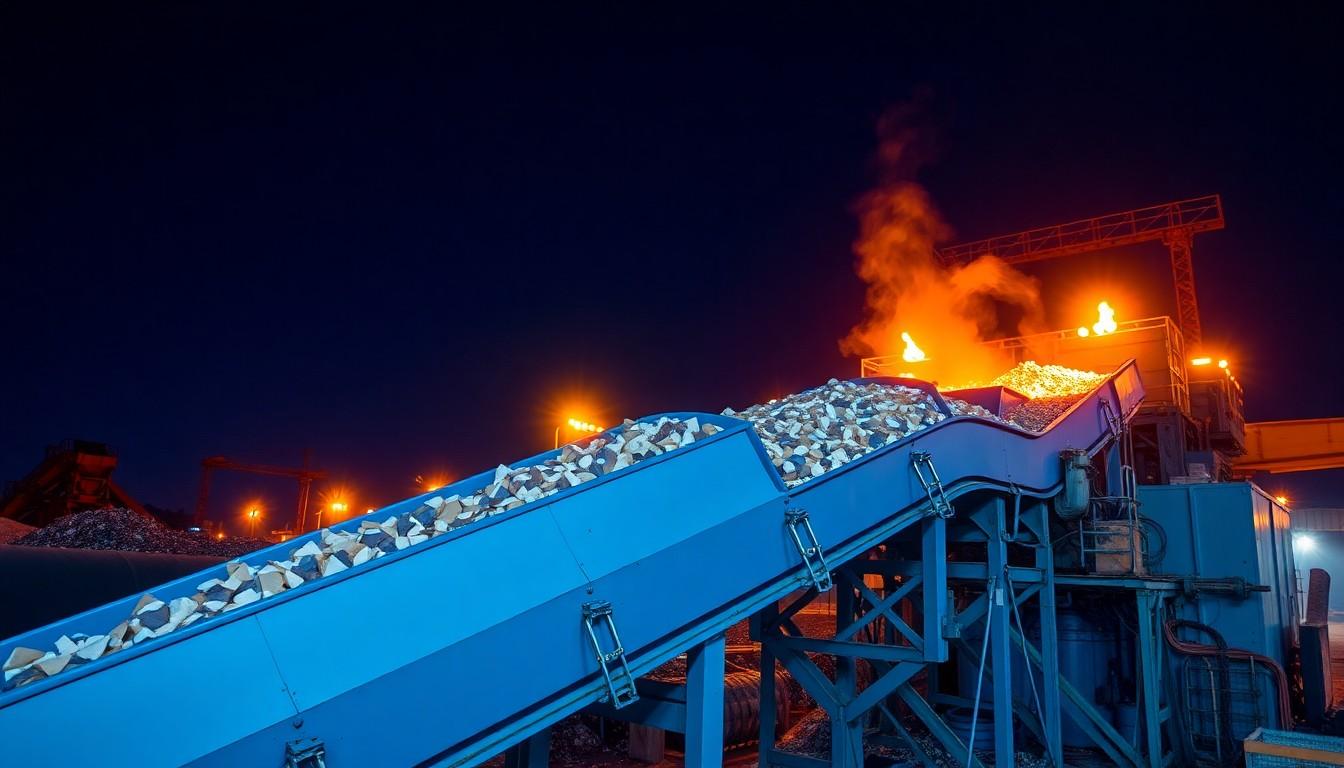
The renewal and expansion of Veolia Environnement’s involvement at the Mafraq 2 plant highlights Abu Dhabi’s commitment to turning construction debris into valuable reusable materials, advancing its circular economy goals amid growing infrastructure demands.
Abu Dhabi has, well, renewed and actually expanded Veolia Environnement’s involvement at the Mafraq 2 construction and demolition waste recycling plant , signalling a continued push for a model that’s about turning rubble into reusable materials instead of just dumping it in landfills.
According to the overview of the deal published by ad hoc news, this arrangement seems to reinforce Veolia’s position at a site that’s become quite a prominent part of the emirate’s waste management plan. The plant is located outside Abu Dhabi and processes mixed construction and demolition waste from all over the city. The resulting material is then turned into certified secondary aggregates, which are used for things like road construction, backfill, and other building projects.
Now, the importance of this facility is pretty clear when you consider that construction and demolition debris are among the largest waste streams , especially in rapidly growing cities. Concrete, asphalt, bricks, and soil can take up a lot of space if disposed of normally. At Mafraq 2, the waste is mechanically sorted, crushed, and screened so that a good portion of it can be reintroduced into the market as a replacement for virgin quarried stone in suitable projects. I mean, it’s pretty handy.
Veolia states that this method eases pressure on landfill sites and helps cut emissions linked to extracting and transporting new raw materials. Practically speaking, it also provides contractors with a local source of recycled aggregate, which can potentially lower costs when the standards for construction allow its use.
This renewed deal also reflects a broader shift happening in the Gulf , where waste policies are increasingly linked to resource efficiency. Abu Dhabi has been putting more effort into circular economy measures, particularly in sectors like construction, where waste volumes are high and the need for aggregates stays consistent. Long-term contracts, such as the one at Mafraq 2, enable government authorities to work alongside specialised firms on recycling goals, material quality, and processing capacity over time , instead of relying solely on short-term disposal contracts.
That’s quite important for the wider construction scene in the UAE. Developers, demolition companies, and infrastructure contractors now face mounting pressure to sort waste streams and divert recoverable materials from landfills. Facilities like Mafraq 2 offer a practical pathway for compliance, and they also support public procurement policies favouring recycled content in certain projects. For an emirate still heavily investing in roads, housing, and other infrastructure, having a steady supply of reusable aggregates is, frankly, strategically valuable.
Veolia has integrated the plant into its broader environmental services portfolio, which covers municipal waste, industrial treatment, and recovery operations. The company describes these assets as long-term infrastructure services rather than fleeting installations. The idea is to keep plants running at high utilisation, while also tweaking processing lines to adapt to changing waste streams and evolving regulations.
The Abu Dhabi contract also fits into Veolia’s wider regional expansion. Recently, the company announced another agreement to manage and recover hazardous waste from one of the world’s biggest refineries. They say that the refinery deal involves handling around 70,000 tonnes of industrial waste annually, with the possibility of increasing to 165,000 tonnes. When you consider these contracts together, it really shows how the French multinational is broadening its reach , from municipal recovery projects to heavy industrial waste management across the Gulf.
Regional waste operators are also stepping up their game , especially in the emirate’s collection and logistics network. Tadweer Group, responsible for waste collection across Abu Dhabi, states that they serve residential, commercial, industrial, and construction sectors, operating a large fleet with a sizeable workforce. That wider ecosystem helps explain how specialised recycling sites like Mafraq 2 stay operational: they really rely on dependable collection, sorting, and transportation as much as on advanced processing technology.
Veolia’s local activities aren’t just about recycling, either. According to materials about their operations in the Middle East, they offer integrated waste-management systems aimed at streamlining production, cutting transport and treatment costs, and reducing environmental impact. In Abu Dhabi, this has helped the firm build a footprint across the whole chain , from collection right through to recovery and final disposal.
For Abu Dhabi, the significance of Mafraq 2 really lies in how it aligns with longer-term environmental and economic goals. The emirate is working hard to cut down its reliance on landfill, save natural resources, and push for a more circular approach to materials. A plant that transforms demolition waste into certified aggregate is a very tangible sign of this policy. It also exemplifies how environmental targets are increasingly achieved through commercial contracts rather than just public agencies acting alone.
The fact that Veolia’s role has been extended and expanded indicates that Abu Dhabi sees real value in scaling up this model. As construction activities keep going strong across the UAE capital, demand for recycled materials is likely to stay closely linked to both regulatory pressures and economic considerations. Mafraq 2 now stands as one of the clearer examples of how waste can be reconceptualised , not just as a disposal issue, but as an industrial input that supports sustainable development.
- https://www.ad-hoc-news.de/boerse/news/ueberblick/new-contract-momentum-keeps-veolia-s-mafraq-2-recycling-plant-in-the/69549126 – Please view link – unable to able to access data
- https://www.ad-hoc-news.de/boerse/news/ueberblick/new-contract-momentum-keeps-veolia-s-mafraq-2-recycling-plant-in-the/69549126 – Abu Dhabi has extended Veolia Environnement’s role at the Mafraq 2 construction and demolition waste recycling plant, underscoring how the facility turns building rubble into reusable aggregates and supports the emirate’s landfill-reduction push.
- https://www.ad-hoc-news.de/boerse/news/ueberblick/contract-boost-in-the-desert-veolia-s-mafraq-2-recycling-plant-scales/69548631 – Abu Dhabi has extended and expanded Veolia’s role at the Mafraq 2 construction and demolition waste recycling plant, a key asset turning rubble into reusable aggregate in the emirate’s circular economy strategy.
- https://www.veolia.com/en/industries/processing-and-recovering-hazardous-industrial-waste-middle-easts-largest-refinery-abu-dhabi – Veolia has signed a landmark agreement to manage and recover hazardous waste from one of the world’s largest refineries in Abu Dhabi, processing 70,000 tons of industrial waste annually, with plans to scale up to 165,000 tons.
- https://www.tadweer.ae/ – Tadweer Group is responsible for waste collection across Abu Dhabi, serving residential, commercial, industrial, and construction sectors, with a fleet of over 1,200 vehicles and more than 5,000 staff.
- https://aljaber.com/companies/veolia-environmental-services/ – Veolia Environmental Services, a joint venture between Al Jaber Group and ONYX France, provides comprehensive waste management services in Abu Dhabi, including collection, transportation, sorting, treatment, recycling, disposal, and transportation of all types of waste.
- https://www.near-middle-east.veolia.com/our-services/waste-management-and-recycling – Veolia Middle East offers integrated waste management systems to help clients optimise production flow, reduce transportation and treatment costs, and lower environmental impact, collecting over 3,000 tonnes of recyclables annually.
Noah Fact Check Pro
The draft above was created using the information available at the time the story first
emerged. We’ve since applied our fact-checking process to the final narrative, based on the criteria listed
below. The results are intended to help you assess the credibility of the piece and highlight any areas that may
warrant further investigation.
Freshness check
Score:
8
Notes:
The article was published on 16 June 2026, indicating recent information. However, the content closely mirrors a previously published article from the same source on the same date, suggesting potential recycling of content. This raises concerns about originality and freshness. ([ad-hoc-news.de](https://www.ad-hoc-news.de/boerse/news/ueberblick/contract-boost-in-the-desert-veolia-s-mafraq-2-recycling-plant-scales/69548631?utm_source=openai))
Quotes check
Score:
7
Notes:
The article does not contain any direct quotes. The absence of verifiable quotes limits the ability to assess the accuracy and originality of the information presented.
Source reliability
Score:
6
Notes:
The article originates from ad-hoc-news.de, a lesser-known publication. While it provides detailed information, the lack of widespread recognition and potential biases associated with niche sources warrant caution. Additionally, the article appears to be summarising content from Veolia’s official communications, raising concerns about source independence. ([veolia.com](https://www.veolia.com/en/industries/processing-and-recovering-hazardous-industrial-waste-middle-easts-largest-refinery-abu-dhabi?utm_source=openai))
Plausibility check
Score:
7
Notes:
The claims about Veolia’s expanded role at the Mafraq 2 recycling plant align with known initiatives in Abu Dhabi’s waste management sector. However, the absence of independent verification and reliance on a single source diminish the credibility of these claims.
Overall assessment
Verdict (FAIL, OPEN, PASS): FAIL
Confidence (LOW, MEDIUM, HIGH): MEDIUM
Summary:
The article presents information about Veolia’s expanded role at the Mafraq 2 recycling plant in Abu Dhabi. However, the content closely mirrors previously published material from the same source, raising concerns about originality and freshness. The reliance on Veolia’s official communications without independent verification sources further diminishes the credibility of the information. Given these issues, the article fails to meet the necessary standards for publication.

