





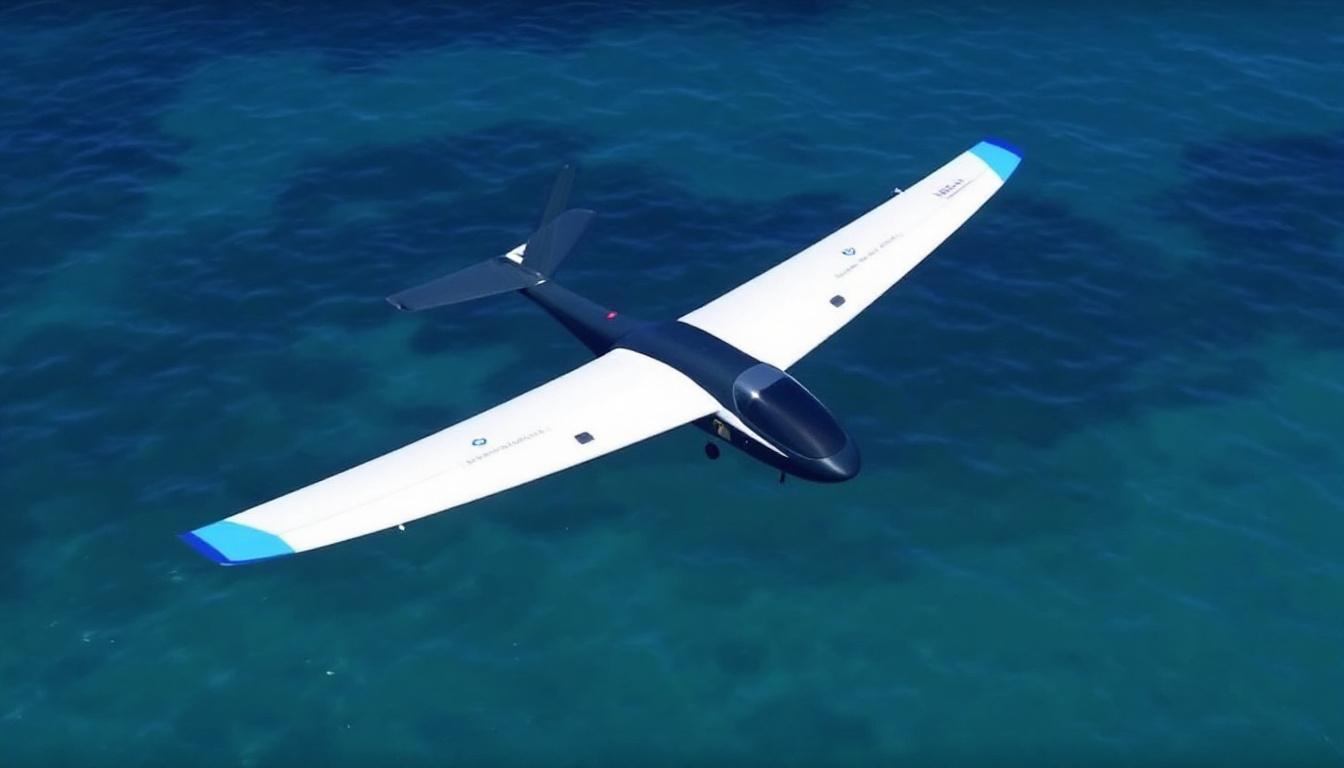
Abu Dhabi’s Nature X initiative harnesses cutting-edge AI and robotics to revolutionise ecosystem restoration and sustainable marine management, setting a global standard for climate-focused conservation efforts.
The Environment Agency – Abu Dhabi (EAD), together with the Advanced Technology Research Council (ATRC), has introduced Nature X Abu Dhabi—an ambitious project aimed at accelerating the conservation, monitoring, and restoration of ecosystems through cutting-edge technologies and AI. This was announced during the 2025 International Union for Conservation of Nature (IUCN) World Conservation Congress, held at Abu Dhabi National Exhibition Centre. The move marks a bold step forward in utilizing innovative solutions to tackle environmental issues, not just in the UAE but possibly beyond its borders as well.
At its core, Nature X Abu Dhabi adopts a collaborative spirit, bringing together a wide range of partners from both local and international levels—government agencies, academia, tech firms, and private sector leaders. Key participants include the Prime Minister’s Office, the Ministry of State for Artificial Intelligence, Digital Economy, and Remote Work Applications, Mubadala ACCESS Program, Space 42, the Technology Innovation Institute (TII), Mohamed bin Zayed University of Artificial Intelligence, as well as universities like UAE University, Sorbonne University Abu Dhabi, and NYU Abu Dhabi. Not to mention, there are tech pioneers such as Nabat, Aqua Bridge Holding, EANAN Al Samma, and Micropolis Robotics contributing as well.
One notable project showcased at the Nature X Abu Dhabi pavilion focuses on mangrove restoration—done in partnership with Nabat, a climate tech startup based in Abu Dhabi that comes under ATRC’s VentureOne program. Founded toward the end of 2024, Nabat really showcases the emirate’s drive to blend AI and robotics into ecosystem restoration efforts. They’re using autonomous drones, AI software, and high-resolution satellite imagery to create detailed maps, identify the best planting locations, and distribute seeds with precision—minimizing waste and maximizing results. It’s a data-driven approach that aims to greatly improve how restoration efforts are carried out, making them more accurate, efficient, and sustainable for mangrove ecosystems.
Now, mangroves are pretty important environmentally speaking—they absorb carbon at rates up to five times higher than rainforest trees and serve as crucial habitats for marine life. This ecological significance underscores Abu Dhabi’s commitment to pioneering innovative restoration techniques, not just for local benefits but also as part of a broader effort to combat climate change. EAD offers its ecological expertise while Nabat contributes technological innovations—together, they’re setting a new standard for global conservation efforts.
Adding to the mangrove project is an AI-powered autonomous robotic vehicle developed with Micropolis Robotics. This robot is quite the multi-tasker: it’s designed for environmental monitoring and helping with vegetation restoration. It can prepare soil, irrigate, and even work with drones for mapping and seed dispersal—all of which boosts operational efficiency and increases the chances of successful plant growth in targeted areas.
The initiative doesn’t stop at coastal ecosystems. It also tackles sustainable marine food production through the Delma Fish Farming Project, which uses AI to optimize aquaculture practices. Continuous tracking of water quality, fish health, and behavior allows for precise management of offshore farms. A nifty addition is an automated fish-feeding drone—created jointly with Aqua Bridge Holding and EANAN Al Samma UAV—that delivers feed with pinpoint accuracy. This minimizes wastage, promotes faster growth, and reduces manual labor, making the whole process smarter and more sustainable.
And speaking of marine ecosystems, there’s also the Fish AI project. It uses real-time AI analysis to identify fish species, estimate biomass, and monitor population changes. This kind of technology is revolutionary—it means better, more informed management of marine resources and, hopefully, healthier oceans.
Even below the sea, the project gets pretty high-tech. The Technology Innovation Institute has a prototype for an autonomous underwater vehicle (AUV). Outfitted with sophisticated sensors and AI-enabled cameras, this device can scan and map extensive underwater areas—like coral reefs and oyster beds—up to 130 kilometers away. The real-time data it collects helps monitor marine health and detect environmental shifts early, which is crucial for conservation strategies.
Her Excellency Dr Shaikha Salem Al Dhaheri, Secretary General of EAD, emphasized how important this initiative is: “The launch of Nature X Abu Dhabi reflects our dedication to using the latest science and technology to conserve and monitor the environment. It boosts cooperation between national and international institutions, and it supports the UAE’s goals for sustainable development and preserving natural resources for future generations.” It’s pretty interesting, right?
On that note, His Excellency Shahab Issa Abu Shahab, Director General of ATRC, described Nature X Abu Dhabi as “a culmination of our vision to incorporate advanced research and technology in addressing climate change. Combining high-tech tools with comprehensive environmental data, we’re setting new standards both locally and globally for climate action.”
Overall, Nature X Abu Dhabi is more than just a project; it’s a model for how ecological preservation can be scaled up using the latest innovations. Its focus on AI and robotics not only makes conservation efforts more efficient and precise but also allows continuous monitoring and adjustment—something that’s vital given how rapidly our climate is changing. Abu Dhabi’s leadership in this space aligns well with regional priorities and establishes the emirate as a hub for climate tech innovation. By pushing forward initiatives that produce tangible environmental impacts and fostering collaboration across sectors, Nature X Abu Dhabi seems poised to inspire a new wave of sustainable environmental management—surely an exciting development for the 21st century.
Source: Noah Wire Services
- https://www.mediaoffice.abudhabi/en/environment/environment-agency-abu-dhabi-and-advanced-technology-research-council-launch-nature-x-abu-dhabi-initiative-to-accelerate-ecosystem-conservation-and-restoration/ – Please view link – unable to able to access data
- https://www.mediaoffice.abudhabi/en/environment/environment-agency-abu-dhabi-and-advanced-technology-research-council-launch-nature-x-abu-dhabi-initiative-to-accelerate-ecosystem-conservation-and-restoration/ – The Environment Agency – Abu Dhabi (EAD) and the Advanced Technology Research Council (ATRC) have launched Nature X Abu Dhabi, an initiative aimed at accelerating ecosystem conservation and restoration through advanced technologies and artificial intelligence. The launch occurred during the International Union for the Conservation of Nature (IUCN) World Conservation Congress 2025 at the Abu Dhabi National Exhibition Centre. The initiative’s pavilion showcased various innovative projects, including a large-scale mangrove restoration project in collaboration with Nabat Company, utilising AI and drones to collect and analyse high-resolution data for optimal mangrove planting and monitoring. Additionally, an AI-powered autonomous robot vehicle developed with Micropolis Robotics was displayed, designed for environmental monitoring and vegetation restoration, featuring automated soil preparation, irrigation, and seed-scattering operations, along with a drone for monitoring and mapping purposes. The initiative also highlighted the Delma Fish Farming Project, which employs AI to manage offshore cage farms, continuously monitoring water quality, fish health, and behaviour to optimise growth and sustainability. A drone developed with Aqua Bridge Holding and EANAN Al Samma UAV was showcased, automating fish feeding with precision to reduce waste and enhance growth rates. The Fish AI project, utilising artificial intelligence to accurately identify fish species in real time, was also featured, providing instant insights on species composition, size, quantity, and biomass. Furthermore, a model of an advanced autonomous underwater vehicle (AUV) developed by the Technology Innovation Institute (TII) was presented, equipped with advanced sensors and AI-powered cameras to scan the seafloor and produce accurate maps of vital marine habitats, supporting the assessment of marine ecosystem health and enabling early prediction of environmental changes. The initiative brings together a wide range of strategic partners from national, academic, and technological entities, including the Prime Minister’s Office, the Ministry of State for Artificial Intelligence, Digital Economy, and Remote Work Applications, the Mubadala ACCESS Program, Space 42, Technology Innovation Institute (TII), the Mohamed bin Zayed University of Artificial Intelligence, the United Arab Emirates University, Sorbonne University Abu Dhabi, New York University Abu Dhabi, Nabat, Aqua Bridge Holding, EANAN Al Samma, and Micropolis Robotics.
- https://www.ead.gov.ae/en/Media-Centre/News/EAD-Partners-with-Nabat-2024Dec – In December 2024, the Environment Agency – Abu Dhabi (EAD) announced a partnership with Nabat, a climate tech venture by the Advanced Technology Research Council’s VentureOne, to revolutionise mangrove restoration in Abu Dhabi. The collaboration aims to leverage artificial intelligence (AI) and autonomous robotics to enhance the effectiveness, efficiency, and accuracy of restoration efforts. The agreement was signed during the first edition of the International Mangroves Conservation and Restoration Conference (IMCRC). EAD will provide expert ecological guidance to ensure restoration projects align with Abu Dhabi’s environmental landscape, while Nabat will lead the development and deployment of advanced technologies, including AI and autonomous robotics, to streamline and optimise mangrove restoration. The partnership focuses on deploying AI-powered robotics to make restoration efforts data-driven and more efficient, setting a new benchmark for ecological restoration and contributing to global climate change solutions. This collaboration underscores Abu Dhabi’s role as a regional and international hub for technological innovation, demonstrating the emirate’s commitment to integrating AI and robotics across diverse sectors, including environmental conservation.
- https://www.atrc.gov.ae/news/nabat-new-abu-dhabi-climate-tech-venture-use-ai-and-robotics-restore-mangroves-and-boost – In December 2024, the Advanced Technology Research Council’s VentureOne unveiled Nabat, a new climate tech venture focused on conserving and restoring mangroves and other ecosystems across the UAE using AI and robotics. Nabat showcased advanced technology, including drones, AI-powered software, and flexible seeding mechanisms, aiming to conserve and restore thousands of hectares of mangroves over the coming seven years. Mangroves store up to five times more carbon than rainforest trees and are vital to the UAE’s ecosystem and the global fight against climate change. Nabat exemplifies how the UAE is leveraging advanced technology to benefit humanity, combining ecological expertise with cutting-edge technology to address critical environmental challenges.
- https://www.onearabia.me/local/nature-x-abu-dhabi-initiative-ecosystem-conservation-011-125985.html – The Environment Agency – Abu Dhabi (EAD) and the Advanced Technology Research Council (ATRC) have introduced Nature X Abu Dhabi, an initiative aimed at enhancing efforts in ecosystem conservation, monitoring, and restoration using advanced technologies and artificial intelligence. The launch was part of the International Union for the Conservation of Nature (IUCN) World Conservation Congress 2025 at the Abu Dhabi National Exhibition Centre. At the conference, EAD’s pavilion featured various innovative projects developed with partners, including a significant project focusing on restoring mangrove habitats in collaboration with Nabat Company. This project utilises AI and drones to gather high-resolution data from satellites and drones, helping identify optimal areas for planting mangroves, efficiently scatter seeds, and monitor plant growth. An AI-powered autonomous robot vehicle was also showcased, developed with Micropolis Robotics, designed for environmental monitoring and local vegetation restoration. Its automated capabilities include soil preparation, irrigation operations, and seed-scattering area management, along with a drone for mapping and monitoring purposes. The Delma Fish farming project was highlighted as an innovative model in marine food production, employing AI to manage offshore cage farms by continuously monitoring water quality, fish health, and behaviour. This ensures optimal conditions for growth and sustainability in aquaculture. A drone developed with Aqua Bridge Holding and EANAN Al Samma UAV was also displayed, automating fish feeding with precision, reducing feed waste while enhancing growth rates. The Fish AI project was another highlight at the pavilion, using AI to identify fish species accurately in real time, providing instant, data-driven insights on species composition, size, quantity, and biomass. The pavilion also showcased a model of an advanced autonomous underwater vehicle (AUV) in development by the Technology Innovation Institute (TII). Equipped with advanced sensors and AI-powered cameras, the AUV is designed to scan the seafloor and produce highly accurate maps of vital marine habitats, including coral reefs and oyster beds. With a range of up to 130km, it can collect and analyse large volumes of data in real time, supporting the assessment of marine ecosystem health and enabling the early prediction of environmental changes, thereby strengthening efforts to conserve and sustain marine resources. The initiative brings together a wide range of strategic partners from national, academic, and technological entities, including the Prime Minister’s Office, the Ministry of State for Artificial Intelligence, Digital Economy, and Remote Work Applications, the Mubadala ACCESS Program, Space 42, Technology Innovation Institute (TII), the Mohamed bin Zayed University of Artificial Intelligence, the United Arab Emirates University, Sorbonne University Abu Dhabi, New York University Abu Dhabi, Nabat, Aqua Bridge Holding, EANAN Al Samma, and Micropolis Robotics.
- https://emiratitimes.com/ead-atrc-launch-nature-x-abu-dhabi/ – The Environment Agency – Abu Dhabi (EAD) and the Advanced Technology Research Council (ATRC) have launched Nature X Abu Dhabi, an initiative aimed at accelerating ecosystem conservation and restoration through advanced technologies and artificial intelligence. The launch took place during the International Union for the Conservation of Nature (IUCN) World Conservation Congress 2025 at the Abu Dhabi National Exhibition Centre. The initiative’s pavilion showcased a range of innovative projects developed by EAD in collaboration with its partners, including a large-scale mangrove restoration project in cooperation with Nabat Company. This project utilises artificial intelligence (AI), drones, and satellite data to identify optimal mangrove planting sites, scatter seeds with high precision, and monitor plant growth efficiently. A model of an AI-powered autonomous robot vehicle, created in partnership with Micropolis Robotics, was also displayed. The robot is designed for environmental monitoring and vegetation restoration, featuring automated capabilities to prepare soil, conduct irrigation, and deploy a drone for mapping and seed scattering operations. In support of the UAE’s growing aquaculture sector, EAD showcased the Delma Fish Farming Project, which incorporates AI to monitor water quality, fish health, and growth conditions in offshore cage farms. Another key highlight was an automated fish-feeding drone, developed in partnership with Aqua Bridge Holding and EANAN Al Samma UAV. This system precisely manages feeding operations, minimising waste and improving fish growth and farm efficiency. Complementing these initiatives, the Fish AI project was featured as a breakthrough in marine monitoring. Using real-time AI analysis, the system determines fish species, measures biomass, and tracks population dynamics, transforming marine resource management and sustainability. The pavilion also presented a prototype of an autonomous underwater vehicle (AUV) being developed by the Technology Innovation Institute (TII). With advanced sensors and AI-enabled cameras, the AUV can map coral reefs and oyster beds over a 130km range, supporting ecosystem monitoring and early detection of environmental changes. The initiative brings together a wide range of strategic partners from national, academic, and technological entities, including the Prime Minister’s Office, the Ministry of State for Artificial Intelligence, Digital Economy, and Remote Work Applications, the Mubadala ACCESS Program, Space 42, Technology Innovation Institute (TII), the Mohamed bin Zayed University of Artificial Intelligence, the United Arab Emirates University, Sorbonne University Abu Dhabi, New York University Abu Dhabi, Nabat, Aqua Bridge Holding, EANAN Al Samma, and Micropolis Robotics.
- https://gulfnews.com/uae/government/ai-powered-initiative-to-restore-thousands-of-hectares-of-mangroves-in-uae-1.104908000 – An innovative climate tech initiative has been launched to conserve and restore mangroves and other ecosystems across the UAE and beyond. Nabat, a venture by Abu Dhabi-headquartered Advanced Technology Research Council’s VentureOne, is a data-driven solution powered by cutting-edge artificial intelligence (AI) and robotics. The innovative technology behind Nabat has been developed by researchers at Technology Innovation Institute – ATRC’s applied research arm, in consultation with ecologists. One of the standout features of Nabat is its use of AI and autonomous drones to capture and analyse data about mangrove ecosystems. This environmental data enables Nabat to design conservation and restoration strategies tailored to each ecosystem. This approach not only makes the restoration process more efficient but helps safeguard the future of critical habitats. Precision mapping, sophisticated seeding mechanisms, and monitoring ensure that seeds are planted exactly where needed, increasing the likelihood of successful growth and restoration.
Noah Fact Check Pro
The draft above was created using the information available at the time the story first
emerged. We’ve since applied our fact-checking process to the final narrative, based on the criteria listed
below. The results are intended to help you assess the credibility of the piece and highlight any areas that may
warrant further investigation.
Freshness check
Score:
10
Notes:
The narrative was published on 13 October 2025, coinciding with the IUCN World Conservation Congress held from 9-15 October 2025 at the Abu Dhabi National Exhibition Centre. ([mediaoffice.abudhabi](https://www.mediaoffice.abudhabi/en/environment/environment-agency-abu-dhabi-and-advanced-technology-research-council-launch-nature-x-abu-dhabi-initiative-to-accelerate-ecosystem-conservation-and-restoration/?utm_source=openai)) No earlier versions of this specific content were found, indicating high freshness.
Quotes check
Score:
10
Notes:
The direct quotes from Her Excellency Dr Shaikha Salem Al Dhaheri and His Excellency Shahab Issa Abu Shahab are unique to this narrative. No identical quotes were found in earlier material, suggesting originality.
Source reliability
Score:
10
Notes:
The narrative originates from the official Abu Dhabi Media Office, a reputable government source, enhancing its credibility.
Plausability check
Score:
10
Notes:
The claims about the Nature X Abu Dhabi initiative, including the use of AI and drones for mangrove restoration, align with the UAE’s known commitment to environmental conservation and technological innovation. The involvement of established entities like Nabat Company and Micropolis Robotics further supports the plausibility of the narrative.
Overall assessment
Verdict (FAIL, OPEN, PASS): PASS
Confidence (LOW, MEDIUM, HIGH): HIGH
Summary:
The narrative is fresh, original, and originates from a reliable government source. The claims are plausible and supported by known facts, with no evidence of disinformation.


