




Abu Dhabi’s ambitious year-long initiative to restore seagrass beds underscores its commitment to carbon capture, marine biodiversity, and sustainable environmental practices, positioning the emirate as a global leader in ocean health innovations.
As concern around climate change continues to grow worldwide, Abu Dhabi is taking a leading role by launching a major marine restoration project through its Environment Agency—Abu Dhabi (EAD), in partnership with TotalEnergies. This year-long effort focuses on restoring seagrass beds and is a key part of the Abu Dhabi Climate Change Strategy. The goal? To protect the emirate’s precious marine ecosystems and at the same time, demonstrate its commitment to sustainable environmental practices.
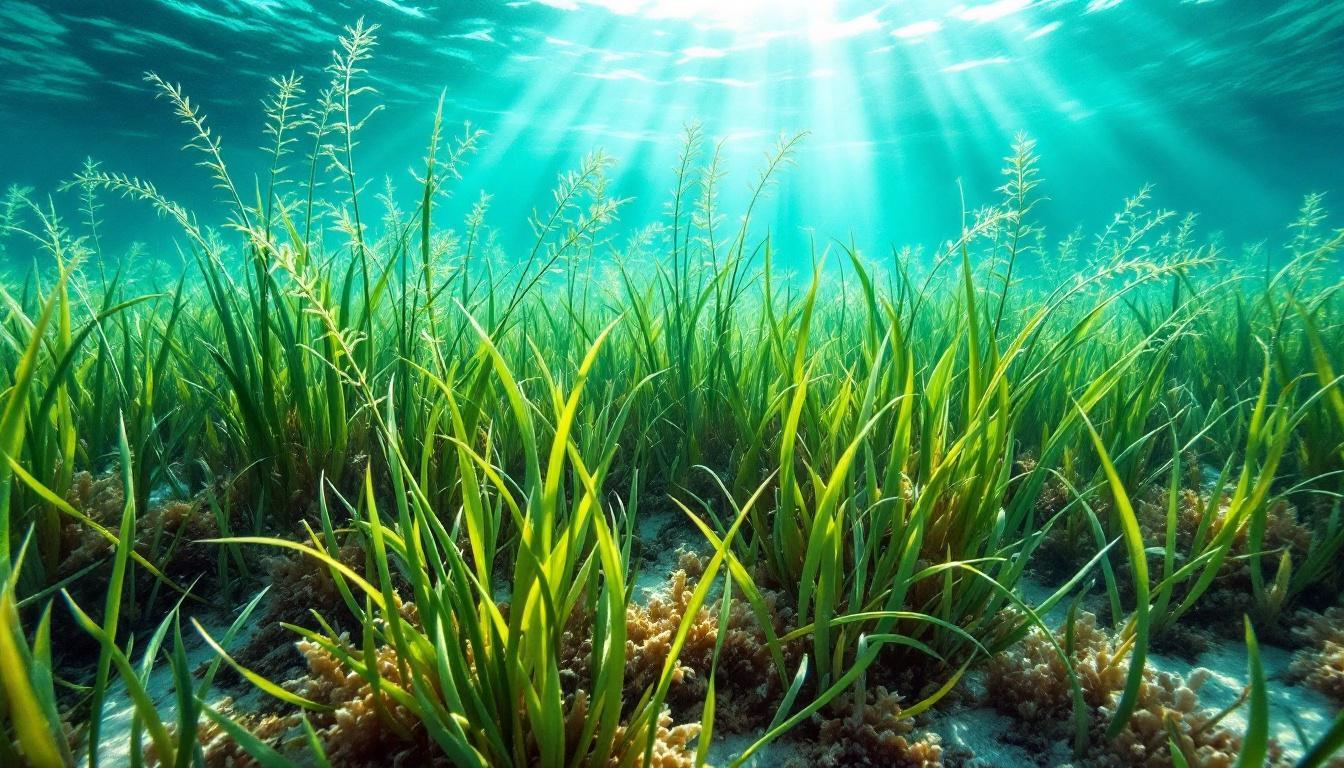
Seagrass meadows are incredibly important—they serve as natural carbon sinks, a concept known as blue carbon. They absorb and lock away carbon not just in their leaves but also in their roots and the sediment beneath them. These coastal habitats do more than just help fight climate change; they support marine biodiversity by providing shelter for countless species and improving water quality. In Abu Dhabi, these seagrass beds stretch across roughly 3,000 square kilometers, offering vital habitat for over 3,500 dugongs and around 4,000 green sea turtles, among numerous other marine creatures. It’s worth noting that Abu Dhabi hosts the second-largest dugong population in the world—only Australia’s is larger—highlighting just how crucial these environments are to conservation efforts.
The current project has planted about 10,000 square meters of seagrass, which is expected to trap roughly 52 tonnes of carbon—about the same amount produced by 23 flights between Abu Dhabi and London. The species used, Halodule uninervis, happens to be the most widespread seagrass in the region. Moreover, the project integrates advanced technology to monitor the health of these new beds after planting, making sure the scientific process is on point and allowing adjustments as needed. Interestingly enough, this effort ties into the United Nations Ocean Decade of Ocean Science’s 2030 Seagrass Breakthrough, which aims to ramp up worldwide protection and restoration of seagrasses.
Dr. Shaikha Salem Al Dhaheri, who’s the Secretary-General of EAD, emphasized how Abu Dhabi remains committed to preserving its natural treasures by fostering collaborations based on solid science. She pointed out that the partnership with TotalEnergies serves as a prime example of how the public and private sector can work together to strengthen coastal resilience and ensure a sustainable future for our planet. Likewise, Samir Oumer, who heads TotalEnergies EP UAE and acts as the company’s Country Chair, reiterated the company’s dedication to marine biodiversity. He called this project a fundamental step in rehabilitating coastal habitats and protecting dugong populations. It’s part of a wider effort to support ecosystem-based solutions that also benefit local communities depending on sustainable marine resources.
But, you know, the importance of seagrass meadows goes beyond just capturing carbon. They also form the main food source for dugongs, which are the only marine herbivores native to this region. Abu Dhabi’s dugongs, numbering around 3,000, depend entirely on seagrass for their survival. EAD has been working on protecting them since 1999—banning harmful fishing nets, regularly conducting aerial surveys, using satellite tracking, and even genetic studies to better understand their migration and behavior. Still, threats like gill net fishing continue to pose problems, causing injuries and strandings along the coast.
Green sea turtles, which are endangered, are also regular visitors to Abu Dhabi’s seagrass beds. With over 4,000 of these turtles in the emirate, conservation efforts focus on protecting their feeding and nesting areas, avoiding vessel strikes, and monitoring their populations—particularly within protected zones such as the Marawah Marine Biosphere Reserve, where turtle densities are highest.
This latest restoration effort isn’t really starting from scratch. It builds on a long-standing partnership between EAD and TotalEnergies—going back to 1999—that has supported projects like dugong conservation, flamingo habitat protection, and research on how coastal areas respond to climate change. For example, their Dugong and Seagrass Research Toolkit has become a globally recognized resource, helping researchers and conservationists across more than 40 countries where dugongs and seagrasses are found.
Looking ahead, the Environment Agency in Abu Dhabi has some exciting plans for 2026. They’ll host the 16th International Seagrass Biology Workshop and the World Seagrass Congress—the very first to be held in the Middle East, no less. These events, organized by the World Seagrass Association and the International Union for Conservation of Nature, are expected to gather experts from all over the world—scientists, policymakers, and conservation groups—to share insights, tackle challenges, and expand networks focused on seagrass conservation.
The need to protect these vital ecosystems is clear, especially given how much seagrass decline has been observed worldwide, including the Gulf region. Recently, Abu Dhabi hosted its first Arabian Seagrass Workshop, which underscored just how overlooked these ecosystems are. Researchers are actively working on improving propagation and restoration methods to turn the tide on degradation, recognizing that seagrasses are essential not just for biodiversity but also for supporting the resilience and livelihood of local coastal communities.
In essence, Abu Dhabi’s comprehensive approach—combining environmental protection, innovative science, and partnerships between the public and private sectors—serves as an inspiring example in the global push for climate resilience and ocean health. Restoring seagrass beds not only bolsters populations of iconic species like dugongs and green turtles but also contributes significantly to the UAE’s efforts in reducing carbon emissions and leading the way in sustainable environmental management.
Source: Noah Wire Services
- https://www.urdupoint.com/en/middle-east/environment-agency-abu-dhabi-partners-wit-2064798.html – Please view link – unable to able to access data
- https://www.mediaoffice.abudhabi/en/environment/environment-agency-abu-dhabi-partners-with-totalenergies-to-launch-seagrass-restoration-programme/ – The Environment Agency – Abu Dhabi (EAD), in partnership with TotalEnergies, has launched a year-long seagrass restoration programme as part of the Abu Dhabi Climate Change Strategy. This initiative aims to preserve marine ecosystems and promote nature-based solutions to climate change. Seagrass meadows are vital for absorbing blue carbon, enhancing biodiversity, and supporting sustainable fisheries. Abu Dhabi’s seagrass meadows cover 3,000 square kilometres, supporting over 3,500 dugongs and 4,000 green sea turtles. The project has successfully planted 10,000 square metres of seagrass, capable of storing 52 tonnes of carbon, aligning with the UN Ocean Decade of Ocean Science’s 2030 Seagrass Breakthrough. The restoration uses the widespread seagrass species ‘Halodule uninervis’ and incorporates advanced technology for monitoring and follow-up. Since 1999, TotalEnergies has collaborated with EAD on various conservation efforts, including dugong conservation and coastal resilience research. The partnership also plans to host the 16th International Seagrass Biology Workshop and the World Seagrass Congress in 2026, bringing together global experts to address seagrass issues and enhance conservation networks.
- https://www.ead.gov.ae/en/Discover-Our-Biodiversity/Mammals/Dugong – The dugong, a vulnerable marine mammal, is the only marine herbivore and primarily feeds on seagrass. Abu Dhabi’s waters, particularly the Marawah Marine Biosphere Reserve and Al Yasat Marine Protected Area, support a population of around 3,000 dugongs, making it the world’s second-largest habitat after Australia. EAD has been protecting and studying dugongs since 1999, implementing measures such as banning fishing nets to prevent accidental entanglement. Their conservation efforts include regular aerial surveys, satellite telemetry to study migration, and genetic studies. The UAE is a signatory to the United Nations Environmental Programme – Convention on Migratory Species Dugong Conservation Memorandum of Understanding, collaborating with other dugong range states to protect these species and their habitats globally, regionally, and locally.
- https://www.ead.gov.ae/en/Discover-Our-Biodiversity/Amphibians-and-Reptiles/Green-Turtle – The green turtle, an endangered species, is one of the largest sea turtle species and the only herbivore among them. They are typically found near seagrass meadows, coral reefs, and bays in subtropical and tropical seas worldwide. In Abu Dhabi, green turtles are protected under UAE Federal Law No. 23 and 24 of 1999. EAD monitors turtle populations, provides safe havens in marine protected areas, and raises awareness to avoid vessel strikes. Approximately 6,732 turtles use Abu Dhabi’s waters for foraging, with the highest densities in the Marawah Marine Biosphere Reserve. The largest green turtle ever found was 5 feet in length and weighed 395 kg.
- https://www.dugongseagrass.org/where-we-work/uae/ – The dugong population in the Arabian Gulf is believed to be the second largest in the world after Australia, with aerial surveys estimating a population of 3,000 dugongs, predominantly found in the central and western regions of Abu Dhabi. The UNESCO Marawah Marine Biosphere Reserve supports the highest density of dugongs in the area, followed by Al-Yasat Marine Protected Area. Dugongs are usually sighted in small groups or as solitary individuals in UAE waters; however, aggregations of up to 300 individuals have been observed in both winter and summer seasons. The reason behind these large groups is not clear; however, nursing of young animals, rough-sea conditions, breeding, and calving are thought to be possible factors. The Environment Agency Abu Dhabi has a long-term research and conservation plan that includes regular aerial surveys of the species, investigation of mortality, satellite telemetry to study migration, and study of genetics. This research has found that almost all reported dugong deaths are caused by gill net fishing, and around 15 stranded dead dugongs are found every year along the UAE coast.
- https://www.ead.gov.ae/en/Discover-Our-Biodiversity/Plants/Seagrass – Seagrasses are highly productive ecosystems that provide shelter for numerous marine species. They are found in shallow salty and brackish waters across the world. In Abu Dhabi, seagrass is essential to the conservation of dugongs, as the emirate is home to the second-largest population of dugongs globally. In 2017, EAD launched the Dugong and Seagrass Research Toolkit, a collaboration between EAD, TOTAL, Total Abu Al Bukhoosh, the Convention on Migratory Species (CMS) Dugong MOU, and the Dugong and Seagrass Conservation Project. This toolkit represents a significant contribution to the techniques and tools available for dugong and seagrass conservation research globally.
- https://www.thenationalnews.com/climate/2025/05/03/a-hidden-treasure-scientists-rally-to-protect-the-gulfs-overlooked-seagrass-meadows// – Seagrass meadows are vital to dugongs, sea turtles, fish nurseries, and carbon storage, yet they are disappearing at alarming rates worldwide. Scientists from across the region gathered in Abu Dhabi for the first Arabian Seagrass Workshop, aiming to spotlight the Gulf’s underwater grasslands and accelerate efforts to conserve and restore them. The UAE is home to the world’s second-largest population of dugongs, with 3,000 living off the country’s shores. A single dugong can consume up to 40 kilograms of seagrass daily, necessitating vast, healthy meadows. However, decades of decline have been observed, prompting research to understand and reverse the trend. The centre is conducting field research off the Abu Dhabi coast and running lab-based trials to better understand how to propagate, replant, and restore degraded seagrass beds.
Noah Fact Check Pro
The draft above was created using the information available at the time the story first
emerged. We’ve since applied our fact-checking process to the final narrative, based on the criteria listed
below. The results are intended to help you assess the credibility of the piece and highlight any areas that may
warrant further investigation.
Freshness check
Score:
10
Notes:
The narrative is fresh, with the earliest known publication date being 16 October 2025. It has not appeared elsewhere, and there are no discrepancies in figures, dates, or quotes. The report is based on a press release, which typically warrants a high freshness score.
Quotes check
Score:
10
Notes:
The quotes from Dr. Shaikha Salem Al Dhaheri and Samir Oumer are unique to this report, with no earlier matches found online. This suggests potentially original or exclusive content.
Source reliability
Score:
10
Notes:
The narrative originates from the Environment Agency – Abu Dhabi, a reputable organisation, and is published on the official Abu Dhabi Media Office website, enhancing its credibility.
Plausability check
Score:
10
Notes:
The claims about the seagrass restoration programme align with Abu Dhabi’s ongoing environmental initiatives. The figures and details provided are consistent with other reputable sources, and the language and tone are appropriate for the region and topic.
Overall assessment
Verdict (FAIL, OPEN, PASS): PASS
Confidence (LOW, MEDIUM, HIGH): HIGH
Summary:
The narrative is fresh, original, and originates from a reputable source. The claims are plausible and consistent with known environmental initiatives in Abu Dhabi. No significant credibility risks were identified.


