





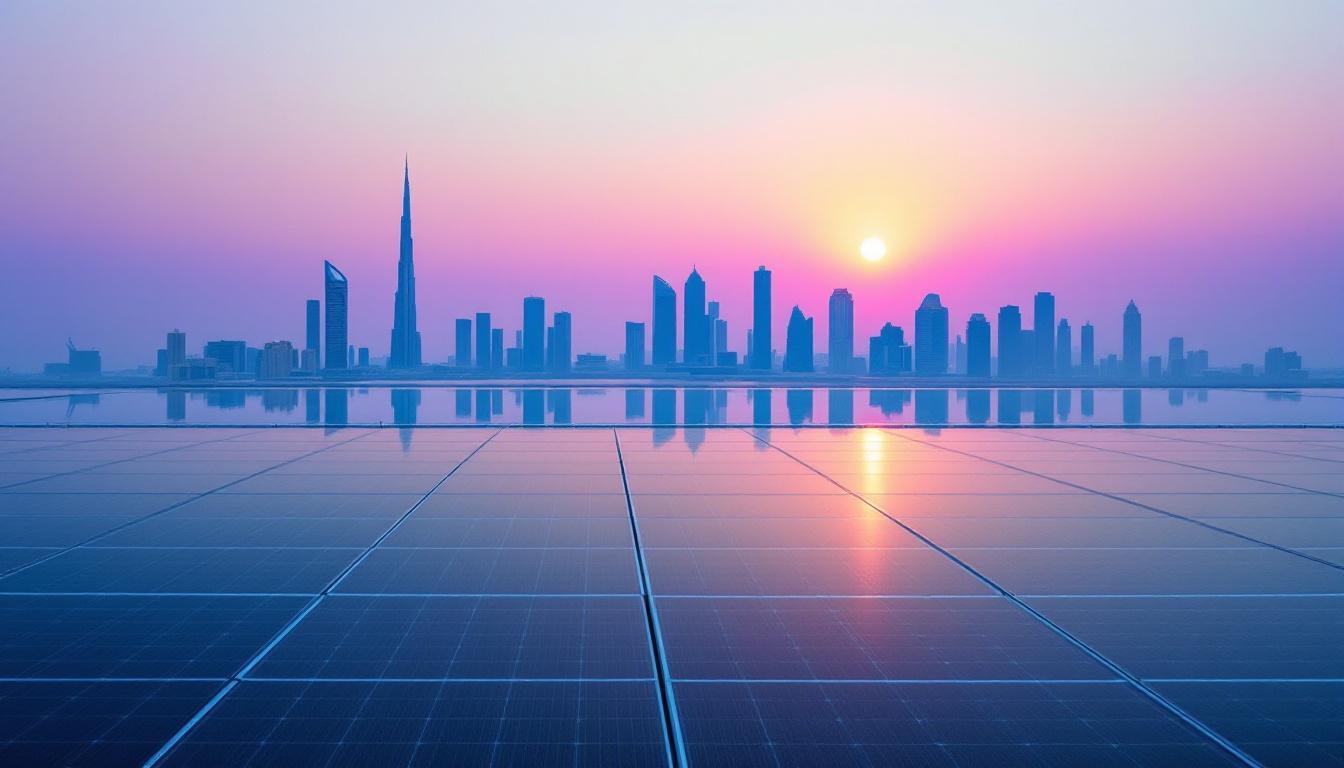
The Abu Dhabi Department of Energy launches a pioneering Solar Self‑Supply Policy, promoting decentralised renewable energy, flexibility for consumers, and a major shift in electricity consumption patterns across the emirate.
The Abu Dhabi Department of Energy has recently rolled out a new Solar (Photovoltaic) Energy Self‑Supply Policy aimed at broadening access to decentralized renewable energy sources and changing the way electricity is consumed across the emirate. The initiative offers consumers the flexibility to stay connected to the grid or to opt for off-grid solutions, such as rooftop and ground-mounted PV systems for on-site use, solar water heating, and customer‑sited battery storage, that can store solar energy generated during the day for later use.
According to the Department of Energy, the main goal of the program is to shift electricity usage patterns to better align with periods of high, low‑carbon solar generation, ultimately reducing the net demand on the distribution grids. The policy document emphasizes that, while large‑scale solar projects and storage will still be planned and procured centrally, the true potential of solar‑powered systems hinges on active participation from both the distribution networks and end users. “In this context, customers should have a clear and structured pathway to choose how they participate, whether by investing in self-supply through distributed photovoltaics (DPV), combining DPV with customer‑sited batteries, or through optimized load management,” the document explains.
The initial rollout will focus on the agricultural sector and those owning rest houses and ranches, reflecting the Department’s assessment that these users are among the most energy‑intensive. Farmers and rural property owners usually require significant power for activities like irrigation, cooling, and pumping. The Department notes that these groups will be eligible to apply for permits to install solar panels and energy storage through Abu Dhabi’s TAMM portal.
The policy is framed as both a way to improve efficiency and bolster resilience. The Department states that these measures will enhance daytime electricity efficiency, strengthen grid security, and support the emirate’s broader energy ambitions by increasing the share of renewable, low-emission energy sources. It’s important to see this as complementary to Abu Dhabi’s overall energy strategy, with Mohammed Al Obaidli, Director General of Regulatory Affairs at the Department, pointing out that it will enable communities to contribute meaningfully towards achieving the targets set out in the Abu Dhabi Energy and Water Efficiency Strategy 2030. That strategy aims for a 22% reduction in electricity use and a 32% drop in water consumption by 2030, using 2013 levels as a baseline.
More detailed operational measures are expected soon. The Department has committed to releasing technical guidelines covering standards, commercial arrangements, and administrative processes. These will also specify requirements for metering and settlement, along with procedures for application and approval that developers and customers will need to follow. Furthermore, they plan to publish a practical guide on high-efficiency appliances for cooling, water heating, lighting, electrical equipment, motors, pumps, and irrigation systems. This guide will include performance metrics and lifecycle cost analyses to assist buyers and operators in choosing equipment that cuts energy and water consumption while reducing long-term operating expenses.
For project developers and climate-tech stakeholders in the UAE, this policy highlights immediate opportunities as well as some regulatory considerations. Incorporating on-site batteries and solar water heating along with DPV opens new design options for projects. Systems that combine PV with storage can shift more energy consumption to periods of self‑supply, which helps reduce peak demand charges for large users and balances the load profile seen by the grid operators. The focus on metering and settlement suggests that there will be stricter technical standards for export limits, islanding protection, and telemetry, which will influence choices around inverters, battery management systems, and communication infrastructure.
Beyond that, the policy signals a move towards greater integration of distributed energy assets for system optimization. By encouraging consumers to time their electricity use to match periods of high solar output, the Department aims to make better use of solar generation that might otherwise overflow during midday. This approach could help lower the need for expensive grid upgrades and work alongside utility-scale solar plants, but of course, it will require coordination among distribution network operators, aggregators, and market players to truly unlock these benefits at a larger scale.
Economically, the impacts will depend on the specific rules that follow. The Department claims that consumers could realize significant savings by deploying PV systems and storage to offset retail demand and to operate facilities overnight powered by stored solar energy. Of course, payback times will vary depending on an individual’s load profile, the efficiency of invested equipment, and the terms laid out in the technical guidelines. The manual on appliances aims to improve these returns by helping users select high‑efficiency cooling, water heating, and pumping equipment that lowers energy needs over the long haul.
Implementing the policy may also present some challenges, especially around integration. Distribution networks will need to adapt to two-way power flows, fluctuating customer behavior, and the complexities created by numerous decentralized storage units. Clear rules governing interconnection, export limits, and aggregation will be crucial to maintaining local grid stability. The Department’s plan to publish binding metering and settlement requirements is logically the first step to address these issues.
For climate and energy tech companies, this policy establishes a clear initial market, starting with the agricultural sector, where pilot projects can test business models and hardware configurations. Lessons learned during this phase should help inform wider rollouts to commercial and residential users. Vendors of high‑efficiency pumps, smart controllers, and agritech solutions will find the lifecycle-focused guidance manual particularly valuable. Meanwhile, providers of batteries and inverters should stay tuned for the technical specifications that will determine product eligibility and certification pathways.
The policy coincides with a broader push across the UAE to expand renewable generation and modernize consumption practices. The Department sees this as aligning with “global best practices,” while also providing value to consumers and enhancing energy security. The coming weeks and months will be crucial, it’s in those details where the success of the policy will really be tested. The guidelines and appliance manual will ultimately determine whether decentralized assets can become reliable, system-augmenting resources or if the program remains limited to early adopters.
For now, Abu Dhabi has laid out a clear framework for a regulated pathway toward self‑supply. If the rules, especially around interoperability, settlement, and technical standards, are robust enough, this could accelerate the adoption of distributed PV, storage, and energy-efficient appliances, particularly in high‑demand sectors. The Department’s upcoming publications will be telling, revealing just how ambitious the standards will be and how swiftly the emirate can scale up consumer-led solar solutions while keeping system stability intact.
- https://www.pv-magazine.com/2026/02/09/abu-dhabi-unveils-solar-plus-storage-self-supply-policy/ – Please view link – unable to able to access data
- https://www.doe.gov.ae/en/Media-Centre/News/The-Abu-Dhabi-Department-of-Energy-launches-Solar-Energy-Self-Supply-Policy-in-emirate – The Abu Dhabi Department of Energy has launched the Solar (Photovoltaic) Energy Self-Supply Policy in Abu Dhabi, enabling customers to improve daytime electricity efficiency and increase reliance on clean and renewable energy sources through the adoption of smart and flexible energy-consumption solutions. The policy allows customers to choose between adopting flexible solutions or continuing to consume electricity directly from the grid. Flexible solutions include the installation of photovoltaic panels for self-supply and self-consumption of electricity, in addition to solar-powered water heaters, as well as the option to support systems with battery energy storage solutions. This initiative aims to improve grid efficiency, enhance security of supply, and support growth plans for Abu Dhabi’s energy sector, in line with the Emirate’s direction to increase reliance on renewable energy generated from clean and environmentally friendly sources, apply global best practices, add value for consumers, and strengthen security of supply. Additionally, the new policy will be applied first to the agricultural sector and owners of rest houses and ranches, creating tangible value for them through facilitating their access to renewable energy sources. Consumers will be able to generate significant savings by leveraging solar energy solutions, including photovoltaic panels and solar-powered water heaters, in addition to battery storage systems to power their facilities during evening hours. The Department of Energy also plans to release a guidance manual for high-efficiency appliances to help rationalise and enhance energy consumption across all sectors. The manual provides a practical, user-focused framework to support households, businesses, and institutions in selecting, purchasing, and operating energy-efficient appliances and systems based on performance data and life-cycle cost considerations. Covering key end-uses such as cooling, water heating, lighting, electrical equipment, motors, pumps, and irrigation systems, the manual promotes best-practice operational behaviours, smart control solutions, and data-driven decision-making to reduce energy and water consumption, lower peak demand, and deliver long-term cost savings, while supporting emissions reduction and system-wide efficiency.
- https://www.ess-news.com/2026/02/09/abu-dhabi-unveils-solar-plus-storage-self-supply-policy/ – The Abu Dhabi Department of Energy has launched a solar energy self-supply policy in the emirate of Abu Dhabi. The policy gives customers across the UAE capital the option to continue utilizing energy from the grid or to adopt flexible energy solutions such as solar systems for self-consumption, either with or without battery storage systems, and solar-powered water heaters. The first phase of the policy will target the agricultural sector as, according to a LinkedIn post from the department, it is one of the most electricity-dependent sectors. The post adds that consumers can now apply for licenses to install solar panels, generate electricity and store it in on-site batteries through Abu Dhabi’s central information portal TAMM. A policy document published by the department explains the new policy aims to reshape when electricity is used to better align with periods of abundant, clean, cost-competitive generation, and to reduce net grid demand through distributed solutions. It adds that while utility-scale solar and storage will continue to be deployed through coordinated system planning and procurement, fully realizing the benefits of a solar-led supply mix requires the distribution network and end-consumers to become active participants in system optimization. “In this context, customers should have a clear and structured pathway to choose how they participate whether by investing in self-supply through distributed photovoltaics (DPV), combining DPV with customer-sited battery storage, or through optimized load management,” the document explains. Mohammed Al Obaidli, Director General of Regulatory Affairs at the Abu Dhabi Department of Energy, commented that the policy will enable the local community to play a key role in achieving targets set out in the Abu Dhabi Energy and Water Efficiency Strategy 2030, which aims for a 22% reduction in electricity and 32% reduction in water usage by the end of the decade compared to a 2013 baseline. The Department of Energy says it will issue detailed guidelines setting out the implementation mechanisms, technical requirements, commercial arrangements and administrative procedures required to operationalize the new policy, which will include provide binding provisions on metering, settlement, application and approval processes. The department is also planning to roll out a guidance manual on high-efficiency appliances to improve energy-use practices across households, businesses and institutions. Covering cooling, water heating, lighting, electrical equipment, motors, pumps, and irrigation systems, the manual will give consumers a framework to purchase and operate energy-efficient appliances and systems based on performance metrics and a life-cycle cost analysis.
- https://gulfnews.com/business/energy/abu-dhabi-launches-solar-self-supply-policy-to-cut-power-demand-1.500433052 – The Abu Dhabi Department of Energy (DoE) has launched the Solar (Photovoltaic) Energy Self-Supply Policy in Abu Dhabi, enabling customers to improve daytime electricity efficiency and increase reliance on clean and renewable energy sources through the adoption of smart and flexible energy-consumption solutions. The launch of the policy forms part of Abu Dhabi’s efforts, led by the Department, to deliver a qualitative transformation in energy generation and consumption in line with the objectives of the Abu Dhabi Energy and Water Efficiency Strategy 2030. It also aims to raise public awareness of the importance of responsible electricity consumption, while supporting the national transition towards increased reliance on clean and renewable energy sources, particularly in vital sectors that depend heavily on electricity for their daily operations. In parallel with the rollout of the policy, the Department of Energy will also launch a guidance manual on high-efficiency appliances to help rationalise and enhance energy consumption across all sectors. The manual provides a practical, user-focused framework to support households, businesses, and institutions in selecting, purchasing, and operating energy-efficient appliances and systems based on performance data and life-cycle cost considerations. Covering key end-uses such as cooling, water heating, lighting, electrical equipment, motors, pumps, and irrigation systems, the manual promotes best-practice operational behaviours, smart control solutions, and data-driven decision-making to reduce energy and water consumption, lower peak demand, and deliver long-term cost savings, while supporting emissions reduction and system-wide efficiency. Under the new policy, customers may choose between adopting flexible solutions or continuing to consume electricity directly from the grid. Flexible solutions include the installation of photovoltaic panels for self-supply and self-consumption of electricity, in addition to solar-powered water heaters, as well as the option to support systems with battery energy storage solutions. This enables greater reliance on photovoltaic energy for electricity consumption. The policy will contribute to improving grid efficiency, enhancing security of supply, and supporting growth plans for Abu Dhabi’s energy sector, in line with the Emirate’s direction to increase reliance on renewable energy generated from clean and environmentally friendly sources, apply global best practices, add value for consumers, and strengthen security of supply. Additionally, the new policy will be applied first to the agricultural sector and owners of rest houses and ranches, creating tangible value for them through facilitating their access to renewable energy sources.
- https://solarquarter.com/2026/02/05/abu-dhabi-launches-solar-self-supply-policy-to-boost-clean-energy-adoption/ – The policy allows users to remain connected to the main electricity grid while also using renewable energy systems. Along with solar panels, customers can adopt solar water heaters and battery energy storage systems. These batteries make it possible to store excess solar power generated during the day and use it later in the evening. This approach can help reduce electricity bills and lower dependence on conventional power sources, while also cutting carbon emissions. In the first phase, the policy is focused on the agricultural sector. Farm owners, ranch operators, and rest house owners are the initial target group, as these properties usually consume large amounts of electricity for irrigation, cooling, and other daily needs. The government expects these users to benefit quickly from lower operating costs and more stable access to clean energy. To further support energy efficiency, the Department of Energy plans to release a guidance manual for high-efficiency electrical appliances. This manual will include performance details and cost-benefit comparisons for commonly used equipment such as air conditioners, irrigation pumps, and lighting systems. The aim is to help consumers choose appliances that save energy and reduce long-term costs. Abdulaziz Mohammed Al Obaidli, Director General of Regulatory Affairs, said the policy is one of the most important regulatory developments in Abu Dhabi’s energy sector. He stated that it allows the community to actively participate in meeting clean energy goals. The policy is part of a wider set of climate and energy initiatives planned through 2026, all focused on building a stronger, more sustainable energy system for the emirate.
- https://www.arabianbusiness.com/business/energy/abu-dhabi-launches-solar-self-supply-policy-to-accelerate-clean-energy-adoption – The Abu Dhabi Department of Energy (DoE) has introduced a Solar (Photovoltaic) Energy Self-Supply Policy aimed at improving electricity efficiency and increasing reliance on clean energy across the emirate. The initiative forms part of Abu Dhabi’s wider efforts to transform energy generation and consumption in line with the Abu Dhabi Energy and Water Efficiency Strategy 2030. The policy allows customers to choose between adopting flexible solutions or continuing to consume electricity directly from the grid. Flexible solutions include the installation of photovoltaic panels for self-supply and self-consumption of electricity, in addition to solar-powered water heaters, as well as the option to support systems with battery energy storage solutions. This enables greater reliance on photovoltaic energy for electricity consumption. The policy will contribute to improving grid efficiency, enhancing security of supply, and supporting growth plans for Abu Dhabi’s energy sector, in line with the Emirate’s direction to increase reliance on renewable energy generated from clean and environmentally friendly sources, apply global best practices, add value for consumers, and strengthen security of supply.
Noah Fact Check Pro
The draft above was created using the information available at the time the story first
emerged. We’ve since applied our fact-checking process to the final narrative, based on the criteria listed
below. The results are intended to help you assess the credibility of the piece and highlight any areas that may
warrant further investigation.
Freshness check
Score:
8
Notes:
The article was published on February 9, 2026, and reports on the Abu Dhabi Department of Energy’s recent launch of the Solar (Photovoltaic) Energy Self-Supply Policy. This policy was also reported by other reputable sources, such as Gulf News on February 5, 2026 ([gulfnews.com](https://gulfnews.com/business/energy/abu-dhabi-launches-solar-self-supply-policy-to-cut-power-demand-1.500433052?utm_source=openai)) and the Abu Dhabi Media Office on February 5, 2026 ([mediaoffice.abudhabi](https://www.mediaoffice.abudhabi/en/energy/abu-dhabi-department-of-energy-launches-solar-energy-self-supply-policy-in-emirate/?utm_source=openai)). The policy’s announcement is recent, and the article provides original reporting on the initiative. However, the presence of similar reports from other sources within the same timeframe suggests that the information may have been disseminated through press releases or official statements. This raises concerns about the originality of the content. Additionally, the article includes direct quotes from officials, which are consistent with those found in other reports, indicating potential reuse of content. Given these factors, the freshness score is 8.
Quotes check
Score:
6
Notes:
The article includes direct quotes from officials, such as Mohammed Al Obaidli, Director General of Regulatory Affairs at the Abu Dhabi Department of Energy. These quotes are consistent with those found in other reports from the same period, suggesting potential reuse of content. The earliest known usage of these quotes appears to be in the Gulf News article published on February 5, 2026 ([gulfnews.com](https://gulfnews.com/business/energy/abu-dhabi-launches-solar-self-supply-policy-to-cut-power-demand-1.500433052?utm_source=openai)). The consistency of the quotes across multiple sources raises concerns about the originality of the reporting. Given these factors, the quotes check score is 6.
Source reliability
Score:
7
Notes:
The article is published on pv magazine International, a reputable source within the renewable energy sector. However, the presence of similar reports from other reputable sources, such as Gulf News and the Abu Dhabi Media Office, suggests that the information may have been disseminated through press releases or official statements. This raises concerns about the independence of the reporting. Given these factors, the source reliability score is 7.
Plausibility check
Score:
9
Notes:
The claims made in the article align with the objectives of the Abu Dhabi Energy and Water Efficiency Strategy 2030, which aims for a 22% reduction in electricity use and a 32% drop in water consumption by 2030 compared to 2013 levels. The policy’s focus on enabling consumers to generate electricity through solar panels and battery storage is consistent with global trends towards renewable energy adoption. The article also mentions the initial rollout targeting the agricultural sector, which is a known high-energy-consuming sector. Given these factors, the plausibility check score is 9.
Overall assessment
Verdict (FAIL, OPEN, PASS): FAIL
Confidence (LOW, MEDIUM, HIGH): MEDIUM
Summary:
The article reports on the Abu Dhabi Department of Energy’s recent launch of the Solar Energy Self-Supply Policy. While the information is recent and plausible, the presence of similar reports from other reputable sources within the same timeframe suggests that the content may have been disseminated through press releases or official statements, raising concerns about the originality and independence of the reporting. Additionally, the direct quotes from officials are consistent with those found in other reports, indicating potential reuse of content. Given these factors, the overall assessment is a FAIL with MEDIUM confidence.


