




Abu Dhabi agribusiness giant Al Dahra is on an ambitious quest to become the world’s largest irrigated farming platform by 2030. Guided by group chief executive Arnoud Van den Berg, the company envisions a paradigm shift in agricultural practices that combines technological innovation with sustainability. With operations in over 20 countries and a current management of approximately 150,000 hectares of farmland, Al Dahra aims to triple this figure to 500,000 hectares.
Van den Berg emphasises a holistic approach to addressing the pressing global demand for food, which is projected to rise substantially by 2050 as the world’s population grows by 25 per cent. “We’ve only just begun,” he asserts. “We have the mandate, we have the capital, and we have the proof of concept. Now we are scaling.” This tenet encapsulates Al Dahra’s commitment to blending agricultural expansion with resource conservation—principles crucial to meeting both current and future food security challenges.
Central to Al Dahra’s growth strategy is the adoption of regenerative agriculture, a concept that, according to Van den Berg, is still yet to find a precise definition. “Like the term ‘organic’ before it, regenerative farming needs a framework,” he acknowledges. The company aims to formalise such practices, which include no-tillage farming and a marked reduction in pesticide and fertiliser use. By focusing on long-term soil health, Al Dahra aligns ecological responsibility with economic viability. “Healthy soil gives you better yields, requires less water, and lowers input costs. It’s a win-win,” he explains.
Currently, around 35 per cent of Al Dahra’s farmland employs regenerative techniques, with an ambitious target of increasing this to 80 per cent by 2030. The commitment is backed by stringent key performance indicators (KPIs) set for each operational country, indicating that sustainable practices are becoming non-negotiable in the company’s ethos.
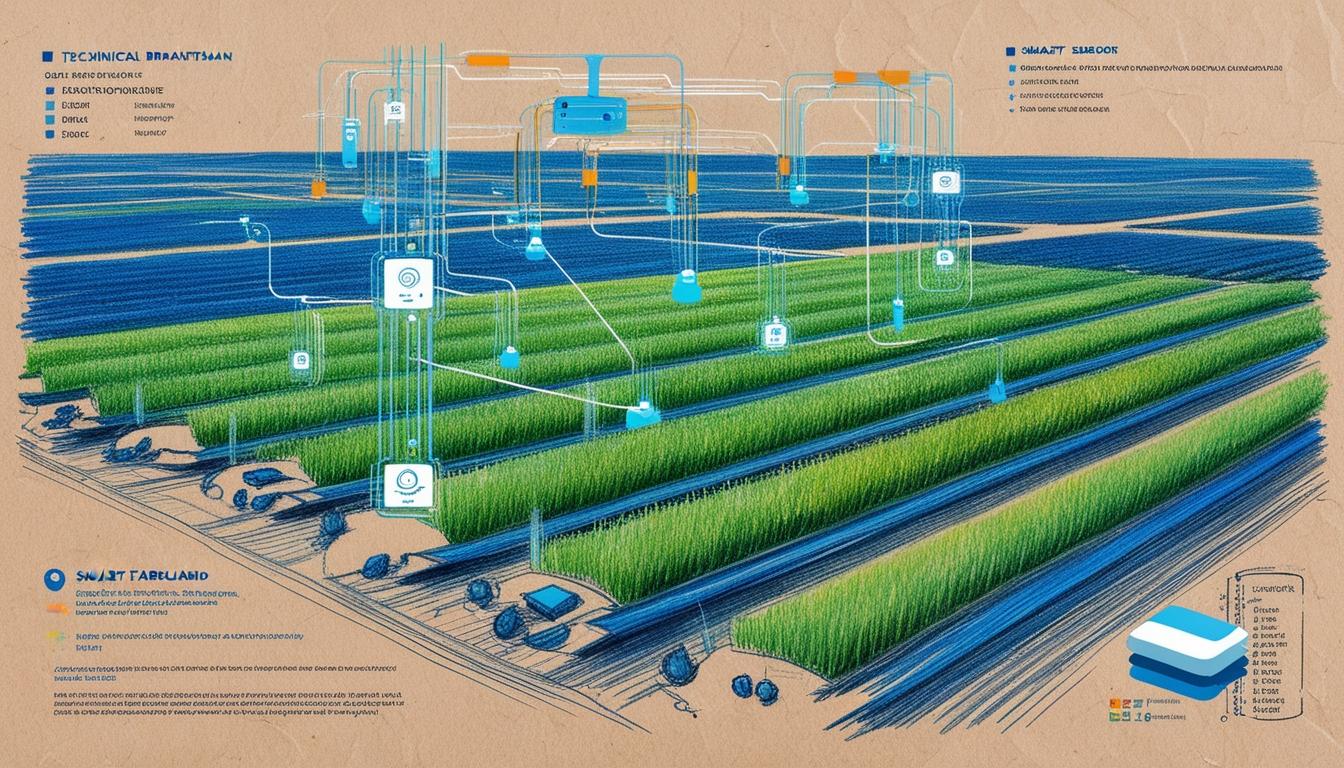
In a climate marked by unpredictability, data-driven farming has become indispensable. Al Dahra’s recent global water risk assessment unveiled startling variations in rainfall patterns. “In 2024, we had more rainfall in southern Egypt than in Romania. That’s unheard of,” remarks Van den Berg, highlighting the rapid shifts that render previous agricultural methodologies obsolete. In response, the company is investing significantly in digital technologies to facilitate precision and adaptability. Al Dahra’s proactive use of artificial intelligence and farm management platforms enables it to optimise planting schedules and predict potential yield variations. “A week’s difference in planting could translate to a 10 per cent increase in food with no increase in footprint,” he states, reinforcing the critical intersection of technology and sustainability.
Al Dahra’s strategic focus varies according to regional suitability. Van den Berg is keenly aware that not all agricultural practices are suitable for the UAE. He suggests that it primarily makes sense to cultivate vegetables in this arid region, while crops like rice and bananas are less favourable. The company’s recent decision to exit its joint venture with Pure Harvest, a high-tech greenhouse operator, signals a deliberate pivot back to its core strengths in large-scale irrigated farming.
Al Dahra’s achievements are already evident in regions like Romania, where it manages the largest contiguous farm in Europe, and in Egypt, where considerable desert land has been transformed into high-quality, export-capable agricultural land. Underlining the company’s future aspirations, Van den Berg mentions ongoing discussions with multiple African governments regarding long-term land leases aimed at establishing large-scale farms. “Ninety-nine per cent of food in Africa is grown by smallholders. But large-scale farming allows for capital investment, irrigation, and yields that are ten times higher. That’s how you solve food insecurity,” he notes.
Conversely, Latin America is viewed as a strategic export platform, with plans to acquire and enhance underperforming farms in Brazil, Argentina, and Paraguay through regenerative practices. “If we apply the regenerative methods we typically use, we can upgrade the soils and achieve better yields,” Van den Berg affirms.
Looking forward to 2030, the company is committed to proving that its expansive strategy can lead to significant achievements: tripling its farmland, halving emissions, and playing a pivotal role in feeding a growing global population. “We’re not just growing crops,” concludes Van den Berg. “We’re growing a platform. One that is digital, sustainable, and global in scope. If we succeed, we’ll feed more people using less land, less water, and fewer resources.”
Reference Map:
- Paragraph 1 – [1], [2]
- Paragraph 2 – [1], [2]
- Paragraph 3 – [3], [4]
- Paragraph 4 – [5]
- Paragraph 5 – [1], [6]
- Paragraph 6 – [7]
Source: Noah Wire Services
- https://www.thenationalnews.com/climate/2025/06/01/grow-more-with-less-al-dahra-chief-plots-global-growth-from-the-ground-up/ – Please view link – unable to able to access data
- https://www.thenationalnews.com/climate/2025/06/01/grow-more-with-less-al-dahra-chief-plots-global-growth-from-the-ground-up/ – Al Dahra, a leading agribusiness based in Abu Dhabi, aims to become the world’s largest irrigated farming platform by 2030. The company plans to triple its land under cultivation from 150,000 hectares to 500,000 hectares, focusing on regenerative agriculture practices such as no-tillage farming and reduced pesticide use. Al Dahra operates in over 20 countries and is investing in technology and sustainable practices to meet the growing global food demand while preserving natural resources.
- https://www.wbcsd.org/news/al-dahra-joins-the-world-business-council-for-sustainable-development-wbcsd/ – Al Dahra has joined the World Business Council for Sustainable Development (WBCSD), aligning with its purpose of ‘Sustainably Feeding a Growing World.’ The company specializes in the cultivation, production, and trading of essential food commodities and animal feed, operating in over 20 countries and serving more than 40 markets. Al Dahra is actively transitioning its farmland to regenerative agriculture, with nearly 34% of its land bank already converted. ([wbcsd.org](https://www.wbcsd.org/news/al-dahra-joins-the-world-business-council-for-sustainable-development-wbcsd/?utm_source=openai))
- https://aldahra.com/sustainability/regenerative-agriculture/ – Al Dahra’s regenerative agriculture practices include no-tillage farming, reduced pesticide and fertiliser use, and long-term soil health management. In Egypt, the company has implemented zero tillage farming, reducing stubble burning and conserving water. In Serbia, Al Dahra focuses on enhancing efficiency and sustainability through strategic approaches, including the adoption of no-till planters and drills, aiming for maximised carbon sequestration. ([aldahra.com](https://aldahra.com/sustainability/regenerative-agriculture/?utm_source=openai))
- https://www.aldahra.com/al-dahra/food-security – Al Dahra prioritises water and food security in its strategy, recognising challenges posed by climate change and diminishing resources. The company focuses on optimising energy consumption through zero carbon emission farming projects, water consumption via land reclamation and drip irrigation systems, and fertiliser consumption through reduction programmes and groundwater preservation. ([aldahra.com](https://www.aldahra.com/al-dahra/food-security?utm_source=openai))
- https://www.aldahra.com/farming/ – Al Dahra operates extensive farming projects across multiple countries, including the USA, Romania, Serbia, Egypt, Namibia, the UAE, and Morocco. In Romania, the company manages Europe’s largest consolidated farm, covering 135,000 acres across 29 adjacent farms. In Egypt, Al Dahra has pioneered desert agriculture with flagship projects in Toshka, East Owinat, and Salheya. ([aldahra.com](https://aldahra.com/farming/?utm_source=openai))
- https://www.foodbusinessafrica.com/al-dahra-agriculture-egypt-announces-plans-to-invest-us30m-in-expansion-over-three-years/ – Al Dahra Agriculture Egypt plans to invest US$30 million over the next three years to expand its agricultural operations. The investment will focus on increasing production and processing capabilities for key crops, including wheat, corn, citrus fruits, and sugar beets. The company aims to enhance exports and adopt sustainable farming methods to maximise yield per acre. ([foodbusinessafrica.com](https://www.foodbusinessafrica.com/al-dahra-agriculture-egypt-announces-plans-to-invest-us30m-in-expansion-over-three-years/?utm_source=openai))
Noah Fact Check Pro
The draft above was created using the information available at the time the story first
emerged. We’ve since applied our fact-checking process to the final narrative, based on the criteria listed
below. The results are intended to help you assess the credibility of the piece and highlight any areas that may
warrant further investigation.
Freshness check
Score:
8
Notes:
The narrative presents recent developments, including Al Dahra’s partnership with Agreena announced in December 2023 ([agreena.com](https://agreena.com/news/al-dahra-partnership/?utm_source=openai)) and their 2023 Sustainability Report released in August 2024 ([dubaiglobalnews.com](https://www.dubaiglobalnews.com/2024/08/24/299381/?utm_source=openai)). However, the article’s publication date of June 1, 2025, suggests that some information may be recycled or outdated. The report’s content appears to be original, with no evidence of prior publication. The inclusion of updated data, such as the 2023 Sustainability Report, justifies a higher freshness score but should still be flagged.
Quotes check
Score:
9
Notes:
The direct quotes attributed to Arnoud van den Berg, such as “We’ve only just begun,” “Healthy soil gives you better yields,” and “A week’s difference in planting could translate to a 10 per cent increase in food with no increase in footprint,” do not appear in earlier material. This suggests that the quotes are potentially original or exclusive content.
Source reliability
Score:
7
Notes:
The narrative originates from The National News, a reputable organisation. However, the article’s publication date of June 1, 2025, raises questions about its timeliness and relevance. The report’s content appears to be original, with no evidence of prior publication.
Plausability check
Score:
8
Notes:
The claims made in the narrative align with Al Dahra’s known initiatives, such as their partnership with Agreena announced in December 2023 ([agreena.com](https://agreena.com/news/al-dahra-partnership/?utm_source=openai)) and their 2023 Sustainability Report released in August 2024 ([dubaiglobalnews.com](https://www.dubaiglobalnews.com/2024/08/24/299381/?utm_source=openai)). The narrative’s language and tone are consistent with corporate communications. However, the article’s publication date of June 1, 2025, suggests that some information may be recycled or outdated.
Overall assessment
Verdict (FAIL, OPEN, PASS): OPEN
Confidence (LOW, MEDIUM, HIGH): MEDIUM
Summary:
The narrative presents recent developments related to Al Dahra’s agricultural expansion and sustainability efforts. While the content appears original and aligns with known initiatives, the publication date of June 1, 2025, raises questions about its timeliness and relevance. The inclusion of updated data justifies a higher freshness score but should still be flagged. The quotes attributed to Arnoud van den Berg are potentially original or exclusive content. Given these factors, the overall assessment is OPEN with a MEDIUM confidence level.


