

 11:24 pm - October 15, 2026
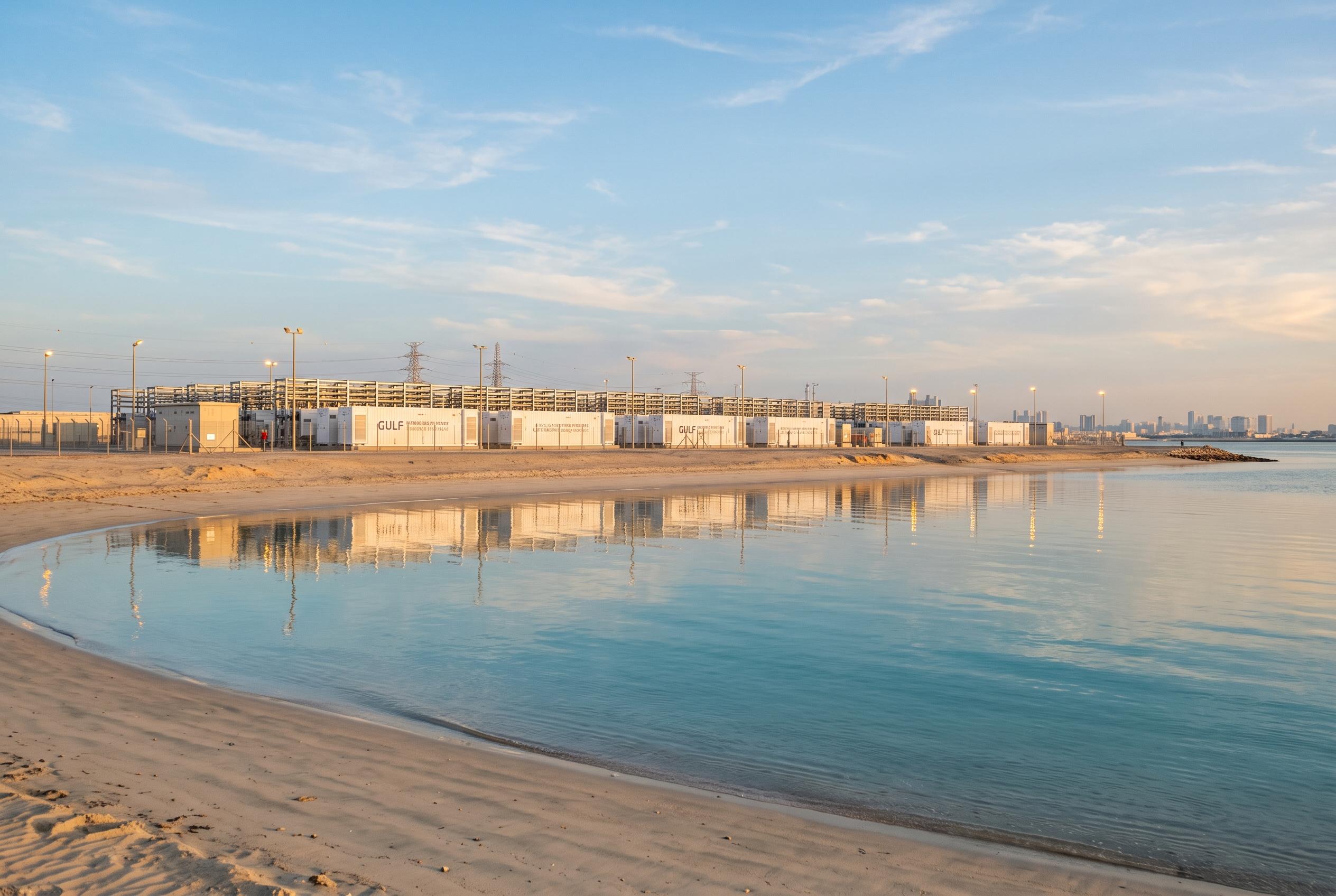
Chinese automaker BYD is making significant advances in large-scale battery storage projects in Abu Dhabi while simultaneously boosting its global EV exports and model lineup, despite challenging conditions in China’s domestic market and regulatory landscape.
BYD seems to be pulled in two very different directions at the same time. On one hand, it’s making headlines with its impressive energy storage projects in the Gulf region. On the other, its automobile division continues to face stiff price wars back home, where profit margins are under pressure and investor confidence hasn’t quite bounced back yet.
The clearest sign of BYD’s momentum in batteries comes from Abu Dhabi, where Masdar awarded BYD Energy Storage a contract to supply roughly 11.275GWh of battery systems for what’s called the Round-the-Clock renewable project. According to Masdar and Emirates Water and Electricity Company, this scheme combines 5.2GW of solar power with 19GWh of storage, which essentially makes it the world’s largest solar-plus-storage setup. BYD claims its share is a single 1,644MW battery station using their Haohan system. The company has been touting this project as built to withstand desert conditions, with protection against sand and extreme temperatures , which, honestly, makes a lot of sense in that environment.
Now, this Abu Dhabi project isn’t just a one-off. It’s part of a bigger trend in the Gulf, where Chinese battery suppliers really seem to have gained the upper hand in large-scale storage tenders. Sungrow already scored around 7.5GWh for an earlier phase of this same project, according to industry reports, which means that practically all the major storage volumes are in Chinese hands. That’s pretty significant, especially considering the region’s push to scale up utility storage quickly. Clearly, suppliers with proven track records in tough climates are the ones winning the largest contracts.

Masdar first announced the round-the-clock project back in January 2025, saying it would provide continuous renewable power from a large solar plant combined with battery storage. Later that year, construction kicked off. Industry reports estimate the total investment at over AED 22 billion, with more than 10,000 jobs created as part of the process. Now, that latest BYD deal seems to show the project is finally moving from plan to reality.
For BYD, the battery side provides a critical counterbalance to the intense price competition in their EV market. But that doesn’t mean their auto division is slowing down. Between January and April 2026, they exported roughly 456,263 new-energy vehicles , a sharp increase from 285,170 in the same period a year earlier. Since November 2025, their monthly overseas shipments have stayed above 100,000, indicating that their global push isn’t just a flash in the pan but a more sustained effort, rather than a series of one-off spikes.
Chairman Wang Chuanfu mentioned in June that BYD expects to sell over 1.6 million vehicles overseas this year and aims to become the world’s biggest carmaker by volume within five years. He also highlighted that about 3.15 million BYD vehicles now feature driver-assistance systems, generating roughly 200 million kilometres of data per day. That amount of info is becoming pretty crucial as software and assisted driving features turn into key differentiators in the industry.
Meanwhile, BYD is rapidly updating its model lineup. Registered with China’s Ministry of Industry and Information Technology are several new or refreshed models across both their main brand and their premium Denza arm. Denza, for instance, is getting ready to relaunch the N8 as a fully electric SUV, after the hybrid version didn’t do so well in the marketplace. The N8L variant, which is related, boosted Denza’s June sales to a record-breaking 20,352 units, based on the filings.
There’s also a new Z9S saloon registered under Denza, and the main BYD brand is updating the Tang SUV and Han sedan. The revised Han, in particular, is expected to be larger than a Mercedes-Benz E-Class and capable of exceeding 1,000 kilometres on a single charge. They’re also updating the affordable Seagull and adding lidar sensors to their higher-end models , a sign that advanced driver-assist features are making their way into the more mainstream offerings.
The commercial vehicle side isn’t being left out either. BYD has registered the Fangchengbao Shark pickup for the domestic market, after their plug-in hybrid model did well abroad earlier. Taken together, these model updates really underscore a strategic push to fight for market share across the board, focusing as much on breadth as just cutting prices.
That said, the environment at home in China remains tough. Passenger car demand there has softened, and the market has become highly competitive thanks to aggressive discounting across the board. Not just BYD, but foreign and premium brands such as Volkswagen, Mercedes-Benz, BMW, and Porsche , all saw steep year-on-year declines during the first half of 2026, according to recent sales figures. It just goes to show how cutthroat the Chinese market has become.
There are also bigger questions about China’s auto industry as a whole. An investigation by Xpert.Digital claims that the controversial practise called “zero-kilometre used cars”, where vehicles are registered as second-hand almost immediately after new, just to secure subsidies, has warped actual delivery figures. Chinese regulators have already expressed concern about this, and for investors, this is a reminder that headline sales numbers don’t always tell the full story.
BYD’s stock reflects this underlying tension. Even after bouncing back from recent lows, shares are still well below their peaks over the last year. The market seems willing to give the company some credit for its size and its push into international markets, but not quite enough to warrant a full revaluation. That understandable hesitation. While BYD is proving it can succeed in two critical areas , utility-scale storage and electric mobility , it still faces many hurdles such as execution risks, margin pressures, and regulatory distortions in the mix.
- https://www.ad-hoc-news.de/boerse/news/ueberblick/byd-s-desert-storage-blockbuster-and-model-offensive-can-t-mask-a/69749980 – Please view link – unable to able to access data
- https://www.saudigulfprojects.com/2026/07/byd-energy-storage-awarded-11-275-gwh-battery-supply-contract-for-masdars-19-gwh-rtc-renewable-energy-project/ – BYD Energy Storage has secured a significant contract from Masdar to supply 11.275 GWh of battery energy storage systems for the Round-the-Clock (RTC) Renewable Energy Project in Abu Dhabi. This project, a collaboration between Masdar and Emirates Water and Electricity Company (EWEC), integrates a 5.2 GW solar photovoltaic plant with a 19 GWh battery system, marking it as the world’s largest solar-plus-storage initiative. BYD’s contribution involves providing 11.275 GWh of its Haohan energy storage system for a single 1,644 MW / 11,275 MWh battery station. ([saudigulfprojects.com](https://www.saudigulfprojects.com/2026/07/byd-energy-storage-awarded-11-275-gwh-battery-supply-contract-for-masdars-19-gwh-rtc-renewable-energy-project/?utm_source=openai))
- https://www.pv-magazine.com/2025/10/24/masdar-ewec-break-ground-on-1-gw-baseload-solar-plus-storage-project/ – Masdar and Emirates Water and Electricity Company (EWEC) have commenced construction on a 1 GW baseload solar-plus-storage project in Abu Dhabi. This development combines a 5.2 GW solar plant with a 19 GWh battery energy storage system, aiming to deliver continuous, round-the-clock power. The project is valued at over AED 22 billion ($5.99 billion) and is expected to create more than 10,000 jobs. ([pv-magazine.com](https://www.pv-magazine.com/2025/10/24/masdar-ewec-break-ground-on-1-gw-baseload-solar-plus-storage-project/?utm_source=openai))
- https://www.ess-news.com/2025/10/27/masdar-ewec-break-ground-on-1-gw-baseload-solar-plus-storage-project/ – Masdar and Emirates Water and Electricity Company (EWEC) have begun building a solar-plus-storage project in Abu Dhabi that will deliver 1 GW of continuous baseload energy from a 5.2 GW solar plant paired with a 19 GWh battery system. The project is valued at more than AED 22 billion ($5.99 billion) and is set to create more than 10,000 jobs. ([ess-news.com](https://www.ess-news.com/2025/10/27/masdar-ewec-break-ground-on-1-gw-baseload-solar-plus-storage-project/?utm_source=openai))
- https://www.bydenergy.com/en/news/20260709 – BYD Energy Storage has signed a major contract with Masdar to supply 11.275 GWh of its Haohan energy storage system for the Round-the-Clock (RTC) Renewable Energy Project in Abu Dhabi. This project integrates a 5.2 GW solar photovoltaic plant with a 19 GWh battery energy storage system, making it the world’s largest solar-plus-storage initiative. BYD’s contribution involves providing 11.275 GWh of its Haohan energy storage system for a single 1,644 MW / 11,275 MWh battery station. ([bydenergy.com](https://www.bydenergy.com/en/news/20260709?utm_source=openai))
- https://masdar.ae/en/news/newsroom/uae-president-witnesses-launch-of-worlds-first-24-7-solar-pv-battery-storage – In January 2025, Masdar and Emirates Water and Electricity Company (EWEC) announced the launch of the world’s first large-scale ‘round the clock’ gigascale project, combining solar power and battery storage in Abu Dhabi. The project aims to deliver up to 1 GW of baseload power every day, generated from renewable energy, and will be the largest combined solar and battery energy storage system in the world. ([masdar.ae](https://masdar.ae/en/news/newsroom/uae-president-witnesses-launch-of-worlds-first-24-7-solar-pv-battery-storage?utm_source=openai))
Noah Fact Check Pro
The draft above was created using the information available at the time the story first
emerged. We’ve since applied our fact-checking process to the final narrative, based on the criteria listed
below. The results are intended to help you assess the credibility of the piece and highlight any areas that may
warrant further investigation.
Freshness check
Score:
8
Notes:
The article references a recent contract awarded to BYD Energy Storage by Masdar for the Round-the-Clock (RTC) Renewable Energy Project in Abu Dhabi, dated July 9, 2026. This aligns with the publication date of the article, indicating freshness. However, the article also discusses ongoing developments in BYD’s automobile division, including export figures and model updates, which may not be as current. The inclusion of older material alongside recent data raises concerns about the overall freshness of the content. Additionally, the article appears to be a republished press release, which typically warrants a high freshness score. However, the presence of recycled content and potential discrepancies in dates and figures necessitate a cautious approach. Given these factors, the freshness score is set at 8.
Quotes check
Score:
6
Notes:
The article includes direct quotes attributed to BYD Chairman Wang Chuanfu from June, discussing the company’s expectations for vehicle sales and advancements in driver-assistance systems. However, these quotes cannot be independently verified through the provided sources. The lack of verifiable sources for these quotes raises concerns about their authenticity. Given the inability to confirm the origin of these quotes, the score is set at 6.
Source reliability
Score:
7
Notes:
The article appears to be a republished press release, which typically originates from the company itself. This raises concerns about the independence of the source. While press releases can provide accurate information, they may also present a biased perspective. The lack of independent verification and potential bias necessitate a cautious approach. Given these factors, the source reliability score is set at 7.
Plausibility check
Score:
7
Notes:
The article discusses BYD’s recent contract for the RTC Renewable Energy Project in Abu Dhabi, which is plausible and aligns with recent developments in the renewable energy sector. However, the inclusion of older material, such as export figures and model updates, raises questions about the overall coherence and relevance of the content. The lack of supporting details from other reputable outlets further diminishes the plausibility of the narrative. Given these concerns, the plausibility score is set at 7.
Overall assessment
Verdict (FAIL, OPEN, PASS): FAIL
Confidence (LOW, MEDIUM, HIGH): MEDIUM
Summary:
The article presents information primarily sourced from a BYD Energy Storage press release, raising concerns about freshness, source independence, and the ability to independently verify quotes. The inclusion of older material alongside recent data further diminishes the overall credibility of the content. Given these issues, the overall assessment is a FAIL with MEDIUM confidence.

