

 10:27 am - October 15, 2026
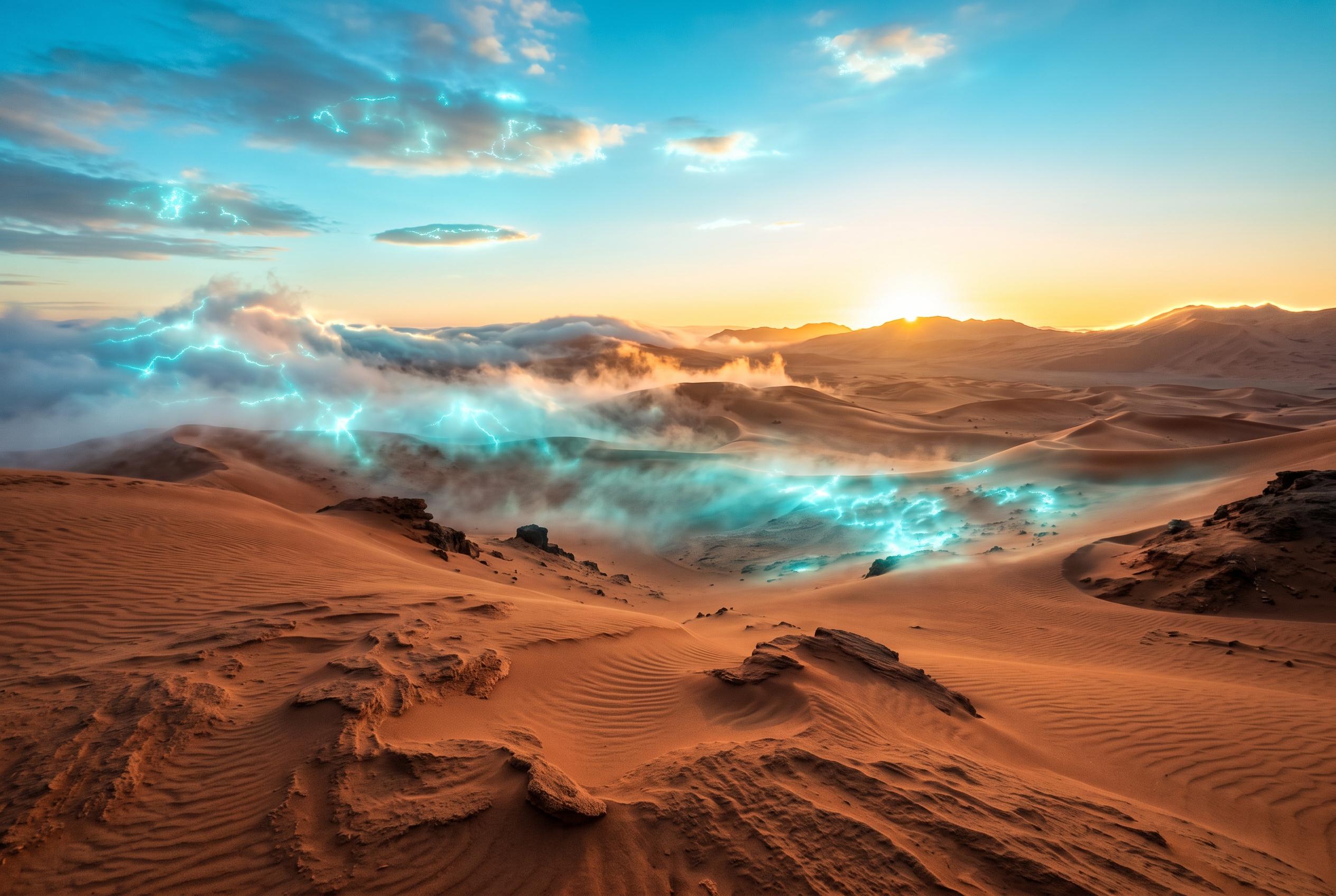
Scientists in the UAE are exploring the possibility of using large-scale solar photovoltaic installations not only to produce energy but also to influence local atmospheric conditions and trigger rainfall, offering a novel approach to water scarcity in desert regions.
Water is increasingly taking centre stage in the climate and technology debates, and the UAE is testing out an idea , honestly, it sounds more like science fiction than straight-up infrastructure , that involves using massive solar parks to help generate rain.
The bigger picture here is rather stark, actually. According to the World Resources Institute, domestic water demand has skyrocketed by about 600% since 1960, driven by population increases and economic growth. And in arid areas, the pressure is even more intense. In the UAE, where a good chunk of the land is desert, the challenge isn’t just securing more water , it’s doing so in a way that aligns with the country’s increasing clean-energy ambitions. I mean, that’s quite a balancing act.
For quite some time now, the Emirates has relied on cloud seeding , you know, to try and boost rainfall artificially , and that effort still goes on. But now, Abu Dhabi and Dubai are also exploring a more unusual approach: whether big solar photovoltaic (PV) installations could actually influence local atmospheric conditions enough to trigger more rain. This idea was outlined in research led by scientists at Germany’s University of Hohenheim and published in Earth System Dynamics in 2024.

What they’re proposing is that solar panels, by absorbing heat, could create columns of warm air over large enough areas. If the conditions were just right, that rising air might help form clouds and eventually lead to rain. In their models, a heat island of about 20 square kilometres might produce roughly 571,616 cubic metres of rain per day , enough, they estimate, to serve around 31,000 people. Basically, it’s a simple idea at heart , use one piece of infrastructure to create another resource that’s desperately needed , but doing it practically? Well, that’s a whole other story.
Oliver Branch, the lead scientist on the project, put the idea plainly. “Our calculation is that if future solar parks reach a certain size, the hot air would rise with enough oomph to hit higher atmospheric layers, where clouds form. There, the water would condense, resulting in rain and thunderstorms,” he explained. It’s pretty fascinating, right? That’s the theory, at least.
And now, there’s actually a real-world setting for testing it out. The UAE happens to be home to one of the largest solar plants in the world , the Mohammed bin Rashid Al Maktoum Solar Park, located south of Dubai. DEWA (the Dubai Electricity and Water Authority) claims it’s the largest single-site solar farm globally, with a current capacity of 3,860 megawatts, and they’re aiming to push that over 8,000 MW by 2030. In June, PV Magazine reported that the park had hit 3.86 GW after another 800 MW came online this year. DEWA also states that this site now accounts for more than 20% of Dubai’s total power capacity, and that one of its big goals is to chop carbon emissions by over 8.5 million tonnes annually.
That’s a significant size because the Hohenheim team’s idea hinges on scale. Smaller solar parks probably wouldn’t produce the atmospheric effects needed. But a park covering tens of square kilometres , especially in a hot, dry climate like the UAE’s , could potentially influence air flow enough to be measurable. The existing solar infrastructure in the region makes this one of the few places where they can seriously test the concept at a meaningful level.
Now, the scientists are moving beyond models and simulations. According to their plan, the Hohenheim team will undertake a new field study across the Arabian Peninsula, funded through the UAE’s Research Program for Rain Enhancement Science. They plan to use high-precision LiDAR (light detection and ranging) systems near major solar installations (including around the Mohammed bin Rashid Al Maktoum Solar Park) to measure temperature, humidity, and wind patterns from ground level right up to the cloud-forming layers.
These real-world observations will be fed into high-resolution weather models that simulate what might happen when large desert areas are covered with panels. The simulations will run on the Hunter and HoreKa supercomputers in Germany , providing the kind of processing power needed to examine a scenario that’s still largely theoretical. It’s quite a step forward, honestly.
The project isn’t just about seeing if rain can be generated more reliably, though. The scientists want to figure out how to design solar infrastructure in the future to get the most rainfall effect , that means looking at what size, location, and layout works best. They’re also exploring the possibility of combining solar parks with agricultural systems, like planting crops underneath the panels. That may help lower local temperatures around the arrays, which could benefit both the crops and the efficiency of the panels. Interestingly enough, it’s a kind of two-for-one approach.
For the UAE, all this makes sense. The country’s already investing heavily in renewable energy, and its solar ambitions are among the most prominent in the Middle East. If large-scale photovoltaics could, even indirectly, support water generation, then the technology gains a whole new level of importance. It would turn solar parks into not just power sources but parts of a broader climate resilience strategy.
Of course, it’s worth noting that this idea is still very much in the early stages , not close to being rolled out as a water-making solution just yet. The science behind cloud formation and rain enhancement in such arid zones remains难 to predict with certainty. Rainfall is highly sensitive to a bunch of local factors, which is why cloud seeding , despite being controversial , has had inconsistent results. But, as always, the UAE seems willing to back unusual ideas if they might lessen reliance on scarce freshwater resources.
That mix of bold scientific ambition paired with practical needs is probably why the country is pouring resources into this work. Here, water security isn’t just about ensuring supplies but is becoming as vital as energy security. The big question now is: can the same land and technology be used to serve both goals simultaneously? It’s a fascinating area of research, and I find it surprising , yet promising , that they’re exploring this route.
- https://www.motorpasion.com/tecnologia/emiratos-quiere-convertir-sus-kilometricos-parques-solares-algo-que-nadie-esperaba-maquina-lluvia – Please view link – unable to able to access data
- https://www.wri.org/insights/domestic-water-use-grew-600-over-past-50-years – The World Resources Institute reports that domestic water demand has increased by 600% since 1960, outpacing other sectors. This surge is attributed to population growth and economic development, leading to heightened water stress in many regions. The study highlights the escalating challenges in managing freshwater resources to meet the needs of expanding urban populations and industries.
- https://www.dewa.gov.ae/en/about-us/strategic-initiatives/mbr-solar-park – The Mohammed bin Rashid Al Maktoum Solar Park, initiated by Dubai Electricity and Water Authority (DEWA) in 2012, is the world’s largest single-site solar park. It has a current production capacity of 3,860 MW, with plans to exceed 8,000 MW by 2030. The park contributes over 21.5% of DEWA’s total capacity, aiming to reduce carbon emissions by over 8.5 million tonnes annually.
- https://www.pv-magazine.com/2025/06/13/dubais-giant-solar-park-surpasses-3-8-gw/ – Dubai’s Mohammed bin Rashid Al Maktoum Solar Park has reached a cumulative capacity of 3.86 GW, with 800 MW added this year. The park now accounts for 21.5% of DEWA’s total energy production capacity. The first phase, combining photovoltaic and concentrated solar power technologies, was commissioned in October 2013, marking a significant milestone in Dubai’s renewable energy initiatives.
- https://www.dewa.gov.ae/en/about-us/media-publications/latest-news/2019/03/dewa-releases-rfq-for-900mw – In March 2019, DEWA issued a Request for Qualification for developers to build and operate the fifth phase of the Mohammed bin Rashid Al Maktoum Solar Park, with a capacity of 900 MW. This phase, utilizing photovoltaic solar panels, was scheduled for commissioning in stages starting from the second quarter of 2021, supporting Dubai’s Clean Energy Strategy 2050.
Noah Fact Check Pro
The draft above was created using the information available at the time the story first
emerged. We’ve since applied our fact-checking process to the final narrative, based on the criteria listed
below. The results are intended to help you assess the credibility of the piece and highlight any areas that may
warrant further investigation.
Freshness check
Score:
8
Notes:
The article presents recent developments regarding the UAE’s exploration of using large solar parks to induce rainfall. The concept is based on a 2024 study by the University of Hohenheim, which has been reported in various reputable sources since May 2026. ([uni-hohenheim.de](https://www.uni-hohenheim.de/en/press-release?cHash=6e242a7f59203696a0b1656d164ebcf9&tx_ttnews%5Btt_news%5D=69025&utm_source=openai)) The article does not appear to be recycled or republished content, and the information aligns with the latest available data. However, the specific publication date of the article is not provided, which limits the ability to assess its freshness accurately.
Quotes check
Score:
7
Notes:
The article includes direct quotes attributed to Dr. Oliver Branch, the lead scientist on the project. These quotes are consistent with those found in other reputable sources reporting on the same study. ([uni-hohenheim.de](https://www.uni-hohenheim.de/en/press-release?cHash=6e242a7f59203696a0b1656d164ebcf9&tx_ttnews%5Btt_news%5D=69025&utm_source=openai)) However, without access to the original source, it’s challenging to independently verify the exact wording and context of these quotes.
Source reliability
Score:
6
Notes:
The article originates from a publication that appears to be a niche or lesser-known outlet. While it references reputable sources such as the University of Hohenheim and the UAE Research Program for Rain Enhancement Science, the publication’s own credibility is uncertain due to its limited recognition. ([uni-hohenheim.de](https://www.uni-hohenheim.de/en/press-release?cHash=6e242a7f59203696a0b1656d164ebcf9&tx_ttnews%5Btt_news%5D=69025&utm_source=openai)) Additionally, the article does not provide clear citations or links to the original studies or press releases, which raises concerns about source transparency and reliability.
Plausibility check
Score:
9
Notes:
The concept of using large solar parks to induce rainfall in arid regions is scientifically plausible and has been explored in recent studies. ([uni-hohenheim.de](https://www.uni-hohenheim.de/en/press-release?cHash=6e242a7f59203696a0b1656d164ebcf9&tx_ttnews%5Btt_news%5D=69025&utm_source=openai)) The article accurately describes the methodology and potential implications of this research. However, the practical implementation of this concept remains experimental, and the article does not discuss the challenges or uncertainties associated with applying this theory in real-world settings.
Overall assessment
Verdict (FAIL, OPEN, PASS): FAIL
Confidence (LOW, MEDIUM, HIGH): MEDIUM
Summary:
The article presents a conceptually plausible and timely topic regarding the UAE’s exploration of using large solar parks to induce rainfall. However, concerns about the freshness and originality of the content, the reliability of the publication source, and the lack of clear citations to original studies raise significant doubts about its credibility. The inability to independently verify key aspects of the article further diminishes confidence in its accuracy. Therefore, the article does not meet the necessary standards for publication under our editorial indemnity.

