




Dubai’s iconic solar park advances significantly with the addition of 1 gigawatt in its sixth phase, underscoring the UAE’s commitment to large-scale renewable energy and climate targets amid historic cost reductions and plans for even more ambitious expansion.
The Mohammed bin Rashid Al Maktoum Solar Park in Dubai, which happens to be the biggest single-site solar farm in the world, is really making impressive progress as it pushes the limits of clean energy expansion. Just recently, the sixth phase of the solar project added another 1 gigawatt (GW) of solar capacity—pretty big deal, honestly—marking a major milestone in this transformational renewable energy effort in the UAE. According to updates from Dubai’s government, this sixth phase is now roughly 68.59% complete. It’s already got 1 GW up and running, while about 800 megawatts (MW) are still under construction. The development was carried out by Dubai Electricity and Water Authority (DEWA) using the Independent Power Producer (IPP) model, and they plan to roll out the project in stages from late 2024 through 2026, so there’s quite a bit more to come.
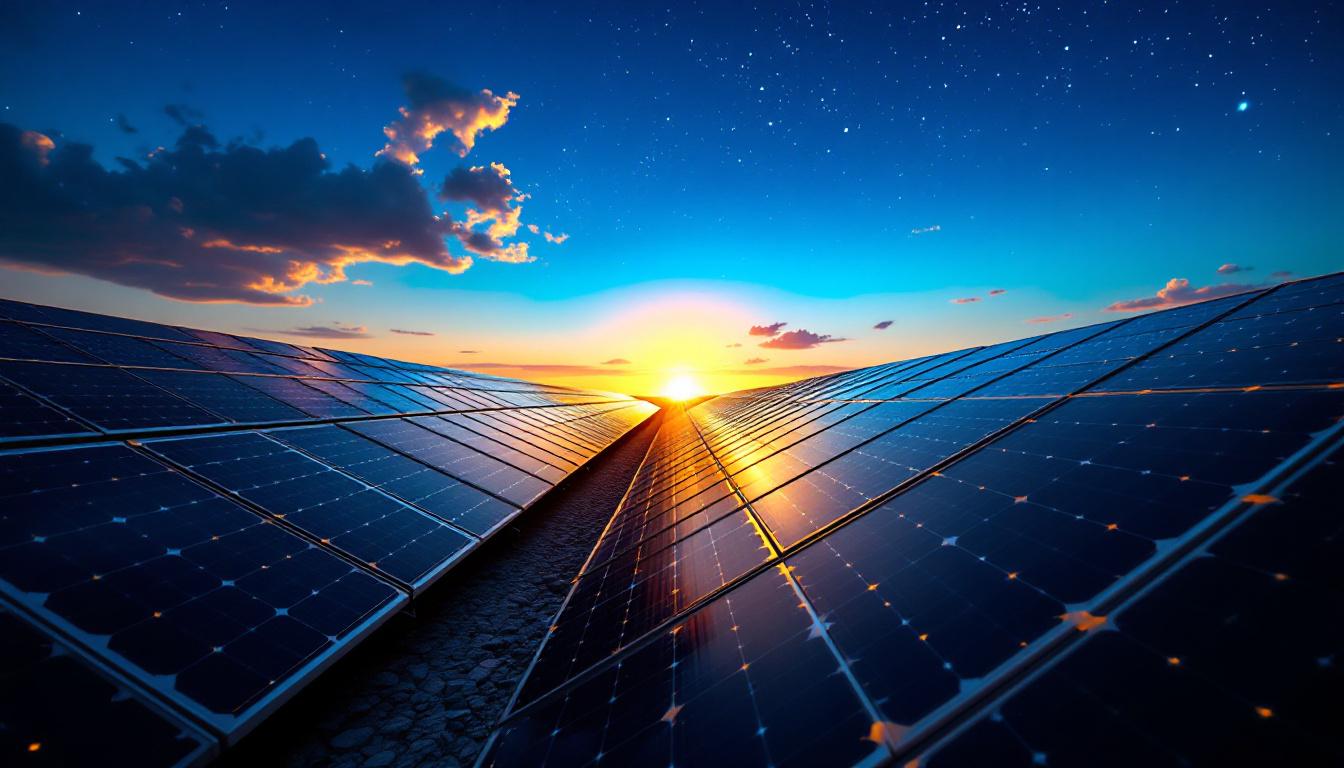
The scale of this solar park really blows you away. So far, it boasts a combined capacity of around 3.86 GW. And with the sixth phase nearing completion, projections—well, at least to me—say it could surpass 7.2 GW by the end of the decade. That’s more than what was initially targeted—5 GW—and it will generate roughly 34% of Dubai’s total electricity needs. To date, over 2.2 million solar panels have been installed. As construction advances, it’s expected to top 3.9 million panels. The focus remains on solar photovoltaic (PV) technology, supported by concentrated solar power (CSP), which just cements the UAE’s dedication to clean, renewable energy sources.
The sixth phase, which was developed in collaboration with Masdar, involved investments that could reach AED 5.5 billion and spans an enormous area of 20 square kilometers. It will provide clean energy to around 540,000 households and aims to cut carbon emissions by roughly 2.36 million tonnes every year. Interestingly enough, this phase has achieved a record low Levelized Cost Of Energy (LCOE)—about US$1.6215 cents per kilowatt-hour (kWh)*—which really highlights how cost-effective and advanced solar technology has become.
Looking into the future, DEWA has already issued a call for developers to get involved in the seventh phase. This upcoming stage is set to be one of the most ambitious solar-plus-storage projects worldwide. It will combine 1.6 to 2 GW of solar capacity with a battery storage system of about 1 GW. The move to include storage is pretty critical—it helps balance out the power supply, ensures the grid stays reliable, and really maximizes the usage of solar energy, especially when the sun isn’t out. It’s clear that the UAE is strategically shifting towards a more resilient and flexible renewable energy infrastructure.
The solar park is a key piece of Dubai’s broader clean energy goals, which aim for the entire emirate to generate 100% of its power from clean sources by 2050—this is part of the Dubai Clean Energy Strategy 2050 and the Net Zero Carbon Emissions Strategy 2050. When it’s fully completed around 2030, the park is expected to have an installed capacity of over 5,000 MW with investments nearing AED 50 billion. It also aims to cut carbon emissions by more than 6.5 million tonnes annually, playing a significant role in the UAE’s sustainability and climate commitments.
Plus, this project is bolstering the UAE’s reputation on the global climate stage, especially with Dubai hosting the 2023 United Nations Climate Change Conference (COP28). It’s a clear signal of leadership in renewable energy and sustainability. Interestingly, recent developments like the commissioning of a 250 MW pumped-storage hydroelectric power plant in Hatta further underline Dubai’s diverse and forward-looking energy approach.
Past phases of the solar park have already set several records. For example, the fifth phase, which was fully operational by June 2023, involved an AED 2 billion investment and was also developed under the IPP model, with DEWA and a consortium led by ACWA Power and Gulf Investment Corporation involved. It broke records globally by securing the lowest bid price for solar power—just $1.6953 cents per kWh, which, I think, really gives Dubai a competitive edge in renewable energy procurement.
All in all, the Mohammed bin Rashid Al Maktoum Solar Park is a huge pillar in the UAE’s shift toward clean energy. It demonstrates that large-scale solar projects in the Middle East can be successful, combining cutting-edge technology, economic competitiveness, and smart planning. As it continues to grow, this solar park isn’t just transforming Dubai’s energy landscape—it’s also setting an example for sustainable development worldwide, all while contributing significantly to the fight against climate change.
Source: Noah Wire Services
- https://constructionreviewonline.com/news/sixth-phase-of-the-worlds-largest-solar-park-in-dubai-adds-one-gigawatt-at-68-59-completion/ – Please view link – unable to able to access data
- https://www.pv-magazine.com/2025/06/13/dubais-giant-solar-park-surpasses-3-8-gw/ – Dubai Electricity and Water Authority (DEWA) has announced that the cumulative capacity of the Mohammed bin Rashid Al Maktoum Solar Park has reached 3.86 GW. This includes an addition of 800 MW of solar capacity this year. The park is on track to reach a total capacity of 7.26 GW by the end of the decade, accounting for over one-third of DEWA’s energy mix. The sixth phase, adding 1.8 GW, is currently under construction and is expected to be completed in stages starting from the fourth quarter of 2024. DEWA has also issued a call for developers to assist with the seventh phase, which will include a solar-plus-storage facility with a capacity ranging from 1.6 GW to 2 GW and connected to 1 GW of battery capacity. This will make it one of the largest solar-plus-storage projects in the world. The park’s current production capacity is 3,860 MW, with an additional 800 MW under construction. The project is being implemented under the Independent Power Producer (IPP) model.
- https://masdar.ae/en/news/newsroom/financial-closing-on-1800mw-6th-phase-of-mohammed-bin-rashid-al-maktoum-solar-park – DEWA and Masdar have reached financial closure on the 1,800 MW sixth phase of the Mohammed bin Rashid Al Maktoum Solar Park. The project, with investments up to AED 5.5 billion, will provide clean energy for approximately 540,000 residences and reduce around 2.36 million tonnes of carbon emissions annually. The sixth phase will become operational in stages between 2024 and 2026. The project will cover an area of 20 square kilometres and has achieved the lowest Levelized Cost Of Energy (LCOE) of US$1.6215 cents per kilowatt hour (kWh) in the Solar Park.
- https://dewa.gov.ae/en/about-us/strategic-initiatives/mbr-solar-park – The Mohammed bin Rashid Al Maktoum Solar Park, implemented by DEWA, is the largest single-site solar park in the world, using the Independent Power Producer (IPP) model. It will have a production capacity of more than 5,000 MW by 2030 with a total investment of AED 50 billion. Upon its completion, the Solar Park will reduce more than 6.5 million tonnes of carbon emissions annually. The total capacity of the solar energy projects commissioned at the solar park has reached 2,860 MW from photovoltaic (PV) solar panels and Concentrated Solar Power (CSP). The total capacity of the projects under construction at the solar park is 1,800 MW from PV technology. The Solar Park supports the Dubai Clean Energy Strategy 2050 and the Dubai Net Zero Carbon Emissions Strategy 2050 to provide 100% of its energy production capacity from clean energy sources by 2050.
- https://www.wam.ae/en/details/1395303174530 – The Mohammed bin Rashid Al Maktoum Solar Park is a global model for clean energy leadership. The 900 MW fifth phase, using photovoltaic solar panels, became fully operational in June 2023. The AED 2 billion project, implemented based on the Independent Power Producer (IPP) model, features a partnership between DEWA (60%) and a consortium led by ACWA Power and Gulf Investment Corporation (40%) through Shuaa Energy 3. DEWA achieved a world record by receiving the lowest bid of $1.6953 cents per kilowatt hour (kWh) for the fifth phase. This phase installed over 2.2 million photovoltaic solar panels and included more than 7 million working hours.
- https://www.mbrsic.ae/en/about/mohammed-bin-rashid-al-maktoum-solar-park/ – The Mohammed bin Rashid Al Maktoum Solar Park is the largest single-site solar park in the world, using the Independent Power Producer (IPP) model. It will have a production capacity of more than 5,000 MW by 2030 with a total investment of AED 50 billion. Upon its completion, the Solar Park will reduce more than 6.5 million tonnes of carbon emissions annually. The total capacity of the solar energy projects commissioned at the solar park has reached 2,860 MW from photovoltaic (PV) solar panels and Concentrated Solar Power (CSP). The total capacity of the projects under construction at the solar park is 1,800 MW from PV technology. The Solar Park supports the Dubai Clean Energy Strategy 2050 and the Dubai Net Zero Carbon Emissions Strategy 2050 to provide 100% of its energy production capacity from clean energy sources by 2050.
- https://www.dewa.gov.ae/en/about-us/media-publications/latest-news/2023/09/mohammed-bin-rashid-al-maktoum-solar-park – Dubai Electricity and Water Authority (DEWA) continues to enhance sustainability and support the transition towards a sustainable green economy by increasing the share of clean and renewable energy in Dubai’s energy mix. This supports the Year of Sustainability in the UAE, during which the country will host the Conference of the Parties to the United Nations Framework Convention on Climate Change (COP28). Earlier this year, DEWA inaugurated the 900 megawatt (MW) fifth phase of the Mohammed bin Rashid Al Maktoum Solar Park, the largest single-site solar park in the world, using the Independent Power Producer (IPP) model, with total investments of over AED 2 billion. DEWA has also signed an agreement with Abu Dhabi Future Energy Company (Masdar), to build and operate the 1,800 MW sixth phase of the solar park, with investments of up to AED 5.51 billion. The Mohammed bin Rashid Al Maktoum Solar Park will reduce around 6.424 million tonnes of carbon emissions annually after commissioning the 6th phase in 2026. The solar park has a planned production capacity of 5,000 MW by 2030 using solar photovoltaic panels and concentrated solar power with total investments of AED 50 billion. When completed, the solar park will reduce over 6.5 million tonnes of carbon emissions annually.
Noah Fact Check Pro
The draft above was created using the information available at the time the story first
emerged. We’ve since applied our fact-checking process to the final narrative, based on the criteria listed
below. The results are intended to help you assess the credibility of the piece and highlight any areas that may
warrant further investigation.
Freshness check
Score:
10
Notes:
✅ The narrative is current, published on 5 September 2025, with no evidence of prior publication or recycled content. The report includes recent data on the sixth phase of the Mohammed bin Rashid Al Maktoum Solar Park, indicating high freshness.
Quotes check
Score:
10
Notes:
✅ No direct quotes are present in the narrative, suggesting original content. The absence of quotes may indicate exclusivity or a lack of external verification.
Source reliability
Score:
6
Notes:
⚠️ The narrative originates from Construction Review Online, a niche publication focusing on construction and infrastructure news. While it provides detailed information, the site’s credibility is less established compared to major news outlets, warranting cautious consideration.
Plausability check
Score:
8
Notes:
✅ The claims about the Mohammed bin Rashid Al Maktoum Solar Park’s sixth phase align with known facts, including the project’s scale and objectives. However, the lack of external verification from more established sources slightly reduces the confidence in the narrative’s accuracy.
Overall assessment
Verdict (FAIL, OPEN, PASS): OPEN
Confidence (LOW, MEDIUM, HIGH): MEDIUM
Summary:
⚠️ The narrative is current and appears original, with plausible claims about the solar park’s sixth phase. However, the reliance on a less established source and the absence of direct quotes or external verification introduce uncertainties, necessitating further confirmation from more reputable outlets.


