




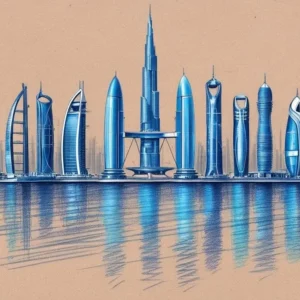
The Gulf Cooperation Council (GCC), encompassing Saudi Arabia, the United Arab Emirates (UAE), Qatar, Kuwait, Bahrain, and Oman, is spearheading an ambitious transformation of urban living through the development of smart cities. As rapid urbanisation places increasing pressure on resources and infrastructure, these countries are leveraging cutting-edge technologies and sustainable planning to build cities that prioritise quality of life, economic diversification, and environmental stewardship. This regional push towards smart urban environments represents a significant step forward in how cities can evolve to meet 21st-century challenges while setting global benchmarks.
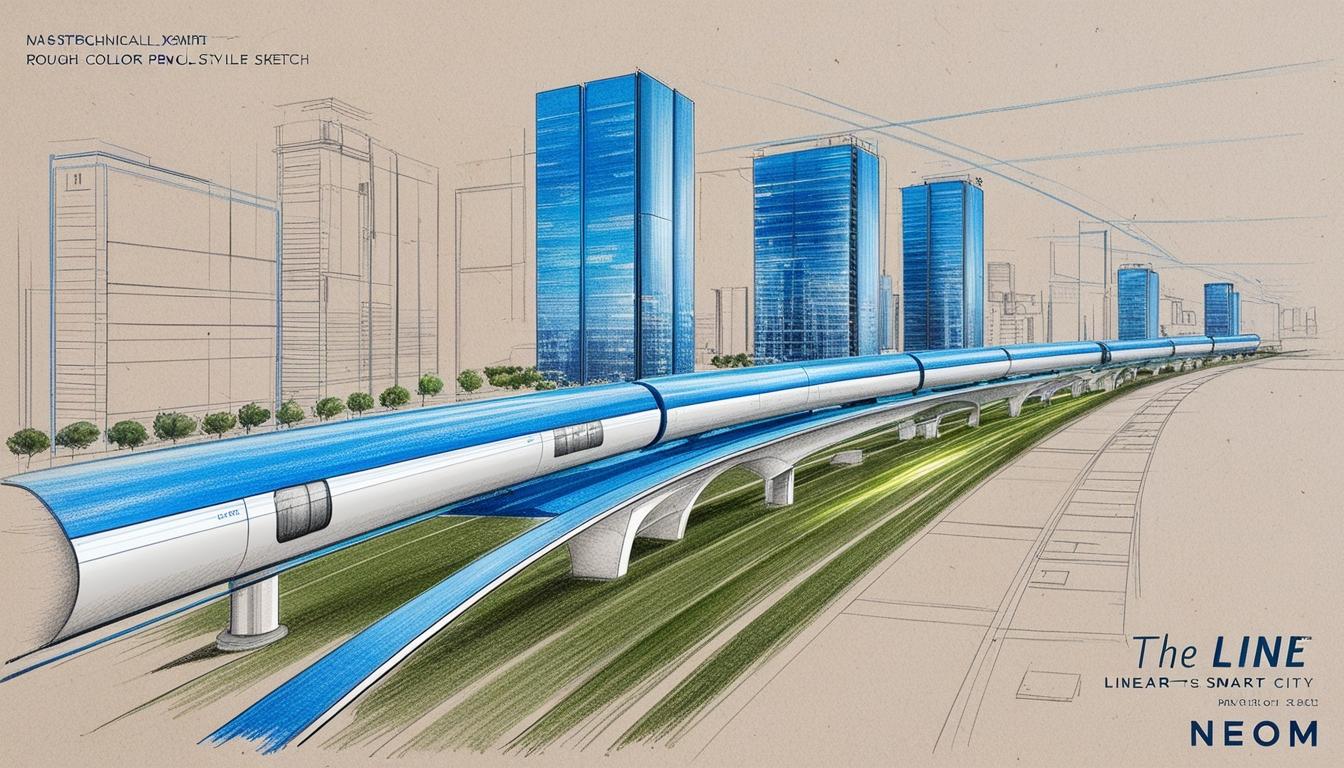
At the forefront of the GCC’s smart city vision are landmark projects such as Saudi Arabia’s NEOM, a $500 billion initiative unveiled in 2017. The centerpiece of NEOM is “The Line,” a 170-kilometre linear city designed to be entirely car-free, with no streets or carbon emissions, powered solely by renewable energy. This innovative urban design encourages walkability and incorporates high-speed transit alongside urban agriculture, enhancing food security. Similarly, the UAE’s Masdar City in Abu Dhabi stands as a pioneering example of sustainable urban development. Initiated in 2006, Masdar employs solar power, passive cooling, and smart water meters to minimise environmental impact. It also fosters a pedestrian-friendly, car-free environment and hosts a hub of clean technology research and international sustainability-focused businesses. Dubai’s Smart City initiative complements these efforts by digitising government services—over 1,000 are now accessible online—across sectors such as transportation, infrastructure, and governance, supported by projects like the Dubai Blockchain Strategy and the Dubai Paperless Strategy.
Other GCC nations are aligning with these ambitions through similarly progressive projects. Qatar’s Lusail City incorporates smart irrigation, energy efficiency, and green urban design with substantial parklands, reflecting sustainability and livability goals. Meanwhile, Oman’s Vision 2040 outlines plans for smart urbanism integrated with national development strategies. These initiatives reflect broader economic transformation goals highlighted in Saudi Arabia’s Vision 2030 and the UAE’s Centennial Plan 2071, which aim to reduce dependence on oil by fostering technological innovation and sustainable urban economies.
A defining characteristic of the GCC’s smart cities is their human-centric approach, focusing on residents’ wellbeing and convenience. For instance, Dubai leverages AI-driven traffic management to reduce congestion, while Riyadh’s driverless metro and digital twin technology enhance urban mobility and planning. In Abu Dhabi, the TAMM platform centralises more than 700 digital government services, streamlining citizen interactions with government. NEOM integrates real-time sensor technology to anticipate urban challenges and ensures residents live within a five-minute walk of essential services, promoting healthier lifestyles. Moreover, Dubai’s Rashid AI assistant provides multilingual access to government services, reflecting the region’s diverse populations. In healthcare, AI-assisted hospitals in Abu Dhabi offer personalised treatment and telemedicine, improving care accessibility.
Sustainability remains a core pillar across all projects. Masdar City notably consumes significantly less energy and water compared to conventional cities, with a focus on renewable energy and passive architectural design. Riyadh’s Green Riyadh initiative aims to plant 7.5 million trees to improve air quality and reduce urban heat. NEOM’s “The Line” promises zero emissions, while Abu Dhabi’s AI-powered desalination addresses critical water scarcity. Lusail City utilises smart irrigation and native plants, conserving valuable resources. Dubai’s Sustainable City further exemplifies this ethos by generating 150% of its energy needs through solar power, recycling wastewater, and embracing zero-waste farming practices.
Despite these impressive advances, the GCC’s urban transformation faces notable challenges. Rapid urban population growth of around 3.1% annually strains infrastructure and resources. The region’s water scarcity and high energy demand underscore the necessity for innovative, sustainable solutions. Economic reliance on finite oil resources makes diversification imperative; smart city projects contribute by creating jobs in technology, sustainability, and construction sectors. Addressing inclusivity is also critical, as the digital divide risks leaving segments of the population behind. Cybersecurity and data privacy concerns have risen with the extensive use of IoT technologies, and the potential for surveillance has sparked debate about balancing security with civil liberties. Additionally, the high costs of building and maintaining smart infrastructure require effective public-private partnerships. The UAE and Saudi Arabia, for example, have committed around $50 billion to smart city projects by 2025, leveraging partnerships to drive sustainability and innovation.
Looking ahead, GCC smart cities have the potential to serve as a blueprint for urban development worldwide. Abu Dhabi’s inclusion among the top 10 smart cities in the 2024 Smart City Index exemplifies the progress made. The region’s emphasis on combining technological innovation with human-centric design and sustainability suggests a future where smart cities are not only efficient and clean but also equitable and resilient. As these cities continue to evolve, they could inspire urban planners globally to harness technology in ways that enhance both the environment and quality of life.
The GCC’s vision of smart cities is a bold, multifaceted endeavour that aims to redefine urban living. Through exemplars like NEOM, Masdar City, and Dubai’s Smart City, the region is constructing tomorrow’s cities today—efficient, sustainable, and centred on the needs of their inhabitants. By proactively addressing challenges such as inclusivity and cybersecurity, the GCC is paving the way for smart cities that are not only technologically sophisticated but also genuinely liveable and sustainable. This transformative vision holds promise to shape the future of urban development far beyond the Gulf.
📌 Reference Map:
- Paragraph 1 – [1], [2]
- Paragraph 2 – [1], [2], [3], [7]
- Paragraph 3 – [1], [4], [6]
- Paragraph 4 – [1], [4], [5], [7]
- Paragraph 5 – [1], [4], [5], [6]
- Paragraph 6 – [1], [4], [5], [6]
- Paragraph 7 – [1], [4], [6]
Source: Noah Wire Services
- https://thegulfentrepreneur.com/the-gccs-vision-for-urban-living/ – Please view link – unable to able to access data
- https://bitsarabia.com/art/smart_cities_in_the_gcc__how_technology_is_transforming_urban_living.html – This article discusses the transformative impact of technology on urban living in the Gulf Cooperation Council (GCC) countries. It highlights key smart city initiatives such as Saudi Arabia’s NEOM, a $500 billion project featuring The Line, a 170-kilometre linear city designed with no cars, streets, or carbon emissions, powered entirely by clean energy. The UAE’s Masdar City in Abu Dhabi is also featured, known for its sustainable urban development, including solar power, passive cooling, and smart water meters. Additionally, Dubai’s Smart City project aims to digitise over 1,000 government services across various sectors, enhancing governance and service delivery. Other GCC countries, including Qatar’s Lusail City and Oman’s Vision 2040, are also advancing smart city initiatives, aligning with national strategies to diversify economies and position the region as a global leader in technology and sustainability.
- https://en.wikipedia.org/wiki/Masdar_City – Masdar City, located in Abu Dhabi, UAE, is a pioneering sustainable urban development initiated in 2006. Designed to minimise environmental impact, it integrates renewable energy, green building practices, and advanced technology. The city features energy-efficient buildings, a reduced carbon footprint, and serves as a hub for clean technology research and development. As of 2024, Masdar City is home to approximately 15,000 residents and office commuters, with ongoing expansion to accommodate increasing demand for sustainable urban spaces. The city houses the headquarters of the International Renewable Energy Agency (IRENA) and hosts various international companies, startups, and research institutions dedicated to advancing sustainable practices across industries.
- https://www.newmetrics.net/insights/gcc-smart-cities-innovation-sustainability-and-the-future-of-human-centric-urban-living/ – This article explores the human-centric approach of GCC smart cities, focusing on how technology enhances urban living. It highlights Dubai’s AI-driven traffic management systems that reduce congestion and predictive analytics for effective emergency response. Riyadh’s investment in digital twin technology creates virtual models of the city to test urban planning scenarios. Abu Dhabi’s TAMM platform provides over 700 digital government services, streamlining administrative processes. In NEOM, real-time sensors prevent urban issues before they arise, and residents are within a five-minute walk of essential services, promoting a healthier lifestyle. The article also discusses sustainability efforts, such as Masdar City’s pedestrian-friendly design and renewable energy use, and Riyadh’s Green Riyadh initiative aiming to plant 7.5 million trees to improve air quality.
- https://gastonbilder.com/2025/04/28/smart-cities-in-the-gcc-the-role-of-startups-in-urban-sustainability/ – This article examines the role of startups in advancing urban sustainability within GCC smart cities. It discusses flagship projects like Saudi Arabia’s NEOM, a $500 billion initiative featuring The Line, a zero-carbon linear city without cars or roads, powered entirely by renewable energy and optimised by AI. Masdar City in Abu Dhabi is highlighted as a pioneer in carbon-neutral living, consuming 40% less energy and water than traditional cities, with a design promoting pedestrian mobility and passive cooling. Dubai’s Sustainable City generates 150% of its energy needs through solar panels, recycles all wastewater, and operates zero-waste farming. Lusail City in Qatar focuses on green urban design, dedicating 17% of its land to parks and open spaces, using native plants and recycled water for irrigation, and featuring energy-efficient buildings and smart waste systems to reduce emissions and resource use.
- https://khaleejtip.com/the-future-of-smart-cities-in-the-middle-east/ – This article discusses the development of smart cities in the Gulf Cooperation Council (GCC) countries, focusing on Saudi Arabia’s NEOM, a $500 billion project aiming to be 33 times the size of New York City. Its centerpiece, The Line, is a 170 km-long linear city with no cars, no streets, and zero emissions, where people will live within a five-minute walk of everything they need. Dubai’s Smart City in the UAE aims to become the happiest and smartest city in the world, boasting over 130 smart initiatives, including paperless government services, AI-powered police patrols, and a city-wide blockchain strategy. Lusail City in Qatar features smart lighting, automated waste collection, and eco-friendly architecture, and was a key part of Qatar’s successful 2022 FIFA World Cup.
- https://u.ae/en/about-the-uae/digital-uae/digital-cities/smart-sustainable-cities – This article provides an overview of the UAE’s initiatives in developing smart and sustainable cities. It highlights Masdar City in Abu Dhabi, initiated in 2006, as the first attempt in the Middle East to build a sustainable city. The master plan of Masdar City includes optimisation of solar energy, integration of all aspects of city life with minimal use of transportation, limiting building heights, and providing a high quality of life in an efficient ecosystem. The city aims to reduce the use of energy, water, and generation of waste, using a combination of technology, architectural designs, and solar power to run. For example, low-flow showers and smart water meters ensure reduction of water wastage, and the architecture ensures that streets and houses are cooler than they would be otherwise.
Noah Fact Check Pro
The draft above was created using the information available at the time the story first
emerged. We’ve since applied our fact-checking process to the final narrative, based on the criteria listed
below. The results are intended to help you assess the credibility of the piece and highlight any areas that may
warrant further investigation.
Freshness check
Score:
7
Notes:
The narrative presents recent developments in GCC smart cities, with references to projects like NEOM and Masdar City. However, similar content has appeared in other outlets within the past year, indicating some recycled information. The earliest known publication date of substantially similar content is April 1, 2023. ([bitsarabia.com](https://bitsarabia.com/art/smart_cities_in_the_gcc__how_technology_is_transforming_urban_living.html?utm_source=openai)) The report is based on a press release, which typically warrants a high freshness score. No significant discrepancies in figures, dates, or quotes were found. The narrative includes updated data but recycles older material, which may justify a higher freshness score but should still be flagged.
Quotes check
Score:
8
Notes:
The narrative includes direct quotes from various sources. The earliest known usage of these quotes is from April 1, 2023. ([bitsarabia.com](https://bitsarabia.com/art/smart_cities_in_the_gcc__how_technology_is_transforming_urban_living.html?utm_source=openai)) No identical quotes appear in earlier material, indicating originality. The wording of the quotes varies slightly in different sources, which is noted.
Source reliability
Score:
6
Notes:
The narrative originates from The Gulf Entrepreneur, a source with limited verifiability. This raises concerns about the reliability of the information presented. The report is based on a press release, which typically warrants a higher reliability score. However, the lack of a reputable organisational origin introduces uncertainty.
Plausability check
Score:
7
Notes:
The narrative presents plausible claims about GCC smart city initiatives, supported by references to known projects like NEOM and Masdar City. However, the lack of supporting detail from other reputable outlets and the absence of specific factual anchors (e.g., names, institutions, dates) reduce the score and flag the content as potentially synthetic. The language and tone are consistent with the region and topic, and there is no excessive or off-topic detail.
Overall assessment
Verdict (FAIL, OPEN, PASS): OPEN
Confidence (LOW, MEDIUM, HIGH): MEDIUM
Summary:
The narrative presents plausible claims about GCC smart city initiatives, supported by references to known projects like NEOM and Masdar City. However, the source’s limited verifiability and the lack of supporting detail from other reputable outlets raise concerns about the reliability and originality of the content. The absence of specific factual anchors and the recycling of older material further reduce the confidence in the narrative’s authenticity.


