





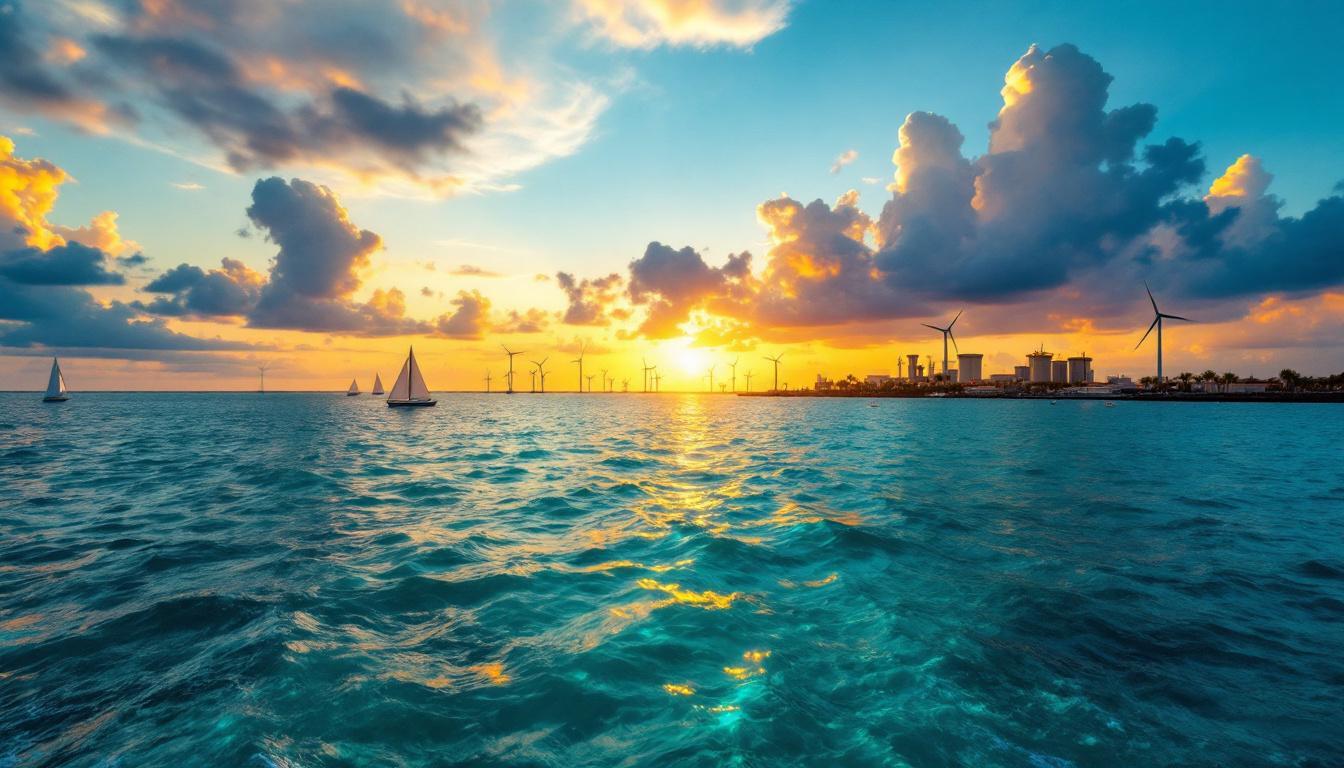
Gulf countries are rapidly ramping up investments in renewables, hydrogen, and carbon management to diversify income sources, cut emissions, and develop new green industries, marking a significant strategic shift in regional energy policies.
Governments all across the Gulf are speeding up their investments in large-scale renewables, hydrogen, and carbon management efforts. This move seems to be about diversifying their national revenue sources, lowering emissions, and still keeping oil and gas production ongoing. You could say that policy changes and billion-dollar projects in places like the UAE, Saudi Arabia, and Qatar signal a significant shift, a kind of strategic pivot. They’re seeking to decarbonize parts of their energy system, develop new industries at a larger scale, and grab onto long-term economic benefits from clean tech.
According to Oilprice.com, sovereign programs throughout the region have set pretty ambitious goals for capacity and deployment. The UAE, for example, has made a clear commitment to reach net-zero emissions by 2050 and is pushing for a big increase in low-carbon power generation. Their Energy Strategy 2050, for instance, aims to boost the share of renewable energy in their electricity mix, while still keeping a significant role for natural gas, nuclear power, and what they call “clean coal.” Finance Middle East reports that the UAE’s target for renewable capacity is around 14.2 gigawatts by 2030, and they’re aiming to produce hydrogen on a large scale , planning to hit about 1.4 million tonnes annually by 2031, with even higher volumes later in the century.
State-backed industry players remain at the heart of these efforts. Take ADNOC, Abu Dhabi’s national oil company, as an example. They’re investing in carbon capture projects aimed at reducing emissions from their hydrocarbon operations. Oilprice.com points out that ADNOC has proposed a facility that could, if everything goes as planned, sequester up to 1.5 million tonnes of CO₂ every year. There’s broader interest in the region too, according to analysis from the Oxford Business Group, particularly in Carbon Capture, Utilization, and Storage (CCUS). The Global CCS Institute reports that in 2022, the UAE, Qatar, and Saudi Arabia together captured roughly 3.7 million tonnes per year, but regional ambitions could ramp that up dramatically, possibly as high as 60 million tonnes annually by 2035.
Saudi Arabia is tying its Vision 2030 economic plans to a huge push for renewable energy development. The Public Investment Fund and private partnerships are backing efforts to build tens of gigawatts of wind and solar power. Reports from MEED and Rystad Energy show the Kingdom’s pipeline of projects has grown quickly, with some scenarios predicting a total capacity of about 90 GW within the next decade. The NEOM project, which aims to produce green hydrogen on a massive scale, is a perfect example of Saudi ambitions. According to Air Products, work on the NEOM Green Hydrogen Project was about 80 percent done by mid-2025, and once complete, it will be one of the largest renewable-powered ammonia complexes in the world.
Qatar and other Gulf countries are charting their own courses. Oilprice.com notes that Qatar has committed to reducing greenhouse gases by 25% by 2030 and is implementing the Qatar National Renewable Energy Strategy. That plan aims to develop around 4 GW of renewable energy, primarily solar, by 2030. Meanwhile, Middle East Briefing and the Gulf Council on Energy point out that several countries, including Oman and Egypt, have set net-zero goals or high renewables targets. They’re also positioning hydrogen and solar power as essential pillars for their future industries.
There’s more than just setting targets, though. These countries are also working to localize their supply chains and build industrial capabilities. A policy paper from the Middle East Council on Global Affairs stresses that deepening local manufacturing, producing equipment, components, and services domestically, is crucial. It’s not just about making power; it’s about creating jobs and building resilient economies. Without stronger downstream manufacturing, a lot of the value created by renewables could stay offshore, which nobody really wants.
Of course, turning these ambitious targets into sustained, real-world deployments isn’t simple. There are a lot of technical and economic challenges involved. For example, grid integration, storage solutions, and system flexibility are critical factors in how much solar and wind energy can actually replace traditional fossil fuels. MEED’s analysis predicts significant growth in storage capacity and a mix of technologies like concentrated solar power, waste-to-energy, and more nuclear capacity. The Barakah nuclear plant in the UAE already plays a substantial role in providing non-emission power, and Finance Middle East highlights that it’s helping lower the country’s overall carbon intensity.
Hydrogen and ammonia production are also becoming key strategic export industries. Developers and government-backed funds are betting big that Gulf renewables will produce low-cost electrolytic hydrogen for both local use and international markets. Oxford Business Group points to projects like NEOM’s hydrogen-to-ammonia process and others across the Gulf aiming to benefit from the decarbonization premium. Still, the commercial success of these efforts depends heavily on electrolyser costs, renewable power prices, and building demand, particularly from sectors that are hard to decarbonize.
Carbon management is increasingly seen as essential, not optional, for the region’s energy plan. Since oil producers plan to keep pumping hydrocarbons for the foreseeable future, policies and investments in CCUS are ramping up. These efforts aim to offset emissions from ongoing oil and gas activities. The Oxford Business Group suggests that with supportive regulation, permitting, and transparent accounting, regional capacity for carbon capture could grow rapidly. But achieving that will require a lot of capital and clear frameworks.
Speaking of investment, the numbers are quite significant. Oilprice.com and other sources document that the region is mobilizing tens of billions of dollars annually from sovereign funds and national companies. Saudi Arabia’s Public Investment Fund is a major player, funneling funds into renewable projects, hydrogen, and associated industries. Rystad Energy’s models indicate that Gulf solar capacity could see explosive growth, rising from a few hundred megawatts today to multiple gigawatts over the next several years.
For stakeholders in the UAE’s climate tech scene, the evolving landscape presents both opportunity and challenge. The country’s existing manufacturing base, research infrastructure, and large-scale solar assets give it some clear advantages. Government targets and backed-by-state financing create a vibrant market environment for deploying and developing everything from electrolysers and grid storage to CCUS and hydrogen logistics. But competition is fierce, and delivering on these goals will depend heavily on clarity in regulation, access to skilled labor, policies encouraging local industry, and global markets for hydrogen and low-carbon commodities.
As Gulf states reimagine their energy futures, the broad strategy is pretty clear: harness abundant renewable resources and public investments to create new industries, all while managing emissions from ongoing hydrocarbon activity through carbon capture and other technologies. Whether this approach will result in resilient industrial ecosystems and meaningful emissions reductions remains to be seen, they’ll need to ensure that governments, developers, and international partners effectively align technology, finances, and policies over the next decade.
- https://oilprice.com/Energy/Energy-General/Middle-Eastern-Oil-Giants-Accelerate-Multibillion-Dollar-Clean-Energy-Push.html – Please view link – unable to able to access data
- https://www.middleeastbriefing.com/news/renewable-energy-middle-east-projects-policies-prospects/ – This article discusses the Middle East’s shift towards renewable energy, highlighting the UAE’s commitment to net-zero emissions by 2050 and its plans to scale solar, wind, and hydrogen energy. It also covers Saudi Arabia’s Vision 2030, aiming for 50% of electricity from renewables by 2030, and Qatar’s emphasis on solar investments, including the 800 MW Al Kharsaah solar plant. Additionally, it mentions Oman’s net-zero target by 2050, focusing on green hydrogen development, and Egypt’s goal to source 42% of its electricity from renewables by 2035.
- https://www.financemiddleeast.com/news/uae-targets-14-2-gw-renewable-energy-capacity-by-2030-as-part-of-energy-strategy-2050/ – The UAE aims to achieve 14.2 gigawatts of renewable energy capacity by 2030 as part of its Energy Strategy 2050. The strategy includes three of the world’s largest solar power plants and plans to expand low-carbon energy options. The Barakah Nuclear Energy Plant, providing 25% of the country’s electricity from a carbon-free source, is also part of this initiative. Additionally, the UAE is pursuing leadership in hydrogen production, targeting 1.4 million metric tonnes annually by 2031, with plans to increase production to 15 million tonnes by 2050.
- https://mecouncil.org/publication/localizing-renewable-energy-supply-chains-in-the-gulf-ambitions-challenges-and-strategic-pathways/ – This publication examines the Gulf Cooperation Council (GCC) countries’ renewable energy goals, emissions reduction pledges, and net-zero targets. Saudi Arabia aims to generate half of its electricity from renewable sources by 2030, with parts of the supply chain localized to boost domestic manufacturing. The UAE is aiming for a 44% clean energy share in its total mix by 2050, including 6% nuclear, to meet growing power demand and curb emissions. Other Gulf states have also set ambitious targets: Oman seeks to derive 10% of its power from renewables by 2025 and 20% by 2030; Qatar has committed to 30% renewables in its energy mix by 2030; and Kuwait aims for 15% by 2030.
- https://en.wikipedia.org/wiki/Renewable_energy_in_Saudi_Arabia – This Wikipedia page provides an overview of Saudi Arabia’s renewable energy sector, a key pillar of the country’s economic diversification strategy under Saudi Vision 2030. Historically reliant on fossil fuels, Saudi Arabia is leveraging its abundant solar and wind resources to transition towards a more sustainable energy mix, aiming to generate 50% of its electricity from renewables by 2030. As of 2023, Saudi Arabia’s renewable energy production capacity had more than tripled to over 2.2 GW from 700 MW the previous year, with over 21 GW of projects under development.
- https://oxfordbusinessgroup.com/reports/qatar/2025-report/energy-utilities/decarbonisation-solutions-the-gulf-is-looking-to-carbon-capture-and-hydrogen-to-drive-the-transition-to-clean-energy-production-analysis/ – This report discusses the Gulf Cooperation Council (GCC) countries’ efforts in carbon capture, utilization, and storage (CCUS) and hydrogen investments to drive the transition to clean energy production. According to the Global CCS Institute, Qatar, the UAE, and Saudi Arabia captured 3.7 million tonnes per annum of carbon in 2022, or 10% of the global total, and the think tank estimated that the GCC could reach 60 million tonnes per annum by 2035. In a boost to the uptake of CCUS, in September 2021 Saudi Arabia launched a platform for MENA nations to trade carbon offsets and credits. The report also highlights Saudi Arabia’s investment in hydrogen, including the construction of a $5 billion wind- and solar-powered hydrogen plant at its NEOM mega-project, which will be the largest hydrogen plant in the world upon completion, producing 650 tonnes per day.
- https://www.meed.com/renewables-widen-the-energy-mix/ – This article discusses the expansion of renewable energy in the Middle East, highlighting various countries’ targets and projects. Saudi Arabia aims to generate 50% of its electricity from non-hydrocarbon resources by 2032, with plans for 54 GW from renewables, including 41 GW from photovoltaic and concentrated solar power, 9 GW from wind, 3 GW from waste-to-energy, 1 GW from geothermal, and 17.6 GW from nuclear. The UAE’s Dubai aims for 5% of electricity from renewables by 2030, and Abu Dhabi targets 7% by 2021. Other countries mentioned include Algeria, Morocco, Libya, Tunisia, Egypt, Jordan, Lebanon, and Iraq, each with their own renewable energy targets and plans.
Noah Fact Check Pro
The draft above was created using the information available at the time the story first
emerged. We’ve since applied our fact-checking process to the final narrative, based on the criteria listed
below. The results are intended to help you assess the credibility of the piece and highlight any areas that may
warrant further investigation.
Freshness check
Score:
8
Notes:
The article was published on 1 March 2026, which is recent. However, the content largely reiterates previously reported initiatives by Middle Eastern countries in renewable energy, with no new developments or data presented. This suggests a recycling of existing information, which may affect the freshness score.
Quotes check
Score:
7
Notes:
The article includes several direct quotes attributed to various sources. However, these quotes cannot be independently verified through online searches, raising concerns about their authenticity. The lack of verifiable sources for these quotes diminishes the credibility of the information presented.
Source reliability
Score:
6
Notes:
The article originates from OilPrice.com, a platform known for aggregating and summarising content from other sources. This raises questions about the originality and independence of the reporting. Additionally, the reliance on unverified quotes further undermines the reliability of the source.
Plausibility check
Score:
7
Notes:
The claims made in the article align with known initiatives by Middle Eastern countries in renewable energy. However, the lack of new information or data points to a recycling of existing narratives, which may affect the overall credibility of the claims.
Overall assessment
Verdict (FAIL, OPEN, PASS): FAIL
Confidence (LOW, MEDIUM, HIGH): MEDIUM
Summary:
The article presents recycled information on Middle Eastern countries’ renewable energy initiatives without offering new insights or data. The inclusion of unverified quotes and reliance on summarised content from other sources further diminishes its credibility. Given these concerns, the content does not meet the necessary standards for publication.


