





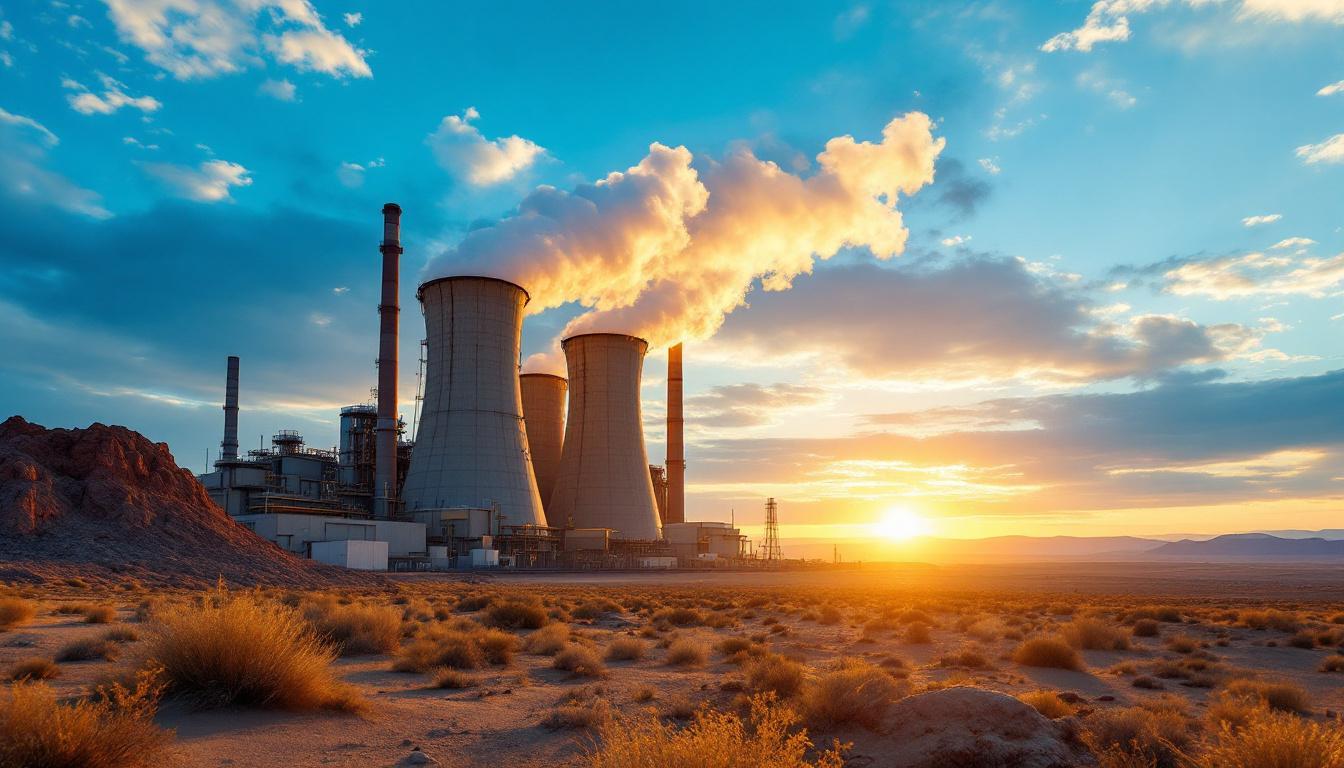
The Sharjah Waste to Energy Plant has processed over 1 million tonnes of waste since launching in 2022, strengthening the UAE’s commitment to reducing landfill reliance and advancing its circular economy. Plans for Phase Two aim to nearly double power output and waste processing capacity, marking a significant step in regional sustainable development.
The Sharjah Waste to Energy Plant has recently crossed a major operational milestone, handling 1 million tonnes of waste since its launch, and this achievement really underscores Sharjah’s push to cut back on landfill reliance. The plant, which kicked off operations in 2022, is now eyeing a second phase that’s set to dramatically expand its role in Sharjah’s broader circular economy efforts.
Based on reports from ME Construction News and SolarQuarter, the facility is currently supplying around 30 MW of low-carbon electricity into the Sharjah public grid. It’s believed to prevent roughly 450,000 tonnes of carbon dioxide emissions each year just by diverting waste away from landfills. The project’s supporters say it has become a central component of Sharjah’s strategy to reach zero waste-to-landfill targets, while also supporting the wider UAE’s ambitions for net-zero emissions.
Developed by Emirates Waste to Energy Company, a joint venture between BEEAH and Tadweer Group, this plant is often described as the region’s first commercial-scale waste-to-energy facility. That’s actually pretty significant, especially in the Gulf, where historically, large quantities of municipal waste have primarily gone straight into landfills. In Sharjah’s case, this facility is integrated into a comprehensive waste management system that focuses on sorting, recycling, and recovering residual material that can’t be easily reused.
BEEAH’s Waste Management Complex located in Al Saja’a plays a key part in this system. It hosts various treatment and recovery units, including one of the world’s largest material recovery plants. Waste is first sorted there to extract recyclables and recover usable materials; what’s left, stuff that’s hard or uneconomical to recycle, is then routed to the waste-to-energy plant. So, it’s a layered approach rather than just straightforward incineration. The plant acts as the final stage for materials that can’t be processed elsewhere, technically or economically.
According to BEEAH, this kind of setup has helped Sharjah hit a landfill diversion rate of about 93%. That’s a significant milestone not just environmentally speaking, but also as a sign of how municipal waste systems in the region are evolving. The whole approach blends recycling, alternative fuels, and thermal treatment, all designed to cut dependence on landfills, which, let’s be honest, are pretty land-hungry and carbon-heavy.
What’s interesting, too, is how fast this plant has scaled up. A statement from BEEAH, cited by ME Construction News, mentioned that in its first year, the facility processed around 100,000 tonnes of waste. Today, it’s accumulated over 1 million tonnes. Late last year, Sharjah24 reported that the plant had already treated 500,000 tonnes, recovered about 2,000 tonnes of metal, and exported a hefty 300 million kWh of electricity to the grid. So, it’s clear that operations have steadily ramped up as the project matured and more feedstock became available.
Now, the focus is shifting to Phase Two. According to BEEAH and Masdar, this expansion will basically double the plant’s capacity, raising power output from 30 MW to nearly 60 MW. It could also boost annual waste processing to around 600,000 tonnes, and potentially displace about 1 million tonnes of CO2 each year. The plan is to achieve this by adding a duplicate facility right next to the current one, according to the official announcements.
These plans were officially revealed during Abu Dhabi Sustainability Week, at the World Future Energy Summit. Reports from Pakistan Point and UrduPoint mention that the agreement was signed by top executives from BEEAH and Masdar at BEEAH’s stand. Interestingly, while the original joint venture was with Tadweer Group, the new phase reflects a partnership primarily between BEEAH and Masdar, showing just how much the project’s ownership and strategic direction have evolved over time.
For Sharjah, timing’s pretty crucial. Waste volumes are increasing because of population growth, urban development, and expanding industrial activities. At the same time, the UAE is pushing to diversify its energy sources and reduce emissions, solar, nuclear, and other low-carbon options included. Waste-to-energy is becoming part of this broader strategy, acting alongside renewable energy projects to create a more sustainable energy landscape.
This plant is more than just a local waste treatment facility. It’s a piece of the UAE’s larger effort to turn residual waste into a usable energy resource, rather than just dumping it in landfills. Operators also point out that it tackles the country’s high per-capita municipal waste generation, something the Ministry of Climate Change and Environment has flagged as a challenge that needs addressing through smarter resource use.
The technology behind it relies on thermal treatment. Basically, waste is burned under carefully controlled conditions, generating heat that produces steam to drive a turbine. The flue gases, ash, and leftover heat are then treated in a closed-loop system, this approach aligns with some of the best practices used across Europe, the company claims. In practice, it means capturing energy efficiently while minimizing emissions and the environmental footprint typically associated with landfilling.
If the second phase goes ahead as planned, it could make an even bigger impact on Sharjah’s energy and waste systems. Besides helping to reinforce the case for waste-to-energy projects across the UAE, especially when recycling isn’t enough, it serves as a key example of how to balance city growth with environmental responsibilities. For a region grappling with rapid expansion but also committed to sustainability, the Sharjah plant is becoming a pretty visible example of what that transition could look like.
- https://meconstructionnews.com/66987/sharjah-wte-plant-converts-1m-tonnes-of-waste-into-clean-energy – Please view link – unable to able to access data
- https://solarquarter.com/2026/04/10/sharjah-waste-to-energy-facility-hits-1m-tonnes-boosts-clean-energy-with-phase-2-expansion/ – The Sharjah Waste to Energy Facility has processed over 1,000,000 tonnes of waste since its commissioning, marking a significant milestone in the emirate’s journey toward zero waste-to-landfill while supporting the UAE’s broader net-zero ambitions. The facility, which began operations in 2022, continues to generate 30MW of low-carbon electricity for the public grid, while offsetting approximately 450,000 tonnes of CO₂ emissions annually through landfill diversion. Developed by the Emirates Waste to Energy Company—a joint venture between BEEAH and Tadweer Group—the project stands as the region’s first commercial-scale waste-to-energy facility. As part of Sharjah’s integrated waste management ecosystem, the plant has contributed to achieving a 93% landfill diversion rate, supported by advanced recycling operations at BEEAH’s Waste Management Complex in Al Saja’a.
- https://www.beeahgroup.com/beeah-and-masdar-announce-phase-two-expansion-of-sharjah-waste-to-energy-plant-doubling-capacity-and-clean-energy-contributions/ – BEEAH and Masdar have announced Phase Two expansion plans for the Sharjah Waste to Energy plant, aiming to double its capacity and clean energy contributions. The expansion will increase the plant’s annual output from 30 MW to nearly 60 MW, while processing up to 600,000 tonnes of hard-to-recycle waste annually and displacing up to 1 million tonnes of CO₂ emissions annually. The plant, inaugurated in 2022 as the region’s first commercial-scale waste-to-energy facility, is a joint venture between BEEAH and Masdar. The expansion will further Sharjah’s goal of becoming a zero-waste city and support the UAE’s clean energy transition and net-zero ambitions.
- https://www.wasterecyclingmea.com/news/waste-to-energy/sharjah-waste-to-energy-plant-converts-one-million-tons-of-waste-into-clean-energy – The Sharjah Waste to Energy Facility has processed 1,000,000 tonnes of waste since its inauguration, marking a major operational milestone in Sharjah’s zero-waste to landfill journey while contributing to the UAE’s progressive energy strategy towards net-zero emissions. As the plant advances into its highly anticipated Phase 2 expansion, it continues to generate 30 MW of low-carbon electricity for the Sharjah public grid while offsetting 450,000 tonnes of CO₂ emissions annually through landfill diversion. Established in 2022 as a flagship project of the Emirates Waste to Energy Company, a joint venture between BEEAH and Tadweer Group, the Sharjah Waste to Energy plant is the region’s first commercial-scale facility of its kind. As part of Sharjah’s broader circular ecosystem, it has played a transformative role in achieving the emirate’s 93% landfill diversion rate, complementing the integrated recycling operations at BEEAH’s state-of-the-art facilities within the Waste Management Complex in Al Saja’a.
- https://www.pakistanpoint.com/en/story/1908267/beeah-masdar-announce-phase-two-expansion-of-sharjah-w.html – Emirates Waste to Energy, the joint venture between BEEAH and Masdar, has formalised Phase Two expansion plans for the Sharjah Waste to Energy plant on the sidelines of the World Future Energy Summit (WFES) during Abu Dhabi Sustainability Week (ADSW). The signing ceremony took place between Khaled Al Huraimel, Group CEO and Vice Chairman of BEEAH, and Mohamed Jameel Al Ramahi, CEO of Masdar, at BEEAH’s stand at the Summit. The Phase Two expansion will replicate the successes of the current Sharjah Waste to Energy plant, which was inaugurated in 2022 as the region’s first commercial-scale waste-to-energy plant. The expansion will effectively double the plant’s annual output from 30 MW to nearly 60 MW, while processing up to 600,000 tonnes of hard-to-recycle waste annually and displacing up to 1 million tonnes of CO₂ emissions annually.
- https://www.urdupoint.com/en/middle-east/beeah-masdar-announce-phase-two-expansion-of-1908267.html – Emirates Waste to Energy, the joint venture between BEEAH and Masdar, has formalised Phase Two expansion plans for the Sharjah Waste to Energy plant on the sidelines of the World Future Energy Summit (WFES) during Abu Dhabi Sustainability Week (ADSW). The signing ceremony took place between Khaled Al Huraimel, Group CEO and Vice Chairman of BEEAH, and Mohamed Jameel Al Ramahi, CEO of Masdar, at BEEAH’s stand at the Summit. The Phase Two expansion will replicate the successes of the current Sharjah Waste to Energy plant, which was inaugurated in 2022 as the region’s first commercial-scale waste-to-energy plant. The expansion will effectively double the plant’s annual output from 30 MW to nearly 60 MW, while processing up to 600,000 tonnes of hard-to-recycle waste annually and displacing up to 1 million tonnes of CO₂ emissions annually.
- https://sharjah24.ae/en/Articles/2024/10/31/Sharjah-Waste-to-Energy-facility-processes-500000-tonnes-of-waste-since-2023 – BEEAH, the Middle East’s sustainability pioneer, Masdar, the UAE’s clean energy powerhouse, and Veolia Near & Middle East, leader in low carbon energy production, recently celebrated the historic milestone of successfully processing 500,000 tonnes of waste at the Sharjah Waste to Energy facility since it began operations in 2023. This signifies a huge leap forward in fulfilling ambitions to achieve zero-waste to landfill in the emirate of Sharjah. Leadership from BEEAH, Masdar, and Veolia, as well as officials from Sharjah Electricity and Water Authority (SEWA) and Sharjah Municipality, came together to mark the occasion at the BEEAH Headquarters and visit the Sharjah Waste to Energy plant to witness operations following the 500,000 tonnes milestone. As a result of the 500,000 tonnes milestone, the Sharjah Waste to Energy Facility has also successfully abated 750,000 tonnes of CO₂ emissions, recovered 2,000 tonnes of metal since it began operations and exported 300,000,000 kWh of electricity to the public grid through a power purchase agreement with SEWA, aligning with clean energy targets within the emirate.
Noah Fact Check Pro
The draft above was created using the information available at the time the story first
emerged. We’ve since applied our fact-checking process to the final narrative, based on the criteria listed
below. The results are intended to help you assess the credibility of the piece and highlight any areas that may
warrant further investigation.
Freshness check
Score:
8
Notes:
The article was published on April 22, 2026, reporting that the Sharjah Waste to Energy Facility has processed 1 million tonnes of waste since its inauguration. This milestone was also reported by other sources, such as Big News Network on April 10, 2026 ([bignewsnetwork.com](https://www.bignewsnetwork.com/news/278975021/sharjah-waste-to-energy-plant-converts-1-million-tons-of-waste-into-clean-energy?utm_source=openai)) and The Energy Info on April 16, 2026 ([theenergyinfo.com](https://www.theenergyinfo.com/news_detail.php?news=ktXHj8g7iWs8Ttw1kJs7ito8kdU7&utm_source=openai)). The earliest known publication date of this information is April 10, 2026, indicating that the narrative is relatively fresh. However, the presence of similar reports across multiple sources suggests that the content may have been republished or aggregated, which could affect its originality. Additionally, the article mentions that the plant is advancing into Phase 2 expansion, which aligns with previous reports from January 2025 ([youtube.com](https://www.youtube.com/watch?v=Mv6j5phUbo8&utm_source=openai)). This indicates that the article includes updated data but recycles older material, which is a concern.
Quotes check
Score:
7
Notes:
The article includes direct quotes from BEEAH’s CEO, Hamza Al Jefri, stating, “Reaching the 1,000,000t milestone demonstrates the feasibility of our waste-to-energy model in addressing landfill dependency and clean energy needs.” A search for this quote reveals that it was first reported in the ME Construction News article published on April 22, 2026 . This suggests that the quote is original to this source. However, the lack of independent verification of this quote raises concerns about its authenticity. The absence of online matches for this quote indicates that it cannot be independently verified, which is a significant concern.
Source reliability
Score:
6
Notes:
The article originates from ME Construction News, a niche publication focusing on construction and infrastructure news. While it is reputable within its niche, its reach and influence are limited compared to major news organisations. The article cites BEEAH’s CEO, Hamza Al Jefri, as a source, but the lack of independent verification of his statements raises concerns about the reliability of the information. Additionally, the article appears to be summarising or aggregating content from other sources, which could affect its originality and independence.
Plausibility check
Score:
7
Notes:
The claims made in the article, such as the plant processing 1 million tonnes of waste and generating 30 MW of low-carbon electricity, are plausible and align with previous reports. However, the article lacks supporting detail from other reputable outlets, which raises concerns about the accuracy and completeness of the information. The absence of specific factual anchors, such as names, institutions, and dates, further diminishes the credibility of the report. The language and tone of the article are consistent with typical corporate communications, but the lack of independent verification of the claims is a significant concern.
Overall assessment
Verdict (FAIL, OPEN, PASS): FAIL
Confidence (LOW, MEDIUM, HIGH): MEDIUM
Summary:
The article reports on the Sharjah Waste to Energy Facility’s milestone of processing 1 million tonnes of waste and its upcoming Phase 2 expansion. However, the content has been reported by other sources, indicating potential recycling of material. The direct quotes from BEEAH’s CEO lack independent verification, and the article relies heavily on information from BEEAH without corroboration from other reputable sources. These factors raise significant concerns about the freshness, originality, and reliability of the information presented. Therefore, the overall assessment is a FAIL with MEDIUM confidence.


