





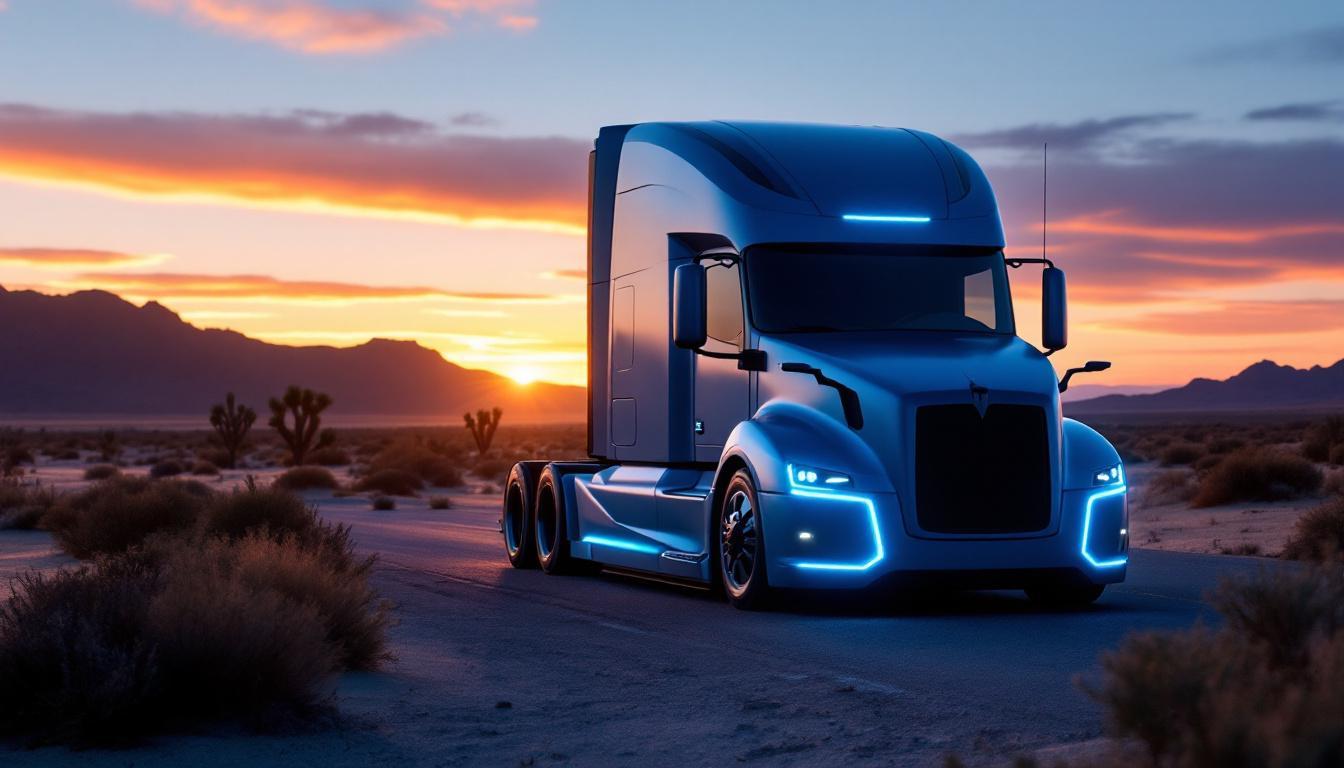
Jameel Motors unveils Farizon’s latest range of commercial EVs at a high-profile event, signalling a sharp rise in electric trucking as the UAE’s infrastructure and policies rapidly support sustainable logistics.
Jameel Motors, a well-known provider of mobility solutions and a partner to top automotive brands, has recently stolen some attention with a bold move aimed at speeding up the UAE’s transition toward electrified commercial transportation. At an exclusive event held in the UAE, the company introduced Farizon’s latest range of commercial electric vehicles (EVs), which marks a significant broadening of their EV offerings in response to the growing demand for eco-friendly transport options in the country’s business sector. The event also included a prominent panel discussion called “Driving UAE’s commercial future,” which delved into how commercial EVs could transform the country’s shifting transportation scene.
The fleet on display featured a variety of innovative commercial vans, light-duty trucks, and heavy-duty trucks, all scheduled for deployment in 2026. This indicates Jameel Motors’ readiness to address the increasing logistics and transportation needs with zero-emission alternatives. Farizon’s flagship models like the SuperVAN series and the H90 light-duty truck have been fully certified for the GCC market, coming with solid warranties and advanced CAT battery systems—highlighting their reliability and mature technology.
In the panel discussion, industry experts including Zeeshan Gaus, Head of Product – Mobility at Jameel Motors, talked about the rapidly growing potential for electric commercial vehicles in the UAE. He stressed the rising interest from logistics companies, e-commerce platforms, and progressive firms that are eager to adopt cleaner, electric fleets. Gaus noted, “The question isn’t whether EVs will disrupt commercial transportation; it’s how fast we can develop solutions to meet the increasing market demands.” Other panelists like Olga Shevorenkova, CEO of Loop Global, and François Carlier, Deputy Director of Al Shirawi Industries, contributed insights on operational hurdles, emerging opportunities, and the regulatory landscape shaping EV adoption.
The timing of this announcement is quite strategic, especially considering the fast growth expected in the UAE’s commercial vehicle sector. Industry estimates suggest that the market will grow from $2.61 billion in 2025 to about $3.95 billion by 2030, with the electric segment expected to expand at roughly 35% annually. This surge is fueled by strong government policies focused on sustainability, such as the UAE’s Net Zero by 2050 plan and the 2023 National Electric Fleet Vehicles Policy, which aims to have half of all road vehicles be electric or hybrid by mid-century. The UAE has also set a goal for at least 10% of all vehicles to be EVs by 2030—an ambitious target.
Supporting these targets, the country is investing heavily in expanding charging infrastructure. For instance, Abu Dhabi’s E2GO joint venture between ADNOC and TAQA plans to roll out 70,000 EV charging points by 2030, and Dubai’s Electricity and Water Authority (DEWA) is rapidly scaling up its Green Charging Station network. On the corporate side, initiatives like the government-backed Road 2.0 program bring together 17 major companies—including Aramex, Unilever, and Talabat—that have committed to deploying 6,000 zero-emission vehicles by 2030 and up to 20,000 by 2040.
All these efforts reflect the crucial environmental motivation behind moving commercial vehicles to electric power. Transport contributes over 22% of the UAE’s overall greenhouse gas emissions, making it vital for national decarbonization plans. Dubai’s Roads and Transport Authority (RTA), for example, has a goal to have a fully electric and hydrogen-powered taxi and limousine fleet by 2040. Meanwhile, Abu Dhabi’s Integrated Transport Centre has launched a Green Bus Assessment program aimed at promoting sustainable public transport systems.
Jameel Motors is also making moves to support this shift, having recently opened the first dedicated Farizon showroom and service center in Dubai’s Airport Free Zone. The facility is designed to give commercial fleet operators direct access to cutting-edge EV technology and after-sales services. Not only does this move underscore Jameel’s commitment to fostering EV adoption, but it also helps address the logistical and maintenance challenges that come with switching to electric fleets.
Adding to the evidence of growing confidence in this field, at a launch event in Dubai celebrating Farizon’s entry into the GCC, over 40 companies and institutions took part—resulting in partnership agreements for 300 SuperVAN units. That’s quite a strong initial sign that the regional commercial sector is ready to embrace electric vehicles as part of broader sustainability goals.
Looking ahead, Jameel Motors plans to continue showcasing Farizon’s innovative vehicle technology at major industry events, including Mobility Live Middle East 2025, solidifying its leadership position in sustainable commercial transport solutions within the UAE.
All in all, the combination of supportive government policies, expanding infrastructure, corporate initiatives, and industry innovation suggests that the UAE is swiftly becoming a key hub for electric commercial mobility in the region. Of course, there are still challenges—like scaling operations and logistics—but the pace of rollout and rising market confidence hint at a transformative shift that’s just around the corner. It’s pretty exciting to think that, sooner rather than later, commercial EVs could become the norm—a cornerstone in the UAE’s ambitious sustainability roadmap.
Source: Noah Wire Services


