





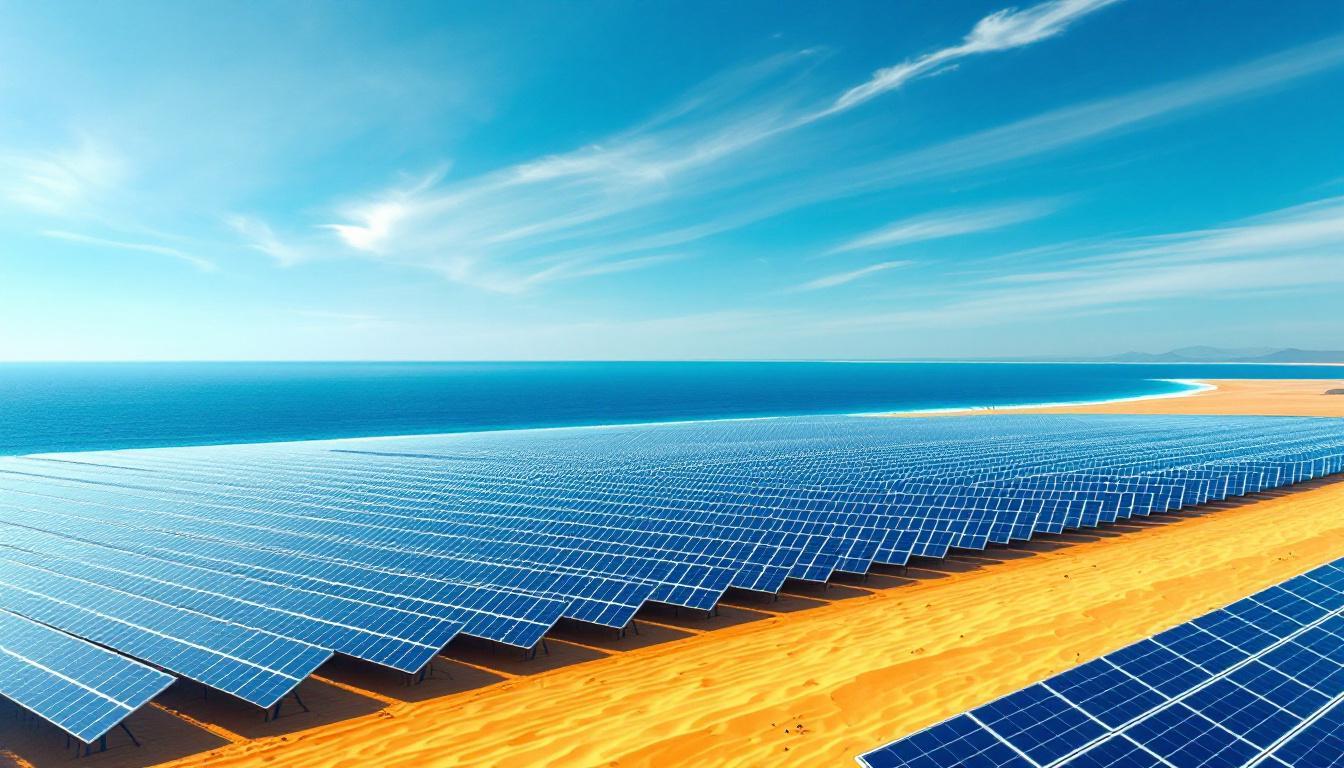
JinkoSolar and Arctech are expanding their global footprint with major overseas contracts, highlighting how local environmental factors are shaping the next wave of utility-scale solar projects in Europe, Australia, and the Gulf region.
JinkoSolar and Arctech have each secured new contracts overseas, highlighting how global demand for utility-scale solar installations is increasingly driven by local factors, ranging from cloudy northern Europe to the intense heat and dust of the Gulf region.
JinkoSolar announced that it has signed module supply agreements in France, Australia, the Netherlands, and Jordan, with combined deliveries totaling around 234.89MW. All four projects will incorporate its Tiger Neo 3.0 modules, which are based on TOPCon technology, a design that’s become a key element in the company’s push towards higher-efficiency products. What’s interesting here is that these orders cover quite different operating environments, which makes the spread of these contracts all the more noteworthy.
The largest among these is in France, at nearly 94.73MW. The company notes that this project is designed to perform well under relatively low levels of sunlight and frequent cloud cover, conditions that favor modules capable of generating more power when the light is weaker. In Australia, JinkoSolar stated that a 72MW project will utilize the same modules to optimize land productivity. This is an increasingly important aspect in markets where the availability of land and costs associated with civil works can really push overall project expenses higher. Then there’s the order in the Netherlands, at about 39.15MW, aimed at ground-mounted solar generation, where land costs and balance-of-system expenses can heavily influence project economics. Lastly, Jordan’s remaining 29.01MW project is set for a desert environment characterized by intense sunlight, high temperatures, and dry conditions.
And that last point, well, it certainly matters when considering Middle Eastern projects. Utility solar in the Gulf isn’t just about capacity ratings; it’s also about how well the equipment performs in extreme heat, glare, and dust conditions. This is one of the reasons why tech providers are under increasing pressure to demonstrate real-world durability, not just impressive efficiency numbers from lab tests. Jinko’s pitch for its Tiger Neo 3.0 modules is that they are already moving from initial launch into large-scale deployments, and the company reports accumulating nearly 9.5GW of contracted orders for this series across the globe.
In addition, JinkoSolar claims to have shipped over 350GW of modules worldwide by the third quarter of 2025. That’s quite a massive footprint, no wonder it helps suppliers secure repeat business, especially when developers prefer dependable products with proven delivery records. It also reflects a broader industry trend toward higher-performance N-type modules, as developers seek maximum yield from each hectare of land, particularly in markets where land and grid connection costs are rising.
Meanwhile, Arctech has snagged a considerably larger deal in the UAE, supplying tracking systems for the 1.5GW Al Ajban project in Abu Dhabi. They’ve announced an agreement with PowerChina to supply their SkyLine II single-axis trackers. In a place like the UAE, trackers are especially vital, they can significantly boost energy output throughout the day by following the sun, which improves the overall economics of large desert solar farms.
PV-Tech mentioned that the Al Ajban project had previously been awarded by Abu Dhabi’s Emirates Water and Electricity Company to EDF Renewables and Korea Western Power. That really underscores the project’s big scale and international profile. PV Magazine adds that once up and running, the plant could generate enough power for about 160,000 households, and help cut Abu Dhabi’s annual carbon emissions by around 2.4 million tonnes. Those figures tie into the UAE’s broader push to grow clean energy capabilities while reducing reliance on fossil fuels.
The Al Ajban contract is also pretty strategic for Arctech because it extends the company’s footprint in a market where it’s already involved in major projects. EnergyTrend noted that this latest deal follows earlier UAE orders linked to the PV2 and PV3 programs, so, apparently, they’re staying involved in some of the country’s most ambitious solar developments. Arctech reports that its total order volume in the Middle East now exceeds 28GW.
That regional presence is backed up by a local base in Jeddah, which handles R&D, manufacturing, supply chain logistics, and engineering services. For Gulf projects, local involvement isn’t just a business convenience, it can actually help speed up lead times, improve after-sales support, and mitigate risks associated with moving large volumes of hardware across borders.
Putting all this together, these new deals from JinkoSolar and Arctech show a clear pattern. Buyers aren’t just scanning for the cheapest options or the highest nameplate capacities anymore. Instead, they want equipment tailored to the terrain, climate, and financial realities of each location. For markets in the UAE and broader Middle East, that means modules and trackers must be engineered to handle extreme heat, intense reflectivity, and massive deployment scales. And for suppliers, success increasingly depends on whether they can prove their products deliver real-world performance, not just boast about promise in a brochure.
As utility solar capacity continues to grow in the region, the competitive edge will likely favor firms that combine high-efficiency product offerings with strong execution, solid logistics, and robust local operations. Both JinkoSolar and Arctech seem to believe they’re well-positioned to do just that, based on these latest orders.
- https://www.energytrend.com/news/20260414-51238.html – Please view link – unable to able to access data
- https://www.pv-magazine.com/press-releases/arctech-lands-a-1-5gw-solar-project-order-in-the-uae/ – Arctech, a leading solar tracking and racking solutions provider, has secured a 1.5 GW order for its SkyLine II single-axis solar tracking system from PowerChina for the Al Ajban Solar PV plant in the UAE. This project, part of the UAE’s Energy Strategy 2050, aims to become one of the largest single-site solar plants globally upon completion. The plant is projected to generate sufficient green electricity to meet the needs of approximately 160,000 households and reduce Abu Dhabi’s annual carbon emissions by 2.4 million tons, significantly advancing the region’s green development and energy transition efforts.
- https://www.pv-tech.org/arctech-signs-1-5gw-solar-pv-tracker-supply-deal-for-al-ajban-project-in-the-uae/ – Arctech has secured a 1.5 GW solar tracker supply agreement with PowerChina for the Al Ajban project in the UAE. The supply agreement is for Arctech’s 1P single-axis solar tracking system SkyLine II and will be delivered to the Al Ajban project in the United Arab Emirates (UAE). The 1.5 GW solar PV project was awarded to French energy giant EDF Renewables and the Korean Western Power Company (KOWEPO) last year by Abu Dhabi’s Emirates Water and Electric Company (EWEC).
- https://www.jinkosolar.com/en/site/tigerneo_3 – JinkoSolar’s Tiger Neo series has demonstrated a maximum power generation increase per watt of up to 23.23% efficiency at the module level, and 615Wp power output for the 72-cell panel in 182″ format. The Tiger Neo 3.0 modules have achieved the critical milestone ‘from launch to deployment’ and now possess large-scale global delivery capabilities. By Q3 2025, JinkoSolar had shipped over 350 GW of modules globally, with one in every seven modules installed globally being a JinkoSolar module.
- https://www.jinkosolar.com/en/site/tigerneo_3 – JinkoSolar’s Tiger Neo series has demonstrated a maximum power generation increase per watt of up to 23.23% efficiency at the module level, and 615Wp power output for the 72-cell panel in 182″ format. The Tiger Neo 3.0 modules have achieved the critical milestone ‘from launch to deployment’ and now possess large-scale global delivery capabilities. By Q3 2025, JinkoSolar had shipped over 350 GW of modules globally, with one in every seven modules installed globally being a JinkoSolar module.
- https://www.jinkosolar.com/en/site/tigerneo_3 – JinkoSolar’s Tiger Neo series has demonstrated a maximum power generation increase per watt of up to 23.23% efficiency at the module level, and 615Wp power output for the 72-cell panel in 182″ format. The Tiger Neo 3.0 modules have achieved the critical milestone ‘from launch to deployment’ and now possess large-scale global delivery capabilities. By Q3 2025, JinkoSolar had shipped over 350 GW of modules globally, with one in every seven modules installed globally being a JinkoSolar module.
- https://www.jinkosolar.com/en/site/tigerneo_3 – JinkoSolar’s Tiger Neo series has demonstrated a maximum power generation increase per watt of up to 23.23% efficiency at the module level, and 615Wp power output for the 72-cell panel in 182″ format. The Tiger Neo 3.0 modules have achieved the critical milestone ‘from launch to deployment’ and now possess large-scale global delivery capabilities. By Q3 2025, JinkoSolar had shipped over 350 GW of modules globally, with one in every seven modules installed globally being a JinkoSolar module.
Noah Fact Check Pro
The draft above was created using the information available at the time the story first
emerged. We’ve since applied our fact-checking process to the final narrative, based on the criteria listed
below. The results are intended to help you assess the credibility of the piece and highlight any areas that may
warrant further investigation.
Freshness check
Score:
8
Notes:
The article was published on April 14, 2026, which is within the past 7 days, indicating freshness. However, the content appears to be a direct translation of the original Chinese article from EnergyTrend, suggesting potential recycling of content.
Quotes check
Score:
7
Notes:
The article includes specific figures and project details. However, without access to the original Chinese source, it’s challenging to verify the accuracy and originality of these quotes.
Source reliability
Score:
6
Notes:
EnergyTrend is a niche publication focusing on energy trends. While it provides detailed industry insights, its reach and reputation are limited compared to major news organisations.
Plausibility check
Score:
8
Notes:
The claims about JinkoSolar and Arctech securing significant overseas orders align with industry trends and are plausible. However, without independent verification, there’s a degree of uncertainty.
Overall assessment
Verdict (FAIL, OPEN, PASS): FAIL
Confidence (LOW, MEDIUM, HIGH): MEDIUM
Summary:
While the article is recent and covers plausible developments, it heavily relies on a single, niche source without independent verification. The potential recycling of content and lack of corroborating sources diminish its credibility. Editors should exercise caution and seek additional independent confirmations before publishing.


