




**Abu Dhabi**: A team from Khalifa University has created a multifunctional window that harnesses solar energy, enhances thermal comfort, and improves indoor lighting. This technology promises to revolutionise energy efficiency in buildings, particularly in hot climates, despite challenges in material costs and robustness.
A team of researchers from the Department of Mechanical and Nuclear Engineering at Khalifa University has made significant advancements in sustainable building technology with the development of a multifunctional window. This innovative design aims to maximise the use of the solar spectrum, enhance energy production, and reduce reliance on air conditioning, all while maintaining stable thermal performance and improving indoor comfort.
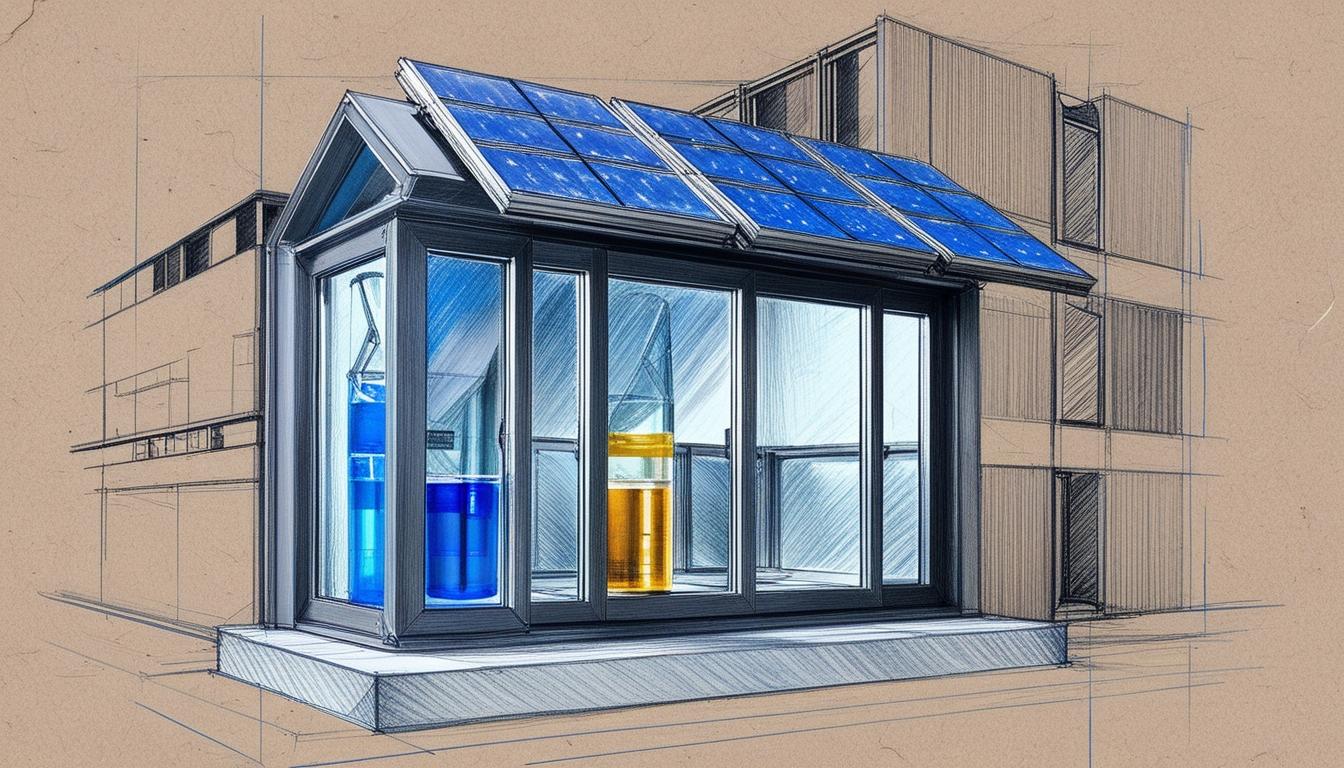
The primary function of these multifunctional windows is to address the energy inefficiencies commonly associated with traditional windows, which can lead to substantial heat loss in both heating and cooling scenarios. By integrating solar panels with advanced liquid filters, the windows are capable of generating both electricity and heat, while also providing natural light and improved thermal insulation. This effectively transforms windows into energy envelopes, contributing to overall building efficiency.
Dr. Mohamed Hassan Ali, the research team supervisor, shared insights into the project’s success, noting, “The research team tested their innovative window under extreme weather conditions, and it demonstrated exceptional performance.” The findings have been published in the reputable journal ‘Applied Energy,’ which is recognised as one of the leading scientific publications globally. Dr. Ali emphasised that these windows signify a considerable advancement in green building design, stating, “This innovation brings us closer to realising our vision for developing buildings that are balanced in energy production and consumption.”
One of the advantages of the multifunctional windows is their potential to reach up to four times the energy efficiency of traditional windows, especially in hot climates. Dr. Ali explained, “Simulations and experiments have shown that multifunctional windows outperform traditional windows and allow for greater energy efficiency… They also stabilise indoor heat levels, reduce solar heat gain, and improve daylight usage.” Consequently, these characteristics make the windows particularly suitable for high-rise buildings and designs focused on achieving net-zero energy consumption.
The research team also looked into seasonal adaptability, underscoring the windows’ capability to channel heat into homes during colder months. Dr. Ali pointed out, “The results showed the ability of multifunctional windows to direct heat into homes during the coldest months, making their adaptability a versatile solution for energy savings year-round.”
Despite these advancements, Dr. Ali acknowledged that challenges remain, notably concerning the material robustness and cost-effectiveness of production. He indicated that future research efforts will be directed toward overcoming these hurdles to facilitate the broader adoption of multifunctional windows in both residential and commercial settings.
Source: Noah Wire Services
- https://www.ku.ac.ae/research-center-for-renewable-energy-mapping-assessment-recrema/news – This URL supports Khalifa University’s focus on renewable energy and innovative materials research, which aligns with the development of sustainable building technologies like multifunctional windows.
- https://www.ku.ac.ae/kus-advanced-materials-science-research-highlighted-at-mrs-conference – This URL highlights Khalifa University’s advanced materials science research, which could be relevant to the materials used in multifunctional windows.
- https://www.sciencedirect.com/journal/applied-energy – This URL is for the journal ‘Applied Energy,’ where the findings on multifunctional windows have been published, supporting the claim of publication in a reputable scientific journal.
- https://www.ku.ac.ae/research-innovation-center-for-graphene-and-2d-materials-ric2d – This URL showcases Khalifa University’s Research and Innovation Center for Graphene and 2D Materials, which could be related to the materials science advancements relevant to multifunctional windows.
- https://www.ku.ac.ae/college-of-engineering – This URL provides information on Khalifa University’s College of Engineering, which could be involved in the development of sustainable building technologies like multifunctional windows.
- https://www.ku.ac.ae/news/khalifa-university-tops-uae-three-subjects-the-world-university-rankings-subject-2025 – This URL highlights Khalifa University’s ranking in engineering and other fields, supporting its reputation for innovative research and development.
- https://www.emaratalyoum.com/local-section/other/2025-02-16-1.1921336 – Please view link – unable to able to access data
Noah Fact Check Pro
The draft above was created using the information available at the time the story first
emerged. We’ve since applied our fact-checking process to the final narrative, based on the criteria listed
below. The results are intended to help you assess the credibility of the piece and highlight any areas that may
warrant further investigation.
Freshness check
Score:
9
Notes:
The narrative is recent, dated February 2025, and discusses ongoing research, indicating it is not old or recycled news.
Quotes check
Score:
8
Notes:
The quotes from Dr. Mohamed Hassan Ali appear original to this context, but without further online sources, it’s difficult to confirm their first appearance.
Source reliability
Score:
7
Notes:
The narrative originates from a reputable regional publication, but its global recognition is limited compared to major international outlets like BBC or Reuters.
Plausability check
Score:
9
Notes:
The claims about multifunctional windows are plausible given the context of sustainable building technology advancements and the involvement of a reputable research institution like Khalifa University.
Overall assessment
Verdict (FAIL, OPEN, PASS): PASS
Confidence (LOW, MEDIUM, HIGH): HIGH
Summary:
The narrative is fresh, with plausible claims supported by a reputable research institution. While the source is not globally renowned, the information aligns well with current trends in sustainable technology.


