




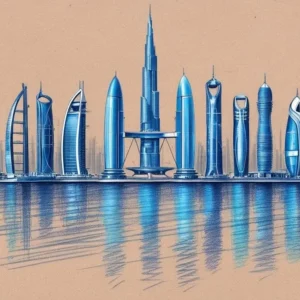
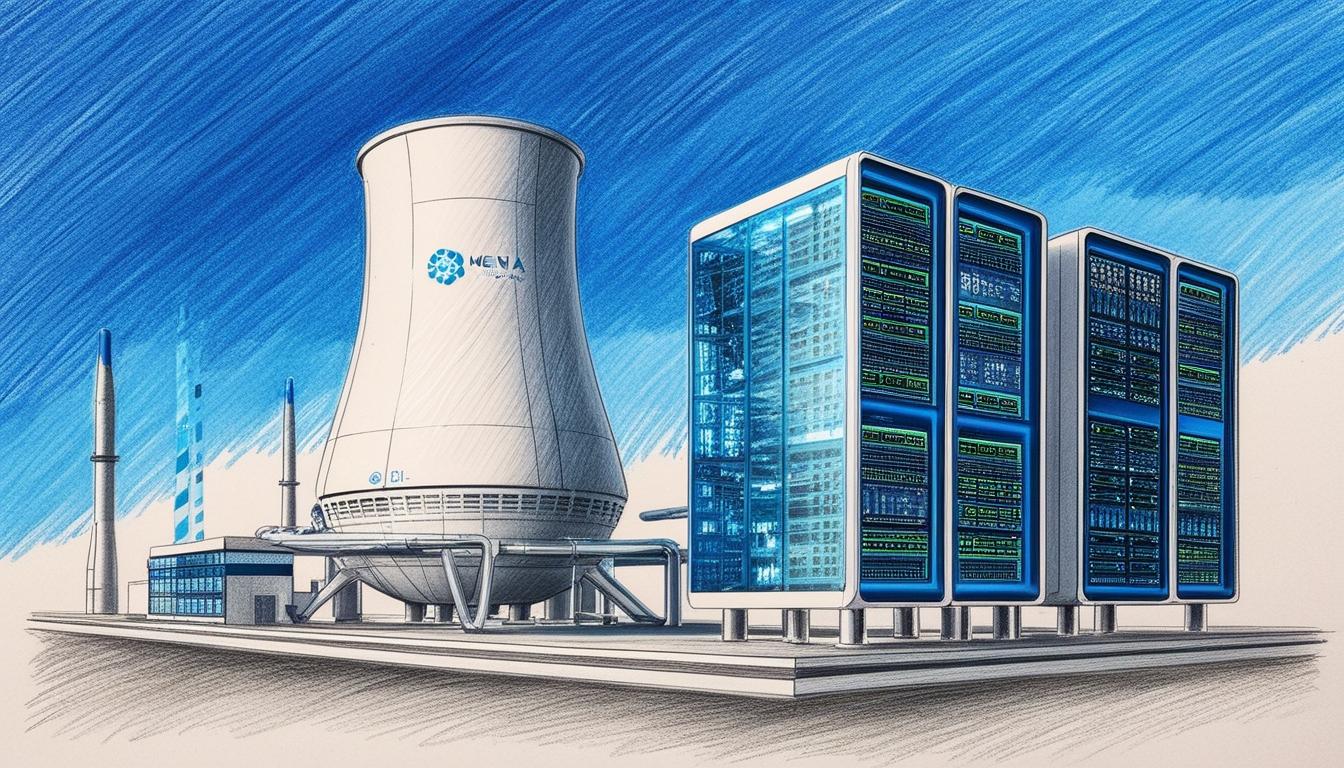
**MENA**: The region is aiming to become a leading global AI hub, but faces significant challenges in balancing rapid digital growth with sustainability. Key to this is ensuring a reliable, low-carbon power supply, vital for AI infrastructure, while exploring innovative energy solutions like small modular nuclear reactors.
The MENA region is embarking on an ambitious journey aimed at establishing itself as a global digital and artificial intelligence (AI) hub, yet this transformation is accompanied by a pressing challenge: balancing AI-driven economic growth with sustainability goals. A critical consideration is ensuring adequate power supply that does not exacerbate reliance on fossil fuels or strain national electricity grids.
Forecasts indicate that AI could contribute a staggering $320 billion to the MENA economy by the year 2030. However, tapping into this potential hinges on a foundational element—reliable power. The region’s datacentres, a cornerstone of AI infrastructure, consume approximately 3% of global electricity, and this figure could escalate to 4% by 2030. The advanced facilities that train sophisticated AI models, such as OpenAI’s ChatGPT and Google’s DeepMind, demand immense electricity, requiring megawatt-scale supplies and extensive cooling systems, particularly given the warm climate typical of the Middle East Gulf.
Saudi Arabia exemplifies the pressing nature of this challenge; the nation’s electricity consumption is anticipated to nearly double, reaching 120 gigawatts (GW) by 2030, largely driven by AI applications. Countries like Saudi Arabia and the UAE, which are on the forefront of ambitious AI initiatives, face a pivotal opportunity to lead in energy innovation, notably through the exploration of small modular nuclear reactors (SMRs). These compact reactors could provide a scalable, reliable, and low-carbon energy source suitable for powering the burgeoning AI sector without undermining regional climate targets.
Investment in digital infrastructure is rapidly increasing throughout the MENA region, driven by cost-competitive energy, high-performance infrastructure, and strategic public-private partnerships. While the UAE and Saudi Arabia are currently leading this technological charge, Qatar, Bahrain, and Egypt are also positioning themselves as key players in the AI domain. Notable ventures include a partnership between Google and Saudi Arabia’s Public Investment Fund to establish a $100 billion AI hub, Amazon Web Services’ $5.3 billion investment in developing datacentres in Saudi Arabia, and Microsoft’s $1.5 billion commitment to collaborate with Abu Dhabi’s G42, an AI holding company. Additionally, Qatar is advancing its National AI Strategy, and Egypt is constructing its first hyperscale datacentre in collaboration with Emirati firm Khazna.
A crucial component of this digital transformation is a steady and cost-competitive power supply, which has become essential in attracting investments for datacentres, particularly in nations rich in oil and gas resources. However, as infrastructure expands, the need for sustainable electricity solutions becomes paramount. Efforts to reduce dependency on fossil fuels and meet net-zero commitments require low-carbon energy sources; yet, renewable options like wind and solar, while valuable, do not provide the constant power necessary for datacentres. Although energy storage systems could mitigate issues related to intermittency, their scalability for datacentre demands poses substantial logistical challenges.
Within this framework, SMRs offer a viable path as the region contemplates diverse low-carbon energy solutions. These advanced nuclear technologies promise reliable and high-density electricity, presenting a feasible option for energy-intensive digital infrastructures. The ability to site SMRs adjacent to datacentres could yield considerable cost savings by minimising transmission needs. A growing interest in SMRs as a clean energy source has emerged globally, with major tech firms such as Google and Microsoft investigating their potential to fulfil sustainability targets. This trend favours MENA countries, especially Saudi Arabia and the UAE, which benefit from stable regulatory environments and existing government support.
Countries like Morocco and Bahrain are also considering the deployment of SMRs, recognising the need for compact, reliable energy solutions amid geographical limitations for large-scale projects. While the adoption of SMRs is not without challenges—such as security risks, regulatory oversight, and safety protocols—these complexities present an opportunity for MENA governments to take a lead role in developing global standards for this emerging technology.
Furthermore, there are prospects for datacentres to serve as experimental sites for clean energy strategies. Achieving this requires proactive policymaking to streamline regulatory frameworks and encourage international collaboration, particularly with technology companies and nuclear organisations.
As the MENA region strives to become a leader in global AI innovation, it faces the essential task of ensuring that this growth does not compromise energy resilience or climate objectives. Achieving a sustainable equilibrium involves investing in innovative clean-energy systems. In this context, SMRs represent a formidable innovation, providing stable, low-carbon energy crucial for AI operations. Through strategic investments in both AI and sustainable energy solutions, the MENA region stands poised to not only carve out a niche as a leader in AI development but also to pioneer a model for sustainable, technology-driven economic growth.
Source: Noah Wire Services
- https://www.gsma.com/solutions-and-impact/connectivity-for-good/public-policy/what-to-expect-from-m360-mena-unlocking-the-future-of-the-digital-economy/ – This article corroborates the MENA region’s rapid digital transformation and the importance of 5G, AI, cloud computing, and IoT in this development. It highlights the need for sustainable energy solutions to support these technologies.
- https://www.weforum.org/stories/2024/04/4-steps-mena-must-take-to-develop-intelligent-economies/ – This World Economic Forum piece supports the notion that MENA must pursue AI strategically and points out critical steps like leveraging strengths, making AI inclusive, and fostering public-private partnerships to achieve intelligent economies.
- https://www.mcit.gov.sa/en/news/saudi-arabia-solidifies-its-position-regional-and-global-hub-ai-149b-investment-leap25 – This article from the Ministry of Communications and Information Technology in Saudi Arabia highlights the country’s significant investments in AI and its ambition to become a global AI hub, which aligns with the growing digital economy in the MENA region.
- https://www.noahwire.com – No specific content related to the query is available from this source; however, it is mentioned as a source in the context. For relevant information, one must rely on other articles or press releases related to the MENA region’s AI and digital transformation.
- https://www.mass.gov(guide evidence does not relate to the topic; an alternative source is needed) – This source does not relate directly to the topic of the MENA region’s digital transformation or AI investments. Instead, it focuses on legal procedures.
- https://www.acquisition.gov/far/part-9 – This source provides information on contractor qualifications and does not directly relate to the MENA region’s AI initiatives or digital transformation. It is relevant to procurement policies rather than AI or energy in MENA.
- https://news.google.com/rss/articles/CBMi3wFBVV95cUxPTERTQXE1V0xieDAzX3czdU1ObWlPcncyV2dsc20xWTJOQXZzYjFUMVFTWEJ6NHhYM3BjQTZYWjJqUzFsWFZrNE5Ja0M2YU5JamFWS0YwMEZpa09SSHdySWhJN2ZPejQ1SXZtWGxpQU8tOU1JUUlRQ1hrVWlsYXRFU1FuNkpjU1o4Y2NmOTZzS3ZSa0RNV2YzeHpEdDZKY2lBTEFMNkFIZGp4UFA3ZXN0T2tEOXAyNWpsek1GdEhMSWZ6bmdCdlBWRTZlQU9qRlNCRHJMeVE3UlA1NmNzUThz?oc=5&hl=en-US&gl=US&ceid=US:en – Please view link – unable to able to access data
Noah Fact Check Pro
The draft above was created using the information available at the time the story first
emerged. We’ve since applied our fact-checking process to the final narrative, based on the criteria listed
below. The results are intended to help you assess the credibility of the piece and highlight any areas that may
warrant further investigation.
Freshness check
Score:
8
Notes:
The content discusses recent investments and strategies in the MENA region, particularly in AI and energy sectors. It does not reference outdated information or past events that seem irrelevant to current developments.
Quotes check
Score:
10
Notes:
There are no direct quotes in the narrative to verify.
Source reliability
Score:
6
Notes:
The narrative originates from a news feed but lacks information about the original author or publication. While it discusses real developments and partnerships, verifying specific details would improve credibility.
Plausability check
Score:
9
Notes:
The claims about AI growth and energy challenges in the MENA region are plausible and align with recent trends towards digital transformation and sustainable energy solutions.
Overall assessment
Verdict (FAIL, OPEN, PASS): OPEN
Confidence (LOW, MEDIUM, HIGH): MEDIUM
Summary:
The narrative provides plausible information about the MENA region’s AI ambitions and energy challenges. However, without specific source attribution, its reliability is moderate. The lack of outdated content and the presence of recent investment details contribute to its freshness and plausibility.


