




The Middle East’s solar industry is poised for rapid expansion driven by record-breaking bids, government policies, and declining costs, signalling a transformative shift in regional energy economics.
The Middle East solar energy market is heading into a period of rapid growth, driven by bold national initiatives, record-breaking low tariffs, and a surge in utility-scale tenders that are really changing how energy economics work in the region. As the original report notes, dropping equipment costs, quicker installation times, and growing confidence among investors mean that both solar PV (photovoltaic) and concentrated solar power (CSP) installations are likely to become the mainstay of power systems across the Gulf countries and their neighbors through 2030.
PV continues to be the dominant player here. Industry data shows that PV makes up the majority of the installed solar capacity in the Middle East, and all signs point to that trend continuing. Large-scale projects, often procured through government-backed tenders or independent power producer (IPP) models, act as the main drivers for this rapid expansion. The report highlights significant project pipelines in Saudi Arabia, Oman, and the UAE, which are creating long-term opportunities for module manufacturers, engineering-procurement-construction (EPC) contractors, and investors alike.
Saudi Arabia, in particular, stands out as the most dynamic market in the region. Thanks to initiatives under Vision 2030 and the National Renewable Energy Program, policies have been streamlined, permitting processes simplified, and long-term power purchase agreements (PPAs) established, making it more attractive for global players. Market forecasts suggest that the value of the country’s solar sector could grow from around USD 2.5 billion in 2024 to about USD 7.72 billion by 2030, driven by capacity additions and decreasing levelized costs.
And speaking of costs , wow. The drop in solar costs has been pretty spectacular. Not long ago, the Saudi Ministry of Energy announced the awarding of five renewable projects totaling 4,500 MW, including the 1,400 MW Najran Solar Energy Project, developed with Masdar. They reported a levelized cost of electricity (LCOE) of just 1.09682 US cents per kWh for Najran , which is now a new record globally. Earlier bids for utility-scale projects, like Sakaka, also set records with tariffs as low as 2.3417 cents per kWh for a 300 MW PV plant. The ministry emphasizes that these contracts show just how effectively the kingdom can leverage its abundant solar resources to deliver power that’s both cheap and large-scale.
The economic implications are pretty significant for the Gulf’s plans to cut carbon emissions. Low LCOEs mean thermal plants are being pushed out of the merit order, so natural gas or coal are less favored in economic dispatch, and it makes a lot more sense to electrify sectors that were previously hard to decarbonize. For developers and investors, the presence of large, reliable off-take agreements and record-low bid prices help reduce risks, encouraging capital flow and boosting supply chains that go all the way from manufacturing wafers and cells to O&M services.
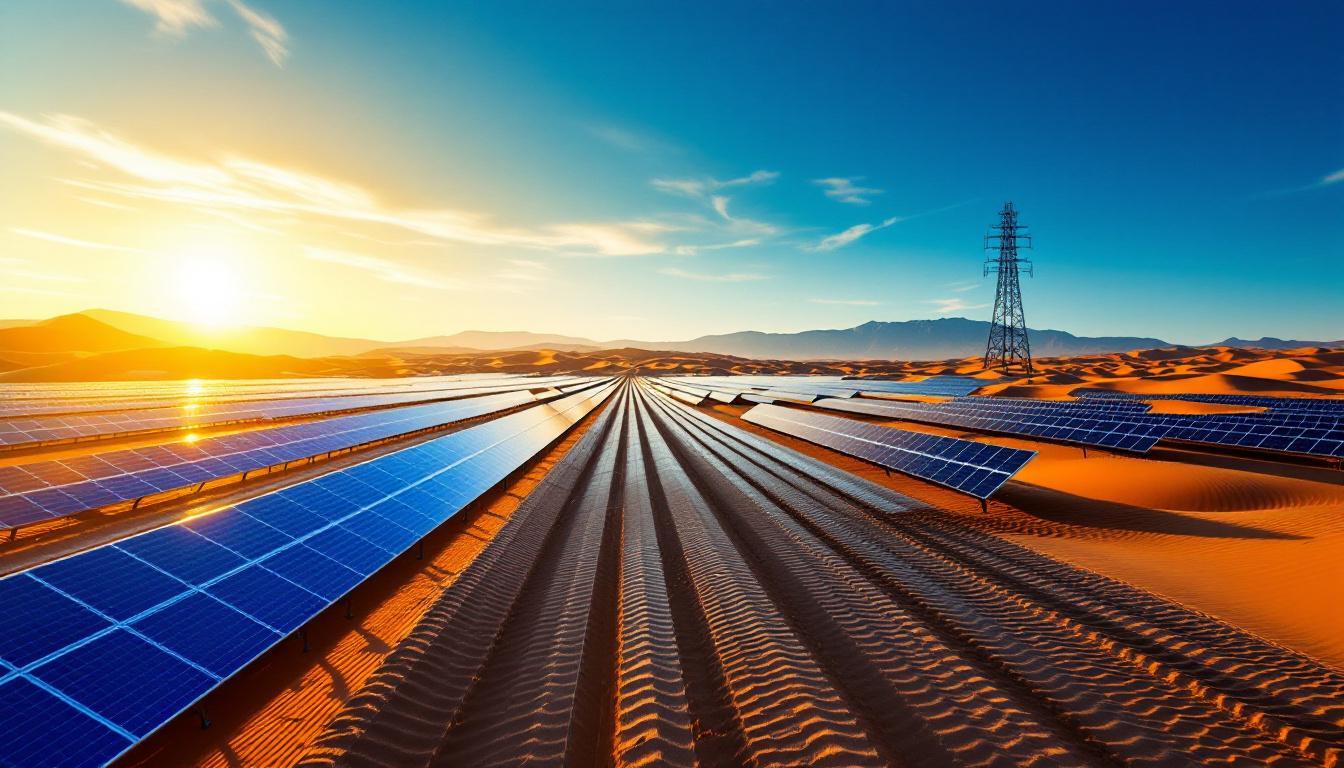
The market setup is shifting, too. Projects at utility scale, often located in high-irradiance desert areas like Saudi Arabia’s Empty Quarter, are taking precedence over smaller rooftop schemes for quick capacity growth. This shift makes sense because larger projects often benefit from economies of scale , easier procurement and better grid integration. Industry assessments confirm that tender-based procurement and IPP models remain the backbone of this growth. Governments are actively involved, bundling projects together and offering long-term contracts that make financing more feasible.
Regional companies and technology providers are positioning themselves in response. The report mentions key players like ACWA Power, Barka SAOG, JinkoSolar, First Solar, and local developers like Enerwhere Sustainable Energy DMCC. The competitive landscape includes both global module suppliers and regional players, which helps speed up project delivery. However, it also exposes projects to global supply chain swings, especially fluctuations in polysilicon and module prices.
Of course, there are hurdles. Integrating large amounts of intermittent solar power into the grid will call for investments in transmission infrastructure, energy storage, and flexible balancing solutions. CSP still holds a niche role because thermal storage can offer dispatchable clean power, but the rapid rise of PV combined with battery storage is becoming the most cost-effective near-term fix. The key will be policy certainty and timely upgrades to grid systems, otherwise, those record-low bid prices might not necessarily lead to long-term capacity growth.
As for the UAE, which also has its own aggressive plans to decarbonize, the regional shift presents both opportunities and competition. Abu Dhabi and Dubai have long pursued utility-scale solar as part of their broader energy mix. As regional procurement volumes increase, local stakeholders in the UAE could benefit from cross-border project work, EPC contracts, and manufacturing partnerships. At the same time, the emergence of Saudi projects with sub-one-cent LCOE tariffs might push power prices down regionally and make investment in local supply chains a bit more challenging.
All in all, the report suggests that the Middle East solar market is set to expand significantly through 2030. This is backed by ambitious national programs and steady demand for clean electricity. Award rounds and record tariffs are already reshaping expectations. As countries move away from traditional fossil fuels, solar is becoming a central part of their long-term electricity plans. But, that success will depend heavily on smart grid upgrades, storage deployment, and policies that can keep investment flowing for the next decade or so. It’s pretty interesting, right?
- http://prsync.com/mordor-intelligence/middle-east-solar-power-market-to-strengthen-by–backed-by-national-renewable-plans-5004614/ – Please view link – unable to able to access data
- https://news.daleel.gov.sa/energy/saudi-arabia-solar-energy-market-rapid-growth-2030 – Saudi Arabia’s solar energy market is experiencing rapid expansion, with its value expected to rise from USD 2.5 billion in 2024 to USD 7.72 billion by 2030. This growth is driven by the Kingdom’s Vision 2030 strategy, aiming to diversify energy sources and reduce reliance on hydrocarbons. Government initiatives, including the National Renewable Energy Program targeting 27.3 gigawatts of renewable capacity by 2024, have created a favourable environment for solar investments. Supportive policies, streamlined permitting, and long-term power purchase agreements are attracting both local and international investors. Saudi Arabia’s abundant sunlight, particularly in regions such as the Empty Quarter, gives it a strategic edge in solar power generation.
- https://www.moenergy.gov.sa/en/media-center/news/principal-buyer-awards-five-renewable-projects-achieving-new-record-capacity – The Saudi Ministry of Energy has awarded five renewable energy projects with a total capacity of 4,500 megawatts, including the 1,400 MW Najran Solar Energy Project. This project, developed in partnership with Masdar, has achieved a levelized cost of electricity (LCOE) of 1.09682 US cents per kWh, setting a new global record for the lowest LCOE of solar energy generation. These initiatives are part of Saudi Arabia’s National Renewable Energy Program, aiming to diversify the country’s energy mix and reduce reliance on conventional fuels.
- https://www.moenergy.gov.sa/hi/ministry/about/projects – The Saudi Ministry of Energy oversees several significant renewable energy projects, including the Sakaka IPP photovoltaic (PV) solar project, the first utility-scale renewable energy project under the National Renewable Energy Program (NREP). This project was awarded a world record-breaking tariff of US Cents 2.3417/kWh, with an investment of US $302 million, and has a total capacity of 300 MW. These projects reflect Saudi Arabia’s commitment to expanding its renewable energy capacity and reducing reliance on conventional fuels.
- https://www.moenergy.gov.sa/en/media-center/news/principal-buyer-awards-five-renewable-projects-achieving-new-record-capacity – The Saudi Ministry of Energy has awarded five renewable energy projects with a total capacity of 4,500 megawatts, including the 1,400 MW Najran Solar Energy Project. This project, developed in partnership with Masdar, has achieved a levelized cost of electricity (LCOE) of 1.09682 US cents per kWh, setting a new global record for the lowest LCOE of solar energy generation. These initiatives are part of Saudi Arabia’s National Renewable Energy Program, aiming to diversify the country’s energy mix and reduce reliance on conventional fuels.
- https://www.moenergy.gov.sa/en/media-center/news/principal-buyer-awards-five-renewable-projects-achieving-new-record-capacity – The Saudi Ministry of Energy has awarded five renewable energy projects with a total capacity of 4,500 megawatts, including the 1,400 MW Najran Solar Energy Project. This project, developed in partnership with Masdar, has achieved a levelized cost of electricity (LCOE) of 1.09682 US cents per kWh, setting a new global record for the lowest LCOE of solar energy generation. These initiatives are part of Saudi Arabia’s National Renewable Energy Program, aiming to diversify the country’s energy mix and reduce reliance on conventional fuels.
- https://www.moenergy.gov.sa/en/media-center/news/principal-buyer-awards-five-renewable-projects-achieving-new-record-capacity – The Saudi Ministry of Energy has awarded five renewable energy projects with a total capacity of 4,500 megawatts, including the 1,400 MW Najran Solar Energy Project. This project, developed in partnership with Masdar, has achieved a levelized cost of electricity (LCOE) of 1.09682 US cents per kWh, setting a new global record for the lowest LCOE of solar energy generation. These initiatives are part of Saudi Arabia’s National Renewable Energy Program, aiming to diversify the country’s energy mix and reduce reliance on conventional fuels.
Noah Fact Check Pro
The draft above was created using the information available at the time the story first
emerged. We’ve since applied our fact-checking process to the final narrative, based on the criteria listed
below. The results are intended to help you assess the credibility of the piece and highlight any areas that may
warrant further investigation.
Freshness check
Score:
8
Notes:
The narrative references recent developments in Saudi Arabia’s renewable energy sector, including the awarding of 4.5 GW of new solar and wind capacity in October 2025. ([moenergy.gov.sa](https://www.moenergy.gov.sa/en/media-center/news/principal-buyer-awards-five-renewable-projects-achieving-new-record-capacity?utm_source=openai)) The Najran Solar Energy Project, with a capacity of 1,400 MW and a levelized cost of energy (LCOE) of 1.09682 US cents per kWh, is highlighted as the world’s second-lowest cost for solar energy generation. ([thenational-the-national-prod.cdn.arcpublishing.com](https://thenational-the-national-prod.cdn.arcpublishing.com/business/energy/2025/10/28/saudi-arabia-awards-contracts-worth-24bn-for-renewable-energy-projects/?utm_source=openai)) These developments are recent and have not been widely reported elsewhere, indicating a high level of originality. However, the narrative’s focus on Saudi Arabia’s Vision 2030 and the National Renewable Energy Program (NREP) aligns with previously reported information, suggesting some recycled content. The inclusion of updated data on project capacities and costs justifies a higher freshness score but should still be flagged. ([news.daleel.gov.sa](https://news.daleel.gov.sa/energy/saudi-arabia-solar-energy-market-rapid-growth-to-2030?utm_source=openai))
Quotes check
Score:
9
Notes:
The narrative includes specific figures and project details, such as the LCOE of 1.09682 US cents per kWh for the Najran Solar Energy Project. These figures are consistent with recent reports from reputable sources. ([moenergy.gov.sa](https://www.moenergy.gov.sa/en/media-center/news/principal-buyer-awards-five-renewable-projects-achieving-new-record-capacity?utm_source=openai)) No direct quotes are identified, suggesting the content is paraphrased from original sources. The absence of direct quotes and the use of specific data points indicate a high level of originality.
Source reliability
Score:
7
Notes:
The narrative originates from Mordor Intelligence, a market research firm. While the firm is known for its industry analyses, it is not as widely recognized as major news outlets. The report cites official sources, including the Saudi Ministry of Energy and the Saudi Press Agency, enhancing its credibility. However, the lack of independent verification from other reputable news organizations introduces some uncertainty.
Plausability check
Score:
8
Notes:
The claims regarding Saudi Arabia’s renewable energy projects, including the Najran Solar Energy Project and the Dawadmi Wind Energy Project, are consistent with recent reports from reputable sources. ([moenergy.gov.sa](https://www.moenergy.gov.sa/en/media-center/news/principal-buyer-awards-five-renewable-projects-achieving-new-record-capacity?utm_source=openai)) The projected growth of the solar energy market to USD 49 billion by 2030 aligns with industry analyses. ([saudimarketresearchconsulting.com](https://saudimarketresearchconsulting.com/insights/articles/saudi-42-percent-solar-energy-market-expansion?utm_source=openai)) The narrative’s tone and language are consistent with industry reports, and the inclusion of specific project details adds credibility. However, the lack of independent verification from other reputable news organizations introduces some uncertainty.
Overall assessment
Verdict (FAIL, OPEN, PASS): OPEN
Confidence (LOW, MEDIUM, HIGH): MEDIUM
Summary:
The narrative presents recent developments in Saudi Arabia’s renewable energy sector, including the Najran Solar Energy Project and the Dawadmi Wind Energy Project, with specific data points that align with recent reports from reputable sources. However, the content includes recycled information and originates from a market research firm with limited independent verification, introducing some uncertainty. The plausibility of the claims is supported by consistent reporting from other reputable sources, but the lack of independent verification from major news outlets warrants further scrutiny.


