





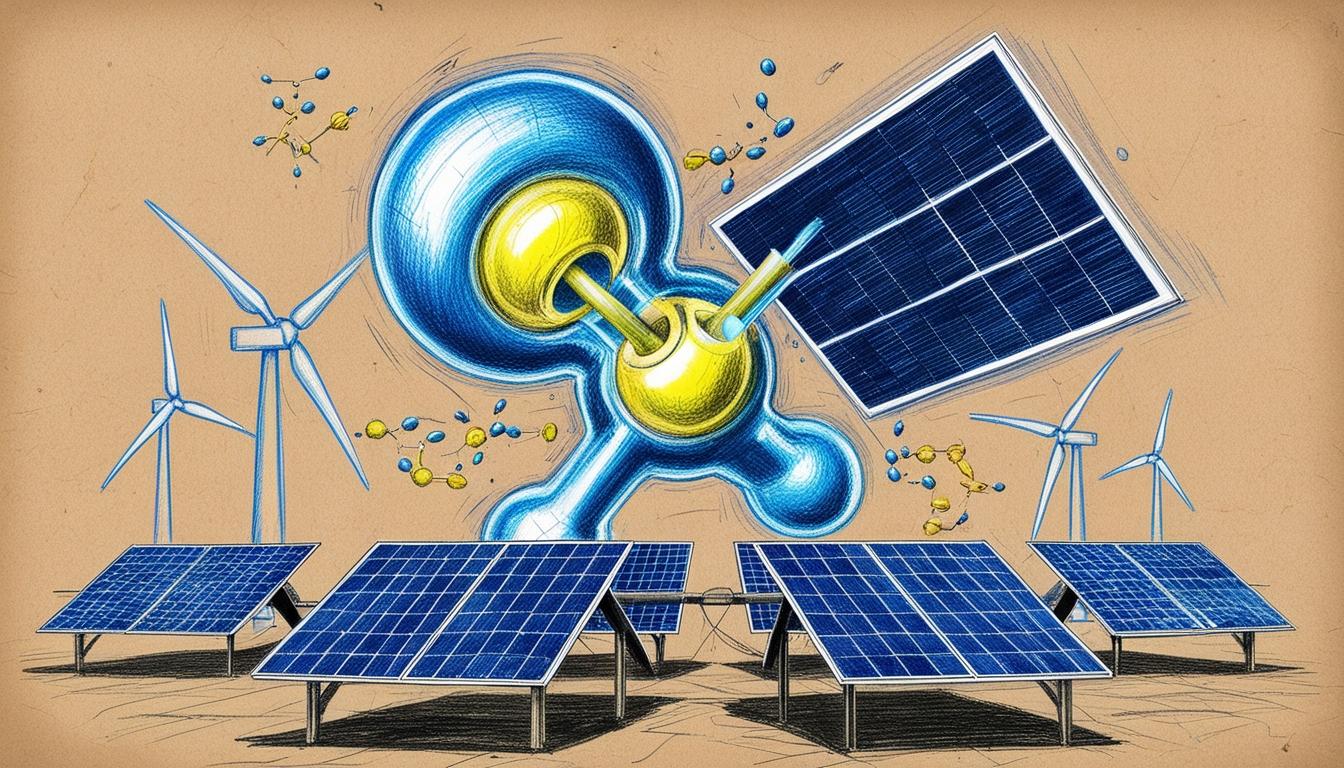
**Cairo**: The Kuwait-based OAPEC has launched the Hydrogen Guidance Initiative to advance green and blue hydrogen development across 11 Arab member states, focusing on collaboration, innovation, integration with renewables, investment challenges, and skills development.
The Kuwait-based Organization of Arab Petroleum Exporting Countries (OAPEC) has announced the launch of a new initiative aimed at advancing the development of green and blue hydrogen across its 11 member states. The organisation, which coordinates energy policies among oil-producing Arab nations, revealed the “Hydrogen Guidance Initiative” during its third annual symposium held in Cairo last week. This initiative reflects five years of ongoing OAPEC efforts dedicated to low-carbon hydrogen development.
OAPEC member countries involved include a number of states with significant ambitions in clean hydrogen, such as Egypt, Saudi Arabia, the United Arab Emirates, Algeria, Tunisia, and Kuwait, alongside Bahrain, Iraq, Libya, Qatar, and Syria.
The Hydrogen Guidance Initiative is designed to address several key priorities in the hydrogen sector. Jamal Issa Al-Loughani, OAPEC’s secretary general, outlined five specific aims of the initiative:
-
Enhancing regional and international collaboration through the establishment of a joint Arab platform for data and experience exchange. This includes forming an expert team to monitor industry developments and produce best-practice guides on an ongoing basis.
-
Promoting scientific innovation in hydrogen production technologies, including supporting research programmes focusing on electrolysis and carbon capture methodologies.
-
Supporting the integration of hydrogen with renewable energy sources by assisting member states in developing national strategies combining hydrogen production with wind and solar resources, and investing in infrastructure aimed at reducing operational costs.
-
Addressing technical and investment challenges related to hydrogen transport and storage by conducting feasibility studies for network development. This may involve utilising existing gas pipelines and seeking partnerships with European and international entities to facilitate technology and expertise transfer.
-
Building national capabilities through the integration of hydrogen topics into university curricula and launching vocational training programmes to cultivate a skilled workforce in the hydrogen sector.
In a Facebook post, Al-Loughani announced the appointment of a general co-ordinator tasked with overseeing the implementation of these components and monitoring hydrogen industry progress within the region, although the individual’s name was not disclosed.
Al-Loughani emphasised the initiative’s goal to support the region’s transition toward a more sustainable energy future and to keep pace with global shifts in the energy sector, particularly regarding low-carbon hydrogen technologies.
It is important to note that OAPEC is distinct from the Organisation of the Petroleum Exporting Countries (Opec), which is headquartered in Vienna and includes a broader membership, encompassing several sub-Saharan African nations such as Nigeria, Congo-Brazzaville, Equatorial Guinea, and Gabon, as well as Venezuela and seven Arab countries.
This announcement marks a significant step in the Arab world’s collective approach to hydrogen, aiming to foster regional cooperation, technological innovation, and skills development consistent with emerging global energy trends.
Source: Noah Wire Services
- https://www.hydrogeninsight.com/policy/international-low-carbon-hydrogen-initiative-launched-by-arab-fossil-fuel-states/2-1-1810270 – Corroborates OAPEC’s launch of a low-carbon hydrogen initiative for developing green and blue hydrogen across its 11 member states.
- https://www.h2-view.com/story/oapec-targets-blue-and-green-hydrogen-development/2125057.article/ – Supports details about the initiative’s focus on supply chain challenges, renewable energy integration, and data exchange among OAPEC members.
- https://www.upstreamonline.com/hydrogen/arab-fossil-fuel-states-launch-international-low-carbon-hydrogen-initiative/2-1-1810567 – Confirms OAPEC’s role in coordinating hydrogen development efforts among its 11 Arab member countries.
- https://oapecorg.org – Provides official OAPEC content highlighting energy transition initiatives, including hydrogen-related policies (as referenced in its news/press sections).
- https://hydrogen-central.com/oapec-launches-arabh2-hydrogen-energy-development-steering-initiative/ – Details the ArabH2 Steering Initiative’s launch, including Cairo symposium involvement and its focus on supply chains, renewable integration, and expertise exchange.
- https://www.h2-view.com/story/oapec-targets-blue-and-green-hydrogen-development/2125057.article/ – Reiterates the initiative’s emphasis on research programs for electrolysis and carbon capture, alongside international best-practice adoption.
- https://news.google.com/rss/articles/CBMixgFBVV95cUxQTWFvX1lweldXR08weEJFMjhnamc0SEtVTEpoc0sxQXdEMm96VTlvaGpVUXZKMGUxQmxsTmNJWjM5VjFKZ3EzQTlUVGRacVNqa3pDSzktSlM4SjBxWHJvazdCc05OZnI5S1g1TEJNTzRyZWxLUmVnRC1ITDYzcE1KRWU0ODgwZk1SZEFmQ1A4bXFfSDllZERRYVowQTFROGR6Nmp6V3I5OGRfendwbjhOTE1UVlpkRGV2Tm1pRHB5X2pMekdfblE?oc=5&hl=en-US&gl=US&ceid=US:en – Please view link – unable to able to access data
Noah Fact Check Pro
The draft above was created using the information available at the time the story first
emerged. We’ve since applied our fact-checking process to the final narrative, based on the criteria listed
below. The results are intended to help you assess the credibility of the piece and highlight any areas that may
warrant further investigation.
Freshness check
Score:
8
Notes:
The narrative mentions a recent symposium in Cairo and refers to ongoing efforts over five years, suggesting the information is relatively current. However, specific dates for events like the symposium are not provided.
Quotes check
Score:
6
Notes:
There are no direct quotes from external sources that can be verified independently. A Facebook post is mentioned but lacks an accessible link for verification.
Source reliability
Score:
7
Notes:
The narrative appears to be based on a reputable topic and references established organizations like OAPEC. However, the exact origin of the content (e.g., a news outlet or press release) is unclear.
Plausability check
Score:
9
Notes:
The claims align with global trends towards sustainable energy and hydrogen development. The initiative’s focus on regional collaboration and technology innovation is plausible given the involvement of major oil-producing nations.
Overall assessment
Verdict (FAIL, OPEN, PASS): PASS
Confidence (LOW, MEDIUM, HIGH): MEDIUM
Summary:
The content is generally plausible and reflects a coherent initiative related to sustainable energy trends. However, the absence of specific dates and identifiable sources reduces confidence in its freshness and reliability.


