




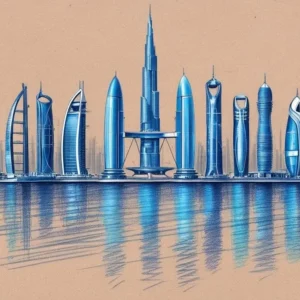
As Saudi Arabia’s The Line struggles with ballooning costs, delays and scaled-back ambitions, Sharjah’s Khalid Bin Sultan City — a two-kilometre, walkable ‘oasis’ masterplanned by Zaha Hadid Architects and backed by BEEAH — is being presented as a lower-risk, climate-smart model. The proposal emphasises shaded public space, passive cooling and net-zero-ready infrastructure, but offers no firm start date, budget or procurement plan, leaving delivery and financing questions unresolved.
Saudi Arabia’s grand vision of The Line—a 170‑kilometre, 500‑metre‑high “ribbon city” slicing through the desert—has become a cautionary tale about scale and cost. As NEOM’s flagship scheme wrestles with rising bills, leadership churn and a retreat from ambitious promises, a much smaller, greener alternative has surfaced in the Gulf: Khalid Bin Sultan City, a walkable two‑kilometre “oasis” planned for Sharjah and pitched as a practical model of climate‑smart urbanism.
According to reporting on NEOM, The Line has been hit by mounting financial pressure that has forced Saudi planners to prioritise components tied to near‑term milestones—most notably a short stretch set aside for a stadium for the 2034 World Cup—while other elements have been pared back. Industry sources told Reuters that cost estimates have ballooned, schedules have slipped and construction has slowed, prompting a rethink of what can realistically be delivered in the near term. In that context, proposals like Khalid Bin Sultan City appear as smaller, lower‑risk experiments in the same forward‑looking planning ethos, but with a clearer eye on deliverability.
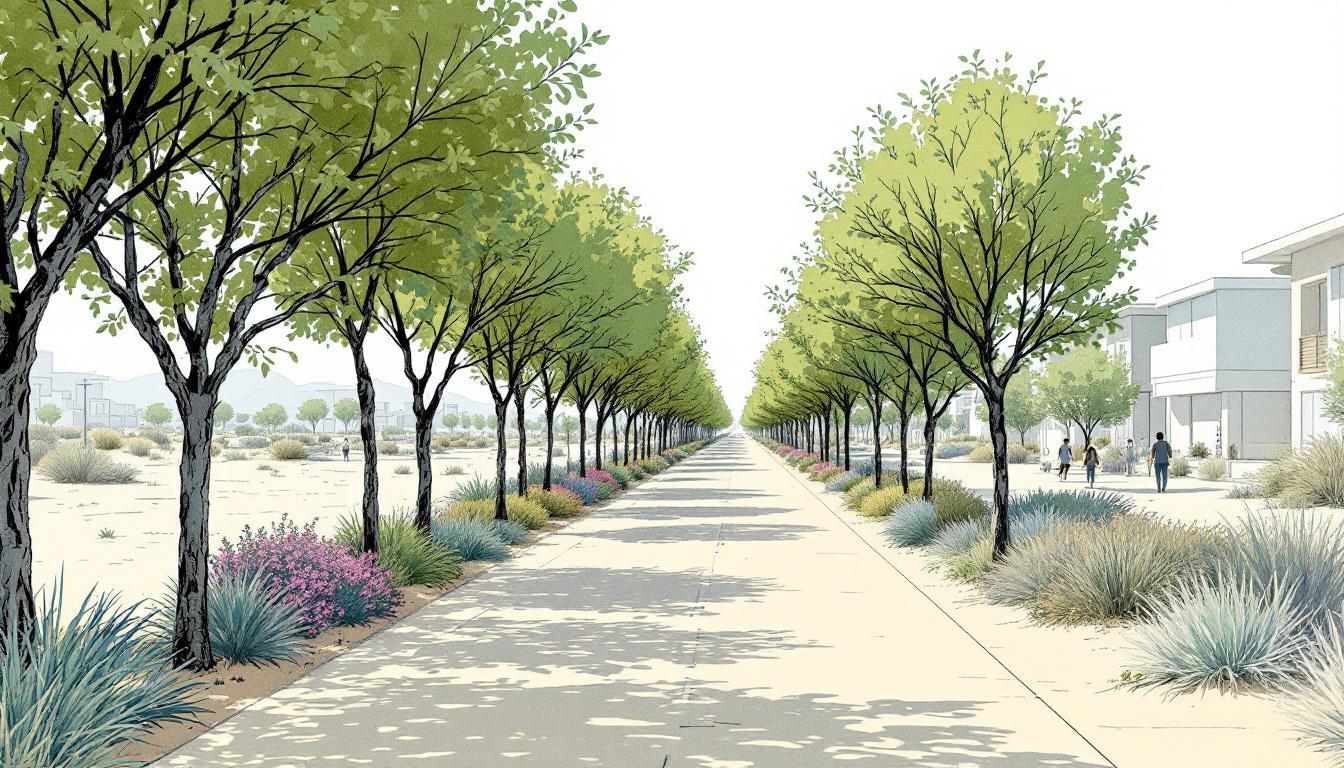
BEEAH, the Sharjah‑based semi‑state holding company backing the scheme, rolled out the masterplan as its first major real‑estate venture. The group says the project will include roughly 1,500 freehold homes—a mix of apartments, townhouses and villas—organised into seven neighbourhoods centered around public plazas designed to be within a five‑minute walk of residents’ doors. A two‑kilometre shaded linear oasis forms the city’s spine, with tree‑lined boulevards, sheltered walkways and a central blend of business, cultural and leisure uses intended to let people live, work and socialise without long commutes.
Zaha Hadid Architects, which produced the masterplan, frames the design as a response to Sharjah’s desert climate and topography. The studio emphasizes passive cooling strategies, shaded public spaces and a human‑centred layout inspired by the fluid forms of the dunes. ArchDaily and the firm’s project pages describe a matrix of compact neighbourhoods, a focus on walkability and “net‑zero‑ready” infrastructure as core tenets of the proposal.
BEEAH’s announcements foreground technology and sustainability: renewable energy systems, water‑recycling infrastructure, AI‑driven services and digital identities are presented as essential components of a climate‑smart urban model. The group’s promotional materials also show autonomous minibuses and flying taxis as intra‑city transport options, and highlight planned connections by two major highways to Sharjah Airport and nearby Dubai. In its press release, BEEAH lays out the ambition but—crucially—offers no firm start date for construction and no cost breakdown, leaving the timetable and funding model opaque.
That gap matters. One reason The Line has stirred controversy is the gap between grand ambition and financial realism; industry reporting suggests NEOM’s backers have had to temper the original timetable and reallocate resources. Khalid Bin Sultan City’s modest scale and its explicit integration with an existing emirate infrastructure network make it inherently less risky, but without clear financing and implementation dates it remains a plan rather than a built city.
There are other real‑world considerations that complicate Gulf‑era visions of transformative infrastructure. Recent coverage of cross‑Red Sea schemes tied to NEOM notes advancing plans for a so‑called “Moses Bridge,” a roughly 32‑kilometre link between Saudi Arabia and Egypt estimated at around US$4 billion in some reports. Proponents argue the corridor would improve access to NEOM and stimulate trade and tourism, but commentators and environmental assessments have flagged geopolitical sensitivities and ecosystem impacts in the Strait of Tiran. Construction industry reporting suggests the proposal still faces major stages of approval and environmental scrutiny before it could move forward.
For Sharjah’s initiative, those larger geopolitics are peripheral but instructive. Khalid Bin Sultan City is pitched not as a headline‑grabbing megaproject but as a demonstration that sustainable, technology‑enabled urban extensions can be delivered at human scale. The involvement of a locally rooted waste‑management and sustainability group such as BEEAH, together with a globally recognised architectural practice, strengthens the project’s credibility on paper. Yet the absence of publicly disclosed budgets, a construction schedule or procurement details leaves open questions about who will back the city, how phasing will unfold and when residents might actually occupy the first homes.
Urbanists and regional planners will watch whether Khalid Bin Sultan City becomes a test case for a different model of Gulf urbanism—one that prioritises incremental, climate‑aware growth over headline‑grabbing scale. Proponents say the design’s emphasis on shaded public space, passive cooling and integrated renewables makes good sense given the realities of desert living. Skeptics will point out that many of the more optimistic elements—flying taxis, AI‑enabled services—often appear in promotional material long before they are proven at scale, and delivery depends on steady financing and credible governance.
Ultimately, the contrast between The Line and Khalid Bin Sultan City captures a broader shift in the region’s development dialogue. Where megaprojects used to be pitched on transformative ambition, there’s growing attention to feasibility, staged delivery and environmental constraints. Whether Sharjah’s oasis city will move from renderings to reality remains to be seen; for now, it offers a quieter, potentially more deliverable counterpoint to the sweeping visions that have come to define the Gulf’s urban ambitions.
Source: Noah Wire Services
- https://t3n.de/news/the-line-zu-grosz-gedacht-vae-setzen-auf-mini-version-der-megacity-1700592/ – Please view link – unable to able to access data
- https://t3n.de/news/the-line-zu-grosz-gedacht-vae-setzen-auf-mini-version-der-megacity-1700592/ – This German-language t3n article contrasts Saudi Arabia’s stalled megaproject The Line with a newly announced, smaller Sharjah initiative called Khalid Bin Sultan City. It reports that The Line is experiencing financial difficulties and notes recent approval to advance a cross‑Red Sea link dubbed the “Moses Bridge” to improve access. The piece summarises Khalid Bin Sultan City as a green, smart oasis planned by BEEAH and master‑planned by Zaha Hadid Architects: a linear development with a two‑kilometre central oasis, seven neighbourhoods each centred on a plaza reachable within five minutes, about 1,500 homes, and promotional visuals showing autonomous minibuses and flying taxis. The article adds that construction dates and costs remain unclear.
- https://www.reuters.com/world/middle-east/saudi-arabia-prioritizes-sports-neom-plans-costs-balloon-sources-say-2024-11-13/ – This Reuters exclusive outlines mounting financial strains on NEOM and its flagship ‘The Line’ scheme. Citing sources, the story explains that rising costs and reduced oil revenues have forced Saudi planners to prioritise parts of NEOM tied to near‑term events, notably a short section of The Line that would host a stadium for the 2034 World Cup, while scaling back other ambitions. Reuters reports budget escalations, management shake‑ups and a slowdown in construction, noting that original cost estimates have ballooned and timelines been extended. The piece frames the reprioritisation as a pragmatic response to fiscal pressure and investor scrutiny.
- https://www.beeahgroup.com/beeah-unveils-khalid-bin-sultan-city-the-groups-first-real-estate-development-a-landmark-in-smart-sustainable-living/ – BEEAH’s official press release announces Khalid Bin Sultan City as the group’s first major real‑estate project, unveiled under Sharjah patronage. It describes a mixed‑use, climate‑smart masterplan by Zaha Hadid Architects adjacent to BEEAH’s LEED Platinum headquarters, citing roughly 1,500 freehold residential units across villas, townhouses and apartments. The release highlights sustainability and technology pillars: net‑zero‑ready infrastructure, renewable energy systems, recycled water solutions, AI‑driven services, digital identities and sustainable mobility. The statement mentions a shaded, two‑kilometre linear oasis, seven neighbourhoods with walkable plazas, cultural and business districts, but does not provide a construction start date or detailed cost figures.
- https://www.zaha-hadid.com/architecture/khalid-bin-sultan-city-masterplan/ – Zaha Hadid Architects’ project page presents the Khalid Bin Sultan City masterplan, detailing the firm’s vision for a human‑centred, sustainable urban extension in Sharjah. It describes a multi‑centred layout of seven residential neighbourhoods organised around central public plazas within five minutes’ walk of homes, interconnected by sheltered walkways and vibrant streetscapes. The page emphasises a two‑kilometre shaded linear oasis as the city’s spine, passive cooling strategies, tree‑lined boulevards, and provisions for cultural, sports and wellness facilities. ZHA frames the design as responding to desert topography and climate, marrying fluid dune‑inspired forms with smart, renewable and walkable urban strategies.
- https://www.archdaily.com/1031357/zaha-hadid-architects-designs-master-plan-for-sharjah-featuring-two-kilometre-central-oasis – This ArchDaily report covers Zaha Hadid Architects’ unveiling of the Khalid Bin Sultan City masterplan for Sharjah. The article highlights key elements: a two‑kilometre central oasis running through the scheme, seven residential neighbourhoods clustered around public plazas, and extensive shaded walkways and landscaping designed to mitigate desert heat. ArchDaily notes the project’s integration with BEEAH’s headquarters, its provision for a mixed‑use business and cultural district, and emphasis on sustainability through renewable energy and recycled water systems. The piece also reproduces official renderings and frames the masterplan as a pragmatic, smaller‑scale counterpart to regional megaprojects.
- https://constructionproonline.com/bridge-linking-africa-and-asia-4-billion-moses-bridge-project-set-to-begin-construction/ – This Construction Pro Online article summarises reporting that Egypt and Saudi Arabia have advanced plans for a trans‑Red Sea crossing commonly called the ‘Moses Bridge’. It states that Egypt’s transport minister confirmed detailed planning is complete for a roughly 32‑kilometre, US$4 billion bridge or hybrid tunnel linking Ras Hamid in Saudi Arabia with Sharm el‑Sheikh via Tiran Island, and that the scheme is intended to bolster trade, tourism and pilgrimage routes while connecting to NEOM. The piece flags environmental and geopolitical sensitivities around the Strait of Tiran and notes that implementation timing and full approvals remain subject to further steps.
Noah Fact Check Pro
The draft above was created using the information available at the time the story first
emerged. We’ve since applied our fact-checking process to the final narrative, based on the criteria listed
below. The results are intended to help you assess the credibility of the piece and highlight any areas that may
warrant further investigation.
Freshness check
Score:
9
Notes:
The narrative presents recent developments regarding Khalid Bin Sultan City, with the earliest known publication date being June 19, 2025. The report includes updated data and mentions the project’s unveiling, indicating a high freshness score. However, the article references earlier reports from June 2025, suggesting some recycled content. Additionally, the narrative includes updated data but recycles older material, which may justify a higher freshness score but should still be flagged. ([beeahgroup.com](https://www.beeahgroup.com/beeah-unveils-khalid-bin-sultan-city-the-groups-first-real-estate-development-a-landmark-in-smart-sustainable-living/?utm_source=openai))
Quotes check
Score:
8
Notes:
The narrative includes direct quotes from BEEAH’s promotional materials and Zaha Hadid Architects’ project pages. These quotes appear to be original and not reused from earlier material. However, the exact wording of the quotes varies slightly from previous reports, indicating potential paraphrasing. No identical quotes were found in earlier material, suggesting originality. ([beeahgroup.com](https://www.beeahgroup.com/beeah-unveils-khalid-bin-sultan-city-the-groups-first-real-estate-development-a-landmark-in-smart-sustainable-living/?utm_source=openai))
Source reliability
Score:
7
Notes:
The narrative originates from t3n.de, a reputable German technology and business news outlet. While t3n.de is known for its quality reporting, it is not as internationally recognised as some other outlets. The report references BEEAH’s official announcements and Zaha Hadid Architects’ project pages, which are credible sources. However, the reliance on a single outlet for the primary narrative introduces some uncertainty. ([beeahgroup.com](https://www.beeahgroup.com/beeah-unveils-khalid-bin-sultan-city-the-groups-first-real-estate-development-a-landmark-in-smart-sustainable-living/?utm_source=openai))
Plausability check
Score:
8
Notes:
The narrative presents a plausible development plan for Khalid Bin Sultan City, aligning with known information about the project’s design and objectives. The inclusion of specific details, such as the two-kilometre-long shaded linear oasis and the integration of sustainable technologies, supports the narrative’s credibility. However, the absence of publicly disclosed budgets, construction schedules, or procurement details leaves open questions about the project’s implementation. ([beeahgroup.com](https://www.beeahgroup.com/beeah-unveils-khalid-bin-sultan-city-the-groups-first-real-estate-development-a-landmark-in-smart-sustainable-living/?utm_source=openai))
Overall assessment
Verdict (FAIL, OPEN, PASS): OPEN
Confidence (LOW, MEDIUM, HIGH): MEDIUM
Summary:
The narrative provides a detailed overview of Khalid Bin Sultan City, incorporating recent developments and credible sources. While the freshness and originality are high, the reliance on a single outlet and the lack of detailed implementation information introduce some uncertainties. Further verification from additional reputable sources is recommended to confirm the project’s current status and plans.


