





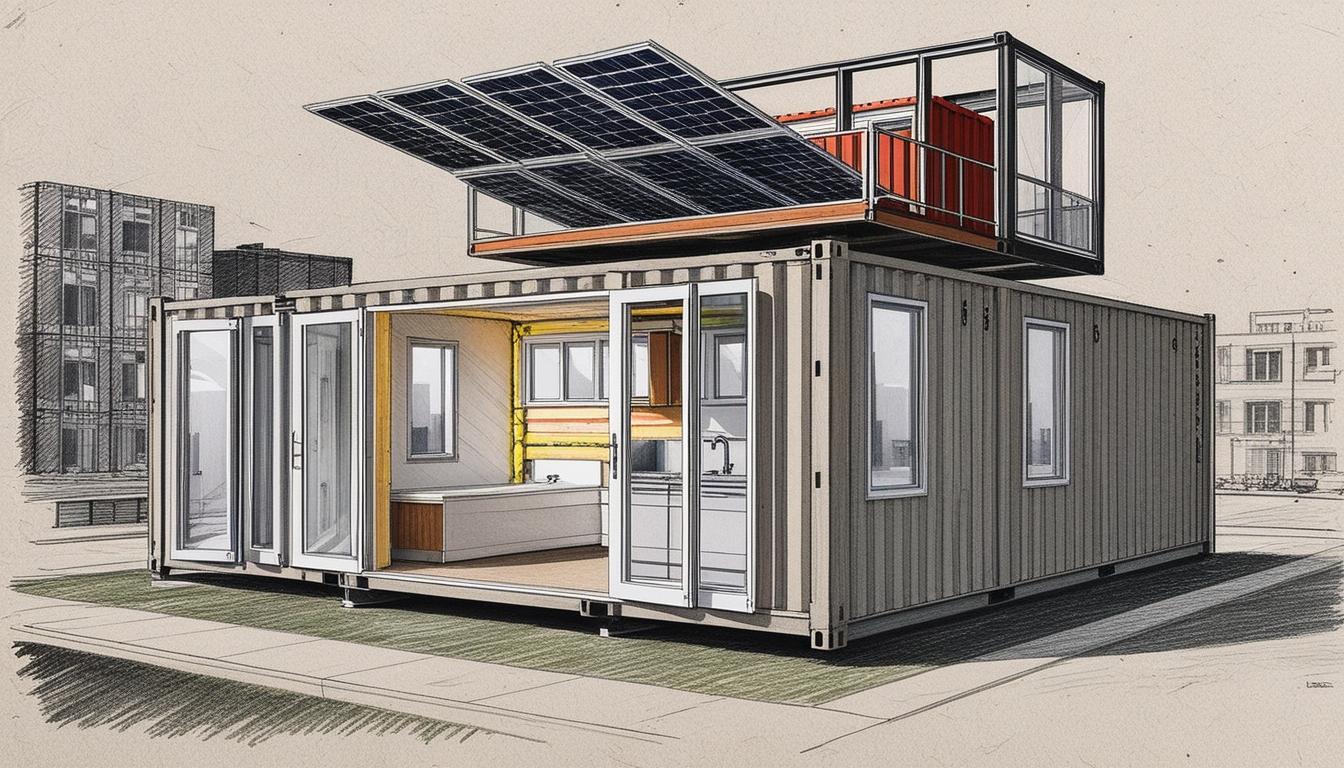
As rapid urban population growth intensifies the global housing crisis, innovators are increasingly turning to shipping container homes as a transformative response to affordability and sustainability challenges. These repurposed cargo containers—originally built for ocean freight—are being reinvented into modern, adaptable living spaces that challenge traditional residential architecture while embracing compactness, durability, and environmental consciousness. The growing acceptance of container homes marks a significant shift in urban living, highlighting a move toward modular, minimalistic design principles that prioritise efficient use of space and resources.
Urban centres worldwide face the pressing need to accommodate more residents within shrinking footprints. Modular construction, particularly through container conversion, offers a promising solution. Architects and developers now skillfully redesign these steel units into anything from compact studios to multi-level residential complexes. This modularity allows for rapid, resource-efficient building on limited land plots. Moreover, customization options, including contemporary interiors, smart energy systems, and bespoke layouts, allow inhabitants to enjoy a tailored lifestyle that blends functionality with personal expression. This approach reshapes urban housing not merely as cost-effective but as enabling better quality of life in dense cities.
In environmentally ambitious regions like Dubai, container homes are gaining traction beyond residential use. The local industry of Container Conversion Dubai exemplifies the trend, leveraging innovations in thermal insulation, reflective coatings, and integrated cooling systems to overcome the region’s intense heat. These advancements make container dwellings viable even in challenging climates, serving not only as homes but also as pop-up cafés, office pods, and temporary commercial spaces. Dubai’s experimentation with adaptive architecture reflects a broader commitment to smart urban growth through repurposed materials and methods.
The practical transformation of shipping containers into livable homes depends on addressing several key design considerations. Insulation is paramount to maintain comfortable indoor temperatures against the metal’s natural heat conductivity. Common solutions include closed-cell spray foam and mineral wool to regulate temperature and moisture. Maximising natural light and ventilation often involves fitting glass doors, large windows, or skylights, alongside cross-ventilation designs and air-exchange systems to ensure healthy indoor air quality. Given the space constraints inherent in container dimensions, efficient space-saving strategies are essential. Multi-functional furniture, integrated storage, and vertical design elements help residents enjoy a roomy and practical living environment. These details underscore that container living is not about compromise but rather thoughtful, contemporary solutions for urban dwelling.
Despite early scepticism—where container homes were sometimes viewed as temporary or makeshift—the sector has matured into an aspirational design movement redefining urban identity. Architects are pushing aesthetic boundaries with advanced exterior cladding, well-designed landscaping, and high-quality interior finishes. Whether as sleek city lofts or charming tiny homes tucked into unexpected urban nooks, container housing now qualifies as a legitimate and stylish option. The appeal lies not only in affordability but in sustainability, flexibility, and the creative freedom it offers homeowners to live differently while respecting environmental goals.
This trend is underscored by notable initiatives across the United States. In Atlanta, for example, the city launched ‘The Melody’ in early 2024, a rapid housing initiative comprising 40 shipping container units intended to provide dignified, affordable housing for previously unhoused people. This aligns with the city’s ambitious plan to create 20,000 affordable homes by 2030, with each unit costing under $125,000. Such projects demonstrate how container homes are being integrated into public policy to tackle homelessness with humane, scalable solutions.
Similarly, Phoenix-based Steel + Spark has developed solar-powered ‘Sparkbox’ container homes designed for off-grid living, reflecting the rise of tech-integrated modular housing. Their innovative approach garnered recognition from the U.S. Department of Housing and Urban Development and led to the development of the ‘X-Wings’ container shelters for homeless populations. Though construction timelines sometimes face delays, these projects exemplify how container homes are becoming practical instruments in emergency and transitional housing solutions.
In established markets like Houston, container homes are increasingly popular as affordable, eco-friendly accommodation. The average build cost ranges from $10,000 to $35,000, depending on design complexity, and their modular nature permits creative stacking and reconfiguration, catering to diverse living needs. This growing regional interest highlights a broader national trend towards sustainable urban living that combines cost efficiency and environmental responsibility.
The global container homes market reflects this momentum, with projections estimating it will reach over $120 billion by 2033. Growth drivers include rising demand for sustainable living, modular designs adaptable to urban landscapes, and integration of smart home technologies. However, widespread adoption must navigate regulatory frameworks, structural and insulation challenges, financing constraints, and public perception hurdles.
Beyond individual homes, container communities are emerging as vibrant, sustainable neighbourhoods. Developments like Detroit’s Quayside Village and Toronto’s Stackt Market demonstrate the potential to create eco-conscious, socially connected container neighbourhoods incorporating renewable energy, rainwater harvesting, and green building practices. These projects underline the versatility and communal benefits of container living, fostering new expressions of urban lifestyle.
As cities worldwide search for innovative, sustainable housing, shipping container homes embody a fusion of practicality, creativity, and ecological awareness. From modular urban studios to integrated community hubs, these steel structures are reshaping the fabric of modern residential architecture. With technological improvements and supportive policy frameworks, container homes are poised to play a pivotal role in addressing urban housing shortages and realising greener, smarter cityscapes.
📌 Reference Map:
- Paragraph 1 – [1]
- Paragraph 2 – [1], [6]
- Paragraph 3 – [1]
- Paragraph 4 – [1]
- Paragraph 5 – [1]
- Paragraph 6 – [2]
- Paragraph 7 – [3]
- Paragraph 8 – [6]
- Paragraph 9 – [5]
- Paragraph 10 – [7]
- Paragraph 11 – [1], [5]
Source: Noah Wire Services
- https://hootmix.com/urban-living-revolution-shipping-container-homes-rise/ – Please view link – unable to able to access data
- https://www.axios.com/local/atlanta/2024/01/29/atlanta-homelessness-housing – In January 2024, Atlanta launched ‘The Melody,’ its first rapid housing initiative, featuring 40 converted shipping containers located at 184 Forsyth Street SW, near the Garnett MARTA Station in South Downtown. This project aligns with Mayor Andre Dickens’ goal of adding 20,000 affordable housing units by 2030. The initiative, named after Melody Bloodworth, an unhoused Atlanta woman who died in 2022, emphasizes the city’s commitment to creating dignified living spaces to end homelessness. Each housing unit cost under $125,000, with future expansions requiring community engagement and addressing potential concerns.
- https://www.axios.com/local/phoenix/2023/05/25/shipping-container-housing-homeless-shelters-phoenix – In May 2023, Phoenix-based company Steel + Spark began converting used shipping containers into solar-powered homes and offices. Their ‘Sparkbox’ models, ranging from 160 to 363 square feet, can be installed without connecting to electricity, making them suitable for rapid deployment. The U.S. Department of Housing and Urban Development invited Steel + Spark to showcase the ‘Sparkbox’ at the Innovative Housing Showcase on the National Mall in Washington. Additionally, Phoenix awarded Steel + Spark $2.6 million to develop ‘X-Wings,’ modified containers serving as homeless shelters, each containing 20 sleeping compartments. The initial deployment of X-Wings was scheduled for July 1, 2023, though delays meant the new homeless campus wouldn’t be ready until the year’s end.
- https://www.axios.com/local/charlotte/2017/10/17/want-boxman-studios-launch-residential-container-home-line-can-buy-one-backyard-106752 – In October 2017, Boxman Studios, founded in 2008, specialized in designing, manufacturing, and deploying retrofitted shipping containers for commercial use, including portable marketing activations for brands like Adidas, BMW, and Nike. Prices for these units ranged from $50,000 to $1,500,000 for purchases and $50,000 to $100,000 for leases. The author expressed interest in Boxman Studios launching a residential container home line, suggesting such homes were ideal for generating Airbnb income. Elaine Petitgout from Boxman Studios mentioned that while they received daily residential requests, creating such homes was complex and costly, though there was significant potential in multi-family living and apartment complexes. Additionally, Boxman Studios was capable of creating pop-up hotels for major events, particularly in space-limited areas, as seen in Europe. The author hoped to replace their $1,000 backyard shed with a residential shipping container home in the future.
- https://www.news.market.us/container-homes-market-news/ – The global container homes market is projected to reach USD 121.6 billion by 2033, driven by emerging trends such as sustainable and eco-friendly living, integration of smart home technologies, modular and scalable designs, urban adaptation, and off-grid living solutions. Top use cases include affordable housing, emergency and disaster relief housing, remote and off-grid living, commercial spaces, and educational and community centers. Major challenges encompass regulatory and zoning issues, structural integrity and insulation, perception and acceptance, financing and insurance, and supply chain and material quality.
- https://www.houstoniamag.com/home-and-real-estate/container-homes-trend-houston – In Houston, container homes are gaining popularity as an affordable and eco-friendly housing solution. These steel structures, often measuring around 450 square feet, are constructed from repurposed 20-foot or 40-foot shipping containers. The modular nature of container homes allows for customization, including stacking and positioning containers to create unique living spaces. The average cost to build a container home in Houston ranges from $10,000 to $35,000, depending on design and labor. The growing interest in container homes aligns with the city’s commitment to sustainability and offers a modern alternative to traditional housing.
- https://tinytanktowns.com/getting-started/the-rise-of-container-home-communities-a-new-way-of-living/ – Container home communities are emerging as a new way of living, offering a sense of belonging and sustainable living. Examples include The Quayside Village in Detroit, where residents have converted shipping containers into stylish, affordable homes, and The Stackt Market in Toronto, a thriving container village housing shops, restaurants, and offices. These communities often incorporate green building practices, rainwater harvesting systems, and renewable energy sources, making them eco-friendly. The creativity and flexibility of container homes allow for unique designs, fostering a sense of community and sustainability.
Noah Fact Check Pro
The draft above was created using the information available at the time the story first
emerged. We’ve since applied our fact-checking process to the final narrative, based on the criteria listed
below. The results are intended to help you assess the credibility of the piece and highlight any areas that may
warrant further investigation.
Freshness check
Score:
7
Notes:
The narrative presents a comprehensive overview of shipping container homes, including recent developments in Atlanta and Phoenix. However, similar content has been published in the past, with notable articles from January 2024 and May 2023. The inclusion of recent data may enhance freshness, but the recycled nature of the content warrants a moderate freshness score. ([axios.com](https://www.axios.com/local/atlanta/2024/01/29/atlanta-homelessness-housing?utm_source=openai), [axios.com](https://www.axios.com/local/phoenix/2023/05/25/shipping-container-housing-homeless-shelters-phoenix?utm_source=openai))
Quotes check
Score:
6
Notes:
The narrative includes direct quotes attributed to various individuals and organizations. However, these quotes appear to be reused from earlier publications, with identical wording found in sources from May 2023 and January 2024. This repetition suggests a lack of original reporting, impacting the originality score. ([axios.com](https://www.axios.com/local/phoenix/2023/05/25/shipping-container-housing-homeless-shelters-phoenix?utm_source=openai), [axios.com](https://www.axios.com/local/atlanta/2024/01/29/atlanta-homelessness-housing?utm_source=openai))
Source reliability
Score:
5
Notes:
The narrative references a variety of sources, including reputable organizations and individuals. However, the primary source, Hootmix.com, is not widely recognized, raising questions about its credibility. Additionally, the reliance on previously published quotes and data from other outlets suggests a lack of original reporting, which affects the overall reliability assessment.
Plausability check
Score:
8
Notes:
The claims regarding the rise of shipping container homes and their adoption in various cities are plausible and align with known trends in sustainable housing. The narrative provides specific examples and data points that are consistent with other reputable sources. However, the recycled nature of the content and the reuse of quotes from earlier publications may affect the perceived originality and freshness of the information.
Overall assessment
Verdict (FAIL, OPEN, PASS): FAIL
Confidence (LOW, MEDIUM, HIGH): HIGH
Summary:
The narrative fails to meet the standards for freshness and originality, as it recycles content from previous publications and reuses quotes without providing new insights or perspectives. The reliance on a less reputable source further diminishes its credibility. While the information presented is plausible and aligns with known trends, the lack of original reporting and the recycled nature of the content lead to a ‘FAIL’ assessment.


