





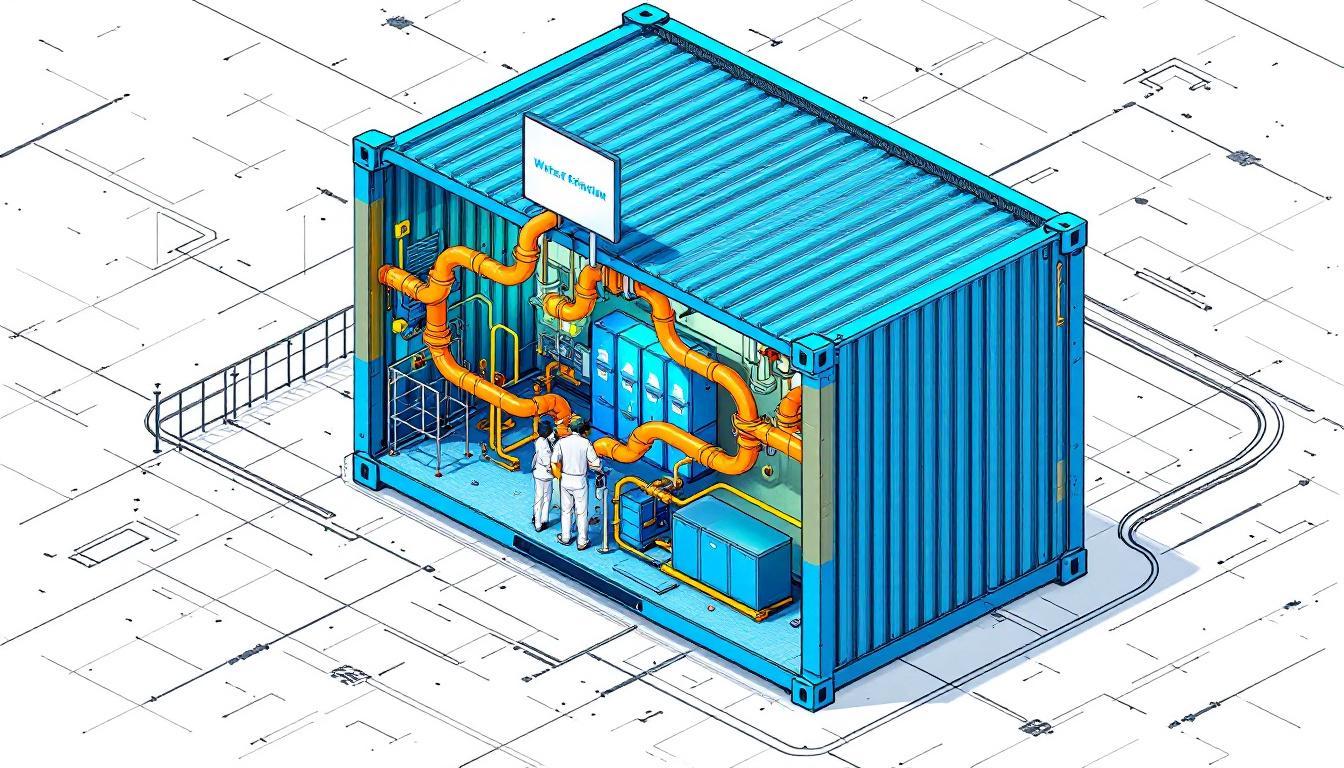
Greene Concepts says it is exploring exportable, containerised bulk‑refill stations and tanker shipments from a deep artesian source in North Carolina as a stopgap for drought‑hit Middle East and North Africa countries, but experts warn logistical, environmental and governance limits to long‑distance bulk water deliveries.
Greene Concepts, a small U.S. bottled-water company, says it is exploring an exportable “refill station” model to deliver bulk, naturally filtered water to drought‑hit countries across the Middle East and North Africa (MENA). The idea, laid out in a company press release distributed via Access Newswire on 12 August 2025, frames the plan as both humanitarian aid and emergency response. It would pair the firm’s high‑volume bottling and tanker‑dispatch capability in Marion, North Carolina, with containerised bulk‑refill infrastructure and a network of global logistics partners.
According to the announcement, Greene Concepts runs a large commercial refill station at its Marion plant that pulls from a protected deep artesian aquifer and can dispense “tens of thousands of gallons” of mineral‑rich water daily. The company is weighing whether that system — originally designed to supply U.S. tanker customers — could be adapted to ship bulk water to ports in the MENA region, assist non‑governmental organizations and humanitarian relief efforts, or be recreated in containerised form in countries facing acute shortages. The company website likewise describes the Marion facility as capable of large‑volume production and white‑label services, and reiterates that its Be Water brand comes from springs and an artesian aquifer beneath the Blue Ridge Mountains.
Greene Concepts’ chief executive, Lenny Greene, is quoted in the release saying the Middle East’s shortage “is not just an environmental challenge — it’s a humanitarian emergency,” and that the firm is “committed to expanding access to safe water in regions suffering from aquifer depletion and rising demand.” The language and timing suggest early exploratory activity: the company says it is “in discussions” with containerised infrastructure providers, logistics partners and aid organizations, but notes no contracts have been signed and no operations deployed.
The proposal arrives amid clear evidence of deepening water stress across MENA. The World Bank warns that per‑capita renewable water availability in the region is on track to fall below the absolute scarcity threshold of 500 cubic metres by 2030 and estimates an additional 25 billion cubic metres of water will be needed by 2050 unless policies change. The Bank stresses that institutional and governance reforms — decentralised allocation, efficiency measures and integrated policy — are essential, and that infrastructure alone faces fiscal and environmental limits. In parallel analyses, the World Resources Institute’s Aqueduct 4.0 maps current and projected water risk and shows a sharp rise in people and economic activity exposed to “extremely high” water stress by mid‑century, underscoring the scale and trajectory of the challenge.
Regional context matters for any export‑oriented idea. Gulf states like the United Arab Emirates and Saudi Arabia have built sizable desalination sectors to meet urban demand; the U.S. Department of Commerce notes extensive investment and a continuing pipeline for desalination, wastewater reuse and energy‑efficient treatment technologies in the UAE, while reports suggest Saudi policy under Vision 2030 is shifting toward integrating renewable energy and reuse alongside expanded desalination capacity. By contrast, countries such as Yemen and Jordan face acute humanitarian water crises, where infrastructure collapse and groundwater depletion have led to heavy reliance on tanker deliveries, unsafe sources and serious public‑health consequences. The Water Project documents aquifer depletion around Yemen’s capital, a persistent tanker market and related sanitation and cholera risks — circumstances that make rapid, mobile water delivery appealing but also expose logistical and security complications.
That mix of technical and political realities points to both potential roles and sharp limitations for a bulk‑refill export model. In regions where desalination is the norm—and where urban supplies depend on large, capital‑intensive networks—shipped bottled or tanker water would be expensive and, at scale, unlikely to displace established systems. For crisis zones and short‑term humanitarian operations, however, containerised, potable bulk supplies can provide immediate relief where pipelines, pumps and treatment plants have failed. Industry analysts and water planners also note trade‑offs: long‑distance bulk shipments carry significant carbon and cost footprints, and any extraction and export must be weighed against source‑aquifer sustainability, local water rights and regulatory approval.
Experts and international agencies repeatedly caution that emergency logistics must sit within longer‑term adaptation strategies. The World Bank explicitly warns against relying on infrastructure panaceas; investment needs to be paired with governance reform, efficiency improvements in agriculture (the region’s dominant water user), and better water‑use allocation. Tools such as WRI’s Aqueduct are designed to help policymakers, investors and companies identify hotspots where interventions will be most effective and to weigh options including conservation, reuse, desalination and decentralised supplies.
Greene Concepts frames its offer as complementary rather than competitive to large‑scale national systems, highlighting potential applications in humanitarian relief, emergency response and as a supplemental source in locations with damaged or limited infrastructure. The firm’s statement points to interest in countries including Jordan, Iraq, Yemen, the UAE and Saudi Arabia — a varied group in terms of water policy, technical capacity and import reliance. The company also acknowledges the practicalities it must resolve: containerised infrastructure, long‑haul logistics, port handling, cost recovery and coordination with host governments and aid organisations.
Readers should note the company’s disclosure that the announcement contains forward‑looking statements subject to customary uncertainties and risks; Greene Concepts reminds investors that plans are contingent on future agreements, regulatory clearances and financing. In short, the proposal is an early‑stage commercial idea with humanitarian framing rather than a completed programme.
If bulk shipments or portable refill stations are to play a constructive role, they will need to be integrated into broader strategies that the World Bank and regional planners advocate: sensible pricing, demand management, agricultural reform, reuse and energy‑efficient treatment. For now, Greene Concepts’ plan illustrates a recurring theme of the MENA water debate — that immediate relief and long‑term resilience must be pursued together, and that private‑sector innovations can only be effective when aligned with public policy, local needs and environmental limits.
Source: Noah Wire Services


