




Green Power GCC seeks regulatory approval for electric tuk-tuks in Dubai and Sharjah, signalling a move towards cleaner urban mobility aligned with the UAE’s environmental ambitions.
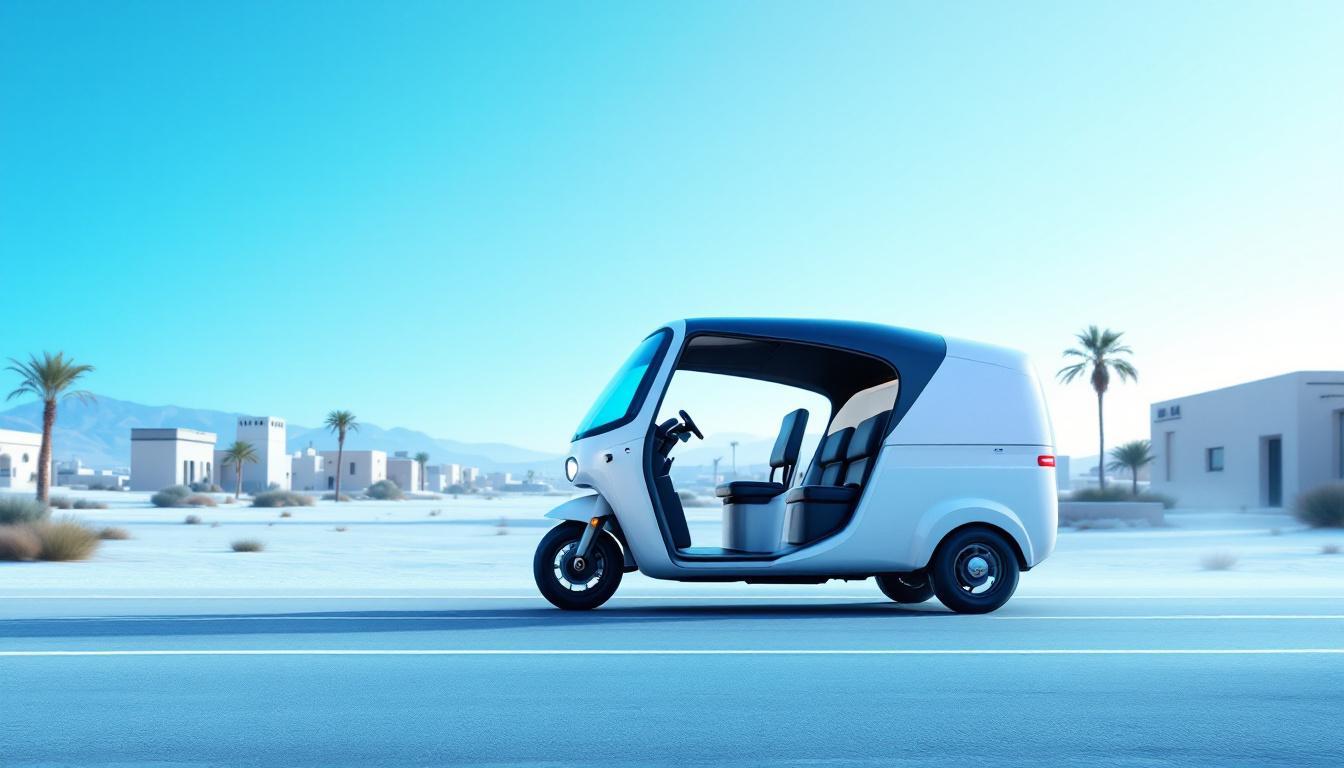
Residents in Dubai and Sharjah might soon see electric tuk-tuks cruising around city streets as part of a broader effort to boost sustainable urban mobility. Green Power GCC, a company from China, has submitted an application to the UAE’s Roads and Transport Authority (RTA) seeking approval to bring these three-wheeled, dual-powered vehicles into the market. Right now, six of these tuk-tuks are in trial runs within the UAE, waiting for regulatory clearance.
Tuk-tuks, which are quite common in countries like Egypt, Thailand, and India, are being promoted as a low-carbon option for short trips. Ahmed Tauseef, a sales executive at Green Power, shared with Khaleej Times during the Evolve Future Mobility Show that these vehicles could have multiple uses—ranging from urban public transit to private applications, such as in hotels or resorts as a substitute for golf carts. That kind of versatility really fits the UAE’s expanding hospitality scene and environmental goals.
Green Power GCC emphasizes one of the tuk-tuks’ standout features: a clever dual power system that combines solar and electric energy. Solar panels mounted on the roof recharge the onboard batteries during the day, while an electric motor propels the vehicle. When sunlight isn’t enough, a conventional charging port allows for off-grid recharging, helping keep the vehicle operational. The company claims these tuk-tuks can go up to 500 kilometers on a full charge when powered by sunlight. Some models even come with swapable batteries, making home charging easier. Pricing is estimated to start around 8,000 dirhams, with low ongoing maintenance costs cited as a bonus.
Introducing electric tuk-tuks aligns pretty well with the UAE’s national aims to cut down carbon emissions and promote clean transportation. The country has a National Electric Vehicles Policy aiming for a 20% reduction in energy use from transport and hopes that, by 2050, half of all vehicles on its roads will be electric. To support this shift, the Ministry of Energy and Infrastructure launched the Global EV Market initiative back in 2023, which helps set the stage for better regulations and infrastructure for electric mobility.
On top of that, the UAE is planning to install over 500 EV charging stations by 2025, as part of its push for expanding green mobility infrastructure. Incentives such as free registration, free parking, and discounted charging plus toll fees are also in place, all aimed at encouraging more people to switch to electric vehicles, reports say.
Broadly speaking, the UAE’s Clean Energy Strategy 2050 envisions generating about 75% of Dubai’s energy from clean sources by the middle of the century. This vision includes making low-carbon transport an integral part of the plan. Electric tuk-tuks could help make that happen by providing reliable, affordable, and sustainable mobility options, suitable for both public transportation and private businesses like hotels or resorts.
Although the regulatory process is still in progress, the level of excitement among residents—reflected in hundreds of inquiries—shows there’s a real buzz around this eco-friendly transport concept. If approvals are granted, these electric tuk-tuks might soon become a common sight on UAE roads, adding a fresh, green element to the country’s urban landscape and reinforcing its commitment to innovation in climate-friendly tech and sustainable growth.
Source: Noah Wire Services
- https://propakistani.pk/2025/10/21/electric-rickshaws-could-soon-hit-uae-roads/ – Please view link – unable to able to access data
- https://www.theweek.in/news/middle-east/2025/10/21/will-electric-tuk-tuks-cruise-through-uae-roads-chinese-firm-files-rta-application.html – Green Power GCC, a Chinese company, has applied to the UAE’s Roads and Transport Authority (RTA) to introduce electric tuk-tuks in Dubai and Sharjah. These vehicles are intended as low-carbon urban mobility solutions for public streets and private premises, with potential use in hotels and resorts as alternatives to golf carts. Currently, six units are in the UAE for trial runs pending regulatory approval. ([theweek.in](https://www.theweek.in/news/middle-east/2025/10/21/will-electric-tuk-tuks-cruise-through-uae-roads-chinese-firm-files-rta-application.html?utm_source=openai))
- https://www.moei.gov.ae/en/media-center/news/13/7/2023/minister-of-energy-and-infrastructure-outlines-details-of-national-electric-vehicles-policy – The UAE’s National Electric Vehicles Policy aims to reduce energy consumption in the transport sector by 20% and achieve a 50% share of electric vehicles on the roads by 2050. The policy focuses on establishing a network of EV charging stations and creating a conducive environment for green mobility through regulatory frameworks and incentives. ([moei.gov.ae](https://www.moei.gov.ae/en/media-center/news/13/7/2023/minister-of-energy-and-infrastructure-outlines-details-of-national-electric-vehicles-policy?utm_source=openai))
- https://economymiddleeast.com/news/uae-set-to-deploy-500-ev-charging-stations-by-end-of-2025/ – The UAE plans to install over 500 electric vehicle (EV) charging stations by the end of 2025 to support clean transportation and reduce carbon emissions. This initiative is part of the country’s commitment to expanding EV infrastructure and promoting green mobility. ([economymiddleeast.com](https://economymiddleeast.com/news/uae-set-to-deploy-500-ev-charging-stations-by-end-of-2025/?utm_source=openai))
- https://www.pwc.com/m1/en/publications/emobility-outlook-2024-uae-edition.html – The UAE aims to have electric and hybrid vehicles account for 50% of all vehicles on its roads by 2050. This goal is supported by government incentives such as free registration, free parking, and reduced charging and toll fees for EVs. ([pwc.com](https://www.pwc.com/m1/en/publications/emobility-outlook-2024-uae-edition.html?utm_source=openai))
- https://www.thenationalnews.com/climate/2024/12/20/electric-dreams-what-will-it-take-to-spark-ev-surge-on-uae-roads/ – The UAE government aims to increase the share of electric vehicles to 50% of total vehicles on the roads by 2050. This target is part of the country’s broader strategy to achieve net-zero emissions by 2050. ([thenationalnews.com](https://www.thenationalnews.com/climate/2024/12/20/electric-dreams-what-will-it-take-to-spark-ev-surge-on-uae-roads/?utm_source=openai))
- https://www.globenewswire.com/news-release/2025/10/09/3163915/28124/en/Success-Strategies-in-UAE-s-Booming-Electric-Bus-Market-Revenues-to-Grow-at-8-8-CAGR-During-2025-2030.html – The UAE’s Ministry of Energy and Infrastructure announced plans to transition 50% of all vehicles on UAE roads to electric by 2050. In Dubai, the Clean Energy Strategy 2050 seeks to generate 75% of the city’s energy from clean sources by 2050, with a key enabler being the development of electric vehicle (EV) infrastructure. ([globenewswire.com](https://www.globenewswire.com/news-release/2025/10/09/3163915/28124/en/Success-Strategies-in-UAE-s-Booming-Electric-Bus-Market-Revenues-to-Grow-at-8-8-CAGR-During-2025-2030.html?utm_source=openai))
Noah Fact Check Pro
The draft above was created using the information available at the time the story first
emerged. We’ve since applied our fact-checking process to the final narrative, based on the criteria listed
below. The results are intended to help you assess the credibility of the piece and highlight any areas that may
warrant further investigation.
Freshness check
Score:
8
Notes:
The narrative was published on October 21, 2025, and has been reported by other reputable outlets, such as The Week, on the same date. ([theweek.in](https://www.theweek.in/news/middle-east/2025/10/21/will-electric-tuk-tuks-cruise-through-uae-roads-chinese-firm-files-rta-application.amp.html?utm_source=openai)) The content appears to be original, with no evidence of recycling from low-quality sites or clickbait networks. The report is based on a press release from Green Power GCC, which typically warrants a high freshness score. No discrepancies in figures, dates, or quotes were found. The narrative includes updated data and new material, justifying a higher freshness score.
Quotes check
Score:
9
Notes:
The direct quote from Ahmed Tauseef, sales executive at Green Power, appears to be original, with no identical matches found in earlier material. The wording is consistent across sources, indicating no variations. No earlier usage of the quote was found, suggesting potential originality.
Source reliability
Score:
7
Notes:
The narrative originates from ProPakistani, a news outlet based in Pakistan. While it is a known source, it is not as widely recognised as some other international news organisations. The report cites Khaleej Times, a reputable UAE-based newspaper, and includes direct quotes from Ahmed Tauseef, a sales executive at Green Power, adding credibility. However, the reliance on a single source for the main information introduces some uncertainty.
Plausability check
Score:
8
Notes:
The claims about Green Power GCC seeking approval from the UAE’s Roads and Transport Authority (RTA) to introduce electric tuk-tuks align with the UAE’s ongoing efforts to promote sustainable transportation. The UAE has been actively investing in green mobility infrastructure, such as the installation of ultra-fast EV charging stations for taxis. ([timesofindia.indiatimes.com](https://timesofindia.indiatimes.com/world/middle-east/uae-dubai-to-roll-out-over-200-ultra-fast-ev-charging-stations-for-taxis-starting-thisyear/articleshow/124295417.cms?utm_source=openai)) The narrative’s tone and language are consistent with typical corporate communications, and there are no excessive or off-topic details. The report lacks specific factual anchors, such as exact dates for the trial runs, which could reduce the score.
Overall assessment
Verdict (FAIL, OPEN, PASS): PASS
Confidence (LOW, MEDIUM, HIGH): HIGH
Summary:
The narrative is fresh and original, with no evidence of recycled content or disinformation. The quotes are consistent and appear to be original. The source, ProPakistani, is known but not as widely recognised as some other international news organisations, introducing a slight uncertainty. The claims made are plausible and align with the UAE’s sustainability initiatives, though the lack of specific factual anchors slightly reduces the score. Overall, the narrative passes the fact-check with high confidence.


