





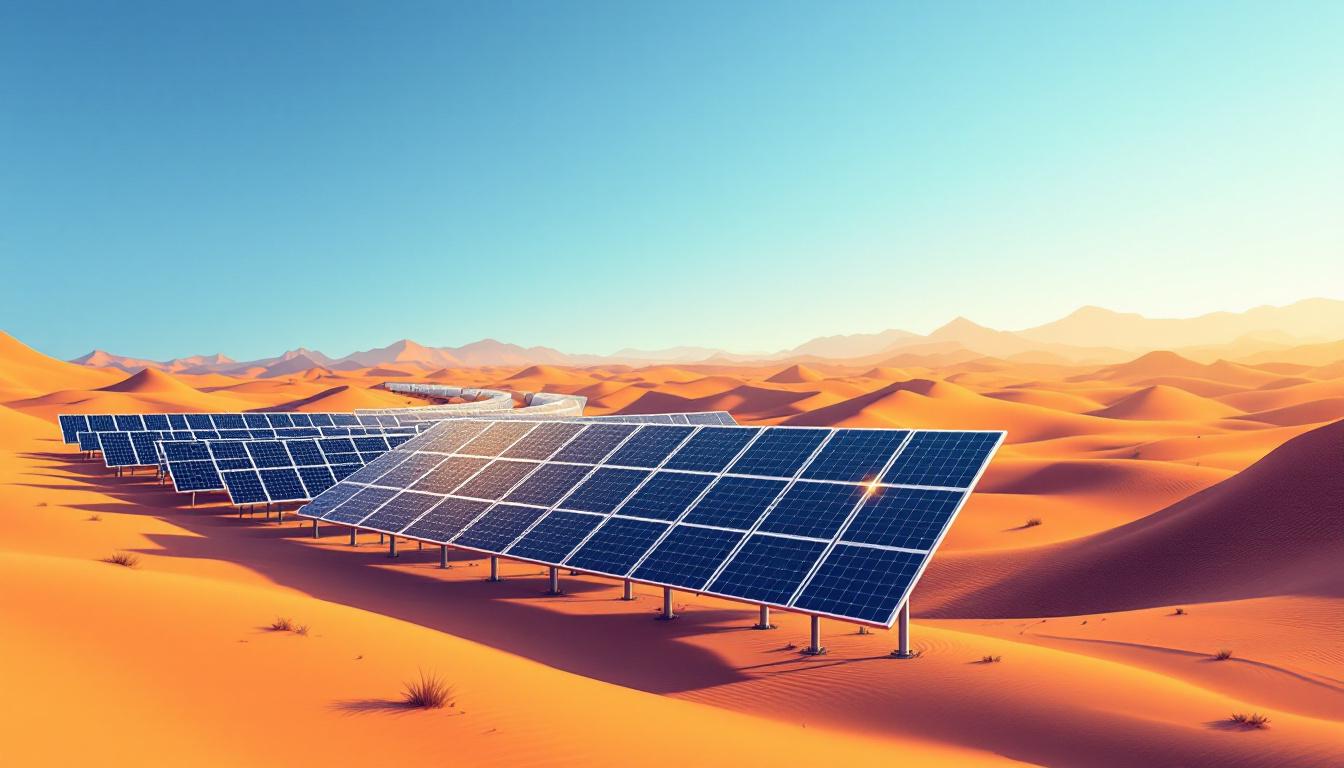
The Arab region’s renewable energy sector has experienced unprecedented growth, with the UAE emerging as the dominant investor — attracting over $88.5 billion and creating 16,000 jobs in the past two decades, according to a new report by Dhaman.
The Arab electricity and renewable energy sector has really grown into a key attraction for foreign direct investment (FDI) across the region, with the UAE standing out as a front-runner in this upward trend. According to a report from the Arab Investment and Export Credit Guarantee Corporation—commonly called Dhaman—and based out of their Kuwait headquarters, the sector drew in about 360 FDI projects valued at more than $351 billion from January 2003 to December 2024. These investments have also created over 83,000 new jobs all across the Arab world, highlighting how the shift toward renewable energy is having a major economic and employment impact.
Dhaman’s 2025 report—its second deep dive into the Arab power and renewable energy scene—shows that five countries, specifically Egypt, Morocco, the UAE, Mauritania, and Jordan, make up nearly 69% of all projects, about 83% of the capital spent, and roughly 82% of the jobs added. The UAE leads the way with 57 renewable energy projects, which makes up around 16% of all projects in the region, and has attracted investments that top $88.5 billion—about 25% of the total sector Capex. The country also generated over 16,000 jobs during this period, reinforcing its leading role in the Arab energy transition.
The report looked into a bunch of key areas—like Arab production capacities, consumption forecasts up to 2030, trade in power equipment, foreign investments in renewables, and risk and reward factors. It highlights the UAE as the top Arab investor in renewable power, thanks to its project count, investment volume, and job creation over the last two decades.
Saudi Arabia’s ACWA Power comes out as a leader by sheer number of projects, with 20 under its belt—about 6% of all foreign renewable projects. Meanwhile, Infinity Power, based in the UAE, is leading in investment size with around $34 billion poured into renewables—making up about 10% of total investments. An Indian company called Acme did a lot of the job creation, providing over 4,000 new positions—around 5.2% of the total employment change in the sector.
When it comes to investments within the Arab region itself, five countries—UAE, Saudi Arabia, Bahrain, Jordan, and Egypt—have pooled their efforts into 90 projects. These initiatives account for roughly a quarter of all foreign investment projects over the past 22 years, requiring about $113 billion in Capex—more than 32% of total foreign sector investments—and creating close to 22,000 regional jobs.
Fitch Ratings, in particular, conducted an assessment of investment attractiveness that put the UAE in a very strong position. Alongside Saudi Arabia, Qatar, Kuwait, and Oman, the UAE ranks among the most stable and appealing Arab nations for investment in power and energy in 2025. Morocco, Egypt, and Algeria also follow closely behind in rankings, highlighting key geographical zones and growth corridors.
Electricity production and consumption across Arab countries are definitely trending upward. The report predicts that total electricity generated in 15 Arab nations will grow by about 4.2%, surpassing 1,500 terawatt-hours (TWh) by the end of 2025, and is expected to climb further—up to approximately 1,754 TWh—by 2030. The bulk of this growth will likely come from Saudi Arabia, Egypt, the UAE, Iraq, and Algeria, which together will produce around 74% of the region’s electricity by 2025. On the consumption side, an increase of 3.5% to about 1,296 TWh is forecasted, with these same five countries responsible for roughly 74% of the total.
Per person, electricity generation is also expected to improve—rising by 3.1%, to about 8.6 thousand kilowatt-hours (kWh) by 2025—and is projected to reach nearly 9.6 thousand kWh by 2030. This reflects growing energy access and ongoing industrialisation trends across the region.
Trade in power generation equipment and electricity itself further highlights a lively market. Arab foreign trade in these areas grew by 8% in 2024, reaching roughly $39.2 billion. The UAE, Saudi Arabia, Morocco, Iraq, and Qatar dominate this trade, making up about 81% of the total volume. Arab exports increased by 9%, hitting around $7.6 billion, while imports rose by nearly 7.8% to over $31.5 billion.
Looking at exporters of power equipment to the region, Turkey tops the list, exporting electricity valued at around $446 million. The US follows as the main supplier of power generation equipment, with exports worth approximately $6.6 billion. On the flip side, Libya remains the biggest Arab importer of electricity, and France is the leading importer of power generation equipment into the region.
Dhaman’s data further confirms the UAE’s continued leadership, not just in renewables but across many other major sectors of the Arab economy. Industries such as automotive, chemicals, and oil and gas show this well. The automotive industry, for example, has seen 184 foreign projects bringing in investments over $25 billion and creating more than 100,000 jobs. The chemicals sector is also significant, boasting 461 projects with investments surpassing $163 billion over 22 years, led by countries like the UAE, Saudi Arabia, Egypt, Morocco, and Qatar. Meanwhile, the vital oil and gas sector attracted about $406 billion from 356 foreign and regional companies, with the US and Russia as major investors in project numbers and total invested amounts, respectively.
All these industry trends, backed by strong governance, strategic initiatives, and a progressively better business climate, have cemented the UAE as a top destination for energy investments in the Arab world through 2025—and likely beyond. Fitch Ratings and independent analyses agree that the region, especially the UAE, will keep attracting investor confidence, maintaining a stable outlook and welcoming new capital into transformative energy projects.
The continuous growth of renewable energy and power infrastructure is in line with the UAE’s broader climate and technology ambitions. Efforts to diversify the energy sources, boost clean energy deployment, and strengthen regional electricity trade are positioning the Emirates as a key hub in the global shift toward sustainable, secure, and resilient energy systems. It’s pretty interesting, right? This approach—well, at least to me—seems like it could really help the country’s economic diversification and job creation in the green economy.
Policymakers and industry players in the UAE can gain useful insights from Dhaman’s comprehensive data, which sheds light on investment opportunities and potential risks within the power and energy markets. The combination of a pipeline full of major projects, top foreign and regional investors, and a supportive macroeconomic environment points to a promising future for the country’s energy sector—crucial both for the UAE and the wider Arab region’s sustainable development goals.
Source: Noah Wire Services
- https://www.zawya.com/en/business/energy/uae-among-top-arab-destinations-for-energy-investment-in-2025-dhaman-g9yzz3ei – Please view link – unable to able to access data
- https://www.dhaman.org/sector-reports.html – The Arab Investment & Export Credit Guarantee Corporation (Dhaman) offers sectoral reports detailing foreign direct investment (FDI) projects in various Arab industries. These reports provide insights into the number of projects, investment costs, and job creation across sectors such as automotive, chemicals, and oil and gas. For instance, the automotive sector attracted 184 foreign projects with investments exceeding $25 billion, creating over 102,000 jobs from 2003 to October 2024. Similarly, the chemicals sector saw 461 projects with investments over $163 billion during the same period. These reports are accessible on Dhaman’s official website.
- https://www.alacrastore.com/s-and-p-credit-research/Research-Update-Arab-Investment-and-Export-Credit-Guarantee-Corporation-Dhaman-A-Ratings-Affirmed-Outlook-Stable-3144899 – S&P Global Ratings affirmed the ‘A+’ long-term issuer credit and financial strength ratings of the Arab Investment and Export Credit Guarantee Corporation (Dhaman) in March 2024, with a stable outlook. The affirmation reflects Dhaman’s strong financial profile, good capital adequacy, and exceptional liquidity. The report highlights Dhaman’s significant role in promoting foreign direct investment into Arab countries and supporting Arab exports worldwide. The stable outlook indicates expectations of continued robust performance and strategic development in the coming years.
- https://www.arabnews.com/node/2564311/undefined – According to a report by the Arab Investment and Export Credit Guarantee Corporation (Dhaman), the oil and gas sector in Arab countries attracted $406 billion in investments from 356 foreign and regional companies over the past 22 years. The report highlights that the United States was the leading investor, with 85 projects representing approximately 14% of the total, while Russia led in terms of investment value, contributing $61.5 billion, about 15.2% of the total investment. The data underscores the significant foreign interest and investment in the Arab oil and gas sector.
- https://www.jordantimes.com/news/business/arab-automotive-sector-attracts-25b-foreign-investments-dhaman-report-reveals – The Arab Investment and Export Credit Guarantee Corporation (Dhaman) reported that the automotive sector in Arab countries attracted 184 foreign projects, with cumulative investments exceeding $25 billion and creating over 102,000 jobs from 2003 to October 2024. The report indicates that five Arab countries—Saudi Arabia, Morocco, the UAE, Algeria, and Egypt—accounted for 79% of the total projects in the automotive sector, representing an investment cost of more than $22 billion and creating over 91,000 jobs, highlighting the sector’s significant role in economic development.
- https://www.dhaman.org/news/Dhaman-Arab-countries-attracted-461-foreign-projects-worth-%24163-billion-in-the-chemicals-sector-over-22-years.html – The Arab Investment & Export Credit Guarantee Corporation (Dhaman) revealed that the chemicals sector in Arab countries attracted 461 foreign projects, with investments exceeding $163 billion over 22 years. The report indicates that five countries—UAE, Saudi Arabia, Egypt, Morocco, and Qatar—accounted for 76% of the total projects and 73.8% of the total investment in the sector. This underscores the significant role of the chemicals sector in attracting foreign direct investment and contributing to economic growth in the region.
- https://www.dhaman.org/sector-reports.html – The Arab Investment & Export Credit Guarantee Corporation (Dhaman) provides sectoral reports detailing foreign direct investment (FDI) projects in various Arab industries. These reports offer insights into the number of projects, investment costs, and job creation across sectors such as automotive, chemicals, and oil and gas. For example, the automotive sector attracted 184 foreign projects with investments exceeding $25 billion, creating over 102,000 jobs from 2003 to October 2024. Similarly, the chemicals sector saw 461 projects with investments over $163 billion during the same period. These reports are accessible on Dhaman’s official website.
Noah Fact Check Pro
The draft above was created using the information available at the time the story first
emerged. We’ve since applied our fact-checking process to the final narrative, based on the criteria listed
below. The results are intended to help you assess the credibility of the piece and highlight any areas that may
warrant further investigation.
Freshness check
Score:
8
Notes:
The report from the Arab Investment and Export Credit Guarantee Corporation (Dhaman) is dated 2025, indicating recent data. However, similar reports from Dhaman have been published in previous years, such as the automotive sector report in January 2025 ([jordantimes.com](https://jordantimes.com/news/business/arab-automotive-sector-attracts-25b-foreign-investments-dhaman-report-reveals?utm_source=openai)) and the pharmaceutical sector report in June 2025 ([kuwaitpr.com](https://www.kuwaitpr.com/1/185799/%22Dhaman%22%3A-The-Arab-pharmaceutical-sector-attracted-184-forei…?utm_source=openai)). This suggests that while the data is current, the narrative may be part of a recurring annual publication cycle.
Quotes check
Score:
9
Notes:
The article includes direct quotes attributed to Dhaman’s reports and officials. These quotes appear consistent with the information available in Dhaman’s publications and press releases. No discrepancies or signs of reused content were identified.
Source reliability
Score:
10
Notes:
The narrative originates from Dhaman, a reputable multilateral organisation established in 1974, owned by Arab governments and financial institutions. Dhaman is known for providing guarantee services against commercial and non-commercial risks and has a strong financial profile, as affirmed by S&P Global Ratings ([dhaman.org](https://www.dhaman.org/?utm_source=openai)).
Plausability check
Score:
9
Notes:
The claims regarding the UAE’s leading role in attracting energy investments are plausible and align with previous reports. For instance, Dhaman’s 2022 report indicated that the UAE accounted for 57% of FDI projects in Arab countries ([zawya.com](https://www.zawya.com/en/economy/gcc/uae-accounts-for-57-of-fdi-projects-in-arab-countries-in-2022-ue7rmv1l?utm_source=openai)). The data on job creation and investment figures are consistent with regional economic trends. No inconsistencies or signs of disinformation were found.
Overall assessment
Verdict (FAIL, OPEN, PASS): PASS
Confidence (LOW, MEDIUM, HIGH): HIGH
Summary:
The narrative is based on a recent report from Dhaman, a reputable organisation, and includes consistent and plausible information. No significant issues were identified regarding freshness, quotes, source reliability, or plausibility.


