

 6:16 pm - October 15, 2026
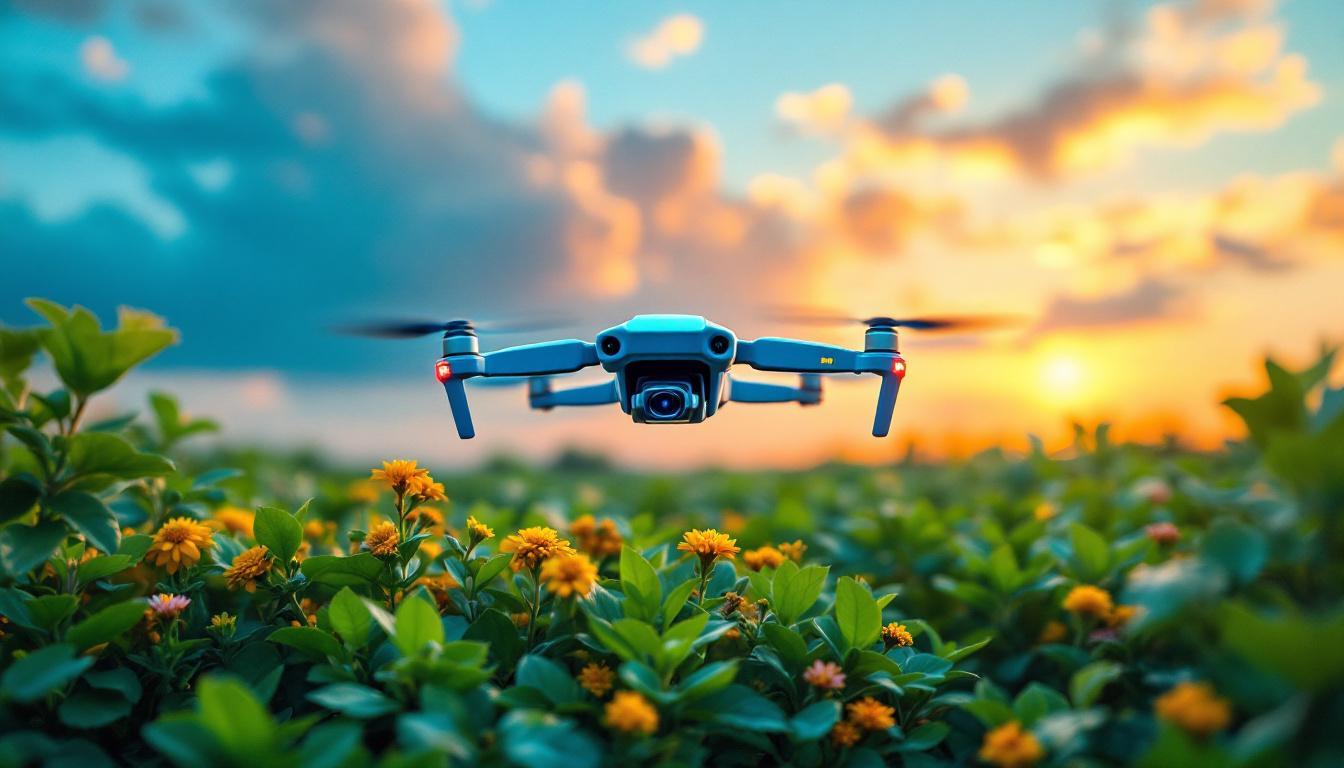
A team of engineering students at the American University of Sharjah has developed AgriDrone, an AI-powered agricultural drone designed to enhance crop monitoring, early issue detection, and resource efficiency, aligning with the UAE’s sustainability ambitions.
A group of engineering students at the American University of Sharjah has come up with an innovative AI-powered agricultural drone, aimed at helping farmers keep a closer eye on their crops and catch issues early on. Their project, dubbed AgriDrone, integrates aerial imaging, 3D mapping, and machine learning techniques to spot early signs of nutrient deficiencies and pest problems across large farming terrains.
The team behind this idea includes Nassim Ashaoubi, Omeid Mohammed Ali, and Mohammed Latifi. They entered the concept in the James Dyson Award , a competition that often rewards practical, real-world solutions for young inventors. Interestingly enough, their goal aligns with the UAE’s broader efforts to promote sustainable and efficient food production practices.
According to the project summary shared by the award organizers, the drone is equipped with four arms, each supporting high-resolution 3D cameras. These cameras capture detailed images of fields and send the data to a mobile app used by farmers. The app then stores this information before uploading it to the cloud, where an AI system, trained on countless plant images, analyzes the data for stress indicators. If the AI detects a potential issue, it provides specific instructions to help farmers locate and address the problem promptly.

This approach is pretty important because crop damage often begins with slight visual cues that can easily be missed during manual inspections. Traditional checks on large farms can be slow, and satellite imagery, while useful, sometimes doesn’t offer the fine detail needed to catch early damage. Drones, on the other hand, aim to close that gap, offering close-range observation combined with automated analysis. Experts suggest that such precision farming systems can boost yields, cut down on waste, and streamline the use of water, fertilizers, and other inputs.
Considering how vital this kind of technology is for the UAE, it’s no surprise they’re interested. Farming in dry climates faces lots of hurdles , from limited water supply and poor soil to intense heat and stress on plants. Any tool that helps farmers detect health problems sooner can reduce unnecessary chemical spraying, save resources, and improve overall productivity. So, their project fits quite well with the regional push for agriculture that uses fewer resources and causes less environmental strain.
The students mention that their system isn’t just for identifying nutrient shortages and pests. It could also help with quality control along the entire supply chain. In real-world terms, that means farmers can make better-informed choices before crops reach the critical decline phase. Having better insight into crop health also aids in planning harvest timelines and targeting treatments, a crucial aspect for commercial farming operations.
Furthermore, their idea echoes a larger trend in agriculture: more and more of that industry is moving toward data-driven decision making. Reports show that drones are already being used in farming to map fields, monitor soil moisture, estimate yields, and even reduce chemical use. Some professionals are leveraging drone imagery to develop more detailed agriculture databases, mapping land types and assessing plant health through processed images. This student project fits into that movement, but with a specific emphasis on AI-based diagnostics.
The team isn’t stopping there. They’re already imagining future versions, including prototypes for testing, and are looking to add extra functionalities, like sensors for soil water content and plant moisture, thermal cameras, and solar panels. They also plan to use recycled materials and water-resistant coatings to make the drone more durable and eco-friendly.
Adding these features would really expand the drone’s role in precision farming. Moisture sensors could help farmers fine-tune irrigation, while thermal imaging might reveal plant stress before any visible signs appear. Solar panels would extend the drone’s flight time and reduce reliance on traditional charging methods, especially useful when covering large areas.
If their development goes smoothly, this kind of drone could really catch the eye of farms needing quick, affordable, and scalable crop monitoring tools. It would also align well with the UAE’s broader climate and sustainability plans, where technology is increasingly used to strengthen food systems against environmental challenges. The country has already shown a solid interest in advanced agricultural monitoring, with UAVs being used for land mapping and vegetation assessment.
For now, AgriDrone remains a promising student project, but it hints strongly at a future where farming is guided less by guesswork and more by live data from the sky. And let’s be honest, especially in a place where every drop of water and every hectare of arable land counts, such innovations could prove invaluable well beyond just academic experiments.
- https://www.emaratalyoum.com/local-section/education/2026-04-05-1.2032105 – Please view link – unable to able to access data
- https://www.jamesdysonaward.org/en-US/2021/project/agridrone – AgriDrone is an innovative artificial intelligence-based drone developed by engineering students at the American University of Sharjah. Equipped with a 3D mapping remote camera, it monitors large farmlands, analyzing nutrient deficiencies and pest growth in crops. The drone captures high-resolution images, which are processed using AI to detect plant issues, guiding farmers to the problem’s source for timely intervention. This technology aims to enhance agricultural sustainability and efficiency in the UAE. ([jamesdysonaward.org](https://www.jamesdysonaward.org/en-US/2021/project/agridrone?utm_source=openai))
- https://www.aitechinsights.com/articles/eyes-in-the-sky-transforming-crop-monitoring-with-ai-powered-drones/ – AI-powered drones are revolutionizing crop monitoring by providing precise, efficient, and actionable insights. Traditional methods like manual inspections and satellite imagery have limitations, but drones equipped with AI can detect subtle variations in crop health across vast fields. This technology enhances crop yields, optimizes resource utilization, and improves overall farm profitability. ([aitechinsights.com](https://www.aitechinsights.com/articles/eyes-in-the-sky-transforming-crop-monitoring-with-ai-powered-drones/?utm_source=openai))
- https://farmonaut.com/precision-farming/3d-drone-mapping-ag-drone-aerial-mapping-solutions – 3D drone mapping is transforming agriculture by offering precise field analysis, optimizing yields, and promoting sustainability. By 2025, over 60% of large farms globally are projected to use 3D drone mapping for field analysis. This technology provides detailed insights into soil conditions, crop health, and resource utilization, enabling farmers to make informed decisions and enhance productivity. ([farmonaut.com](https://farmonaut.com/precision-farming/3d-drone-mapping-ag-drone-aerial-mapping-solutions?utm_source=openai))
- https://feds.group/industry/agriculture/ – Drones are transforming agriculture by offering aerial insights into crop health, moisture levels, yield estimations, and crop spraying. They enable precise monitoring of large areas, providing accurate data for planting, watering, and applying fertilizers, while saving time and resources. Drones also enhance sustainability by minimizing chemical runoff and safeguarding ecosystems. ([feds.group](https://feds.group/industry/agriculture/?utm_source=openai))
- https://www.intechopen.com/chapters/1153076 – Dubai Municipality utilizes Unmanned Aerial Vehicles (UAVs) to map farming areas across the Emirate, identify cultivable lands, and establish a precise agriculture database. A study conducted over six months used Trimble UX5 (HP) drones for high-resolution imaging in 12 Dubai communities. The research highlights the potential of UAVs and deep learning algorithms for large-scale sustainable agricultural mapping, providing specialists with an integrated solution to measure and assess live green vegetation cover derived from processed images. ([intechopen.com](https://www.intechopen.com/chapters/1153076?utm_source=openai))
- https://aai-drones.com/the-aerial-revolution-drones-transforming-precision-agriculture/ – Equipped with cutting-edge sensors and high-resolution cameras, agricultural drones facilitate precision mapping and surveying of agricultural landscapes. They can create detailed 2D and 3D maps of farmlands, identifying variations in soil quality, moisture levels, and terrain. Drones also enable comprehensive information collection on soil conditions, providing detailed data on pH levels, soil types, and chemical content, which is critical for optimal nutrient management and sustainable land practices. ([aai-drones.com](https://aai-drones.com/the-aerial-revolution-drones-transforming-precision-agriculture/?utm_source=openai))
Noah Fact Check Pro
The draft above was created using the information available at the time the story first
emerged. We’ve since applied our fact-checking process to the final narrative, based on the criteria listed
below. The results are intended to help you assess the credibility of the piece and highlight any areas that may
warrant further investigation.
Freshness check
Score:
3
Notes:
The AgriDrone project was featured in the James Dyson Award in 2021, with the official project page last updated in 2021. ([jamesdysonaward.org](https://www.jamesdysonaward.org/2021/project/agridrone/?utm_source=openai)) The article in question was published on April 5, 2026, indicating that the content is at least five years old. This significant time gap raises concerns about the freshness of the information presented. Additionally, the article appears to be a republished version of the original project description, with no new developments or updates provided. The lack of recent information suggests that the content may be recycled, which diminishes its newsworthiness. Given these factors, the freshness score is low.
Quotes check
Score:
2
Notes:
The article includes direct quotes attributed to the student team members, such as “We are very grateful for Professor Gmeiner’s support and his encouragement to make our submission for the James Dyson Award.” ([aus.edu](https://www.aus.edu/media/news/caad-multimedia-design-alumni-win-prestigious-award-for-innovative-product-designs?utm_source=openai)) However, these quotes are identical to those found in the original project description from 2021. The repetition of these quotes without any new context or updates suggests that the content may have been recycled without proper verification or fresh input. This lack of new, independently verifiable quotes raises concerns about the originality and reliability of the information presented.
Source reliability
Score:
4
Notes:
The article originates from a local news outlet, which may have limited reach and resources compared to major news organisations. While the source is not inherently unreliable, its limited scope and potential lack of rigorous editorial standards raise questions about the accuracy and thoroughness of the reporting. Additionally, the article appears to be a republished version of the original project description, with no new developments or updates provided. This lack of original reporting further diminishes the source’s reliability.
Plausibility check
Score:
5
Notes:
The concept of AgriDrone, an AI-powered agricultural drone developed by engineering students, is plausible and aligns with current trends in agricultural technology. However, the article lacks specific details about the project’s progress since its initial presentation in 2021. The absence of recent information or updates raises questions about the project’s current status and the accuracy of the claims made. Without independent verification or new developments, the plausibility of the claims cannot be fully confirmed.
Overall assessment
Verdict (FAIL, OPEN, PASS): FAIL
Confidence (LOW, MEDIUM, HIGH): HIGH
Summary:
The article presents recycled content from 2021 without new developments or updates, raising significant concerns about its freshness, originality, and reliability. The lack of independent verification and the absence of recent information further diminish the content’s credibility. Given these factors, the article fails to meet the necessary standards for publication.

