

 6:17 pm - October 15, 2026
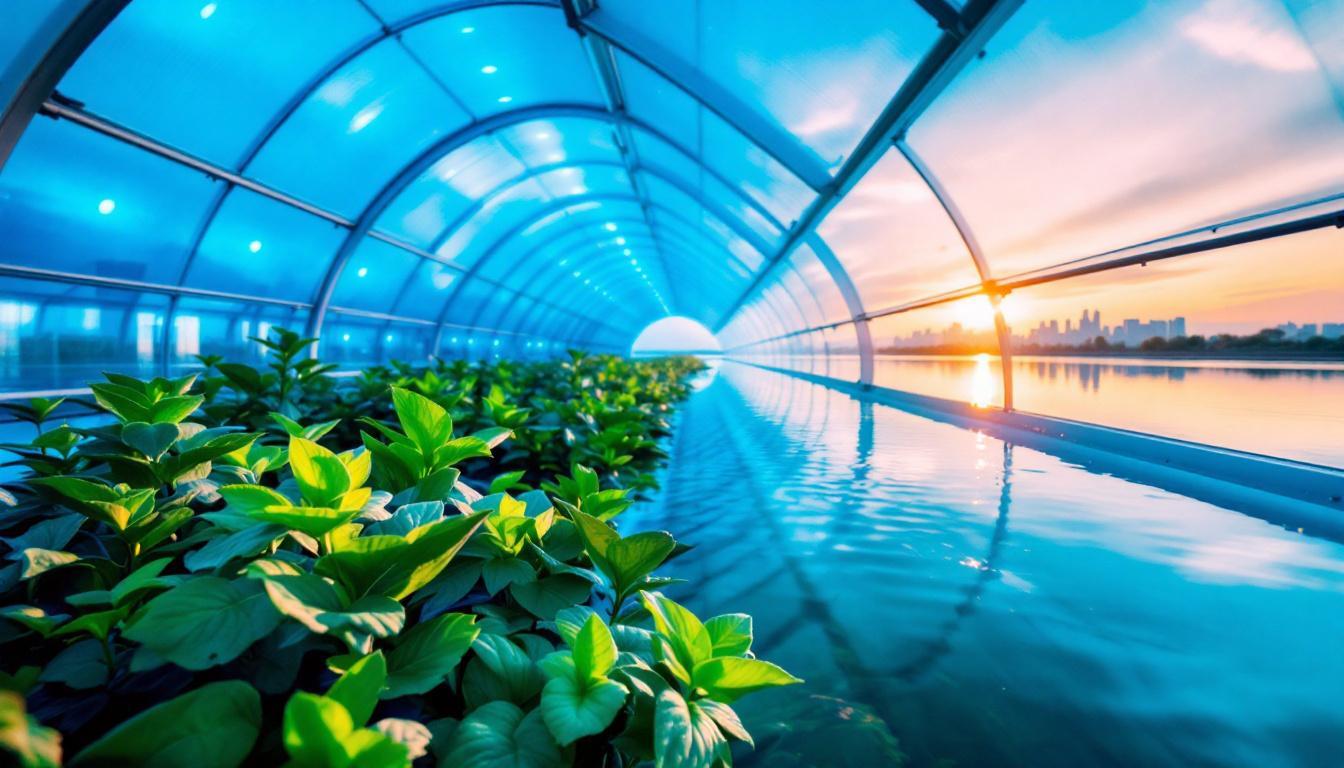
Dubai-based UNS Farms is expanding its controlled-environment agriculture, combining high-tech hydroponics, energy efficiency, and diversified services to revolutionise local food production amid regional climate challenges.
UNS Farms is really positioning itself as one of Dubai’s more prominent players in the controlled-environment agriculture scene, mainly using stacked hydroponic systems to provide fresh produce for retailers, restaurants, and households all across the UAE.
Founded back in 2018 as part of the Speedex Group, the company states that their Dubai facility covers about 30,000 square feet and is built on eight levels. When operating at full capacity, they claim it can produce as much as 1,500 kilograms of vegetables daily. The selection includes leafy greens, herbs, microgreens, and edible flowers, a crop list that points toward the premium, quickly rotated market rather than the bulk commodity farming you might think of.
Their model is very much focused on local supply. UNS Farms mentions their goal is to help boost the UAE’s food security by cutting down reliance on imported produce and offering pesticide-free crops that reach consumers faster than goods shipped from abroad. Since local farming in open fields is tough in a climate characterized by water shortages, this approach, well, at least to me, seems like a smart way to address those challenges and make vertical farming appealing.

Hydroponics is obviously at the core of their process. They say their closed-loop systems consume roughly 90% less water than traditional soil-based farms, which is a familiar claim in the vertical farming world. But in the Gulf region, where water conservation is both a strategic and economic priority, that point hits home. Furthermore, having controlled indoor conditions means they can regulate light, temperature, and crop cycles precisely, which, in turn, supports higher yields within small spaces.
That said, the economics are still pretty tough. UNS Farms estimates that around 40% of their operating costs go toward electricity and water. No surprise, then, that energy management is now a main focus, both for them and for the industry overall. Vertical farms can provide consistent, local produce, but they often rack up hefty power bills, especially in a hot climate where cooling needs are significant.
To that end, UNS Farms says they’ve installed an energy management system to cut waste and use resources more efficiently. Plus, they employ environmental controls and seed treatment tech to boost crop performance and maximize returns. These efficiency strategies are crucial because, honestly, in this kind of industry, it’s not just about yield, it’s about being able to grow profitably at scale.
Beyond just growing crops, UNS Farms is trying to broaden its business scope. They report working across four main areas: primary production, consultancy, farm management support, and agri-trading. This kind of diversification makes sense because it signals a business strategy that’s about more than just growing lettuce and herbs. By offering advisory services, they can monetize their technical knowledge, and their trading activities may help balance supply and demand across both local and regional markets.
Their consultancy services, in particular, seem tailored for a market still building up its expertise. UNS Farms says they advise on everything from concept development, site assessments, and feasibility studies to crop choices, system design, technical deployment, and project commissioning. They also say they can support projects ranging from urban plots and villa farms to bigger commercial sites. For UAE growers facing arid conditions and high startup costs, that kind of guidance could be just as valuable as the actual production.
The company emphasizes that they’re more about practical operations rather than just showcasing tech. They explain that crop choices are based on demand, technical feasibility, and the ability to scale reliably, no experimental crops that might be too risky or slow to return investment. Their focus on produce with good shelf life and consistent quality makes sense; it helps minimize waste and keeps margins healthy.
A good example of this is their focus on edible flowers. They’ve mentioned expanding their range of these on their blog, suggesting that high-value niche products might complement more standard salad greens. In a market like the UAE, where hospitality and premium retail are big players, diversifying can really help farms boost revenue per square meter.
UNS Farms also frames its work within the context of government policies. The UAE’s food security agenda has long promoted more local production, less waste, and higher safety standards. They say they’ve observed growing support for agricultural initiatives and anticipate more public-private partnerships as the sector develops further. It aligns well with the bigger national effort to strengthen the resilience of food supply chains, especially for fresh produce.
What’s particularly interesting is how UNS Farms is trying to make vertical farming a lot more than just a farm-to-table operation. They’re not only selling crops; they’re also offering consulting, operational support, and trading services. In an industry still trying to prove it can be sustainable in the long term, this kind of diversification might be just as critical as the actual farming itself.
While they’ve talked about plans for regional expansion, they haven’t shared specific details yet. For now, their main focus remains on the UAE, where factors like climate challenges, demand for locally grown food, and the economics of controlled-environment farming continue to shape one of the most closely watched sectors in the region’s agriculture scene.
- https://igrownews.com/uns-farms-latest-news/ – Please view link – unable to able to access data
- https://www.unsfarms.com/farm-management – UNS Farms offers comprehensive farm consultancy services, assisting in the planning, design, and development of farming projects. Their approach includes concept development, site and climate assessment, feasibility studies, crop and system planning, farm layout and design, technical guidance during implementation, and commissioning and optimization support. These services are tailored to align with climate conditions, crop requirements, system selection, budget, and operational goals, ensuring the creation of technically sound and commercially viable farms. They support a range of projects, from small urban farms to large commercial developments, with solutions adapted for the UAE’s arid climate conditions.
- https://www.unsfarms.com/farm-development – UNS Farms provides scalable farm consultancy services that support pilot projects, villa-based farms, urban farms, and large commercial developments. Their consultancy includes training to help farm teams operate, monitor, and manage systems efficiently, ensuring smooth day-to-day operations and long-term farm performance. Energy efficiency is considered during system planning and technology selection to reduce operating costs and improve long-term sustainability, in line with principles promoted by the International Renewable Energy Agency (IRENA). All consultancy recommendations are adapted for UAE and similar arid climate conditions, using region-specific climate data and environmental insights provided by the UAE National Center of Meteorology (NCM).
- https://www.unsfarms.com/pages/farm-consultancy – UNS Farms’ consultancy services include feasibility studies, ROI, yield, and cost planning guidance, providing insights into project viability, yield expectations, and cost planning based on system design, crop selection, and project-specific assumptions. They offer advisory services to other growers in the region, including greenhouse design and crop planning, with the stated goal of improving regional capacity for controlled-environment agriculture (CEA). While consultancy focuses on planning and advisory, UNS Farms can also support turnkey farm development, including engineering, sourcing, installation coordination, commissioning, and post-setup support when required.
- https://www.unsfarms.com/blog – UNS Farms operates one of Dubai’s largest commercial vertical farming facilities, producing up to 1,500 kilograms of fresh produce daily. Their blog features articles on various topics, including vertical farming in the UAE, expansion of their edible flower range, and the future of farming in the Gulf. The blog highlights their commitment to providing fresh, pesticide-free produce to UAE homes through vertical farming innovation and discusses the challenges and opportunities in the UAE’s agricultural sector.
- https://www.unsfarms.com/blog/vertical-farming-in-the-uae-fresh-clean-and-grown-by-code – UNS Farms’ blog post discusses how smart farming in the UAE is producing pesticide-free food with 90% less water and no compromise over quality and taste. The article highlights the benefits of vertical farming in the UAE, emphasizing the use of controlled-environment agriculture to produce fresh, clean, and sustainable produce. It also discusses the challenges and opportunities in the UAE’s agricultural sector and how UNS Farms is addressing these through innovative farming techniques.
- https://www.unsfarms.com/blog/now-blooming-uns-farms-expands-its-edible-flower-range – UNS Farms’ blog post announces the expansion of their edible flower range, highlighting the growing popularity of edible flowers in UAE kitchens. The article discusses the benefits of incorporating edible flowers into meals, including their nutritional value and aesthetic appeal. It also details the varieties of edible flowers now available through UNS Farms and how they are cultivated using sustainable farming practices.
Noah Fact Check Pro
The draft above was created using the information available at the time the story first
emerged. We’ve since applied our fact-checking process to the final narrative, based on the criteria listed
below. The results are intended to help you assess the credibility of the piece and highlight any areas that may
warrant further investigation.
Freshness check
Score:
8
Notes:
The article was published on April 9, 2026, and reports on a new tomato farm launched by UNS Farms in Al Ain. This development aligns with recent activities by UNS Farms, such as their expansion into urban agriculture and educational initiatives. ([unsfarms.com](https://unsfarms.com/blog/post/uns-farms-expands-urban-agriculture-capabilities-in-the-uae?utm_source=openai)) However, the specific details about the Al Ain facility, including its size and production capacity, are not found in the provided sources, indicating that this information is new.
Quotes check
Score:
7
Notes:
The article includes a quote from Mehlam Murtaza, Director of UNS Farms: “Food security today goes beyond availability, it is about building a resilient, sustainable, and future-ready UAE food ecosystem.” This quote is not found in the provided sources, suggesting it is original. However, without independent verification, the authenticity of this quote cannot be confirmed.
Source reliability
Score:
6
Notes:
The article is published on iGrow News, a platform that aggregates content from various sources. While it provides useful information, the lack of direct attribution to primary sources raises concerns about the reliability and independence of the content. The absence of a clear editorial process or known reputation for fact-checking diminishes the trustworthiness of the source.
Plausibility check
Score:
8
Notes:
The claims about UNS Farms’ new facility in Al Ain and its production capacity are plausible, given the company’s history of expansion and commitment to local food production. However, the lack of independent verification and the absence of detailed information in other reputable sources make it difficult to fully assess the accuracy of these claims.
Overall assessment
Verdict (FAIL, OPEN, PASS): FAIL
Confidence (LOW, MEDIUM, HIGH): MEDIUM
Summary:
The article presents information about UNS Farms’ new facility in Al Ain, including its size and production capacity. While the content is plausible and the article is freely accessible, the reliance on sources with potential conflicts of interest and the lack of independent verification raise significant concerns about the accuracy and reliability of the information. The absence of corroborating details from other reputable sources further diminishes confidence in the content’s credibility.

