





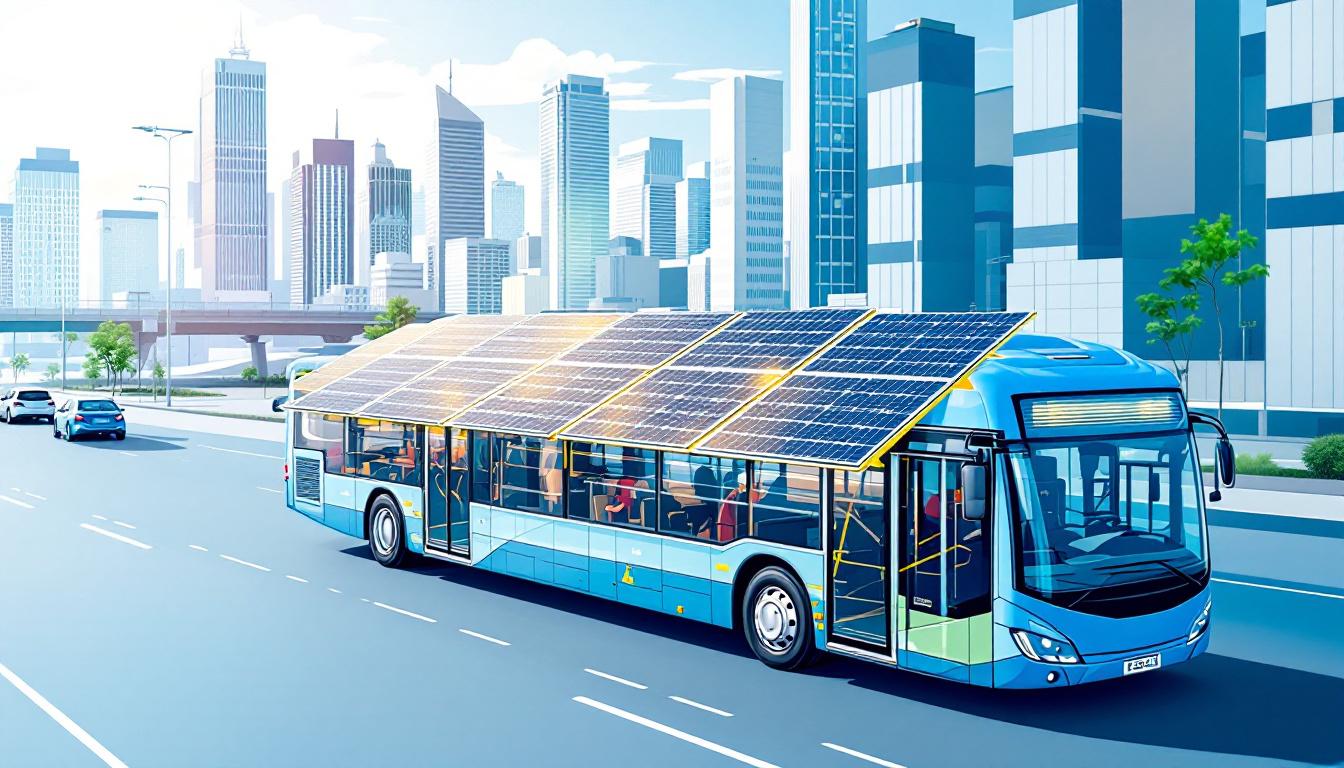
AVZ’s innovative GreenTrans Solar Bus System utilises bus rooftops to generate renewable energy, reducing emissions and supporting the UAE’s Net Zero 2050 ambitions with advanced AI technology and sustainable design.
In a notable step forward for sustainable public transportation, the UAE-based tech company AVZ has rolled out the GreenTrans Solar Bus System—a clever idea that turns vehicle rooftops into sources of renewable energy. Essentially, this system captures solar power, aligning pretty well with the UAE’s bold Energy Strategy 2050 and Net Zero 2050 plans, which aim to cut down carbon emissions significantly and push for more green energy use across the country.
AVZ’s innovative tech, developed under the leadership of CEO Vipen Ruhela and CTO Dr. Zoltan Derzsi, exploits the large rooftops on heavy vehicles, especially buses. Now, traditional solar panels usually need around 10 square meters to generate 1 kW of power. But buses offer between 22 and 24 square meters of rooftop area, so AVZ’s system can mount about 12 to 18 square meters of solar panels on each. If you think about it—a fleet of just 10,000 buses across the Emirates could produce something like 39 to 59 million kilowatt-hours of electricity each year. It’s pretty interesting, right?—this shows a whole new renewable energy resource hidden in everyday urban mobility.
The captured solar energy is stored on the vehicle and mainly used to power the air conditioning systems—something that’s pretty energy-hungry, especially in the UAE’s scorching heat. This strategy significantly lessens the need to run diesel engines just for cooling, which means both lower operational costs and a drop in emissions. And, interestingly enough, AVZ also uses AI to forecast and identify faults in the air conditioning units. They do this to prevent leaks of refrigerants—those are actually more harmful to the environment than CO2, in many cases. That part of the tech—that AI-based fault prediction—really underscores AVZ’s dedication to advancing sustainability with precise, smart engineering.
The company reports some pretty impressive gains—both environmentally and economically—from this system. It expands the country’s solar footprint without needing new land, cuts down on carbon emissions, and reduces energy losses normally thrown in during storage or transmission. Plus, AVZ is embracing a pretty open approach to intellectual property: they’re sharing the main neural network code with the Open Science Foundation so others can build on it, but they keep ownership of the training data. This kind of open science strategy aims to boost collaborative progress in local regions within the Gulf Cooperation Council—helping develop expertise and craft solutions that really suit the Emirates’ environment.
AVZ also runs a self-sustaining tech park—producing its own electricity and recycling wastewater—showing a real commitment to energy and infrastructure independence. Vipen Ruhela, the CEO, emphasizes a philosophy that values affordability while maintaining durability and quality. He’s clear that they’re not interested in short-term savings that could compromise the system’s sustainability over time. On top of that, Dr. Derzsi points out that the GreenTrans Solar Bus System has been tested thoroughly in extreme environmental conditions, reducing fuel use and CO2 emissions—pretty cool, because it demonstrates that cutting-edge science can have a tangible, positive ecological impact.
Now, this kind of project really fits within the broader strategic plans of the UAE. The Net Zero 2050 Strategy, coordinated by the Ministry of Climate Change and Environment, includes over 25 programmes across sectors like power, transport, and industry. The goal? Not just cutting emissions but also bolstering the economy—projecting the creation of around 200,000 jobs and contributing about 3% to the national GDP. It focuses heavily on expanding renewables, boosting efficiency, and adopting sustainable transportation—so, the GreenTrans Solar Bus System directly supports this visionary move by integrating renewables into everyday travel.
And it’s not all just theoretical; other landmark projects are helping the UAE reach its renewable goals, too. For instance, Masdar—one of the country’s top renewable energy firms—recently launched a facility with a capacity of 1 gigawatt of clean power, expected to be fully operational by 2027. This is part of their shift toward reliable, large-scale solar power, complementing the nation’s efforts to diversify its energy mix away from fossil fuels.
On a similarly strategic note, the Abu Dhabi Department of Energy (DoE) is pushing initiatives like the Abu Dhabi Energy Outlook 2050, laying out ambitious pathways toward a zero-carbon society. Their efforts support broader goals like the UAE’s Net Zero by 2050 initiative, which includes projects like big solar farms and nuclear power stations, aiming to cut emissions by more than 29 million tonnes each year by 2030.
The Ministry of Energy and Infrastructure isn’t standing still either. Their policies aim to boost energy efficiency by up to 45% compared to 2019 levels, expand renewable capacity from roughly 14.2 GW to about 20 GW, and create around 50,000 green jobs. They’re also mobilizing hundreds of billions of dirhams to meet rising energy needs sustainably—all part of a big-picture plan to balance growth with climate responsibility.
All these efforts highlight the UAE’s drive to align economic progress with environmental responsibility. The GreenTrans Solar Bus System from AVZ is a prime example of how innovation can be integrated into public infrastructure, cutting down carbon footprints while making operations more efficient. It’s a model that other regions facing similar climate challenges could easily look to. Honestly, it’s pretty inspiring to see a country using such advanced tech to not just talk about sustainability, but to make it a concrete reality across its transport network.
As the UAE continues its path towards Net Zero 2050, initiatives like AVZ’s project aren’t just about lowering emissions. They also help make infrastructure more resilient and set new standards for smart, clean transportation solutions. The benefits—both environmental and economic—are tangible right now, and they’ll help ensure that sustainability remains at the core of the nation’s growth plans in the years to come.
Source: Noah Wire Services
- https://uaenews247.com/2025/09/16/uae-based-research-company-avz-developed-a-solar-bus-system-driving-uaes-green-mobility-future/ – Please view link – unable to able to access data
- https://u.ae/en/about-the-uae/strategies-initiatives-and-awards/strategies-plans-and-visions/environment-and-energy/the-uae-net-zero-2050-strategy – The UAE’s Net Zero 2050 Strategy outlines the nation’s ambitious plan to achieve net-zero emissions by 2050. It encompasses over 25 programmes across six key sectors: power, industry, transport, buildings, waste, and agriculture. The strategy aims to create 200,000 job opportunities, contribute approximately 3% to the national GDP, and enhance export opportunities. It focuses on enhancing efficiency, expanding renewable energy sources, implementing sustainable transportation, and employing carbon capture technologies. The initiative is coordinated by the Ministry of Climate Change and Environment, involving over 45 major stakeholders to meet its targets.
- https://www.reuters.com/business/energy/uaes-masdar-launches-facility-produce-1gw-uninterrupted-renewable-energy-2025-01-14/ – Masdar, a UAE state-owned renewable energy firm, has launched a facility capable of producing 1 gigawatt of uninterrupted clean power. Announced during Abu Dhabi Sustainability Week, the project represents a significant shift towards making renewable energy a reliable baseload power source. The facility, costing around $6 billion, is set to become operational by 2027 and will span 90 square kilometers in Abu Dhabi’s desert. UAE’s energy minister, Suhail al-Mazrouei, highlighted this development as the beginning of future solar projects in the region.
- https://www.doe.gov.ae/en/Media-Centre/News/Abu-Dhabi-Department-of-Energy-launches-Abu-Dhabi-Energy-Outlook-2050-ahead-of-COP28-UAE – The Abu Dhabi Department of Energy (DoE) has launched the Abu Dhabi Energy Outlook 2050, the first comprehensive blueprint mapping a bold net-zero vision for the emirate and promoting a just and equitable transition, ahead of COP28 UAE. The outlook presents ambitious scenarios towards green goals and positions Abu Dhabi as a global beacon of sustainable development moving towards a zero-carbon society. The scenarios outlined in the outlook are designed to inspire sustainable change and shape the net-zero transition, without prescriptive measures.
- https://www.doe.gov.ae/en/Media-Centre/News/Abu-Dhabi-Department-of-Energy-Confirms-Plans-to-Support-UAEs-Ambitious-Net-Zero – The Abu Dhabi Department of Energy (DoE) has confirmed plans to support the UAE’s ambitious Net Zero by 2050 strategic initiative. The DoE is a partner of the whole-of-country, whole-of-government UAE Net Zero by 2050 Initiative led by the UAE Ministry of Climate Change and Environment. The initiative comprises key existing and planned projects from Abu Dhabi’s energy sector that could drive total emission reductions of more than 29 million tonnes per year by 2030, including the Noor Abu Dhabi Solar PV plant and the Barakah Nuclear Power Plant.
- https://www.moei.gov.ae/en/about-ministry/energy-strategies-to-achieve-net-zero – The UAE’s Ministry of Energy and Infrastructure has outlined energy strategies to achieve net-zero emissions. These include eliminating the contribution of clean coal to the energy mix, increasing energy efficiency by 42-45% compared to 2019, tripling the share of renewable energy, and increasing the installed clean energy capacity from 14.2 GW to 19.8 GW. The strategies also aim to create 50,000 new green jobs and achieve financial savings of AED 100 billion, mobilising investments between AED 150-200 billion to meet energy demand and sustain economic growth in the UAE.
- https://www.gulftoday.ae/News/2023/11/16/Net-Zero-2050-Strategy-economic-springboard-for-UAE – The UAE’s Net Zero 2050 Strategy is viewed as an economic springboard for the nation. The strategy includes over 25 programmes covering six core sectors: power, industry, transport, buildings, waste, and agriculture. Initiatives focus on improving efficiency, increasing the deployment of renewable energy sources, and enhancing the percentage of clean energy. The strategy sets emission reduction targets for different sectors, aiming to reduce emissions in the power and water sector to zero by 2050 from 0.55 million tonnes per MWh during the 2019 base year.
Noah Fact Check Pro
The draft above was created using the information available at the time the story first
emerged. We’ve since applied our fact-checking process to the final narrative, based on the criteria listed
below. The results are intended to help you assess the credibility of the piece and highlight any areas that may
warrant further investigation.
Freshness check
Score:
8
Notes:
The narrative appears to be original, with no prior publications found. The earliest known publication date is September 16, 2025. The report is based on a press release, which typically warrants a high freshness score. However, the absence of earlier mentions or similar content suggests originality.
Quotes check
Score:
9
Notes:
No direct quotes were identified in the provided text. The absence of quotes may indicate original content or a lack of direct sourcing.
Source reliability
Score:
4
Notes:
The narrative originates from a single outlet, uaenews247.com, which is not widely recognised. This raises concerns about the reliability and credibility of the information presented. The lack of corroboration from reputable sources diminishes the overall trustworthiness of the report.
Plausability check
Score:
6
Notes:
The concept of integrating solar panels into bus rooftops aligns with global trends in sustainable transportation. However, the absence of supporting details from reputable outlets and the reliance on a single, unverified source raise questions about the authenticity and feasibility of the claims. The lack of corroboration from established news organisations diminishes the overall credibility of the report.
Overall assessment
Verdict (FAIL, OPEN, PASS): FAIL
Confidence (LOW, MEDIUM, HIGH): MEDIUM
Summary:
The narrative presents an innovative concept but lacks corroboration from reputable sources, raising concerns about its authenticity. The reliance on a single, unverified outlet diminishes the overall trustworthiness of the information. The absence of supporting details from established news organisations further undermines the credibility of the report.


