





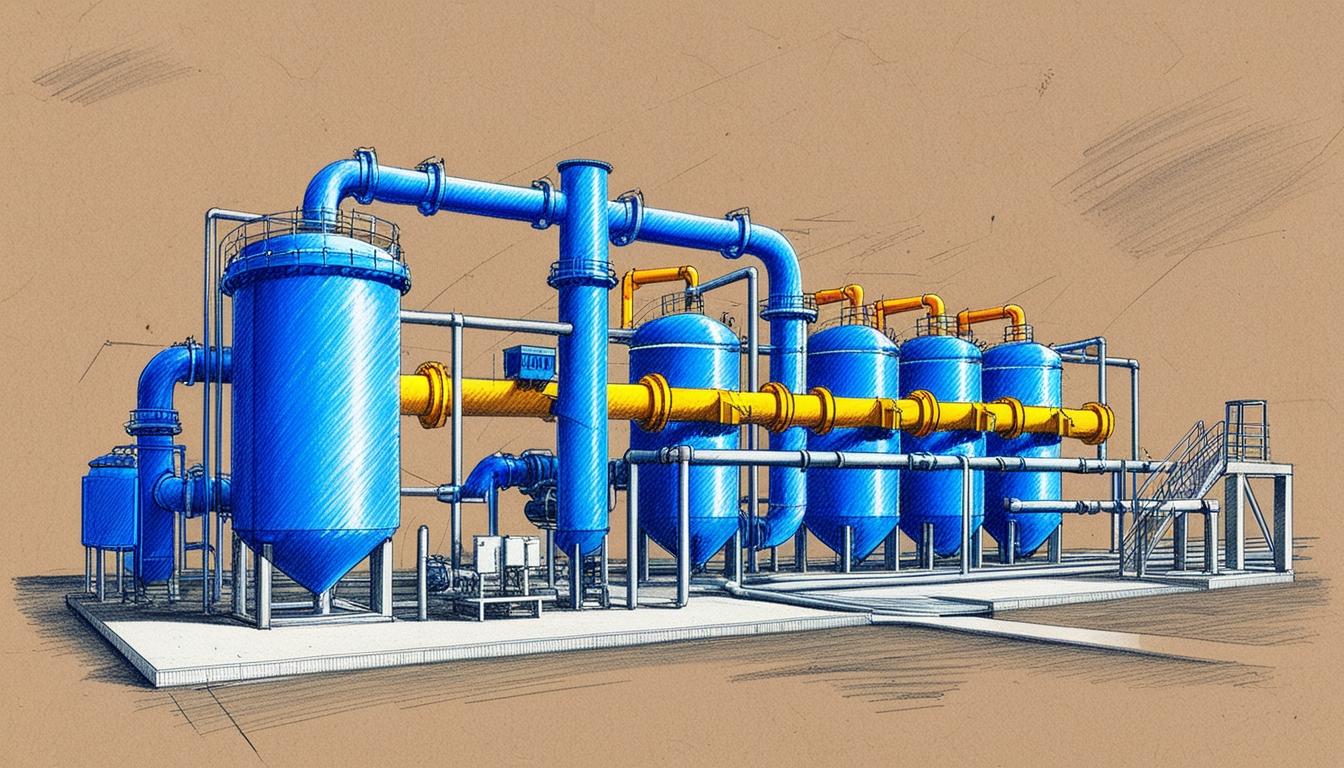
**Middle East:** Facing intensifying water scarcity due to climate and population pressures, Middle Eastern countries are scaling up wastewater recycling. Innovations in Jordan, Egypt, and the UAE demonstrate how treated wastewater supports agriculture, industry, and energy, reducing reliance on costly desalination and advancing circular resource economies.
Transforming Wastewater into a Resource: Lessons from Water Recycling in the Middle East
As the Middle East faces unprecedented water stress due to population growth, rapid urbanisation, and climate change, water recycling has emerged as a critical strategy for sustainable resource management. Traditionally reliant on overdrawn aquifers and energy-intensive desalination, countries in this region are now recognising the need to innovate their water sourcing, management, and reuse practices.
With water demand outstripping supply and traditional methods proving unsustainable, the urgency for alternative strategies is palpable. Desalination, while instrumental over the years in meeting water needs, is both costly and environmentally challenging, particularly due to the substantial brine by-products that threaten marine ecosystems. Therefore, alternatives such as water recycling present an opportunity not only to enhance water availability but also to mitigate environmental impacts associated with conventional methods.
Water recycling involves treating wastewater from various sources—domestic, industrial, and agricultural—so that it can be safely reused for non-potable purposes like irrigation, industrial cooling, and landscaping, as well as indirect and direct potable reuse. This approach not only conserves freshwater supplies but also allows for the recovery of valuable resources, including nutrients and energy, thus realising a circular economy within the water sector.
One successful example of this innovative approach is Jordan’s As-Samra Wastewater Treatment Plant, which treats nearly 70% of the country’s wastewater. This facility employs anaerobic digestion to convert organic sludge into biogas, effectively covering up to 80% of the plant’s energy requirements. Similarly, Egypt’s New Delta Wastewater Treatment Plant, the largest globally, processes over seven million cubic meters of water daily and recovers phosphorus and nitrogen for agricultural use, promoting sustainability in arid regions. In Dubai, water recycling initiatives provide irrigation for green spaces and feed district cooling systems, significantly reducing reliance on desalination while yielding significant cost savings.
Despite the evident benefits of water recycling, its widespread adoption faces a variety of challenges. Globally, only about 52% of wastewater is treated, with stark disparities in treatment rates reflecting differences in economic development. High-income countries, such as those in Western Europe, treat approximately 74% of their wastewater, while in low-income areas like South Asia, the figure plummets to around 4.3%. These discrepancies underscore the issues of inadequate infrastructure, insufficient funding, and a lack of technical expertise that hinder effective treatment and reuse in lower-income countries.
Further complicating matters, pollution at the source poses additional challenges, as industrial effluents rich in toxic chemicals demand advanced treatment technologies, escalating costs and potentially compromising the safety of recycled water. For example, Abu Dhabi’s Recycled Water and Biosolids Regulations 2021 exemplify efforts to enhance safety and efficacy in water recycling, mandating comprehensive strategies for risk assessment and management that align with World Health Organization guidelines.
Cultural perceptions also present a barrier to greater acceptance of recycled water. Attitudes rooted in misinformation and social stigma can deter public support, particularly with regard to direct potable reuse. This disconnection between popular sentiment and scientific reality complicates the political and financial backing necessary for substantial investments in water recycling infrastructure. To address these challenges, targeted public engagement and awareness campaigns are essential.
In the United Arab Emirates, significant strides are being made in reframing the narrative around water recycling. The UAE’s Water Recycling Policy reinforces rigorous quality standards while promoting the use of recycled water for irrigation, hence enhancing resource sustainability. The UAE Water Security Strategy 2036 aims for a remarkable 95% reuse of treated water, with Dubai committing to achieve 100% wastewater recycling by 2030—an initiative that aligns closely with the nation’s broader Net Zero Carbon Emissions Strategy set for 2050.
Additionally, Abu Dhabi’s introduction of a recycled water tariff for agricultural use, set attractively below the desalinated rate, demonstrates a compelling incentive for farmers to transition away from potable groundwater sources. At AED 1.7 per cubic meter, this pricing strategy positions recycled water as economically advantageous, further catalysing adoption.
Ultimately, water scarcity presents not just a pressing challenge but a lens through which the future of communities, economies, and ecosystems will be examined. Finding solutions will require sustained investment in infrastructure, robust regulatory frameworks, and an enduring shift in public perception of recycled water as a valuable resource rather than a liability. The successful initiatives in the Middle East not only illustrate the myriad benefits of treating wastewater as a resource but also serve as a powerful reminder that the key to resolving the water crisis lies not solely in sourcing new water but in effectively utilising what we already possess.
Reference Map:
- Paragraph 1 – [[1]](https://www.jdsupra.com/legalnews/water-recycling-lessons-from-the-middle-3278349/), [[2]](https://www.jdsupra.com/legalnews/water-recycling-lessons-from-the-middle-3278349/)
- Paragraph 2 – [[1]](https://www.jdsupra.com/legalnews/water-recycling-lessons-from-the-middle-3278349/), [[3]](https://www.wasterecyclingmea.com/top-stories/transforming-wastewater-into-a-sustainable-resource)
- Paragraph 3 – [[1]](https://www.jdsupra.com/legalnews/water-recycling-lessons-from-the-middle-3278349/), [[4]](https://www.arabianbusiness.com/abnews/dubai-to-use-100-of-recycled-water-by-2030)
- Paragraph 4 – [[1]](https://www.jdsupra.com/legalnews/water-recycling-lessons-from-the-middle-3278349/), [[6]](https://minetek.com/en-us/resource-hub/news/advancing-municipal-wastewater-management-in-the-middle-east/)
- Paragraph 5 – [[1]](https://www.jdsupra.com/legalnews/water-recycling-lessons-from-the-middle-3278349/), [[5]](https://www.meed.com/water-recycling-gains-momentum-in-the-gulf/)
- Paragraph 6 – [[1]](https://www.jdsupra.com/legalnews/water-recycling-lessons-from-the-middle-3278349/), [[7]](https://www.newarab.com/features/how-mena-region-can-secure-sustainable-water-supply)
- Paragraph 7 – [[1]](https://www.jdsupra.com/legalnews/water-recycling-lessons-from-the-middle-3278349/), [[2]](https://www.jdsupra.com/legalnews/water-recycling-lessons-from-the-middle-3278349/)
- Paragraph 8 – [[1]](https://www.jdsupra.com/legalnews/water-recycling-lessons-from-the-middle-3278349/), [[4]](https://www.arabianbusiness.com/abnews/dubai-to-use-100-of-recycled-water-by-2030)
Source: Noah Wire Services
- https://www.jdsupra.com/legalnews/water-recycling-lessons-from-the-middle-3278349/ – Please view link – unable to able to access data
- https://www.jdsupra.com/legalnews/water-recycling-lessons-from-the-middle-3278349/ – This article discusses the critical role of water recycling in the Middle East, emphasizing its importance in addressing water scarcity, reducing reliance on energy-intensive desalination, and mitigating environmental pollution. It highlights successful initiatives such as Jordan’s As-Samra Wastewater Treatment Plant, which processes nearly 70% of the country’s wastewater and generates biogas to meet 80% of its energy needs. The article also addresses challenges to widespread adoption, including infrastructure costs, pollution at the source, and sociocultural resistance, and underscores the need for robust institutional frameworks to support water recycling efforts.
- https://www.wasterecyclingmea.com/top-stories/transforming-wastewater-into-a-sustainable-resource – This article explores the UAE’s ambitious environmental plan to achieve zero discharge of wastewater by the end of 2024. It discusses the significance of wastewater treatment in meeting water needs, particularly for non-potable purposes like irrigation and industrial processes. The piece also highlights challenges such as salinity in treated wastewater and the need for appropriate regulations and standards for wastewater reuse, emphasizing the importance of infrastructure investments and regulatory frameworks in promoting sustainable water management.
- https://www.arabianbusiness.com/abnews/dubai-to-use-100-of-recycled-water-by-2030 – Dubai Municipality has implemented a comprehensive water reclamation program, achieving a 90% water reuse rate and aiming for 100% by 2030. The initiative focuses on using reclaimed water for irrigation, district cooling, and firefighting, significantly reducing reliance on desalinated water and conserving groundwater resources. The program aligns with Dubai’s Net Zero Carbon Emissions Strategy 2050, contributing to substantial cost savings and environmental benefits, and has been recognized with the International Water Reuse and Recycling Award in 2022.
- https://www.meed.com/water-recycling-gains-momentum-in-the-gulf/ – This article examines the growing trend of water recycling in the Gulf Cooperation Council (GCC) countries, highlighting efforts to shift from desalination to treated sewage effluent (TSE) reuse. It provides statistics on TSE reuse across GCC nations, noting that Abu Dhabi has achieved 100% reuse, while other countries like Saudi Arabia lag behind. The piece discusses the financial and environmental benefits of TSE usage, such as cost savings compared to desalinated water and reduced demand on freshwater resources, and highlights the importance of infrastructure investments and regulatory frameworks in promoting water recycling.
- https://minetek.com/en-us/resource-hub/news/advancing-municipal-wastewater-management-in-the-middle-east/ – This article emphasizes the critical importance of wastewater treatment in the Middle East due to limited freshwater resources and rapid population growth. It highlights Jordan’s As-Samra Wastewater Treatment Plant as a leader in wastewater treatment innovation, capable of generating 80% of its energy needs through biogas and hydropower. The treated wastewater supports over 100 million cubic meters of reclaimed water for farmers in the Jordan Valley, showcasing the potential of wastewater management to address water scarcity and promote sustainable water use in the region.
- https://www.newarab.com/features/how-mena-region-can-secure-sustainable-water-supply – This article discusses the challenges and opportunities in securing a sustainable water supply in the Middle East and North Africa (MENA) region. It highlights the doubling of water reuse projects since 1990 but notes that up to 50% of produced municipal wastewater is still not utilized, being discharged into the sea or evaporated. The piece emphasizes the need to overcome factors limiting water reuse, including cultural barriers, inadequate regulatory frameworks, and institutional fragmentation, and underscores the potential of wastewater recovery to increase water availability, energy, nutrients, and enhance climate adaptation and food security.
Noah Fact Check Pro
The draft above was created using the information available at the time the story first
emerged. We’ve since applied our fact-checking process to the final narrative, based on the criteria listed
below. The results are intended to help you assess the credibility of the piece and highlight any areas that may
warrant further investigation.
Freshness check
Score:
8
Notes:
The narrative references recent strategies and policies like the UAE Water Security Strategy 2036 and Abu Dhabi’s Recycled Water and Biosolids Regulations 2021, indicating fairly current content. However, there are no specific dates within the last year mentioned, reducing the freshness score slightly.
Quotes check
Score:
10
Notes:
There are no direct quotes in the narrative, so there is no concern about plagiarism or lack of originality in this regard.
Source reliability
Score:
7
Notes:
The narrative originates from JD Supra, a reputable legal news platform. While it provides valuable insights and references various known initiatives, its perspective might be limited by legal or regional bias.
Plausability check
Score:
9
Notes:
The claims about water scarcity, the advantages of water recycling, and specific projects in countries like Jordan and Egypt are well-supported by known challenges and initiatives in these regions. The lack of specific data on costs or technical challenges reduces the score slightly.
Overall assessment
Verdict (FAIL, OPEN, PASS): PASS
Confidence (LOW, MEDIUM, HIGH): HIGH
Summary:
The narrative presents a well-structured and plausible overview of water recycling’s importance and challenges in the Middle East. It lacks direct quotes, references recent policies, and is based on a fairly reliable source. However, specific details on costs and technical hurdles are limited.


