




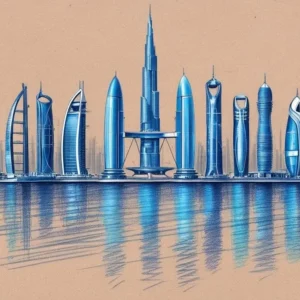

The Abu Dhabi Department of Energy introduces a ground-breaking framework enabling consumers to generate and manage their own solar power, aiming to boost renewable capacity and optimise demand during peak hours.
The Abu Dhabi Department of Energy (DoE) has rolled out a formal framework for on-site solar power generation. They’ve introduced a Solar (Photovoltaic) Energy Self-Supply Policy that offers a regulated pathway for consumers to produce and use their own electricity. As per the DoE, this initiative aims to encourage a shift towards more local, low-carbon energy use during daytime hours and to promote smarter, more flexible demand management across the emirate.
Under this new policy, customers can choose to stay entirely dependent on the grid or explore flexible options like installing distributed photovoltaics (DPV), solar water heating systems, and, with approval, customer-sited battery storage. Basically, the approach allows generated power to be used directly on-site during daylight, and with storage capacity, that energy can also be harnessed after sunset. The DoE believes these measures will help reduce overall grid demand, improve daytime energy efficiency, and strengthen supply security as Abu Dhabi ramps up its renewable capacity.
Initially, the policy is targeting the agricultural sector along with owners of rest houses and ranches. These groups are seen as particularly well-suited for daytime solar power generation, which could help lower their operating costs. Khaleej Times reports that the rollout is being carefully staged to protect system integrity while gradually expanding distributed generation.
Alongside the policy, the DoE has also released a guidance manual focused on high-efficiency appliances. This manual aims to provide householders, businesses, and institutions with a practical guide on selecting, purchasing, and running energy-efficient equipment. It covers areas like cooling, water heating, lighting, motors, pumps, and irrigation systems. The manual also emphasizes smart controls and evaluating the life-cycle costs, all of which are meant to help cut consumption, reduce peak loads, and lower emissions.
Industry insiders note that this policy formalizes a more active role for consumers in managing their energy demand. PV-Tech described it as a structured path for users to invest in DPV alone, combine it with storage solutions, or implement optimized load management. The publication also mentioned that the DoE plans to follow this policy with detailed technical and commercial guidelines covering topics like metering, settlement procedures, and approval processes.
This move aligns well with Abu Dhabi’s broader efficiency goals. As PV-Tech reports, the Abu Dhabi Energy and Water Efficiency Strategy 2030 aims to cut electricity use by 22% and water consumption by 32% by 2030 compared to 2013 levels. The DoE sees the self-supply policy as a practical tool to help meet these targets, while also adding benefits for consumers.
Abdulaziz Mohammed Al Obaidli, the Director General of Regulatory Affairs at the DoE, welcomed the policy. He said: “We’re pleased to announce the launch of the Photovoltaic Energy Self-Supply Policy in Abu Dhabi, which is one of the most important policies we’ve introduced in this sector so far. It strengthens our efforts to develop a strategic mix of energy sources, especially renewable ones, and allows the local community to play a key role in supporting the national goals outlined in the Abu Dhabi Energy and Water Efficiency Strategy 2030.” He further added: “At the Department of Energy, we craft policies and solutions that add value to the sector and are scalable over the long term. These efforts help ensure infrastructure is efficient, resilient, and prepared for the future, while also raising public awareness about environmentally sustainable, socially responsible, and economically viable energy use.”
The department underscores the importance of consumer protection and system stability. Gulf News highlighted that DoE officials stressed the importance of deliberately and carefully expanding self-supply efforts , with safeguards to keep the system reliable as more distributed generation comes online. That balance reflects a common tension in energy transitions: enabling individual investments while maintaining the overall stability and coordination of the larger grid.
For those producing energy on-site, the benefits are clear. Farms and rural estates could see reductions in fuel and grid bills, smaller peak demands, and, with batteries, the ability to shift solar-produced power to the evening hours. PV-Magazine pointed out that the policy aims to reshape load profiles to better match times of abundant, low-cost generation, which should help reduce overall system stress and possibly lower wholesale energy procurement costs.
Details about operational procedures and commercial arrangements are still under development. The DoE has announced it will release further policies and guidelines throughout 2026, including binding rules on metering and settlement. Observers expect these regulations to clarify how exported energy will be valued, how storage systems will be classified, and what technical standards will be required for interconnection and safety. The adoption and clarity of these rules will likely influence the economic viability and overall uptake of self-supply options, especially for agricultural and commercial sectors.
The policy’s launch coincides with the DoE engaging more with international partners. At COP28, the department signed memoranda of understanding with the Arizona State Board of Governors, SolarSpace, and the International Renewable Energy Agency (IRENA). These collaborations aim to accelerate innovation in solar technology and policy design, as part of Abu Dhabi’s broader strategy to import expertise and scale up clean energy solutions.
For developers and equipment suppliers, this creates a promising market in distributed generation and storage, especially for agricultural applications like irrigation and tech-based farming systems. Meanwhile, energy managers are being prompted to incorporate local generation forecasts, demand response, and storage optimization into their operational planning.
Of course, the success of this initiative will hinge on practical implementation. Industry stakeholders will be watching how the forthcoming technical standards, appliance efficiency guidelines, and commercial settlement mechanisms unfold. If everything lines up well, Abu Dhabi could develop a robust, regulated market for consumer-scale PV and storage systems, easing daytime grid pressures and helping the emirate meet its efficiency goals.
- https://abudhabimagazine.ae/abu-dhabi-department-of-energy-launches-solar-energy-self/ – Please view link – unable to able to access data
- https://www.doe.gov.ae/en/Media-Centre/News/The-Abu-Dhabi-Department-of-Energy-launches-Solar-Energy-Self-Supply-Policy-in-emirate – The Abu Dhabi Department of Energy (DoE) has introduced the Solar (Photovoltaic) Energy Self-Supply Policy, enabling customers to enhance daytime electricity efficiency and increase reliance on clean, renewable energy sources through smart and flexible energy-consumption solutions. This initiative aligns with the Abu Dhabi Energy and Water Efficiency Strategy 2030, aiming to transform energy generation and consumption. The policy also includes a guidance manual on high-efficiency appliances to support households, businesses, and institutions in selecting and operating energy-efficient systems, promoting best practices to reduce energy and water consumption, lower peak demand, and achieve long-term cost savings while supporting emissions reduction and system-wide efficiency.
- https://gulfnews.com/business/energy/abu-dhabi-launches-solar-self-supply-policy-to-cut-power-demand-1.500433052 – The Abu Dhabi Department of Energy (DoE) has launched the Solar (Photovoltaic) Energy Self-Supply Policy, allowing customers to improve daytime electricity efficiency and increase reliance on clean and renewable energy sources through smart and flexible energy-consumption solutions. The policy is part of Abu Dhabi’s efforts to transform energy generation and consumption in line with the Abu Dhabi Energy and Water Efficiency Strategy 2030. It also aims to raise public awareness of responsible electricity consumption and supports the national transition towards increased reliance on clean and renewable energy sources, particularly in sectors that depend heavily on electricity for daily operations. The policy will be applied first to the agricultural sector and owners of rest houses and ranches, facilitating their access to renewable energy sources and enabling them to generate significant savings by leveraging solar energy solutions, including photovoltaic panels and solar-powered water heaters, in addition to battery storage systems to power their facilities during evening hours.
- https://www.khaleejtimes.com/uae/abu-dhabi-farms-rest-houses-generate-electricity-solar-power – Farms, ranches, and rest houses in Abu Dhabi are now permitted to generate their own electricity using solar power under a new self-supply framework introduced by the emirate’s energy regulator. The Solar (Photovoltaic) Energy Self-Supply Policy offers eligible agricultural customers the option to directly consume electricity generated on-site during the day and, where approved, use battery storage to extend those benefits into the evening. This policy enables customers to generate part of their own clean electricity and manage their consumption more actively, marking a structured and scalable approach to self-supply in Abu Dhabi. The policy is being introduced in phases, starting with agricultural customers and owners of farms, rest houses, and ranches, segments particularly well-suited to daytime solar generation. The Department of Energy emphasizes that this approach is deliberate and structured, ensuring reliability, protecting consumers, and preserving system integrity as distributed generation increases.
- https://www.pv-magazine.com/2026/02/09/abu-dhabi-unveils-solar-plus-storage-self-supply-policy/ – The Abu Dhabi Department of Energy (DoE) has unveiled the Solar (Photovoltaic) Energy Self-Supply Policy, enabling customers to improve daytime electricity efficiency and increase reliance on clean and renewable energy sources through smart and flexible energy-consumption solutions. The policy aims to reshape electricity usage patterns to better align with periods of abundant, clean, cost-competitive generation and to reduce net grid demand through distributed solutions. Customers have a clear and structured pathway to participate, whether by investing in self-supply through distributed photovoltaics (DPV), combining DPV with customer-sited battery storage, or through optimized load management. The policy is part of Abu Dhabi’s efforts to achieve the ambitious targets set out in the Abu Dhabi Energy and Water Efficiency Strategy 2030, which aims for a 22% reduction in electricity and 32% reduction in water usage by the end of the decade compared to a 2013 baseline. The Department of Energy plans to issue detailed guidelines setting out the implementation mechanisms, technical requirements, commercial arrangements, and administrative procedures required to operationalize the new policy, including binding provisions on metering, settlement, application, and approval processes.
- https://www.doe.gov.ae/Media-Centre/News/Abu-Dhabi-Department-of-Energy-partners-with-University – The Abu Dhabi Department of Energy (DoE) has signed two Memorandums of Understanding (MoU) at COP28 UAE with internationally recognized partners. The agreements aim to harness solar power in space and develop world-class clean energy transition policies and technologies to accelerate climate action, both in Abu Dhabi and globally. The agreements have been signed with Arizona State Board of Governors, on behalf of the University of Arizona and SolarSpace in the US, and the International Renewable Energy Agency (IRENA). They reflect the DoE’s ambitions to partner with leading global regulators, academic institutions, infrastructure developers, and green financiers to help the UAE transition to a net-zero energy future while diversifying towards a sustainable economy.
Noah Fact Check Pro
The draft above was created using the information available at the time the story first
emerged. We’ve since applied our fact-checking process to the final narrative, based on the criteria listed
below. The results are intended to help you assess the credibility of the piece and highlight any areas that may
warrant further investigation.
Freshness check
Score:
8
Notes:
The article reports on the Abu Dhabi Department of Energy’s recent launch of the Solar Energy Self-Supply Policy, dated March 10, 2026. This aligns with a Khaleej Times article from March 4, 2026, confirming the policy’s recent introduction. ([magzter.com](https://www.magzter.com/stories/newspaper/Khaleej-Times/ABU-DHABI-ALLOWS-FARMS-REST-HOUSES-TO-GENERATE-SOLAR-POWER?utm_source=openai)) The policy’s official document was published on February 5, 2026. ([doe.gov.ae](https://www.doe.gov.ae/-/media/Project/DOE/Department-Of-Energy/Media-Center-Publications/2026/Feb/PV-and-Battery-Energy-Storage-Systems-For-Self-Supply-Policy.pdf?utm_source=openai)) No evidence suggests the content is recycled or republished from low-quality sites. The article appears original and timely.
Quotes check
Score:
7
Notes:
The article includes a quote from Abdulaziz Alobaidli, Director General of Regulatory Affairs at the Department of Energy, stating: “This policy is about enabling choice within a responsible regulatory framework.” A similar quote is found in the Khaleej Times article: “This policy is about enabling choice within a responsible regulatory framework,” ([magzter.com](https://www.magzter.com/stories/newspaper/Khaleej-Times/ABU-DHABI-ALLOWS-FARMS-REST-HOUSES-TO-GENERATE-SOLAR-POWER?utm_source=openai)) indicating potential reuse. The exact origin of the quote is unclear, and without independent verification, the authenticity remains uncertain.
Source reliability
Score:
6
Notes:
The article originates from Abu Dhabi Magazine, a local publication. While it provides timely information, its independence and editorial standards are not well-documented, raising concerns about reliability. The Khaleej Times, a more established newspaper, corroborates the policy’s launch, enhancing credibility. ([magzter.com](https://www.magzter.com/stories/newspaper/Khaleej-Times/ABU-DHABI-ALLOWS-FARMS-REST-HOUSES-TO-GENERATE-SOLAR-POWER?utm_source=openai))
Plausibility check
Score:
8
Notes:
The article’s claims about the Solar Energy Self-Supply Policy align with known initiatives by the Abu Dhabi Department of Energy, such as the Demand Response Project and the Energy and Water Efficiency Strategy 2030. ([bignewsnetwork.com](https://www.bignewsnetwork.com/news/274949589/abu-dhabi-department-of-energy-launches-phase-two-of-2025-demand-response-project?utm_source=openai)) The policy’s focus on enabling consumers to generate and consume their own electricity is consistent with global trends towards decentralised energy production.
Overall assessment
Verdict (FAIL, OPEN, PASS): FAIL
Confidence (LOW, MEDIUM, HIGH): MEDIUM
Summary:
While the article reports on the recent launch of the Solar Energy Self-Supply Policy, corroborated by other sources, concerns about the originality of quotes, the reliability of the source, and the independence of verification sources lead to a ‘FAIL’ assessment. The lack of independent verification and potential reuse of content necessitate caution.


