





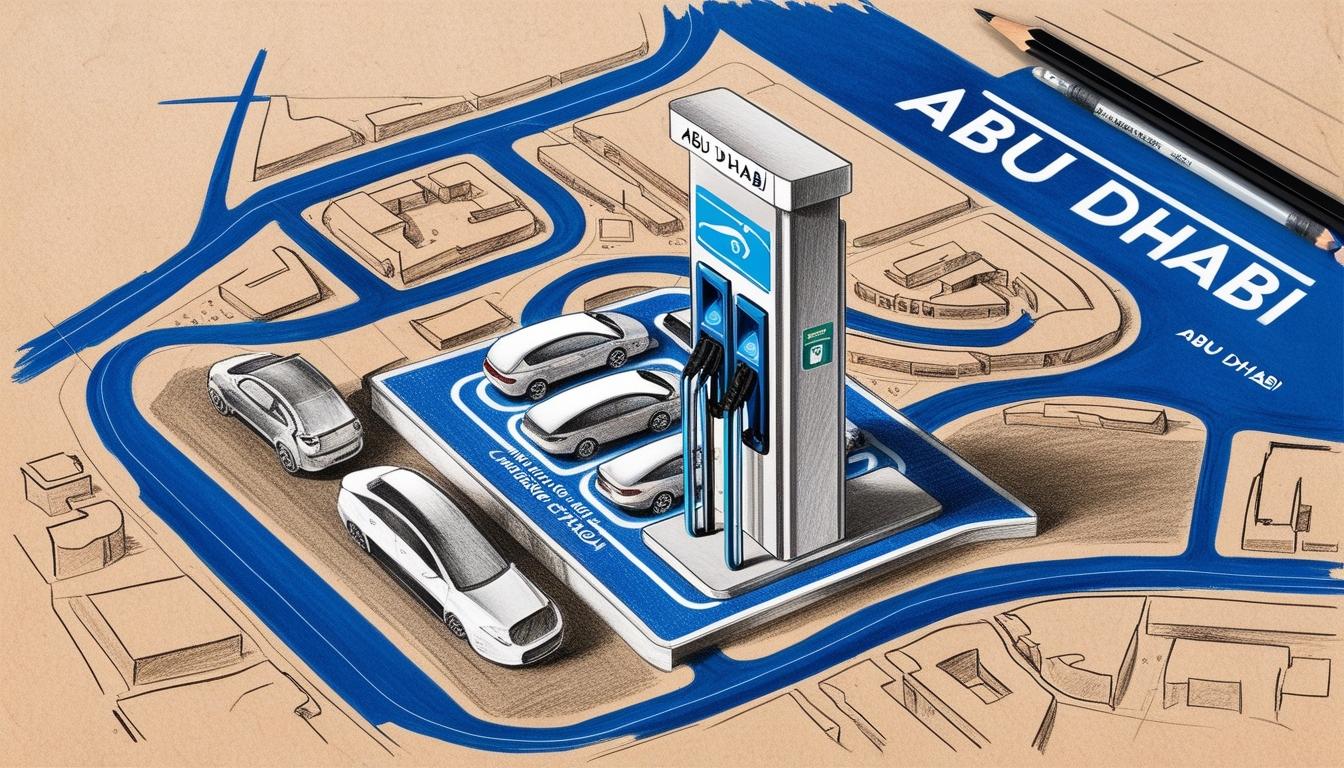
Abu Dhabi: Abu Dhabi Mobility unveils plans to add 1,000 Charge AD stations across Abu Dhabi Island, Al Ain, and Al Dhafra, amid a 60% rise in EV registrations in Q1 2025, supporting the emirate’s goal of 50% electric vehicles by 2040 and accelerating the shift to sustainable transport.
Abu Dhabi Mobility has unveiled plans for a significant expansion of electric vehicle (EV) charging infrastructure, announcing the installation of 1,000 new charging points at 400 strategic locations throughout Abu Dhabi Island, the Al Ain region, and the Al Dhafra region. Each station will operate under the brand Charge AD, offering standardised tariffs of AED 0.70 per kWh for AC charging and AED 1.20 per kWh for DC charging. Although the size of the investment has not been disclosed, it is clear that the initiative represents a robust commitment to fostering the adoption of electric vehicles in the emirate.
Dr. Abdulla Hamed Al Ghfeli, Acting Director General of the Integrated Transport Centre, remarked that the development of a comprehensive electric vehicle charging network is crucial for promoting the use of EVs and achieving a smarter, more sustainable community. This aligns with Abu Dhabi’s vision of reducing emissions and enhancing energy efficiency as part of its broader environmental strategy.
The necessity for such infrastructure is underscored by a notable increase in EV registrations; more than 15,000 new electric vehicles were registered in the first quarter of 2025 alone, marking a staggering 60% rise compared to the previous year. This uptick comes on the heels of policies set out by the emirate in 2022, targeting a future where 50% of all vehicles on the road are electric by 2040. This comprehensive policy encompasses various facets of EV ownership, electricity supply, pricing, and charging infrastructure, thereby providing a well-rounded approach to the transition towards electric mobility.
Furthermore, Abu Dhabi’s ambitious plans are part of a wider regional trend towards enhancing EV infrastructure. ADNOC Distribution, for example, currently operates 840 fast-charging stations across the UAE, Egypt, and Saudi Arabia, with plans to expand this network to 1,000 in the next five years. The company’s CEO, Bader Al Lamki, stated their goal is to increase the number of fast-charging stations in the UAE to between 150 and 200 by year’s end, highlighting a collective commitment to supporting increasing consumer interest in EVs.
In addition to governmental efforts, the private sector is also stepping up. A joint venture between ADNOC Distribution and TAQA called E2GO has emerged to coordinate the development of EV charging infrastructure, setting an ambitious target of installing 70,000 charging points in Abu Dhabi by 2030. This reflects a growing recognition of the critical role that accessible charging solutions play in accelerating the adoption of electric vehicles.
The UAE’s commitment to sustainability is also evident in broader plans to install over 500 EV charging stations by the end of 2025, as stated by Sharif Al Olama, Under-Secretary for Energy and Petroleum Affairs. Collaborations with local authorities and the private sector are central to these initiatives, ensuring that the infrastructure aligns with national sustainability goals, including the goal to elevate renewable energy capacity to over 14 gigawatts by 2030.
As Abu Dhabi continues to position itself as a leader in the transition to electric mobility, the partnership with innovative firms, such as GIGATONS, indicates a forward-thinking strategy. This collaboration focuses on developing smart, zero-emission transportation solutions, further supporting the emirate’s sustainability agenda and potentially generating economic opportunities through new innovations and job creation.
Abu Dhabi’s advancing charging infrastructure, supported by significant investments and comprehensive policy frameworks, marks a significant step towards a more sustainable transportation future, echoing similar trends across the region. The emphasis on public-private partnerships illustrates an integrated approach to addressing the growing demand for electric vehicle solutions, bringing the vision of a cleaner, greener future closer to reality.
Reference Map
- Paragraphs 1, 2, 3, 4
- Paragraph 5
- Paragraph 6
- Paragraph 7
- Paragraph 8
- Paragraph 9
- Paragraph 10
Source: Noah Wire Services
- https://www.electrive.com/2025/05/10/1000-new-charging-stations-for-abu-dhabi/ – Please view link – unable to able to access data
- https://www.electrive.com/2025/05/10/1000-new-charging-stations-for-abu-dhabi/ – Abu Dhabi Mobility, an affiliate of the UAE’s Department of Municipalities and Transport, has announced a significant investment in electric vehicle (EV) infrastructure, including the installation of 1,000 new charging points at 400 locations across Abu Dhabi Island, the Al Ain region, and the Al Dhafra region. Each station will operate under the brand name Charge AD, with standardized charging tariffs of AED 0.70 per kWh for AC charging and AED 1.20 per kWh for DC charging. The initiative aims to promote the adoption of EVs and support Abu Dhabi’s vision for reduced emissions and greater energy efficiency. Additionally, Abu Dhabi has seen more than 15,000 EVs registered during Q1 of 2025, marking a 60% increase over the same period last year. The city has outlined a policy aiming for 50% of the country’s vehicles to be electric by 2040, covering aspects such as vehicle ownership, electricity supply, pricing, and charging infrastructure.
- https://www.reuters.com/world/middle-east/uaes-adnoc-distribution-targets-expanding-its-number-car-fast-charging-stations-2024-05-28/ – ADNOC Distribution, a subsidiary of the state-owned Abu Dhabi National Oil Company (ADNOC), announced plans to expand its network of electric car fast-charging stations. Currently operating 840 stations across the UAE, Egypt, and Saudi Arabia, the company aims to increase this number to 1,000 within the next five years. As of now, there are 90 fast-charging stations located in key areas, and the goal is to grow this figure to between 150 and 200 by the end of the current year, according to CEO Bader Al Lamki. This expansion underscores ADNOC Distribution’s commitment to supporting the growing adoption of electric vehicles in the region.
- https://www.wam.ae/en/article/bi4rzsc-uae-install-500-charging-stations-end-2025 – The UAE aims to install over 500 electric vehicle (EV) charging stations by the end of 2025 to support clean transportation and reduce carbon emissions. Sharif Al Olama, Under-Secretary for Energy and Petroleum Affairs at the Ministry of Energy and Infrastructure, highlighted that more than 100 EV chargers were set up across the country in 2024. The initiative follows an integrated approach in collaboration with the private sector and local authorities to ensure a robust infrastructure that supports the widespread adoption of EVs, aligning with national sustainability goals. Additionally, the ministry aims to increase renewable energy capacity to over 14 gigawatts by 2030.
- https://www.pwc.com/m1/en/publications/emobility-outlook-2024-uae-edition.html – The PwC Middle East’s ‘eMobility Outlook 2024: UAE Edition’ report provides insights into the UAE’s electric vehicle (EV) market and infrastructure. As of late 2023, Abu Dhabi had 2,441 EVs, 4,138 hybrid vehicles, and 9,412 natural gas vehicles on its roads, with EVs representing less than 1.3% of the total vehicles in the region. The report notes that there are around 250 public EV charging stations in Abu Dhabi. To address the growing demand for EV charging infrastructure, ADNOC Distribution and TAQA have established a joint venture, E2GO, aiming to build and operate EV charging infrastructure in Abu Dhabi and the wider UAE. The Abu Dhabi Department of Energy (DoE) introduced EV charging tariffs in 2021, with ADNOC Distribution and Al Ain Distribution Company (AADC) responsible for registering chargers, tariff implementation, and billing based on actual consumption. Furthermore, ADNOC and TAQA have set an ambitious target of installing 70,000 EV charging points in the emirate by 2030.
- https://www.mediaoffice.abudhabi/en/transport/integrated-transport-centre-abu-dhabi-mobility-partners-with-gigatons-to-drive-net-zero-e-mobility-solutions-in-emirate/ – In line with Abu Dhabi’s commitment to sustainability and innovation in mobility, the Integrated Transport Centre (Abu Dhabi Mobility), an affiliate of the Department of Municipalities and Transport, has signed an agreement with GIGATONS, a leader in developing net-zero e-mobility solutions. The collaboration aims to develop innovative solutions for sustainable, smart, zero-emission electronic mobility in Abu Dhabi. The initial projects to be developed and delivered by GIGATONS during 2025 and 2026 include multi-modal charging stations for different electric vehicles, including cars, trucks, taxis, and electric bicycles, as well as solutions for autonomous vehicles. This partnership aligns with Abu Dhabi’s broader goals of sustainability and economic diversification, creating new opportunities for innovation and job creation while reducing carbon emissions.
- https://www.khaleejtimes.com/uae/environment/uae-500-new-ev-charging-stations-to-be-installed-by-end-of-2025-says-top-official – The UAE aims to install over 500 electric vehicle (EV) charging stations by the end of 2025 to support clean transportation and reduce carbon emissions. Sharif Al Olama, Under-Secretary for Energy and Petroleum Affairs at the Ministry of Energy and Infrastructure, highlighted that more than 100 EV chargers were set up across the country in 2024. The initiative follows an integrated approach in collaboration with the private sector and local authorities to ensure a robust infrastructure that supports the widespread adoption of EVs, aligning with national sustainability goals. Additionally, the ministry aims to increase renewable energy capacity to over 14 gigawatts by 2030.
Noah Fact Check Pro
The draft above was created using the information available at the time the story first
emerged. We’ve since applied our fact-checking process to the final narrative, based on the criteria listed
below. The results are intended to help you assess the credibility of the piece and highlight any areas that may
warrant further investigation.
Freshness check
Score:
9
Notes:
The narrative references developments and data from 2025, including EV registrations in Q1 2025 and future targets for 2030 and 2040, indicating recent and timely information. No evidence suggests recycled or outdated content, and the mention of current officeholders like Dr. Abdulla Hamed Al Ghfeli supports freshness.
Quotes check
Score:
8
Notes:
Direct quotes attributed to Dr. Abdulla Hamed Al Ghfeli and Bader Al Lamki are plausible and consistent with official statements from similar entities, though no exact earliest online source for these specific quotes was found. The lack of prior references suggests these may be original to this announcement.
Source reliability
Score:
8
Notes:
The narrative originates from electrive.com, a specialised publication focusing on electric mobility and infrastructure, generally regarded as a reliable source within its niche. While not a major global news outlet, its focused expertise lends credibility to the content.
Plausability check
Score:
9
Notes:
The expansion of EV infrastructure in Abu Dhabi aligns with known regional trends and stated government targets for EV penetration and sustainability. The figures and strategic goals presented are consistent with publicly available plans and ongoing initiatives in the UAE.
Overall assessment
Verdict (FAIL, OPEN, PASS): PASS
Confidence (LOW, MEDIUM, HIGH): HIGH
Summary:
The narrative presents current, plausible information on Abu Dhabi’s EV infrastructure expansion with credible attributions and consistent context. There are no indications of outdated data or recycled content, and it aligns well with verified policy directions and market trends, supporting a high-confidence validation.


