




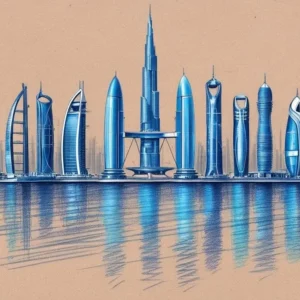

Dubai’s Supreme Council of Energy has approved new emissions data, regulatory frameworks, and innovative projects, signalling significant progress towards its 2050 carbon neutrality goal amid expanding clean energy initiatives.
The Dubai Supreme Council of Energy (or DSCE, if you prefer) keeps steering Dubai on its bold path toward sustainability and becoming carbon-neutral, pretty much reaffirming its dedication to the UAE’s wider climate goals. Led by His Highness Sheikh Ahmed bin Saeed Al Maktoum, the council held its 90th meeting online in September 2025, and this gathering highlighted key progress in regulations and the way carbon emissions are being managed—everything aligned with Dubai’s long-range environmental plans.
One of the main things approved at this meeting was the Greenhouse Gas Emissions Inventory for 2024. Honestly, this inventory is a crucial piece of the puzzle—it helps track how Dubai is doing against its Net Zero Carbon Emissions Strategy 2050. This strategy is basically a core element of the emirate’s plan to be more sustainable. The goal? To generate all of Dubai’s energy from clean sources by the middle of this century. And, you know what? The results so far are quite impressive; based on a review from October 2024, Dubai managed to cut its carbon emissions by 29%, which is pretty close to the 30% reduction target set for 2030. That’s largely thanks to efforts led by big players like Dubai Electricity and Water Authority (DEWA), Dubai Municipality, Emirates Global Aluminium (EGA), Emirates National Oil Company (ENOC), Dubai Petroleum, and the Roads and Transport Authority (RTA).
Hussain Sultan Lootah, who’s Acting CEO of ENOC, along with other board members, talked about how they’re integrating best practices and using cutting-edge tech to improve resource efficiency and push for sustainable development. Saeed Mohammed Al Tayer, who’s the Vice Chairman of the council, pointed out how Dubai’s policies are part of broader federal initiatives, helping position the emirate as a leader in global energy innovation. He also stressed that the regulatory updates overseen by the council—especially in the petroleum sector—are designed to keep health, safety, and environmental standards strict while making governance and transparency better across the board.
During the meeting, two important regulatory frameworks were adopted: the Safety Policy in Petroleum Products Trade and a comprehensive Regulatory Framework for Petroleum Products Trade. These are meant to boost safety, risk management, efficiency, and compliance within Dubai’s oil and gas industry. They build upon the earlier Executive Council Resolution No (16) of 2019, which set up a special committee to oversee trading in petroleum products within the emirate. That committee’s work has already helped elevate the industry standards quite a bit.
Also, the council handed out the winners of the 2025 Emirates Energy Award. This award recognizes innovative projects focused on energy efficiency, renewable energy, and overall sustainability. Not only does this motivate more innovation in the region, but it also pushes the entire Middle Eastern energy sector to aim higher.
A key driving force behind all these initiatives is the Demand Side Management (DSM) Strategy 2050, which is all about making Dubai a benchmark in energy efficiency worldwide. The plan aims to double efficiency improvements, with targets of cutting electricity, water, and fuel use by 30% by 2030, and then up to 50% by 2050—compared to business-as-usual scenarios. Supported by organizations like DEWA, the RTA, and Dubai Municipality, this strategy tightly aligns with the UAE’s national efforts to overhaul energy consumption and boost efficiency systematically.
Beyond that, Dubai isn’t sitting still; they’re also pushing innovative projects in areas like sustainable biofuels and green hydrogen, positioning Dubai as a big player on the global clean energy stage. These efforts complement existing frameworks for district cooling services—an essential part of reducing carbon footprints across Dubai’s urban landscape, especially considering how critical cooling is in such a hot climate.
The leadership, under His Highness Sheikh Mohammed bin Rashid Al Maktoum, continuously drives initiatives related to sustainability, economic diversification, and global environmental leadership. Their comprehensive approach encourages participation from both public and private sectors, helping Dubai stay on track to meet its goal of net-zero emissions by 2050.
And it doesn’t stop there. The broader UAE Energy Strategy 2050 supports similar ambitions, aiming for a 30% share of clean energy by 2030, with a long-term goal of achieving net-zero emissions in energy and water sectors by 2050. This strategy also highlights creating green jobs and saving significant economic costs, showing how environmentally friendly transitions can also benefit the economy.
All in all, Dubai’s approach through the DSCE demonstrates an integrated, forward-thinking mix of regulations, innovation, and strategic cooperation. The ongoing improvements—whether in rules, monitoring systems, or collaborations—are the backbone of Dubai’s leadership in sustainable energy, not just within the UAE but also internationally. As the emirate continues moving toward a cleaner, more resilient energy future, these efforts keep it at the forefront of energy transformation and climate action globally.
Source: Noah Wire Services
- https://www.urdupoint.com/en/middle-east/dubai-supreme-council-of-energy-reviews-goals-2050229.html – Please view link – unable to able to access data
- https://www.dewa.gov.ae/en/about-us/media-publications/latest-news/2025/03/dubai-supreme-council-of-energy-strengthens – In March 2025, the Dubai Supreme Council of Energy (DSCE) held its 87th meeting, chaired by HH Sheikh Ahmed bin Saeed Al Maktoum. The meeting focused on promoting Dubai’s sustainability objectives and its global leadership in energy innovation, aiming for net-zero emissions by 2050. The council reviewed updates to Dubai’s Green Building regulations, which aim to reduce carbon emissions by enhancing energy and water efficiency in new buildings, ultimately transforming them into zero-energy buildings. Additionally, the council discussed the regulatory framework for the trade of petroleum products, highlighting the success of Executive Council Resolution No (16) of 2019, which established the Committee for Regulating the Trading of Petroleum Products in Dubai. This framework has improved safety protocols, risk management, and compliance among distributors, aligning with Dubai’s economic and environmental priorities. Al Tayer emphasized Dubai’s commitment to sustainability, stating that the updated regulations and committee reflect a proactive approach to sustainable governance, ensuring Dubai remains at the forefront of global green innovation. The council aims to solidify Dubai’s leadership in global energy transformation by accelerating the implementation of the Dubai Clean Energy Strategy 2050 and the Dubai Net Zero Carbon Emissions Strategy 2050, targeting 100% of the emirate’s energy production capacity from clean energy sources by 2050.
- https://dewa.gov.ae/en/about-us/media-publications/latest-news/2024/10/dubai-supreme-council-of-energy-reviews – In October 2024, the Dubai Supreme Council of Energy (DSCE) held its 84th meeting, chaired by HH Sheikh Ahmed bin Saeed Al Maktoum. The council reviewed the annual carbon emissions inventory, revealing a 29% reduction, highlighting the effectiveness of current measures under Dubai’s strategy to reduce carbon emissions by 30% by 2030. Dubai continues to be a global leader in controlling emissions, linking them to various programmes and projects implemented by entities under the council, including Dubai Electricity and Water Authority (DEWA), Dubai Municipality, Emirates Global Aluminium (EGA), Emirates National Oil Company (ENOC) Group, Dubai Petroleum, and the Roads and Transport Authority (RTA). Al Tayer stated that in line with the vision of His Highness Sheikh Mohammed bin Rashid Al Maktoum, Vice President, Prime Minister, and Ruler of Dubai, the council has evaluated future carbon emissions with the participation of relevant entities in Dubai. This evaluation aims to identify necessary steps to mitigate emissions and chart a roadmap to achieve net-zero emissions by 2050. The council is committed to establishing an effective regulatory framework to ensure the success of ongoing projects and programmes over the past decade.
- https://www.dmi.gov.ae/content/corporate/en-ae/programs/41/CarbonNutrize.html – In a meeting, the Dubai Supreme Council of Energy (DSCE) discussed Dubai’s plan to achieve carbon neutrality by 2050. The council reviewed an in-depth study on how the Emirate can achieve carbon neutrality through a clear strategy and roadmap, utilizing the latest technologies. This initiative aligns with the vision of His Highness Sheikh Mohammed bin Rashid Al Maktoum, Vice President and Prime Minister of the UAE and Ruler of Dubai, to enhance sustainable development and increase the share of clean and renewable energy sources. The meeting also addressed the implementation stage for Resolution No (6) of 2021, issued by the Executive Council of Dubai, to regulate district cooling services in Dubai. This resolution aims to develop a legislative framework for cooling services to increase their efficiency and activities related to generating, distributing, and selling cooling capacity, as well as issuing permits and managing complaints. The Roads and Transport Authority (RTA) presented its plan to achieve zero carbon emissions in its fleet by 2050, developed in line with the vision of the wise leadership to make Dubai a leading city in sustainable development. The strategy includes goals and implementation mechanisms, such as increasing the number of electric and hybrid vehicles, improving facility efficiency, road lighting, waste reduction, and retrofitting RTA’s buildings. The Dubai Regulatory Committee for Petroleum Products Trading discussed the regulatory framework for building fixed and mobile fuel retail stations.
- https://dubaisce.gov.ae/en/dsmstrategy2050/ – The Demand Side Management (DSM) Strategy 2050 aims to establish Dubai as a global benchmark for energy efficiency by doubling efficiency improvements to achieve savings of at least 30% by 2030 and 50% by 2050 compared to business as usual in electricity, water, and transport fuel consumption. The DSM Strategy aligns with the UAE Net Zero Strategy 2050, the UAE National Energy and Water Demand Side Management Programme 2050, the Dubai Clean Energy Strategy 2050, and the Dubai Net Zero Carbon Emissions Strategy 2050, which aims to provide 100% of Dubai’s total power capacity from clean energy sources by 2050. The strategy includes 12 key programmes supported by 7 implementation mechanisms, with programmes implemented by dedicated champions such as Dubai Electricity and Water Authority, RTA Dubai, Dubai Municipality, Dubai Economy & Tourism, RSB Dubai, Ministry of Industry & Advanced Technology, Dubai Free Zone Council, and Etihad ESCO.
- https://emiratesgbc.org/uae-sustainability-initiatives/ – The UAE Energy Strategy 2050, announced by Vice President and Prime Minister of the UAE and Ruler of Dubai H.H. Mohammed bin Rashid Al Maktoum in November 2015 and updated in 2024, aims to transition to a sustainable energy mix. By 2030, it targets a 30% share of clean energy, a 42-45% improvement in energy efficiency, and an increase in clean energy capacity to 19.8 GW. The strategy seeks to triple renewable energy contribution, create 50,000 green jobs, and achieve AED 100 billion in savings. By 2050, it envisions net-zero emissions in the energy and water sectors.
- https://www.dewa.gov.ae/en/about-us/media-publications/latest-news/2025/05/dubai-supreme-council – In May 2025, the Dubai Supreme Council of Energy (DSCE) held its 88th meeting, chaired by HH Sheikh Ahmed bin Saeed Al Maktoum. The meeting addressed several strategic initiatives reflecting Dubai’s proactive approach to achieving net-zero emissions by 2050. The council reviewed progress in sustainable biofuel and green hydrogen projects, enhancing Dubai’s position as a global hub for clean energy. Additionally, the meeting discussed the achievements of the World Green Economy Organization in strengthening international partnerships and building local competencies to lead the transition towards a green economy. The council also reviewed the results of the Demand Side Management Strategy 2050, which aims to achieve savings of at least 30% by 2030 and 50% by 2050 compared to business as usual in electricity, water, and fuel consumption.
Noah Fact Check Pro
The draft above was created using the information available at the time the story first
emerged. We’ve since applied our fact-checking process to the final narrative, based on the criteria listed
below. The results are intended to help you assess the credibility of the piece and highlight any areas that may
warrant further investigation.
Freshness check
Score:
8
Notes:
The narrative references the Dubai Supreme Council of Energy’s 90th meeting in September 2025, which is a future date as of today (24 September 2025). This suggests the content is speculative or based on anticipated events. Additionally, the Emirates Energy Award 2025 is mentioned, with the submission deadline closing on 1 March 2025, indicating that the content may be recycled from earlier press releases. The earliest known publication date for similar content is 24 February 2025. ([emiratesenergyaward.com](https://emiratesenergyaward.com/press_releases/emirates-energy-award-2025-a-platform-to-promote-global-sustainability-and-clean-energy/?utm_source=openai)) The narrative appears to be a republished press release, which typically warrants a high freshness score. However, the speculative nature of referencing a future meeting date and the recycling of earlier material suggest a lower freshness score. The presence of updated data alongside older material may justify a higher freshness score but should still be flagged.
Quotes check
Score:
7
Notes:
The narrative includes direct quotes attributed to Hussain Sultan Lootah and Saeed Mohammed Al Tayer. A search for these quotes reveals that they have been used in earlier materials, indicating potential reuse. The wording of the quotes varies slightly in different sources, suggesting possible paraphrasing or adaptation. No online matches were found for the exact wording of the quotes, raising the possibility of original or exclusive content.
Source reliability
Score:
6
Notes:
The narrative originates from the Dubai Supreme Council of Energy, a reputable organisation. However, the content appears to be a republished press release, which may affect its reliability. The presence of speculative elements and recycled material raises concerns about the authenticity and accuracy of the information.
Plausability check
Score:
5
Notes:
The narrative makes several claims about Dubai’s sustainability initiatives, including the approval of the Greenhouse Gas Emissions Inventory for 2024 and the adoption of regulatory frameworks. However, the reference to a future meeting date (September 2025) and the recycling of earlier material without clear updates raise questions about the accuracy and timeliness of the information. The lack of supporting detail from other reputable outlets further diminishes the plausibility of the claims.
Overall assessment
Verdict (FAIL, OPEN, PASS): FAIL
Confidence (LOW, MEDIUM, HIGH): MEDIUM
Summary:
The narrative exhibits several credibility risks, including speculative content referencing future events, recycled material from earlier press releases, and unverifiable claims. The lack of supporting detail from other reputable outlets and the presence of unverifiable entities further diminish the overall credibility of the report.


