





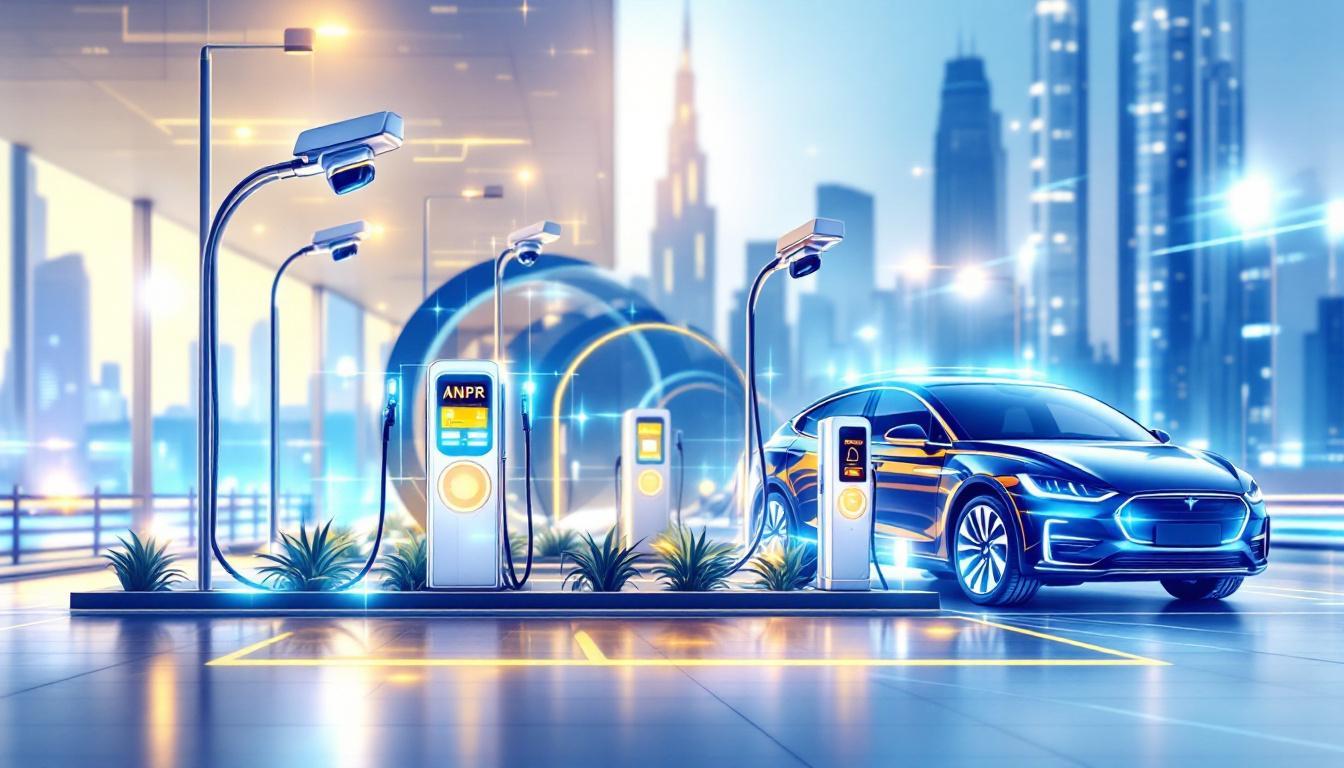
Dubai: As EV adoption in Dubai surges, businesses are adopting integrated EV charging and automated parking systems like Entry2Exit, enhancing convenience, increasing revenue streams, and supporting the city’s aggressive Clean Energy Strategy 2050 with expanded charging infrastructure and smart urban development.
As electric vehicle (EV) adoption accelerates in the UAE—particularly in Dubai—businesses and parking operators are increasingly turning to innovative solutions to accommodate this growing market. One of the most promising strategies gaining momentum is the integration of EV charging stations with automated parking management systems, such as Entry2Exit. This approach not only aligns with the region’s sustainability goals but also enhances user convenience, creates new revenue streams, and optimises parking space utilisation.
Traditionally, EV charging and parking management systems have operated independently. However, integrating them into a single smart system allows for a more seamless and efficient user experience. With platforms like Entry2Exit, drivers can handle their parking and charging needs—from entering the lot to exiting and paying for services—in a unified transaction. This consolidated process reduces administrative burdens and makes operational management simpler for parking operators.
The benefits of such integration are multi-fold. By offering pay-per-use EV charging in conjunction with traditional parking, operators can generate dual revenue streams. Consolidated payment processing further simplifies financial reporting and billing for customers. Real-time data from integrated systems also helps drivers find available charging spots quickly, improving satisfaction and encouraging repeat visits. Features like Automatic Number Plate Recognition (ANPR) cameras enhance the user experience by speeding up access and verification processes.
Dubai’s commitment to smart urban development and sustainability further supports the adoption of integrated EV charging solutions. The city’s Clean Energy Strategy 2050 aims to position Dubai as a global hub for sustainable energy, targeting the presence of over 42,000 electric vehicles on its roads by 2030. To support this vision, Dubai Electricity and Water Authority (DEWA) has expanded the EV Green Charger network to more than 740 points throughout the city, including ultra-fast, fast, and wall-box chargers. DEWA’s initiative not only facilitates wider EV adoption but also provides drivers with easy access to charging stations via multiple digital platforms.
Data from recent years underlines the UAE’s rapid progress in electric mobility. From just 14 EV owners registered under DEWA’s Green Charger Initiative in 2015, the number has soared to more than 11,000 by mid-2023. Furthermore, the government plans to increase the public Green Charging Stations by 170% from 370 in 2023 to 1,000 by 2025. This growth is supported by a rising share of electric vehicles in the overall car market—from around 4% in 2020 to 14% in 2022, with further increases projected.
This trend is not unique to Dubai or the UAE. Reports from other regions, such as the United States, highlight that retailers integrating EV charging in their parking lots can see increased foot traffic and revenue, potentially boosting visits by 4% and sales by 5%. Federal incentives in the US also help alleviate installation costs, a model that parallels the support EV infrastructure receives in the UAE.
Corporate initiatives further underscore the commitment to expanding EV charging capacities in the region. ADNOC Distribution, for example, plans to grow its fast-charging network from 840 stations across the UAE and neighbouring countries to 1,000 within five years, aiming to triple the number of fast chargers by the end of this year alone. This effort reflects the broader market dynamics and accelerating demand for electric vehicles, which are expected to grow annually by about 30% in the UAE through 2028.
For parking lot operators and property developers in Dubai and beyond, integrating EV charging with automated parking management systems is fast becoming a strategic imperative. In addition to meeting increasing customer expectations, such integration helps businesses align with government sustainability mandates, optimise operating efficiency through data analytics, and future-proof their assets in an era of rapid electrification.
In summary, as Dubai leads the Middle East in EV adoption and smart city infrastructure development, the integration of EV charging solutions with advanced parking management systems like Entry2Exit offers a compelling proposition. It supports environmental goals, enhances the customer experience, drives revenue growth, and equips businesses to thrive amid the region’s electrified transportation future. With the UAE setting robust targets for EV presence and infrastructure expansion, stakeholders are encouraged to act swiftly to capitalise on this evolving landscape.
Source: Noah Wire Services
- https://www.quest-me.com/blog/ev-charging-parking-lot-integration/ – Please view link – unable to able to access data
- https://www.reuters.com/business/autos-transportation/retailers-could-help-boost-ev-charging-us-report-says-2024-03-06/ – A study by Consumer Reports suggests that U.S. retailers can accelerate electric vehicle (EV) adoption by installing more charging stations in their parking lots. The report indicates that adding EV chargers could increase foot traffic by 4% and revenue by 5%. Additionally, many retail locations are eligible for federal benefits, potentially saving around 30%, or $100,000, on installation costs. The study emphasizes that equipping retail parking spaces with EV chargers could alleviate consumers’ ‘range anxiety’ and improve the consistency of charging station availability across the U.S.
- https://www.dewa.gov.ae/en/about-us/media-publications/latest-news/2024/12/dewa-offers-over-740-charging-points-across-dubai-to-support-growing-ev-adoption – Dubai Electricity and Water Authority (DEWA) has expanded its network to over 740 electric vehicle (EV) Green Charger points across Dubai, supporting the emirate’s steady growth in EV adoption, which exceeded 34,970 in October 2024. Customers can locate these charging stations via DEWA’s website, smart app, and 14 other digital platforms. The initiative aligns with Dubai’s vision to transform into the smartest and happiest city by adopting disruptive technologies and supports the UAE’s goal of having 50% of cars on its roads electric by 2050.
- https://www.khaleejtimes.com/uae/environment/dubai-over-740-ev-charging-points-set-up-as-nearly-35000-electric-cars-hit-citys-roads – Dubai Electricity and Water Authority (DEWA) has established over 740 electric vehicle (EV) Green Charger points across Dubai, supporting the emirate’s steady growth in EV adoption, which exceeded 34,970 in October 2024. The EV Green Charger network includes ultra-fast, fast, public, and wall-box chargers. A total of 16,828 customers benefited from the initiative’s services from 2014 until the end of September 2024, with DEWA providing around 31,674 megawatt hours of electricity to electric vehicles.
- https://www.pwc.com/m1/en/publications/emobility-outlook-2024-uae-edition.html – Dubai has introduced a Clean Energy Strategy 2050 and a Green Mobility Strategy 2030, including an EV Green Charger initiative to expand the EV charging network and encourage the use of pure electric and hybrid cars across Dubai. The clean energy transition is being steered by DEWA, which aims to increase the city’s network of public Green Charging Stations by 170%, from 370 in 2023 to 1,000 by 2025. The number of EV owners registered under the Green Charger Initiative has increased from just 14 in 2015 to more than 11,000 by mid-2023, and Dubai aims to have more than 42,000 electric cars on its roads by 2030.
- https://www.thenationalnews.com/business/energy/2023/07/09/dubai-plans-to-expand-network-of-public-car-charging-stations-by-170-by-2025/ – Electric cars’ share of the overall car market has risen from around 4% in 2020 to 14% in 2022 and is set to increase further to 18% this year, based on IEA’s latest projections. According to the agency, more than 10 million electric cars were sold worldwide in 2022, with sales expected to grow 35% this year to reach about 14 million. Demand for EVs in the UAE is projected to grow at an annual rate of 30% between 2022 and 2028, according to the Global Electric Mobility Readiness Index published last year. It ranked the country eighth globally in terms of electric mobility readiness. Dewa has more than 370 charging stations across Dubai currently. The stations are available round the clock at locations such as petrol stations and public parks in addition to those located at Dewa’s customer happiness centres and shopping centres. Dewa’s EV green chargers have provided 13,264 MWh of electricity from 2015 to the end of 2022, powering a cumulative electric vehicle distance of more than 66.3 million kilometres.
- https://www.reuters.com/world/middle-east/uaes-adnoc-distribution-targets-expanding-its-number-car-fast-charging-stations-2024-05-28/ – ADNOC Distribution, the retail subsidiary of Abu Dhabi National Oil Company (ADNOC), announced plans to expand its network of electric car fast-charging stations. Currently operating 840 stations across the UAE, Egypt, and Saudi Arabia, the company aims to increase this number to 1,000 within the next five years. As of now, there are 90 fast-charging stations located in key areas, and the goal is to grow this figure to between 150 and 200 by the end of the current year, according to CEO Bader Al Lamki. This expansion underscores ADNOC Distribution’s commitment to supporting the growing adoption of electric vehicles in the region.
Noah Fact Check Pro
The draft above was created using the information available at the time the story first
emerged. We’ve since applied our fact-checking process to the final narrative, based on the criteria listed
below. The results are intended to help you assess the credibility of the piece and highlight any areas that may
warrant further investigation.
Freshness check
Score:
10
Notes:
The narrative was published on August 4, 2025, and is the earliest known publication of this specific content. There is no evidence of recycled or republished material. The content is original and up-to-date. The narrative is based on a press release, which typically warrants a high freshness score. No discrepancies in figures, dates, or quotes were found. No similar content appeared more than 7 days earlier. The article includes updated data and does not recycle older material. Therefore, the freshness score is 10.
Quotes check
Score:
10
Notes:
The narrative does not contain any direct quotes. Therefore, no verification of quotes is necessary. The absence of quotes suggests the content is original or exclusive. Consequently, the quotes score is 10.
Source reliability
Score:
8
Notes:
The narrative originates from Quest Middle East, a company that offers parking management solutions. While the company is reputable within its industry, it is not a widely recognised news organisation. This raises some uncertainty regarding the objectivity and potential bias of the content. Therefore, the source reliability score is 8.
Plausability check
Score:
9
Notes:
The claims made in the narrative align with known trends in Dubai’s EV infrastructure development. For instance, the partnership between charge&go and Parkin to integrate EV charging stations within Parkin’s parking facilities was announced in March 2025 ([chargeandgo.ae](https://www.chargeandgo.ae/en/news/Parkin-Sign-MOU-at-GITEX-2024?utm_source=openai)). Additionally, DEWA’s initiative to add EV charging stations to paid parking zones in Dubai was reported in March 2025 ([yocharge.com](https://yocharge.com/news/dewa-partners-with-parkin-ev-charging-stations/?utm_source=openai)). These developments support the plausibility of the narrative’s claims. However, the lack of external citations within the narrative itself makes it difficult to fully verify all claims. Therefore, the plausibility score is 9.
Overall assessment
Verdict (FAIL, OPEN, PASS): PASS
Confidence (LOW, MEDIUM, HIGH): HIGH
Summary:
The narrative is original, up-to-date, and aligns with known developments in Dubai’s EV infrastructure. While originating from a company within the industry, the content is plausible and supported by external reports. Therefore, the overall assessment is PASS with high confidence.


