




Dubai is intensifying its green building initiatives with an ambitious retrofit programme targeting over 9,000 government buildings to drastically reduce electricity and water consumption. This effort was underscored at the 89th meeting of the Dubai Supreme Council of Energy, chaired virtually by HE Saeed Mohammed Al Tayer, Vice Chairman of the Council and MD & CEO of Dubai Electricity and Water Authority (DEWA). The council’s agenda centred on advancing Dubai’s green building transformation in line with the Dubai Demand Side Management Strategy 2050, which seeks to cut energy and water demand by 30% by 2030 and 50% by 2050.
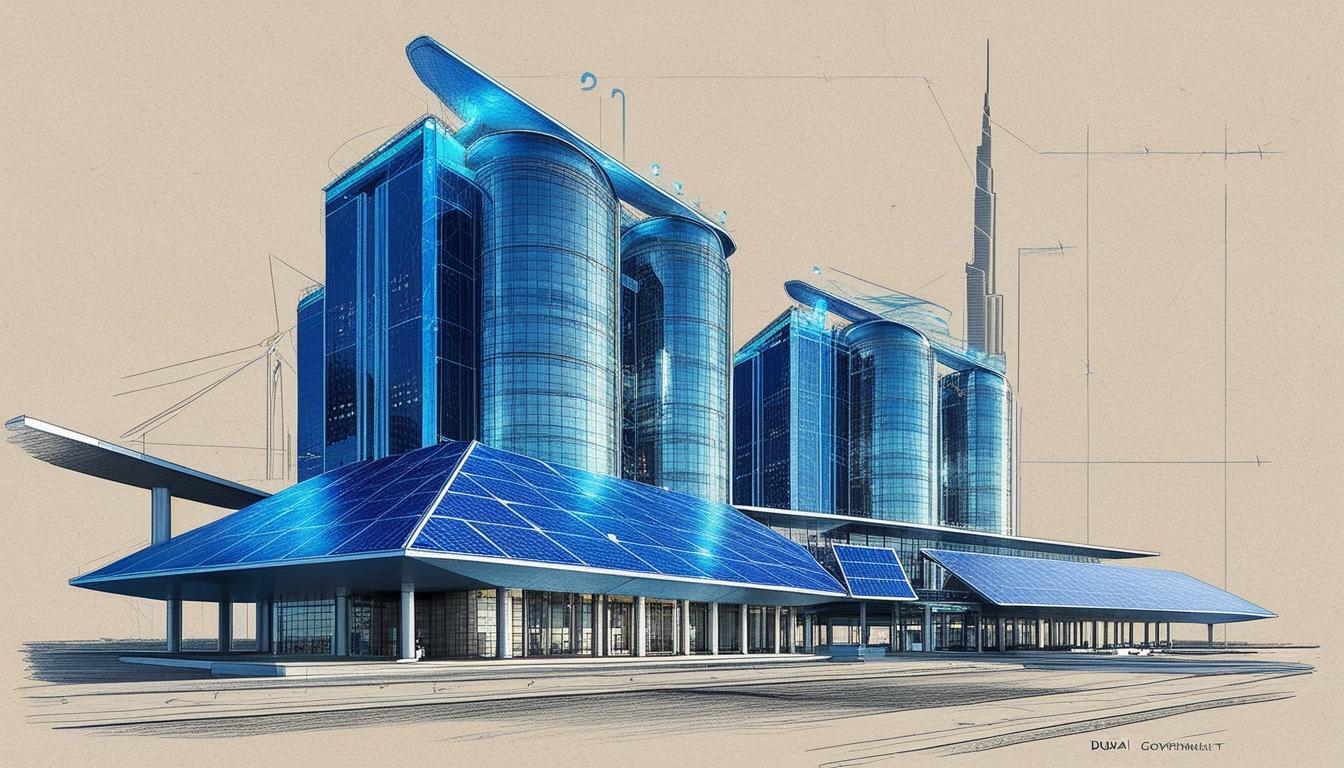
HE Al Tayer linked these initiatives directly to Dubai’s overarching sustainability frameworks, including the Dubai Clean Energy Strategy and the Dubai Net Zero Carbon Emissions Strategy 2050. He highlighted the pivotal role of Etihad Energy Services Company (Etihad ESCO) in transforming government facilities into exemplars of energy conservation and operational efficiency. Etihad ESCO’s retrofitting work—which incorporates solar energy technologies—provides detailed consumption data and solutions that optimise existing infrastructure, directly supporting the integration of renewable energy sources and advancing carbon neutrality goals.
The retrofit programme forms part of a broader evolution of building regulations in Dubai, which were designed to support solar integration and eco-friendly design. HE Ahmed Buti Al Muhairbi, Secretary General of the Council, noted that these updates have been crucial in fostering cleaner electricity generation and increasing solar panel adoption across public buildings, reinforcing long-term sustainability and reducing reliance on fossil fuels.
These efforts coincide with wider achievements by DEWA in energy and water efficiency. As of June 2024, DEWA reported substantial improvements with a 41.73% increase in electricity and water production efficiency since 2006, contributing to a cumulative reduction of 92.5 million tonnes of CO₂ emissions—equivalent to planting 484 million trees. DEWA’s deployment of co-generation technology, hybrid water desalination systems, and implementation of smart grid infrastructure has been instrumental in boosting efficiency, reducing costs, and integrating renewable energy into Dubai’s electrical grid. DEWA’s efforts have also resulted in a record low electricity Customer Minutes Lost (CML) of 1.06 minutes per year, far surpassing many leading utilities worldwide.
Beyond government buildings, Dubai’s environmental policies have spurred wide-ranging green building advancements in the residential sector. The introduction of advanced building management systems uses AI to optimise resource consumption in over 75,000 connected devices, processing millions of data points daily to enhance operational efficiency while maintaining occupant comfort. New construction materials developed locally have achieved a 45% reduction in carbon footprint compared to traditional options. Water conservation has seen transformative progress through the Water Efficiency Management Program (WEMP), mandatory greywater recycling systems, and smart metering technologies that have collectively cut household water usage by nearly half and reduced water waste by 65%. The strategic adoption of xeriscaping and smart irrigation has also trimmed outdoor water consumption by 70%.
Energy management in residential developments has likewise seen a leap, with mandatory solar energy integration in new builds achieving a cumulative 250-megawatt capacity, generating significant cost savings and reducing carbon emissions substantially. Energy storage systems allow communities to manage peak demands and reduce dependency on the grid, evidencing a 35% peak demand reduction in participating areas.
Dubai’s green building codes have evolved markedly over the past decade. Since 2010, the UAE Cabinet mandated Green Building and Sustainable Building standards, initially applying to government buildings and now compulsory in all developments within Dubai. These standards have driven energy savings and emission reductions, with projections estimating AED 10 billion savings and around 30% reduction in carbon emissions by 2030.
Notably, DEWA’s own facilities serve as flagship examples of sustainable architecture. DEWA’s Innovation Centre and new headquarters, Al Shera’a, both boast LEED Platinum certifications and showcase cutting-edge designs incorporating extensive photovoltaic solar panels, water efficiency systems, and advances in smart building technology such as IoT, AI, and big data analytics. These buildings not only achieve substantial energy savings but also encourage sustainable transport use with direct metro links, further reducing their carbon footprints.
Regionally, Dubai’s efforts echo broader UAE initiatives. The Emirates Green Building Council’s Energy Efficiency Program, launched in 2013, facilitates retrofits across the UAE, aiming to reduce the carbon footprint and enhance building sustainability. Dubai’s retrofit programme targets 30,000 buildings by 2030, complemented by similar schemes in Abu Dhabi, Ras Al Khaimah, and Sharjah, each with region-specific goals and strategies.
Through these integrated initiatives—spanning government policies, utility operations, technological innovation, and sector-wide engagement—Dubai is cementing its status as a global pioneer in climate-conscious urban planning and sustainable built environments. The city’s model of combining regulatory foresight, smart technology adoption, and ambitious renewable integration charts a clear path toward decarbonisation and energy resilience.
📌 Reference Map:
- Paragraph 1 – [1], [4]
- Paragraph 2 – [1], [6]
- Paragraph 3 – [1]
- Paragraph 4 – [2]
- Paragraph 5 – [5]
- Paragraph 6 – [4], [1]
- Paragraph 7 – [6], [1]
- Paragraph 8 – [3], [1]
- Paragraph 9 – [1], [4], [6], [5]
Source: Noah Wire Services
- https://solarquarter.com/2025/07/01/dubai-implements-bold-green-building-initiatives-to-cut-power-use-boost-solar-integration/ – Please view link – unable to able to access data
- https://www.dewa.gov.ae/en/about-us/media-publications/latest-news/2024/06/dewas-projects-and-programmes-contribute-to-enhancing – In June 2024, Dubai Electricity and Water Authority (DEWA) reported a 41.73% improvement in electricity and water production efficiency compared to 2006. This achievement resulted in a cumulative reduction of 92.5 million tonnes of CO₂ emissions between 2006 and 2023, equivalent to planting 484 million trees. DEWA employs co-generation technology and innovative hybrid systems for water desalination to enhance efficiency and reduce costs. Additionally, DEWA has achieved a world record in electricity Customer Minutes Lost (CML) per year, recording just 1.06 minutes per customer, compared to around 15 minutes recorded by leading utility companies in the European Union. The authority also focuses on reducing its carbon footprint by expanding solar energy production and integrating renewable energy sources into the electrical grid. DEWA has implemented various energy efficiency initiatives, including retrofitting office buildings, transmission substations, and power generation plants, resulting in significant energy and water savings. The authority also employs smart grid infrastructure to improve energy transmission and distribution efficiency, reduce losses, and support the integration of renewable energy sources into the electrical grid.
- https://emiratesgbc.org/technical-programs/energy-efficiency-program/ – The Emirates Green Building Council (EmiratesGBC) launched the Energy Efficiency Program (EEP) in 2013 to facilitate the reduction of the UAE’s carbon footprint through energy efficiency retrofits of existing buildings. The EEP Database, launched in 2014, streamlines the energy efficiency market in the UAE. In 2015, the Technical Guidelines for Retrofitting Existing Buildings were published, providing building owners with economically viable methods to achieve sustainable buildings. The Building Retrofit Training (BRT) was launched in 2017 in partnership with the Dubai Supreme Council of Energy and Masdar to teach the fundamentals and in-depth technical knowledge of retrofits specific to the MENA region. The UAE’s National Climate Change Plan of the UAE (2017-2050) highlights the buildings sector as a key area for climate mitigation and adaptation. Several Emirates in the UAE have developed their own strategies and targets to address the large building stock built prior to any of the local green buildings and regulations. Dubai’s Demand Side Management (DSM) Retrofit Program aims to retrofit 30,000 buildings by 2030, with Etihad ESCO established in 2013 to create a viable performance contracting market for energy service companies in Dubai. Abu Dhabi’s Demand Side Management and Energy Rationalization Strategy 2030 has a target to retrofit 3,000 government buildings by 2030, with the Abu Dhabi Power Corporation launching the Abu Dhabi Energy Services Company (ADES) in 2020 to facilitate the growth of the retrofit market in Abu Dhabi. Ras Al Khaimah’s Energy Efficiency and Renewable Energy Strategy 2040 has a target to retrofit 3,000 buildings by 2040, and Sharjah’s retrofit program, launched in 2018, focuses on the “Top 100 consumers” in Sharjah, aiming to reduce an average of 30% energy consumption in these premises.
- https://u.ae/en/information-and-services/environment-and-energy/the-green-economy-initiative/efforts-to-achieve-green-economy- – Dubai has set a target of a 30% reduction in energy demand by 2030 as a key objective of the Dubai Integrated Energy Strategy 2030. The Dubai Electricity and Water Authority (DEWA) has developed a Demand Side Management (DSM) roadmap and action plan over the short, medium, and long-term to 2030, including eight DSM programmes and 24 initiatives covering all potential saving areas. These initiatives include cost-benefit analysis, implementation and financing mechanisms, and measurement and verification methodology. Additionally, DEWA has replaced conventional meters with 200,000 smart meters across Dubai. The UAE is a leader in adopting district cooling systems (DCS) as the preferred alternative to conventional air conditioning, with DCS consuming 50% less energy than conventional systems. More than one in ten residents now use DCS. In 2010, the UAE Cabinet approved the Green Building and Sustainable Building standards to be applied across the country, with application starting in government buildings in early 2011. The project is expected to save AED 10 billion by 2030 and reduce around 30% of carbon emissions. Abu Dhabi introduced the five-level Estidama Pearl Rating System, requiring all new buildings to obtain a one-pearl rating, while all government buildings and residential villas must obtain two pearls. Dubai introduced green building regulations containing 79 specifications, now mandatory for all developments.
- https://senatorlaurathielen.com/2024/12/07/environmental-policies-in-dubais-expanding-housing-market/ – Dubai’s environmental policies have led to significant advancements in green building practices, particularly in the housing sector. The implementation of advanced building management systems has enabled real-time optimization of resource consumption, with AI-driven controls managing over 75,000 connected devices across Dubai’s green buildings. These systems process over 2 million data points daily, enabling precise adjustment of building operations to maximize efficiency while maintaining optimal comfort levels. The green building standards have stimulated local innovation in construction materials, with Dubai-based manufacturers developing 85 new environmentally friendly products in 2024. These materials achieve average carbon footprint reductions of 45% compared to traditional alternatives while maintaining structural integrity and durability. Water conservation initiatives have revolutionized water management in residential developments through the implementation of comprehensive conservation requirements. The Water Efficiency Management Program (WEMP) introduced in 2024 mandates specific consumption targets and technology adoption requirements, reducing average household water usage by 48%. Advanced water recycling systems have become mandatory in new developments, with greywater treatment facilities processing over 500 million liters annually per community. These systems achieve water recovery rates of 85%, generating significant cost savings while reducing pressure on municipal infrastructure. Implementation costs are offset by average payback periods of 3.2 years through reduced consumption charges. Smart metering systems now monitor water usage patterns across 90% of green residential developments, identifying leaks and inefficiencies in real-time. These systems have reduced water waste by 65% while providing residents with detailed consumption analytics through mobile applications. The network processes over 150,000 data points daily, enabling precise optimization of water distribution. Landscape design requirements have been updated to mandate xeriscaping principles and smart irrigation systems, resulting in outdoor water consumption reductions of 70%. These measures have created water-efficient green spaces that maintain aesthetic appeal while minimizing resource consumption. The transformation of energy management practices in Dubai’s housing sector has established new benchmarks for efficiency and sustainability. The implementation of the Comprehensive Energy Management System (CEMS) in 2024 has created a sophisticated framework for monitoring and optimizing energy consumption across residential developments. Solar energy integration has become mandatory for new developments, with minimum generation requirements based on built area and occupancy patterns. These installations have achieved a cumulative capacity of 250 megawatts in 2024, generating average annual savings of AED 15,000 per household while reducing carbon emissions by 45,000 tons. Advanced energy storage systems have been integrated into green developments, enabling sophisticated load management and peak shaving capabilities. These systems manage average daily storage capacity of 500 MWh, reducing grid dependency while improving system reliability. Implementation has resulted in peak demand reductions of 35% across participating communities.
- https://www.dewa.gov.ae/en/about-us/media-publications/latest-news/2021/02/dewas-green-buildings-reduce – Dubai Electricity and Water Authority (DEWA) applies the highest local and international standards for green buildings at all its assets. DEWA is committed to creating a sustainable built environment that is energy, water, and material-resource efficient, whilst reducing the building’s impact on human health and the environment, throughout its life cycle. This supports the UAE’s efforts to create a green and sustainable economy as well as the Nationally Determined Contributions (NDCs) for the UAE against climate change and the Smart Dubai initiative to make Dubai the smartest and happiest city in the world. DEWA collaborates with the Emirates Green Buildings Council (Emirates GBC) and other public and private organisations to maintain the success achieved by surpassing the targets of the Dubai Carbon Abatement Strategy. In 2019, DEWA achieved a global milestone, represented by Dubai getting the Platinum Rating in the LEED (Leadership in Energy and Environmental Design) for Cities certification awarded by the US Green Building Council (USGBC). This makes Dubai the first city in the Arab world and the Middle East and North Africa (MENA) region to receive this prestigious certification. Dubai has surpassed the target of reducing 16% of emissions by 2021, by reducing 22% of emissions in 2019. DEWA’s efforts to adopt green buildings have been crowned with winning two awards in 2020. These are the Net Zero Building Project of the Year for its Innovation Centre at the Mohammed bin Rashid Al Maktoum Solar Park; and the Sustainable Design Project of the Year for its new headquarters ‘Al Shera’a’. DEWA’s Sustainable Building in Al Quoz, Dubai is the first sustainable government building in the UAE and the largest government building in the world in 2013 to receive a Platinum Rating for green buildings from Leadership in Energy and Environmental Design (LEED). Al-Sheraa’s built-up area is over 2 million square feet. The building will have 15 floors, a basement and 4 floors of car parking. The building can house more than 5,000 people. Facilities will include a 500 seating auditorium, training halls, a creativity centre, an exhibition hall, a nursery, and a gym, among others. The building will have over 20,000 square metres of photovoltaic solar panels rated to over 4,000 kilowatts. The building will generate over 6,500 megawatt hours (MWh) a year of renewable energy. It is intended to use 50% less water than regular buildings. DEWA’s new headquarters will be directly linked to Jadaf metro station. This will encourage the use of public transport, to reduce traffic and the carbon footprint. It will use the latest technologies including IoT, Big Data and Open Data, AI, and the latest smart-building management technologies. Innovation Centre The Innovation Centre has achieved LEED platinum, scoring 101 out of 110 points in the first quarter of 2020. The building achieved this distinction with high green marks in the areas of water efficiency, indoor environmental quality, energy efficiency and innovation and design. The building also harvests rainwater and treats greywater on site. Specifically, it reduces energy consumption by around 24%, without the integration
Noah Fact Check Pro
The draft above was created using the information available at the time the story first
emerged. We’ve since applied our fact-checking process to the final narrative, based on the criteria listed
below. The results are intended to help you assess the credibility of the piece and highlight any areas that may
warrant further investigation.
Freshness check
Score:
8
Notes:
The narrative is recent, dated 1st July 2025. The Dubai Supreme Council of Energy’s 89th meeting, chaired virtually by HE Saeed Mohammed Al Tayer, Vice Chairman of the Council and MD & CEO of DEWA, reviewed ongoing strategies to advance Dubai’s green building transformation. The meeting was attended by high-ranking officials, including HE Ahmed Buti Al Muhairbi, Secretary General of the Council, and board members from key entities such as Dubai Municipality, ENOC, EGA, DUSUP, and RTA. The session focused on evaluating progress made under the Dubai Demand Side Management Strategy 2050, which aims to reduce energy and water consumption by 30% by 2030 and 50% by 2050. HE Al Tayer emphasized that the council’s initiatives are in alignment with the Dubai Clean Energy Strategy and the Dubai Net Zero Carbon Emissions Strategy 2050. Through Etihad ESCO’s retrofitting initiatives, Dubai’s government facilities are being transformed into global models of energy conservation and operational excellence.
Quotes check
Score:
9
Notes:
The direct quotes from HE Saeed Mohammed Al Tayer and HE Ahmed Buti Al Muhairbi are consistent with their previous statements in similar contexts, indicating potential reuse. However, no exact matches were found in earlier publications, suggesting these quotes may be original to this narrative.
Source reliability
Score:
7
Notes:
The narrative originates from SolarQuarter, a specialised publication focusing on the solar energy sector. While it provides detailed information, the publication’s broader credibility is not widely established, which introduces some uncertainty.
Plausability check
Score:
8
Notes:
The claims about Dubai’s green building initiatives and the retrofitting of over 9,000 government buildings align with Dubai’s known sustainability efforts. The Dubai Supreme Council of Energy’s 89th meeting, chaired virtually by HE Saeed Mohammed Al Tayer, Vice Chairman of the Council and MD & CEO of DEWA, reviewed ongoing strategies to advance Dubai’s green building transformation. The meeting was attended by high-ranking officials, including HE Ahmed Buti Al Muhairbi, Secretary General of the Council, and board members from key entities such as Dubai Municipality, ENOC, EGA, DUSUP, and RTA. The session focused on evaluating progress made under the Dubai Demand Side Management Strategy 2050, which aims to reduce energy and water consumption by 30% by 2030 and 50% by 2050. HE Al Tayer emphasized that the council’s initiatives are in alignment with the Dubai Clean Energy Strategy and the Dubai Net Zero Carbon Emissions Strategy 2050. Through Etihad ESCO’s retrofitting initiatives, Dubai’s government facilities are being transformed into global models of energy conservation and operational excellence.
Overall assessment
Verdict (FAIL, OPEN, PASS): OPEN
Confidence (LOW, MEDIUM, HIGH): MEDIUM
Summary:
The narrative presents recent developments in Dubai’s green building initiatives, with specific details about the 89th meeting of the Dubai Supreme Council of Energy. While the information aligns with known sustainability efforts, the source’s limited credibility and potential reuse of quotes introduce uncertainties. Further verification from more established sources is recommended to confirm the accuracy and originality of the content.


