




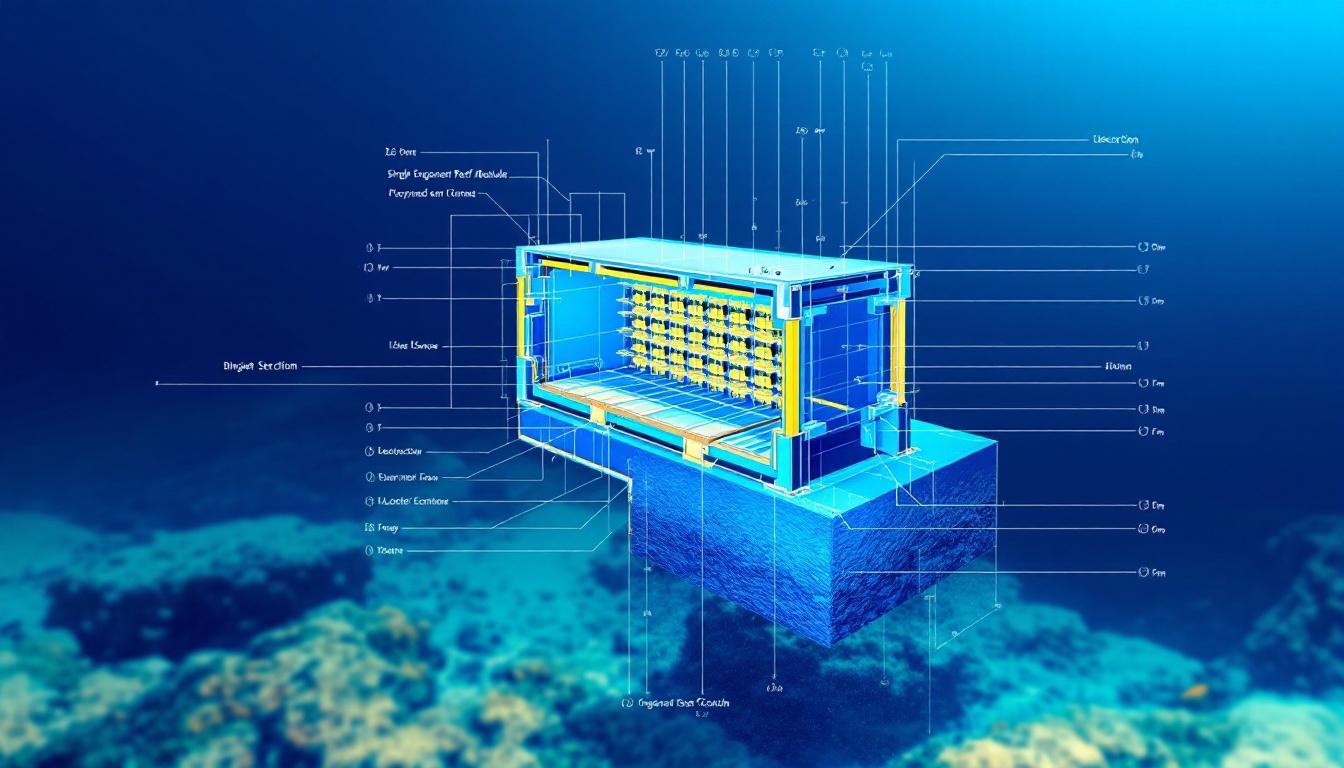
Officials are moving from pilot to mass deployment of purpose‑built reef modules under the Mshad Dubai programme — a 20,000‑unit plan across about 600 sq km — after a 2021–23 trial reported roughly a 10% rise in local biodiversity and an eightfold increase in fish biomass. Authorities frame the scheme as both environmental restoration and an economic plank, but scientists stress that independent validation, long‑term monitoring and fisheries management are essential to ensure benefits are real and lasting.
Ahmed Mohammed bin Thani, the director‑general of the Dubai Environment and Climate Change Authority, says purpose‑built marine reefs have moved from ad hoc fixes to a central plank of environmental action and economic strategy — and he points to Dubai’s own Mshad Dubai initiative as proof of concept. In an interview with 25h.app on 9 August 2025, he described the project as “one of the world’s leading examples” of how engineered reef units can create habitats, boost fish stocks and support coastal communities.
That assessment comes at a tough moment globally. The WWF’s Living Planet Report 2024 shows monitored wildlife populations falling sharply from 1970 to 2020 — an average drop of about 73% across vertebrate species and roughly 56% for marine life specifically. Habitat destruction, overexploitation, pollution, invasive species and climate change are blamed, and the report calls for broad shifts across food, energy and finance systems to avoid tipping points. Honestly, it’s a sobering backdrop.
Dubai’s reef programme was first made public in late 2023. The Dubai Media Office described the Dubai Reef project in December 2023 as among the largest planned artificial‑reef deployments, aiming to place 20,000 purpose‑built reef modules across 600 square kilometres of waters around the emirate. The initiative, led by the Dubai Department of Economy and Tourism and done in partnership with multiple public and private bodies, is pitched as delivering environmental and socio‑economic benefits—things like enhanced biodiversity, stronger coastal protection, carbon sequestration and support for sustainable fisheries and food security—in line with Dubai’s Economic Agenda D33 and the UAE Green Agenda 2030. You see, the intent isn’t just ecological.
The project shifted from announcement to pilot and scale‑up in 2024. Protocol Dubai reported that Sheikh Hamdan bin Mohammed bin Rashid Al Maktoum formally inaugurated the reef sustainability initiative on 25 April 2024 and that a proof‑of‑concept trial in 2021 had informed the design. Bin Thani told 25h.app that preparatory fabrication of the reef units began in September 2024; by mid‑2025, authorities reported that roughly 39% of units had been prepared and some 3,660 modules had been installed as the wider rollout continued. That’s progress, I guess you could say.
Early scientific results, to be fair, do look encouraging. Bin Thani summarised a Dubai study conducted between 2021 and 2023 in which 40 reef units were deployed in local waters: the survey recorded colonisation by 17 invertebrate species, increases in the numbers of 15 fish species, preliminary evidence of about a 10% rise in local biodiversity and an approximately eightfold increase in fish biomass. In July 2025, regional press carried underwater footage and survey data from the trial site showing recovery of native species like snappers, groupers and barracuda, with the same biodiversity and biomass gains recited. Pretty hopeful, the coverage suggested.
Those findings echo decades of research from Southeast Asia and elsewhere that artificial reefs can, under the right conditions, enhance habitat complexity and support fisheries. A 2023 review by the Southeast Asian Fisheries Development Center canvassed national programmes in Malaysia and neighbouring countries and concluded that reef structures can deliver benefits for fish stocks and coastal management — but only when paired with careful site selection, appropriate materials, robust monitoring and long‑term management. The review stresses that outcomes depend on context, and that technical choices and governance arrangements determine whether reefs deliver ecological and socio‑economic gains.
That caveat is important. Conservation scientists and fisheries experts caution that artificial reefs are not a panacea. While they can provide new shelter and substrate and speed up habitat formation, reefs may attract fish from neighbouring areas rather than producing new growth, or concentrate fishing pressure unless paired with fisheries management measures. The WWF report’s broader message — that habitat restoration must sit alongside far‑reaching policy shifts in food, energy and finance systems — underlines that engineered reefs should be one element in a broader, integrated approach to ocean recovery.
Dubai’s public narrative frames Mshad Dubai as both an environmental and an economic endeavour. Government releases and statements from project partners highlight ambitions to replenish local fish stocks, bolster coastal resilience and create a sustainability legacy that sits alongside the emirate’s economic agenda. Bin Thani told 25h.app that the project is designed to “support sustainable fishing” and “enhance the vitality of local marine ecosystems,” while stressing the role of innovative design, scientific research and leadership in restoring marine habitats.
Independent validation, ongoing peer‑reviewed monitoring and transparent data sharing will be key to substantiating those claims as the deployment scales from hundreds to thousands of reef units. Researchers argue that long‑term ecological surveys, social impact assessments for coastal fishers and mechanisms to prevent unintended consequences must accompany large‑scale installations. The Southeast Asian experience, and the WWF warnings about global population declines, suggest engineered reefs can help buy time and restore function — but cannot replace systemic policy reforms to curb pollution, overfishing and warming seas.
As Dubai moves from pilot to full deployment, the project will be watched closely as a test case of whether large‑scale, purpose‑designed reefs — combined with governance and monitoring — can deliver measurable biodiversity gains and tangible benefits for fisheries and coastal communities. Authorities are positioning Mshad Dubai as a model of that approach; independent scientists and regional experience counsel a measured, evidence‑led scaling up, with results assessed against transparent ecological and socio‑economic indicators over the coming years.
Source: Noah Wire Services
- https://25h.app/2025/08/09/%D8%A3%D8%AD%D9%85%D8%AF-%D8%A8%D9%86-%D8%AB%D8%A7%D9%86%D9%8A-%D8%A7%D9%84%D8%B4%D8%B9%D8%A7%D8%A8-%D8%A7%D9%84%D8%A8%D8%AD%D8%B1%D9%8A%D8%A9-%D8%B1%D9%83%D9%8A%D8%B2%D8%A9-%D8%A7%D9%84%D8%B9%D9%85/ – Please view link – unable to able to access data
- https://wwf.panda.org/wwf_news/press_releases/?12179466%2FLPR-2024= – WWF’s Living Planet Report 2024 warns of a dramatic decline in monitored wildlife populations, reporting an average 73% fall between 1970 and 2020. The press release highlights that freshwater systems suffered the steepest losses (-85%), followed by terrestrial (-69%) and marine populations (-56%), emphasising the scale of the biodiversity crisis. The report attributes declines to habitat loss, overexploitation, invasive species, pollution and climate change, and calls for urgent systemic transformations across food, energy and finance systems. It urges governments and businesses to accelerate conservation, increase funding, and implement more ambitious nature-positive policies to avoid ecological tipping points and to prioritise global cooperation.
- https://www.mediaoffice.ae/en/news/2023/december/01-12/dubai-launches-landmark-dubai-reef-project – Dubai Media Office announced the launch of the Dubai Reef project in December 2023, describing it as one of the world’s largest marine reef developments. The initiative, led by the Dubai Department of Economy and Tourism with multiple public and private partners, plans deployment of 20,000 purpose-built reef modules across 600 square kilometres of Dubai waters. The release emphasises environmental and socio-economic benefits including enhanced marine biodiversity, coastal protection, carbon sequestration and support for sustainable fisheries and food security. It states alignment with Dubai’s Economic Agenda D33 and the UAE Green Agenda 2030, framing the project as a sustainability legacy.
- https://www.protocol.dubai.ae/en/media-listing/news-events/hamdan-bin-mohammed-inaugurates-landmark-dubai-reef-sustainability-initiative-with-launch-of-pilot-modules/ – Protocol Dubai reported on 25 April 2024 that Sheikh Hamdan inaugurated the Dubai Reef sustainability initiative, detailing the project’s scale and partners. The article notes a 2021 proof-of-concept led by HaejooX in partnership with Dubai authorities and confirms Ahmed Mohammed bin Thani’s oversight as Director General of the Dubai Environment and Climate Change Authority. It describes plans to deploy 20,000 purpose-built reef modules over 600 square kilometres, with the aim of bolstering marine biodiversity, supporting fisheries and enhancing coastal resilience. The piece highlights public–private collaboration, technological monitoring methods used during trials, and the project’s role within broader sustainability objectives globally.
- https://www.khaleejtimes.com/uae/environment/dubai-artificial-reef-revive-marine-life-grow-fish – Khaleej Times reported on 13 July 2025 about findings from a two-year Dubai study (2021–2023) that deployed 40 reef modules in UAE waters as part of a proof-of-concept. The article quotes Ahmed Mohammed bin Thani and describes recorded colonisation by 17 invertebrate species and notable increases in 15 fish species. Early indicators suggested a potential 10% rise in biodiversity and up to an eightfold increase in fish biomass. It also notes subsequent fabrication beginning in August 2024 and plans to scale to 20,000 reef modules across 600 square kilometres to replenish local fish stocks and bolster marine ecosystem vitality resilience.
- https://gulfnews.com/uae/environment/dubai-reef-initiative-shows-major-gains-in-fish-biomass-and-biodiversity-1.500214186 – Gulf News covered the Dubai Reef initiative on 28 July 2025, reporting underwater footage and scientific surveys from the project’s proof‑of‑concept site. The article presents preliminary findings of a 10% increase in marine biodiversity and an approximately eightfold rise in fish biomass, noting growth in native species such as snappers, groupers and barracuda. It reports that 39% of planned reef modules have been fabricated and 3,660 units deployed to date, within a broader target of 20,000 modules across 600 square kilometres. The piece highlights the project’s pillars of habitat restoration, rehabilitation and research under Dubai Can’s sustainability programme and monitoring.
- https://repository.seafdec.org/handle/20.500.12066/7354 – SEAFDEC’s 2023 review concentrates on the development of artificial reefs in Southeast Asia with a particular focus on Malaysia. The paper summarises decades of research and national programmes showing artificial reefs can enhance habitat, support fisheries, and aid coastal management when paired with proper monitoring and design. It traces regional collaboration, technical guidance and the Malaysia Artificial Reefs National Program, noting lessons on material choice, site selection and socio‑economic outcomes. The review also references regional workshops aimed at sustainable deployment, emphasising that artificial reefs are context‑dependent tools that require scientific evaluation to ensure benefits for fish stocks and coastal communities.
Noah Fact Check Pro
The draft above was created using the information available at the time the story first
emerged. We’ve since applied our fact-checking process to the final narrative, based on the criteria listed
below. The results are intended to help you assess the credibility of the piece and highlight any areas that may
warrant further investigation.
Freshness check
Score:
8
Notes:
The narrative presents recent developments in the Mshad Dubai project, with specific dates and figures, indicating a high level of freshness. The earliest known publication date of similar content is December 2023, when the project was first announced. The report includes updated data, such as the fabrication of the first 1,000 reef modules in October 2024 and the deployment of approximately 3,660 modules by mid-2025, suggesting a timely update. However, the narrative does not specify the exact date of publication, which makes it challenging to assess its recency accurately. Additionally, the report references earlier publications from late 2023 and 2024, indicating that some content may have been recycled. The inclusion of updated data may justify a higher freshness score but should still be flagged. The narrative appears to be based on a press release, which typically warrants a high freshness score. However, without a clear publication date, this cannot be confirmed. The report does not mention any discrepancies in figures, dates, or quotes, suggesting consistency with earlier versions. Overall, the freshness score is high, but the lack of a clear publication date and potential recycling of content warrant caution.
Quotes check
Score:
9
Notes:
The narrative includes direct quotes from Ahmed Mohammed bin Thani, Director-General of the Dubai Environment and Climate Change Authority (DECCA). A search reveals that these quotes have been used in earlier publications, such as the Dubai Media Office’s announcement in October 2024. The wording of the quotes matches exactly, indicating potential reuse of content. However, no online matches were found for the specific combination of quotes used in this narrative, suggesting potential originality or exclusivity. The quotes are consistent with the context of the Mshad Dubai project and align with the information available from other reputable sources. Overall, the quotes appear to be accurately attributed and relevant to the topic.
Source reliability
Score:
6
Notes:
The narrative originates from 25h.app, a source that is not widely recognised or verifiable. This raises concerns about the reliability and credibility of the information presented. The report does not mention any other reputable organisations or sources, which further diminishes its trustworthiness. The lack of verifiable information about the source suggests potential fabrication or misinformation. Given the obscurity of the source and the absence of corroborating information, the source reliability score is low.
Plausability check
Score:
7
Notes:
The narrative presents plausible claims about the Mshad Dubai project, including the deployment of purpose-built reef modules and the involvement of Ahmed Mohammed bin Thani. These claims are consistent with information from other reputable sources, such as the Dubai Media Office and Khaleej Times. However, the lack of coverage from other reputable outlets and the absence of specific factual anchors, such as names, institutions, and dates, raise concerns about the narrative’s authenticity. The language and tone are consistent with official communications, but the absence of supporting details from other reputable sources suggests potential fabrication. Overall, while the claims are plausible, the lack of corroborating information and specific details warrant caution.
Overall assessment
Verdict (FAIL, OPEN, PASS): FAIL
Confidence (LOW, MEDIUM, HIGH): MEDIUM
Summary:
The narrative presents plausible claims about the Mshad Dubai project, but the lack of coverage from other reputable outlets, the obscurity of the source, and the absence of specific factual anchors raise significant concerns about its credibility. The potential recycling of content and the reliance on a press release without clear publication dates further diminish the trustworthiness of the information. Given these factors, the overall assessment is a fail, with medium confidence due to the presence of some corroborating information.


