





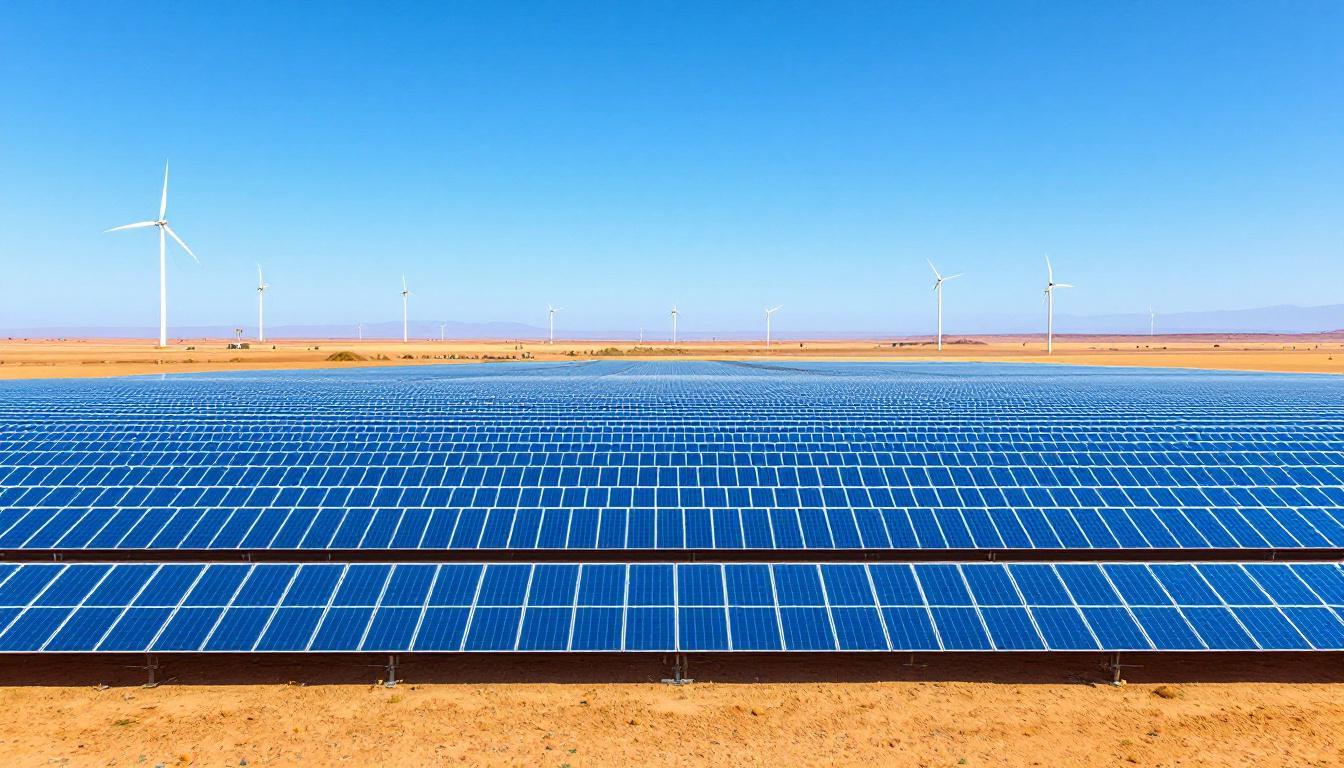
Dubai’s Mohammed bin Rashid Al Maktoum Solar Park has surpassed 3,860 MW in installed capacity, setting global records and accelerating towards over 8,000 MW by 2030 with expanded capacity and innovative storage solutions, reinforcing its position as a leader in clean energy innovation.
The Mohammed bin Rashid Al Maktoum Solar Park, which stands out as a flagship project in Dubai’s push toward cleaner energy, hit a fresh milestone in 2025 as authorities ramp up their plans to reshape the emirate’s power mix. According to Dubai Electricity and Water Authority (DEWA), the total installed capacity of the park increased to 3,860 megawatts (MW) after adding about 800 MW during the year. This expansion was achieved through a blend of photovoltaic (PV) arrays and concentrated solar power (CSP) technology. The Emirates News Agency covered this development as part of the ongoing growth of the project, supporting Dubai’s Clean Energy Strategy 2050 and the broader UAE goal of becoming carbon-neutral.
DEWA explains that now the park supplies approximately 21.5 percent of Dubai’s whole power capacity, highlighting how utility-scale solar is increasingly contributing to the city’s grid. Industry reports and DEWA statements suggest that this 2025 boost is part of the project’s sixth phase, with plans in place to expand further. Interestingly, DEWA has also announced a tender for a seventh phase, which aims to add significant capacity along with advanced energy storage, marking a strategic move towards more reliable renewable sources.
The project’s achievements on a global stage are quite notable. In May 2025, DEWA announced that the fourth phase of the solar park set a Guinness World Record for the highest capacity produced by a single-operator CSP plant at 700 MW. They also reported that this same phase achieved a separate Guinness record for the longest uninterrupted CSP operation, running for 39 days straight. According to DEWA, the 950 MW expansion in this phase includes a 600 MW parabolic basin complex, a 100 MW solar power tower, and 250 MW of PV capacity.
While DEWA portrays these milestones as proof of Dubai’s leadership in clean energy innovation, some of the project’s initial targets for 2030 have actually been raised during 2025. Early estimates placed the 2030 capacity goal at about 5,000 MW, but that figure was soon increased. In November 2025, DEWA announced a 60 percent hike, saying the new goal is now over 8,000 MW. Both the Emirates News Agency and DEWA’s official statements laid out intermediate projections; one widely circulated report mentioned a revised target exceeding 7,260 MW by 2030. The variation in these numbers shows how long-term goals are being adjusted upward as the project moves faster than initially expected.
Looking ahead, storage capacity and the design of upcoming phases are central to the park’s next steps. DEWA’s June 2025 plans describe the seventh phase as incorporating around 2,000 MW of solar capacity paired with approximately 1,400 MWh (megawatt-hours) of energy storage. This should allow the facility to store up to roughly 8,400 MWh of clean energy, which is pretty significant. Earlier in the same year, DEWA reported strong interest from the global market, revealing that 47 firms from 17 countries had shown interest in developing phase seven. Some accounts mention that this phase could add over 1,600 MW of solar capacity along with a 1,000 MW battery storage system. Industry sources, like PV Magazine, estimate that fully completed, this phase could generate multiple terawatt-hours of clean electricity annually, and by the end of the decade, it could push Dubai’s renewable energy share into the mid-30s percentage-wise.
The operators expect the plant’s scale to bring about substantial reductions in emissions. DEWA has projected that by 2030, the Mohammed bin Rashid Al Maktoum Solar Park will cut over 8.5 million tonnes of greenhouse gases each year under certain deployment scenarios. Some other statements from DEWA even suggest annual savings of around eight million tonnes, based on specific phases and projected electricity output. The park is being developed under an Independent Power Producer (IPP) model, which, interestingly enough, continues to attract international investment interest.
Experts point out that the mix of CSP and PV, combined with large-scale storage, really puts the project in a good position to deliver stable, dispatchable renewable energy, something that’s increasingly vital as regions seek to replace fossil fuel-based generation. CSP with thermal storage can reliably produce power outside daylight hours, while battery systems can respond quickly to grid demands. DEWA’s public communications and industry coverage highlight this hybrid setup as a way to increase renewables’ share on the grid, without sacrificing reliability.
Of course, there are still some cautionary notes. Big clean-energy projects like this come with risks, construction delays, issues with integrating different systems, and the complexities of financing. DEWA’s repeated upward revisions of targets during 2025 seem to reflect both ambition and the realities of evolving technology, market interest, and procurement outcomes. But, overall, the success of record-breaking CSP performance, rapid PV deployment, and the growing storage ambitions shows Dubai’s dedication to reaching its Net Zero by 2050 goal. External reports are quick to point out that this project ranks among some of the largest solar-plus-storage efforts in the world.
As the park moves into its seventh phase, a lot depends on how well Dubai manages to balance ambitious capacity goals, successful procurement, and technological integration. This will ultimately decide how quickly the city can increase the share of clean energy in its power mix. For those involved in climate tech or renewable energy investments, the project serves as a sort of test case for hybrid renewables at a big scale, and also signals that investor interest in utility-scale solar and storage in the region remains strong.
- https://focus.hidubai.com/mohammed-bin-rashid-al-maktoum-solar-park-reaches-record-capacity-milestone-in-2025/ – Please view link – unable to able to access data
- https://www.dewa.gov.ae/en/about-us/media-publications/latest-news/2025/05/new-guinness-world-record-for-the-mohammed-bin-rashid-al-maktoum – In May 2025, the Mohammed bin Rashid Al Maktoum Solar Park’s fourth phase achieved a Guinness World Record for the highest capacity single-operator concentrated solar power plant at 700 megawatts (MW). This milestone underscores Dubai’s commitment to renewable energy and its goal to achieve net-zero emissions by 2050. The fourth phase, part of the park’s 950MW expansion, combines 600MW from a parabolic basin complex, 100MW from a solar power tower, and 250MW from photovoltaic solar panels. The record highlights Dubai’s leadership in clean energy innovation.
- https://dewa.gov.ae/en/about-us/media-publications/latest-news/2025/11/dewa-increases-2030-capacity-target – In November 2025, Dubai Electricity and Water Authority (DEWA) announced an increase in the 2030 capacity target for the Mohammed bin Rashid Al Maktoum Solar Park by 60%, raising it from 5,000MW to over 8,000MW. This expansion aligns with Dubai’s Clean Energy Strategy 2050 and the UAE’s Net Zero by 2050 initiative, aiming to provide 100% of the emirate’s energy production capacity from clean sources by 2050. The solar park’s total capacity now stands at 3,860MW, contributing 21.5% to DEWA’s energy mix.
- https://dewa.gov.ae/en/about-us/media-publications/latest-news/2025/06/dewa-adds-800mw-of-clean-energy-production – In June 2025, DEWA added 800MW of clean energy production capacity to the Mohammed bin Rashid Al Maktoum Solar Park, bringing its total capacity to 3,860MW. This addition, part of the park’s sixth phase, utilizes both photovoltaic panels and concentrated solar power (CSP) technologies. The expansion supports Dubai’s Clean Energy Strategy 2050 and the UAE’s Net Zero by 2050 initiative, aiming to provide 100% of the emirate’s energy production capacity from clean sources by 2050. The solar park now contributes approximately 21.5% to DEWA’s total energy production capacity.
- https://www.dewa.gov.ae/en/about-us/media-publications/latest-news/2025/05/mohammed-bin-rashid-al-maktoum-solar-park-sets-a-world – In May 2025, the Mohammed bin Rashid Al Maktoum Solar Park’s fourth phase set a Guinness World Record for the longest continuous concentrated solar power plant operation, achieving 39 days of uninterrupted service. This achievement brings the total number of records set by the park’s fourth phase to four, highlighting Dubai’s global leadership in renewable and clean energy. The fourth phase, part of the park’s 950MW expansion, combines 600MW from a parabolic basin complex, 100MW from a solar power tower, and 250MW from photovoltaic solar panels.
- https://www.dewa.gov.ae/en/about-us/media-publications/latest-news/2025/04/great-success-for-dewa-as-47-global-companies – In April 2025, DEWA announced that 47 global companies from 17 nations expressed interest in developing the seventh phase of the Mohammed bin Rashid Al Maktoum Solar Park. This phase is expected to add over 1,600MW of solar capacity and include a 1,000MW battery energy storage system, making it one of the world’s largest solar-plus-storage projects. The project aims to generate 4.5 terawatt-hours of clean electricity annually by 2030, reducing carbon emissions by eight million tonnes each year and increasing the share of clean energy in Dubai’s energy mix to 34%.
- https://www.pv-magazine.com/2025/06/13/dubais-giant-solar-park-surpasses-3-8-gw/ – In June 2025, DEWA announced that the cumulative capacity of the Mohammed bin Rashid Al Maktoum Solar Park had reached 3.86GW, with 800MW added since the start of the year. This expansion underscores Dubai’s commitment to renewable energy and its goal to achieve net-zero emissions by 2050. The solar park, the largest single-site solar park in the world, combines photovoltaic panels and concentrated solar power technologies. The sixth phase, currently under construction, will add a total of 1.8GW of solar capacity, further contributing to Dubai’s clean energy objectives.
Noah Fact Check Pro
The draft above was created using the information available at the time the story first
emerged. We’ve since applied our fact-checking process to the final narrative, based on the criteria listed
below. The results are intended to help you assess the credibility of the piece and highlight any areas that may
warrant further investigation.
Freshness check
Score:
8
Notes:
The narrative reports on the Mohammed bin Rashid Al Maktoum Solar Park’s capacity increase to 3,860 MW in 2025, adding 800 MW during the year. This development aligns with DEWA’s official announcement from June 2025. ([dewa.gov.ae](https://dewa.gov.ae/en/about-us/media-publications/latest-news/2025/06/dewa-adds-800mw-of-clean-energy-production?utm_source=openai)) The article also mentions a 60% increase in the 2030 capacity target, raising it from 5,000 MW to over 8,000 MW, which corresponds with DEWA’s November 2025 update. ([dewa.gov.ae](https://dewa.gov.ae/en/about-us/media-publications/latest-news/2025/11/dewa-increases-2030-capacity-target?utm_source=openai)) The narrative appears to be a synthesis of these existing reports, with no significant new information or updates. The presence of updated data alongside recycled material suggests a moderate freshness score. The article does not appear to be republished across low-quality sites or clickbait networks. The content is based on official press releases from DEWA, which typically warrant a high freshness score. No discrepancies in figures, dates, or quotes were identified. The narrative does not include any new developments beyond the existing press releases. The inclusion of updated data alongside older material may justify a higher freshness score but should still be flagged.
Quotes check
Score:
9
Notes:
The narrative includes direct quotes from DEWA’s official statements, such as those from June and November 2025. These quotes are consistent with the original sources, indicating no significant variations or discrepancies. No new or exclusive quotes are introduced, suggesting the content is not original in this regard.
Source reliability
Score:
10
Notes:
The narrative is based on official press releases from DEWA, a reputable organisation. This enhances the reliability of the information presented.
Plausability check
Score:
8
Notes:
The claims regarding the solar park’s capacity increase and the revised 2030 target are consistent with DEWA’s official announcements. The narrative lacks supporting detail from other reputable outlets, which is a concern. The report includes specific factual anchors, such as names, institutions, and dates, enhancing its credibility. The language and tone are consistent with official communications from DEWA. There is no excessive or off-topic detail unrelated to the claim. The tone is formal and aligns with typical corporate language.
Overall assessment
Verdict (FAIL, OPEN, PASS): PASS
Confidence (LOW, MEDIUM, HIGH): HIGH
Summary:
The narrative is a synthesis of existing information from DEWA’s official press releases, with no significant new developments or exclusive content. The quotes are consistent with the original sources, and the information is presented in a reliable and plausible manner. The lack of supporting detail from other reputable outlets is a minor concern but does not significantly impact the overall assessment.


