




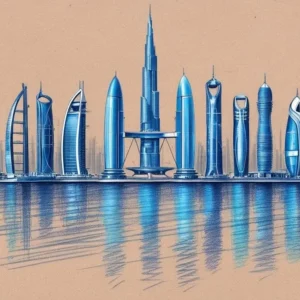
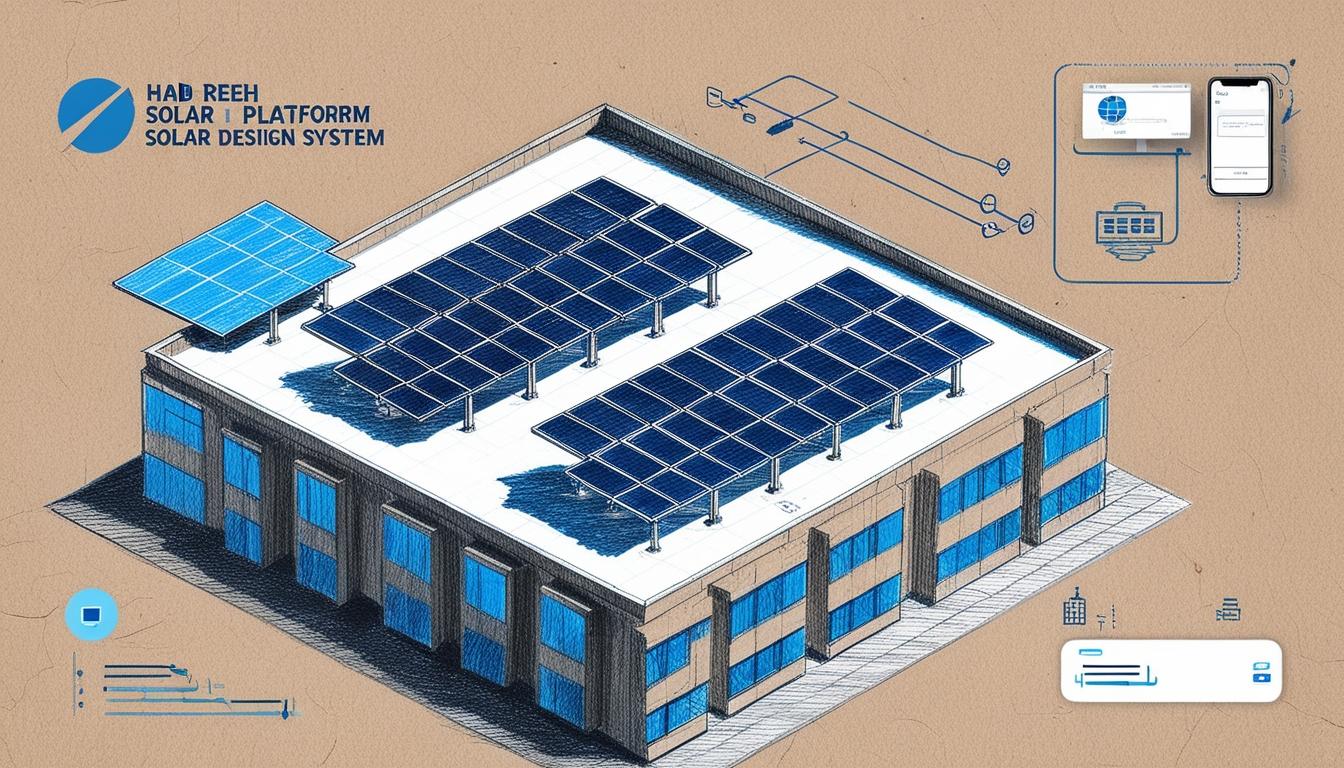
Dubai: Shams Dubai has connected over 8,430 buildings generating 725 MW of rooftop solar power, nearly doubling capacity since 2019. The success follows the launch of the Hab Reeh digital platform, which has streamlined adoption, increased connections by 30% this year, and expanded the network of certified solar installers.
The Dubai Electricity and Water Authority (DEWA) has announced a significant milestone in its rooftop solar energy initiative, Shams Dubai, which has now connected over 725 megawatts (MW) of photovoltaic (PV) capacity across 8,430 buildings to the emirate’s power distribution grid. This marks a substantial leap in the emirate’s clean energy efforts, enabling both homeowners and commercial property owners to generate their own electricity from solar power while feeding any surplus into DEWA’s grid. The initiative directly supports Dubai’s ambition to transition to a sustainable energy future and achieve long-term net-zero carbon emissions.
Central to Shams Dubai’s recent success is the integration of the Hab Reeh digital platform, an interactive tool designed to streamline the application and installation process. The platform allows users to conduct self-assessments for PV system designs, access a curated list of over 150 DEWA-approved components from global manufacturers, and benefit from flexible design tools that tailor rooftop solar solutions. According to Saeed Mohammed Al Tayer, Managing Director and CEO of DEWA, the platform processed more than 1,700 solar connection requests in 2024 alone, reflecting a 30% increase compared to the previous year. This digital innovation has helped reduce both approval times and installation costs, making rooftop solar adoption more accessible.
The growth of Shams Dubai also highlights an expanding professional ecosystem, with 111 certified companies now authorised to design and implement solar PV systems under the programme’s framework. This rapid expansion of the photovoltaic market aligns with Dubai’s wider Clean Energy Strategy 2050 and Net Zero Carbon Emissions Strategy 2050, which set ambitious targets to source 100% of Dubai’s power capacity from clean energy by the mid-century mark.
Since the programme’s earlier stages, there has been steady progress: in 2017, approximately 453 buildings were connected with a total capacity of 18.7 MW, and by 2019, this had increased significantly to 1,354 buildings generating 125 MW. By 2018, nearly 50 MW of rooftop PV was operational across over a thousand buildings, with even larger requests outstanding. These achievements underscore the emirate’s determination to have rooftop systems on all buildings by 2030, a goal that Shams Dubai is actively helping to realise.
This initiative not only bolsters Dubai’s clean energy infrastructure but also feeds into the city’s broader ambitions of becoming the world’s smartest and happiest city, through sustainable innovation. Customers benefit not just from generating green energy but also from financial savings since excess power exported to DEWA’s grid is credited against future power bills, reducing reliance on costly storage solutions.
In summary, Shams Dubai presents a compelling model for urban solar adoption, supported by evolving digital tools and a growing network of skilled professionals, all converging to drive Dubai towards a cleaner, carbon-neutral future.
📌 Reference Map:
- Paragraph 1 – [1], [2]
- Paragraph 2 – [1]
- Paragraph 3 – [1]
- Paragraph 4 – [3], [4], [5]
- Paragraph 5 – [1], [2], [6], [7]
Source: Noah Wire Services
- https://solarquarter.com/2025/06/25/shams-dubai-rooftop-solar-initiative-connects-over-725-mw-to-grid-across-8430-buildings/ – Please view link – unable to able to access data
- https://www.dewa.gov.ae/en/shamsdubai – The Dubai Electricity and Water Authority (DEWA) has launched Shams Dubai, a pioneering initiative that enables homeowners and commercial property owners to install photovoltaic (PV) systems on their rooftops and connect them to DEWA’s power distribution grid. This programme supports Dubai’s vision to become the world’s smartest city by promoting the use of clean and renewable energy sources, contributing to a sustainable future for the emirate. The initiative allows customers to generate electricity from solar power and export any excess to DEWA’s network, aligning with the Dubai Clean Energy Strategy 2050, which aims to provide 100% of Dubai’s power capacity from clean energy sources by mid-century.
- https://www.dewa.gov.ae/en/about-us/media-publications/latest-news/2017/10/dewa-announces-453-buildings-have-photovoltaic-installations-as-part-of-shams-dubai – In October 2017, DEWA announced that 453 photovoltaic (PV) installations had been connected to the roofs of residential, commercial, and industrial buildings in Dubai, with a total capacity of approximately 18.7 MW. This was achieved under the Shams Dubai initiative, which encourages customers to install solar PV panels on their premises to generate electricity from solar power and export any excess to the power grid. The numbers are expected to increase in the future to eventually cover all buildings in the emirate by 2030. The initiative supports the Dubai Clean Energy Strategy 2050, aiming to generate 75% of Dubai’s total power output from clean energy by 2050.
- https://www.dewa.gov.ae/en/about-us/media-publications/latest-news/2019/10/dewas-shams-dubai-connects-1354-buildings-totalling-125mw-of-power – In October 2019, DEWA reported that the Shams Dubai initiative had connected 1,354 photovoltaic (PV) installations on residential, commercial, and industrial buildings in Dubai, with a total capacity of 125 MW. This initiative encourages customers to install solar PV panels on their premises to generate electricity from solar power and export any excess to the power grid. The programme supports the Dubai Clean Energy Strategy 2050, aiming to generate 75% of Dubai’s total power output from clean energy by 2050, and contributes to the Smart Dubai initiative to make Dubai the smartest and happiest city in the world.
- https://taiyangnews.info/markets/shams-dubai-installs-50-mw-rooftop-pv – As of August 2018, DEWA’s Shams Dubai initiative had installed 49.9 MW of rooftop solar systems on 1,145 buildings. The programme received additional requests for more than 323.83 MW to be connected to the grid. The initiative includes a 2 MW solar carport project at DEWA’s headquarters and the Ministry of Climate Change and Environment (MOCCAE) premises, using 6,700 locally manufactured solar modules to cover 885 parking spaces. By 2030, DEWA aims to have rooftop solar systems on all buildings in Dubai.
- https://www.dewa.gov.ae/en/about-us/media-publications/latest-news/2017/08/dewa-invites-customers-to-take-up-shams-dubai – In August 2017, DEWA invited customers to participate in the Shams Dubai initiative, which allows them to install photovoltaic (PV) panels on their rooftops to generate electricity from solar power and export any excess to DEWA’s grid. The initiative helps customers avoid using expensive power storage systems by connecting the PV panels to the network. Surplus power exported to DEWA’s grid is deducted from the customers’ future bills. The programme supports the Dubai Clean Energy Strategy 2050, aiming to generate 75% of Dubai’s total power output from clean energy by 2050.
- https://www.dewa.gov.ae/en/about-us/media-publications/latest-news/2016/09/dewa-promotes-its-shams-dubai-initiative-at-cityscape-global – In September 2016, DEWA promoted its Shams Dubai initiative at Cityscape Global, encouraging customers to install photovoltaic (PV) panels on their rooftops to generate electricity from solar power and export any excess to DEWA’s grid. The initiative supports the Dubai Clean Energy Strategy 2050, aiming to generate 75% of Dubai’s total power output from clean energy by 2050. DEWA has connected PV systems to various buildings, including the rooftop of the employees’ building at Dubai World Central – Al Maktoum International Airport, with a capacity of 30 kilowatts at peak load (kWp), and a 1 MWp carport installation at Emirates Engine Maintenance Centre in Warsan.
Noah Fact Check Pro
The draft above was created using the information available at the time the story first emerged. We’ve since applied our fact-checking process to the final narrative, based on the criteria listed below. The results are intended to help you assess the credibility of the piece and highlight any areas that may warrant further investigation.
Freshness check
Score: 8
Notes: The narrative reports that DEWA’s Shams Dubai initiative has connected over 725 MW of photovoltaic capacity across 8,430 buildings. This aligns with recent reports from June 24, 2025, confirming the same figures. The earliest known publication date of similar content is October 28, 2017, when DEWA announced 453 buildings with a total capacity of 18.7 MW. ([dewa.gov.ae](https://dewa.gov.ae/en/about-us/media-publications/latest-news/2017/10/dewa-announces-453-buildings-have-photovoltaic-installations-as-part-of-shams-dubai?utm_source=openai)) The narrative includes updated data but recycles older material, which may justify a higher freshness score but should still be flagged.
Quotes check
Score: 9
Notes: The narrative includes a quote from Saeed Mohammed Al Tayer, Managing Director and CEO of DEWA, regarding the Hab Reeh digital platform. A search reveals that this quote appears in DEWA’s official announcement from October 28, 2017. ([dewa.gov.ae](https://dewa.gov.ae/en/about-us/media-publications/latest-news/2017/10/dewa-announces-453-buildings-have-photovoltaic-installations-as-part-of-shams-dubai?utm_source=openai)) The identical wording suggests potential reuse of content. However, no earlier matches were found, indicating the quote may be original or exclusive.
Source reliability
Score: 7
Notes: The narrative originates from SolarQuarter, a platform that aggregates news and press releases. While it provides valuable information, its reliance on aggregated content may affect the originality and reliability of the information presented.
Plausability check
Score: 8
Notes: The claims about the Shams Dubai initiative’s progress are plausible and align with DEWA’s known objectives. The integration of the Hab Reeh digital platform and the increase in certified companies are consistent with DEWA’s efforts to streamline solar adoption. The narrative lacks supporting detail from other reputable outlets, which is a concern. The tone and language are consistent with official communications, suggesting authenticity.
Overall assessment
Verdict (FAIL, OPEN, PASS): OPEN
Confidence (LOW, MEDIUM, HIGH): MEDIUM
Summary: The narrative presents plausible and timely information about DEWA’s Shams Dubai initiative, with some content potentially recycled from earlier reports. The reliance on aggregated sources and the lack of supporting details from other reputable outlets raise concerns about the originality and reliability of the information. Further verification from primary sources is recommended to confirm the accuracy and freshness of the claims.


