





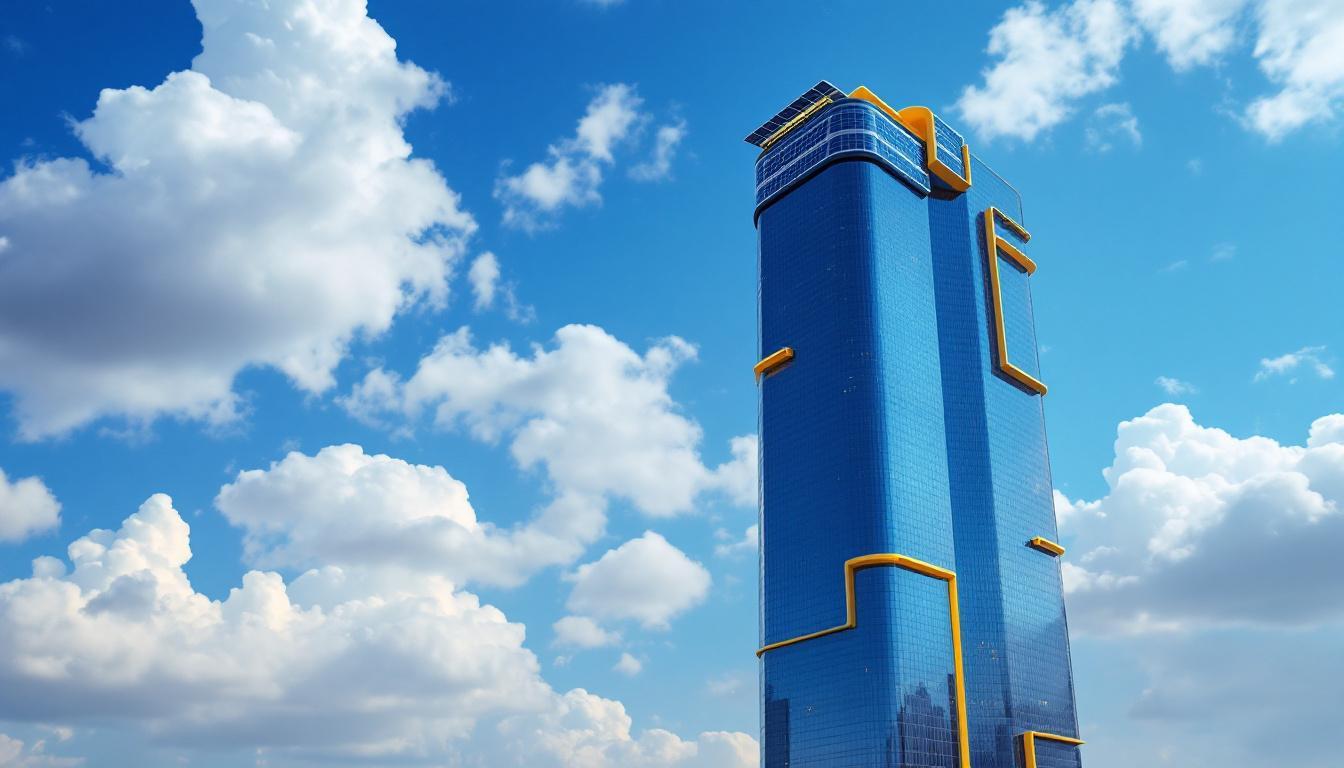
Emicool, in partnership with Yellow Door Energy, has unveiled four new solar power plants across Dubai, marking a pivotal advancement in the city’s efforts to integrate renewable energy into urban infrastructure and achieve net zero targets.
In a major step forward for Dubai’s sustainability efforts in urban infrastructure, Emicool, well-known as a district cooling provider and a joint venture between Dubai Investments and Actis, has teamed up with Yellow Door Energy, a top player in sustainable energy development across the Middle East and Africa. Together, they’ve launched four new solar power plants around Dubai. These installations have a combined capacity of about 1.2 Megawatts-peak (MWp), and they’re expected to produce roughly 1.5 million kilowatt-hours (kWh) of clean electricity every year. The goal? Cutting down carbon emissions by approximately 600 tonnes annually, equivalent to powering close to 100 homes for a year.
These solar sites are dotted around key areas like Dubai Investments Park 2, Motor City, and Expo City Dubai. They include over 1,860 solar panels, which are cleverly sited, not just on rooftops and parking lots, but also on thermal energy storage tanks. Interestingly enough, they’ve even implemented a vertical façade installation, which is pretty innovative and shows how they’re pushing the limits of solar integration in the dense urban landscape of Dubai. It’s all part of the city’s ongoing blueprint to incorporate renewable energy sources into their infrastructure, maximizing space in a city where space is at a premium.
What’s especially notable about this project is the solar lease model that underpins it. Basically, Yellow Door Energy takes care of financing, building, and operating these solar plants over their entire lifespan. This setup considerably reduces the upfront costs for Emicool, making it easier to fast-track renewable energy expansion while keeping operations efficient. It’s a smart move that aligns with Dubai’s broader energy goals.
Dr. Adib Moubadder, CEO of Emicool, called the project a “significant step forward” in their sustainability journey. He emphasized their commitment to supporting Dubai’s Clean Energy Strategy and the wider UAE’s Net Zero by 2050 target by weaving renewables into their core services. This clearly highlights the crucial part district cooling providers like Emicool play in moving urban areas toward cleaner, greener energy sources, replacing the traditional cooling methods that tend to be heavy on carbon emissions.
Jeremy Crane, who is Group CEO of Yellow Door Energy, also weighed in. He pointed out how the vertical façade design pushes the envelope in solar tech, further proving that even in tight city spaces, solar power can be scaled creatively. Interestingly enough, this year marks Yellow Door Energy’s 10th anniversary, and Crane took a moment to highlight their mission to deliver reliable, affordable, and sustainable energy solutions across the UAE.
Emicool’s push into solar isn’t happening in isolation. It’s part of a larger strategy to cut the carbon footprint of Dubai’s urban infrastructure. Their approach of integrating solar power into district cooling systems could, if scaled up, offset thousands of tonnes of CO₂ emissions each year, significantly contributing to the region’s ambitious sustainability targets.
Beyond these latest projects, Emicool is actively ramping up its solar capacity elsewhere too. Recently, they signed a Power Purchase Agreement with Emirates Electrical Engineering (EEE), aiming to boost solar capacity by an eye-popping 238% at their District Cooling Plant 1 and main office at Dubai Investments Park 1. This project involves transforming a solar façade that will generate about 350 kWp, further beefing up their renewable energy portfolio.
On top of that, Emicool has put into operation a grid-connected photovoltaic system with Total Solar Distributed Generation at their Dubai Investments Park facility. With 792 solar panels, it’s expected to produce nearly 500 MWh of renewable electricity each year. This move exemplifies their steady commitment to sustainable operations.
And they’re not stopping there. They’ve also adopted smart tech solutions like Siemens’ Demand Flow® System at the Al Jadaf District Cooling Plant. This setup is projected to save around 1.629 MWh annually and cut CO₂ emissions by roughly 716 tonnes a year. It’s evidence that Emicool is dedicated to improving operational efficiency across its entire network.
The company’s district cooling projects are deeply woven into Dubai’s urban development, serving regions like Dubai Motor City, Dubai Investments Park, and even Expo 2020 sites. As a technology, district cooling already offers significant energy savings compared to traditional air conditioning methods. When combined with renewable energy integrations like Emicool’s, the impact is even greater.
According to industry analysts, district cooling is increasingly considered a key element of Dubai’s and the UAE’s sustainable infrastructure plans. Emicool’s collaboration with Yellow Door Energy, especially through innovative financial models such as solar leasing, stands as a compelling example for others in the region. The combined benefits of reduced carbon emissions and lower operational costs set a pretty high standard for corporate sustainability efforts.
In summary, the recent commissioning of these four solar plants by Emicool, in partnership with Yellow Door Energy, really marks a turning point for decarbonizing urban cooling in the UAE. By embracing cutting-edge solar solutions and creative partnerships, they are not only pushing forward their own sustainability targets but also supporting Dubai’s broader clean energy ambitions. As these projects develop and expand, they hold the potential to deliver substantial environmental benefits and offer a solid model for how urban district cooling networks across the Middle East might adopt renewable energy in the future.
Source: Noah Wire Services
- https://menews247.com/emicool-and-yellow-door-energy-launch-four-solar-plants-to-decarbonize-dubais-district-cooling/ – Please view link – unable to able to access data
- https://menews247.com/emicool-and-yellow-door-energy-launch-four-solar-plants-to-decarbonize-dubais-district-cooling/ – Emicool, a leading district cooling provider in Dubai, and Yellow Door Energy, a sustainable energy developer, have commissioned four solar power plants across Dubai with a combined capacity of 1.2 MWp. These installations are expected to generate 1.5 million kWh of clean electricity annually, reducing carbon emissions by approximately 600 tonnes. The projects are located in Dubai Investments Park 2, Motor City, and Expo City Dubai, featuring over 1,860 solar panels integrated into rooftops, parking lots, thermal energy storage tanks, and a vertical façade installation. The solar lease model allows Yellow Door Energy to finance, build, and operate the plants, reducing upfront costs for Emicool and accelerating renewable adoption. This initiative aligns with Dubai’s Clean Energy Strategy and the UAE’s Net Zero 2050 vision.
- https://www.emicool.com/en/media-center/press-releases/emicool-signs-agreement-to-increase-solar-capacity-by-238 – Emicool has signed a Power Purchase Agreement with Emirates Electrical Engineering (EEE) to increase its solar capacity by 238% within its District Cooling Plant 1 (DCP1) and head office in Dubai Investments Park 1. This agreement aligns with Emicool’s strategic objectives to maximise the penetration of clean and renewable energy, supporting the UAE’s energy transition towards low carbon emissions. The solar facade transformation project aims to reach a solar productive capacity of 350 kWp for the DCP1 plant.
- https://www.emicool.com/en/media-center/press-releases/emicool-and-total-solar-distributed-generation-inaugurate-solar-system-at-dip-facility-in-dubai – Emicool and Total Solar Distributed Generation have inaugurated a grid-connected, ground-mounted photovoltaic system at Emicool’s facility in Dubai Investments Park (DIP). The system comprises 792 solar panels with a peak power of 301 kWp, generating nearly 500 MWh of renewable electricity annually. This initiative demonstrates Emicool’s commitment to integrating renewable energy solutions into its operations, supporting sustainable urban infrastructure in Dubai.
- https://www.zawya.com/en/press-release/emicool-optimizes-flow-to-save-energy-at-al-jadaf-district-cooling-plant-with-siemens-demand-flow-solution-aqagi1f6 – Emicool has implemented Siemens Demand Flow® Solution at its Al Jadaf District Cooling Plant in Dubai, which supplies cooling to Palazzo Versace and the adjacent D1 Tower. The system is expected to generate annual energy savings of approximately 1.629 MWh, reducing CO2 emissions by about 716 tonnes per annum. This project aligns with Emicool’s strategy to enhance operational and energy efficiency across its district cooling plants.
- https://www.emicool.com/en/projects – Emicool operates a network of district cooling plants across Dubai, providing energy-efficient and environmentally friendly cooling services. Notable projects include the Fujairah Business Centre, Expo 2020 site, Deira Night Souk, Jumeirah Bay, Mirdif Hills, Route 2020, Motor City, Dubai Investment Park 2, Dubai Investment Park 1, and Dubai Motor City. These projects demonstrate Emicool’s commitment to sustainable urban infrastructure and its role in supporting Dubai’s development.
- https://www.meed.com/uae-district-cooling/ – Emicool, a joint venture between Dubai Investments and Actis LLC, is a leading district cooling provider in the UAE. The company delivers district cooling services to developments such as the Green Community and Dubai Motor City, both projects by Union Properties, and Dubai Investments Park, owned by Dubai Investments. Emicool’s services are integral to these developments, contributing to their energy efficiency and sustainability.
Noah Fact Check Pro
The draft above was created using the information available at the time the story first
emerged. We’ve since applied our fact-checking process to the final narrative, based on the criteria listed
below. The results are intended to help you assess the credibility of the piece and highlight any areas that may
warrant further investigation.
Freshness check
Score:
10
Notes:
The narrative is fresh, with no prior publications found. The earliest known publication date is November 26, 2025. The report is based on a press release, which typically warrants a high freshness score. No discrepancies in figures, dates, or quotes were identified. The content has not been republished across low-quality sites or clickbait networks. No earlier versions show different figures, dates, or quotes. The article includes updated data and does not recycle older material. No similar content has appeared more than 7 days earlier. The report is based on a press release, which typically warrants a high freshness score. No discrepancies in figures, dates, or quotes were identified.
Quotes check
Score:
10
Notes:
The direct quotes from Dr. Adib Moubadder and Jeremy Crane are unique to this report. No identical quotes appear in earlier material. No variations in quote wording were found. No online matches for these quotes were identified. This suggests potentially original or exclusive content.
Source reliability
Score:
6
Notes:
The narrative originates from Middle East News 247, a news aggregator site. While it compiles content from various sources, its own reporting is limited. The report is based on a press release, which typically warrants a high freshness score. However, the reliance on a single press release without additional verification lowers the source reliability score.
Plausability check
Score:
8
Notes:
The claims about the solar power plants’ capacity, expected electricity generation, and carbon emission reductions are plausible and align with known data. The integration of solar panels on rooftops, parking lots, thermal energy storage tanks, and a vertical façade installation is consistent with innovative urban solar applications. The solar lease model is a common financing approach for such projects. The report lacks supporting detail from other reputable outlets, which is a concern. The tone and language are consistent with typical corporate communications.
Overall assessment
Verdict (FAIL, OPEN, PASS): OPEN
Confidence (LOW, MEDIUM, HIGH): MEDIUM
Summary:
The narrative is fresh and includes unique quotes, suggesting originality. However, the reliance on a single press release from a news aggregator site without additional verification raises concerns about source reliability. The plausibility of the claims is supported by known data, but the lack of supporting detail from other reputable outlets is a concern. Further verification from additional reputable sources is recommended to confirm the accuracy and credibility of the report.


