





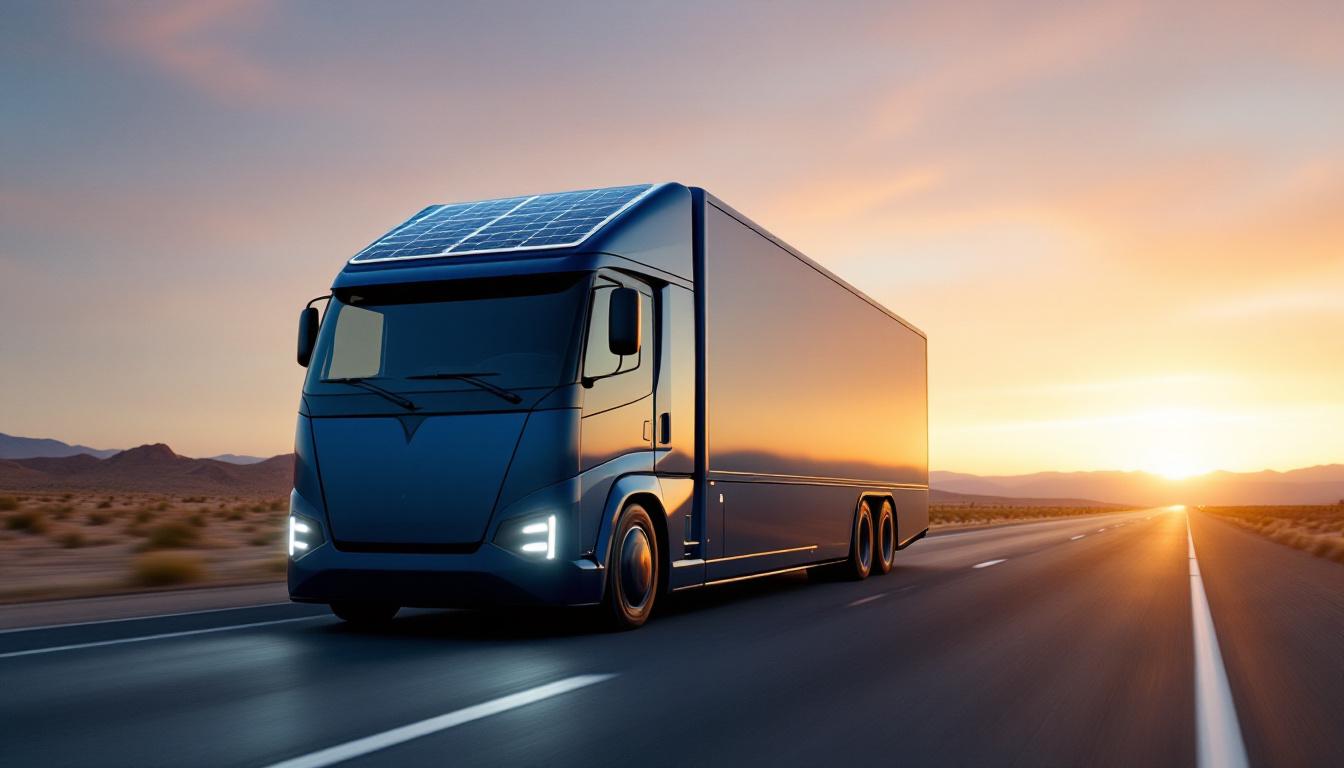
PwC’s new report highlights the urgent need for coordinated policies and infrastructure in the Middle East to maximise electric heavy-duty trucks, promising significant emission reductions and regional economic benefits.
PwC Middle East has recently published a report titled “Driving change – the future of sustainable heavy-duty trucks in the Middle East” which looks into just how important electrification might be in cutting down emissions from road freight in the Gulf Cooperation Council (GCC) countries. The report predicts that if there aren’t specific incentives in place, new truck sales in this region could be responsible for over 54 million tonnes of CO₂ each year by 2035. But, interestingly enough, if the GCC accelerates the switch to electric trucks along with cleaner fuels and switches to lower-emission freight methods, emissions could drop by at least 4.7 percent.
Heavy-duty vehicles, it turns out, are a big factor in global carbon emissions — making up roughly 40 percent of transport-related greenhouse gases — mainly because they rely heavily on diesel and are constantly on the road. This is especially urgent in the Middle East, where countries like the UAE and Saudi Arabia are setting some pretty ambitious goals to promote clean transportation and electrification, aligned with initiatives like Saudi Vision 2030 and the UAE’s Net Zero 2050 strategy. Decarbonizing heavy transport is critical, because otherwise, the emissions from logistics could undermine larger efforts to combat climate change.
The research by PwC, which looked closely at Saudi Arabia, the UAE, and Qatar, points out a big hurdle: the availability of electric heavy-duty trucks in the GCC is quite limited — there are about 70 percent fewer models available there compared to Europe. To overcome this, the report emphasizes the need for regional cooperation—things like coordinated policies, incentives, and infrastructure build-out to boost market growth and attract more manufacturers. It also stresses that creating supportive rules and offering subsidies will be key to stimulating demand. Plus, expanding grids and deploying widespread high-power charging stations are essential for making electric trucks practical on the ground. And, as a bonus, integrating renewable energy into these systems can help lower fleet operating costs and improve performance, making them more attractive to operators.
Battery electric trucks, or BEVs, really stand out as a particularly efficient way to decarbonize freight in the region. Based on data collected by PwC and backed up by independent studies, these vehicles convert around 70 percent of the energy from renewables into motion — a much higher efficiency than traditional diesel trucks. This high conversion rate, which is about two to three times better than hydrogen fuel cell trucks, really helps in drastically reducing greenhouse gases. The International Council on Clean Transportation (ICCT) also confirms these findings, showing that battery electric trucks produce a minimum of 63 percent fewer lifetime greenhouse gases than diesel-powered vehicles—even when operating on the current mix of grid electricity, which isn’t fully renewable.
Of course, despite all these advantages, there are still hurdles that electric heavy-duty trucks must overcome. A study by McKinsey focusing on emissions-free trucks in Europe reveals that the current costs of manufacturing electric trucks are roughly 2.5 to 3 times higher than for diesel ones, which slows down widespread adoption. They suggest that electric truck prices need to drop by about half, and that charging costs should decrease by 25 percent, alongside strong investments in extensive charging infrastructure. The scale of this infrastructure isn’t trivial—estimates from the US’s National Renewable Energy Laboratory point out that all this would require large high-power charging networks to keep these vehicles running efficiently on all kinds of routes.
Globally, the trend towards electrification of heavy-duty vehicles is picking up speed. The International Energy Agency’s Global EV Outlook 2023 notes that while electric trucks made up nearly 2 percent of truck sales worldwide in 2022, there’s still a lot of investment and policy support needed to keep this momentum going. China is currently leading the charge in electric truck adoption, which shows how fast things can move when the right conditions are met.
PwC’s report in the Middle East highlights a big strategic opportunity: transitioning to zero-emission trucks could not only help cut emissions but also spark innovation and diversify regional economies, which are key parts of the Gulf’s future development plans. Heiko Seitz, PwC Middle East’s Global Transport and Logistics Leader, mentions that the region’s growing clean energy capacity and solid logistics networks position the GCC well to become a leader in sustainable freight. He adds, “With smarter policies, investments, and the right kind of incentives, zero-emission trucks could soon outpace traditional engines—both for the environment and for business.”
Achieving this, however, calls for a multi-layered, coordinated effort. The report stresses the importance of regional cooperation on regulation, finance, energy strategies, and infrastructure. Solutions should be tailored to the unique climate and logistical needs of the GCC — that means fostering local tech development and making sure electric trucking is both feasible and appealing for the market.
All things considered, while some obstacles remain, embracing battery electric trucks along with cleaner fuels and different freight modes presents a promising path for the GCC to slash freight emissions significantly by 2035. This approach aligns well with the region’s climate commitments and economic visions — it’s a good opportunity to build a cleaner, more resilient transportation system that can support future growth.
Source: Noah Wire Services
- https://www.zawya.com/en/press-release/companies-news/sustainable-freight-can-deliver-major-co-cuts-across-the-gcc-by-2035-says-pwc-middle-east-report-rerz3c55 – Please view link – unable to able to access data
- https://www.icct.org/publications/battery-electric-trucks-emit-63-less-ghg-emissions-than-diesel/ – A study by the International Council on Clean Transportation (ICCT) reveals that battery electric trucks emit at least 63% fewer greenhouse gas emissions over their lifetime compared to diesel trucks. This significant reduction is achieved even when using the EU’s average electricity grid mix, which is not fully renewable but will continue to improve during the vehicles’ lifespan. The study underscores the potential of battery electric trucks to decarbonize the transport sector and meet climate targets, especially as the electricity grid becomes more renewable. The findings highlight the importance of transitioning to electric trucks to achieve substantial emission reductions in the transportation industry.
- https://www.milence.com/insight/why-battery-electric-trucks/ – Milence discusses the advantages of battery electric trucks (BETs), highlighting their superior energy efficiency compared to diesel trucks. BETs can achieve a source-to-wheel electrical efficiency of 70-80%, meaning only one-fourth of the energy produced is lost, with the rest propelling the truck forward. This efficiency is approximately 2-3 times higher than that of hydrogen fuel-cell trucks and significantly better than diesel trucks. The article emphasizes that this enhanced efficiency makes BETs a compelling option for reducing greenhouse gas emissions and improving operational performance in the transportation sector.
- https://www.iea.org/reports/global-ev-outlook-2023/trends-in-electric-heavy-duty-vehicles – The International Energy Agency’s (IEA) Global EV Outlook 2023 report highlights the rapid growth of electric heavy-duty vehicles (HDVs) worldwide. In 2022, electric HDVs accounted for nearly 2% of total truck sales globally, with China leading the market. The report notes that while the adoption of electric trucks is accelerating, challenges remain, including the need for substantial investments in charging infrastructure and supportive policies. The IEA emphasizes the importance of these factors to sustain the growth of electric HDVs and achieve global decarbonization goals in the transport sector.
- https://www.nrel.gov/news/feature/2025/the-dawn-of-electric-trucking-calls-for-high-power-charging – The National Renewable Energy Laboratory (NREL) discusses the critical need for high-power charging infrastructure to support the growing fleet of medium- and heavy-duty electric vehicles (EVs). As of 2024, over 15,000 such EVs have been deployed in the United States, indicating a significant shift towards electrification in the transport sector. NREL emphasizes that developing robust charging networks is essential to facilitate the widespread adoption of electric trucks and buses, ensuring they can operate efficiently and effectively across various routes and applications.
- https://www.reuters.com/sustainability/climate-energy/battery-electric-cars-produce-73-less-emissions-research-2025-07-08/ – A study by the International Council on Clean Transportation (ICCT) indicates that battery electric vehicles (BEVs) in Europe produce 73% fewer life-cycle greenhouse gas emissions compared to gasoline-powered cars. The research highlights that BEVs are the most effective technology for reducing emissions in the transport sector, where passenger cars contribute nearly 75% of emissions. The study also notes that the increasing share of renewable energy in Europe’s electricity grid further enhances the environmental benefits of BEVs, supporting the transition towards cleaner transportation solutions.
- https://www.reuters.com/sustainability/emissions-free-truck-prices-need-drop-by-50-compete-with-diesel-study-says-2024-09-11/ – A study by McKinsey reveals that prices of emissions-free trucks must drop by 50% to be competitively priced against diesel models, a crucial step towards meeting EU climate targets. Currently, less than 2% of the EU’s heavy freight vehicles are electric or hydrogen-powered, and this figure needs to rise to 40% of new sales by 2030. Production costs for electric trucks are currently 2.5-3 times higher than diesel trucks, which hinders logistics firms from adopting them due to higher costs. McKinsey suggests that to make electric trucks a feasible alternative, their prices should only be 30% higher than their diesel counterparts, necessitating advances in battery technology. Additionally, a 25% reduction in charging costs and the installation of 900,000 private charging points by 2035, costing $20 billion, are essential for the successful implementation of the EU’s CO2 strategy. European truckmakers also face competition from Chinese manufacturers who offer cheaper alternatives and have already captured a significant share of the bus market.
Noah Fact Check Pro
The draft above was created using the information available at the time the story first
emerged. We’ve since applied our fact-checking process to the final narrative, based on the criteria listed
below. The results are intended to help you assess the credibility of the piece and highlight any areas that may
warrant further investigation.
Freshness check
Score:
10
Notes:
The narrative is based on PwC Middle East’s press release dated September 19, 2025, announcing the publication of their report titled ‘Driving change – the future of sustainable heavy-duty trucks in the Middle East’. This indicates the content is fresh and original. The press release is accessible on PwC Middle East’s official website. ([pwc.com](https://www.pwc.com/m1/en/media-centre/2025/sustainable-freight-to-cut-gcc-co2-by-2035.html?utm_source=openai))
Quotes check
Score:
10
Notes:
The press release includes direct quotes from Heiko Seitz, Global Transport and Logistics Leader at PwC Middle East, which are unique to this release and not found in earlier publications. This suggests the quotes are original and exclusive to this report. ([pwc.com](https://www.pwc.com/m1/en/media-centre/2025/sustainable-freight-to-cut-gcc-co2-by-2035.html?utm_source=openai))
Source reliability
Score:
10
Notes:
The narrative originates from PwC Middle East, a reputable organisation with a longstanding presence in the region. The press release is published on PwC Middle East’s official website, enhancing its credibility. ([pwc.com](https://www.pwc.com/m1/en/media-centre/2025/sustainable-freight-to-cut-gcc-co2-by-2035.html?utm_source=openai))
Plausability check
Score:
10
Notes:
The claims made in the press release align with known industry trends and data. The report’s findings are consistent with previous analyses on the environmental impact of heavy-duty trucks and the potential benefits of electrification in the Middle East. The press release provides specific figures and projections, such as the potential reduction of CO₂ emissions by 4.7% by 2035 with accelerated electrification, which are plausible and supported by existing research. ([pwc.com](https://www.pwc.com/m1/en/media-centre/2025/sustainable-freight-to-cut-gcc-co2-by-2035.html?utm_source=openai))
Overall assessment
Verdict (FAIL, OPEN, PASS): PASS
Confidence (LOW, MEDIUM, HIGH): HIGH
Summary:
The narrative is fresh, originating from a recent press release by PwC Middle East. The quotes are original and exclusive to this release. The source is highly reliable, being PwC Middle East, a reputable organisation. The claims made are plausible and consistent with existing industry data. Therefore, the overall assessment is a PASS with high confidence.


