





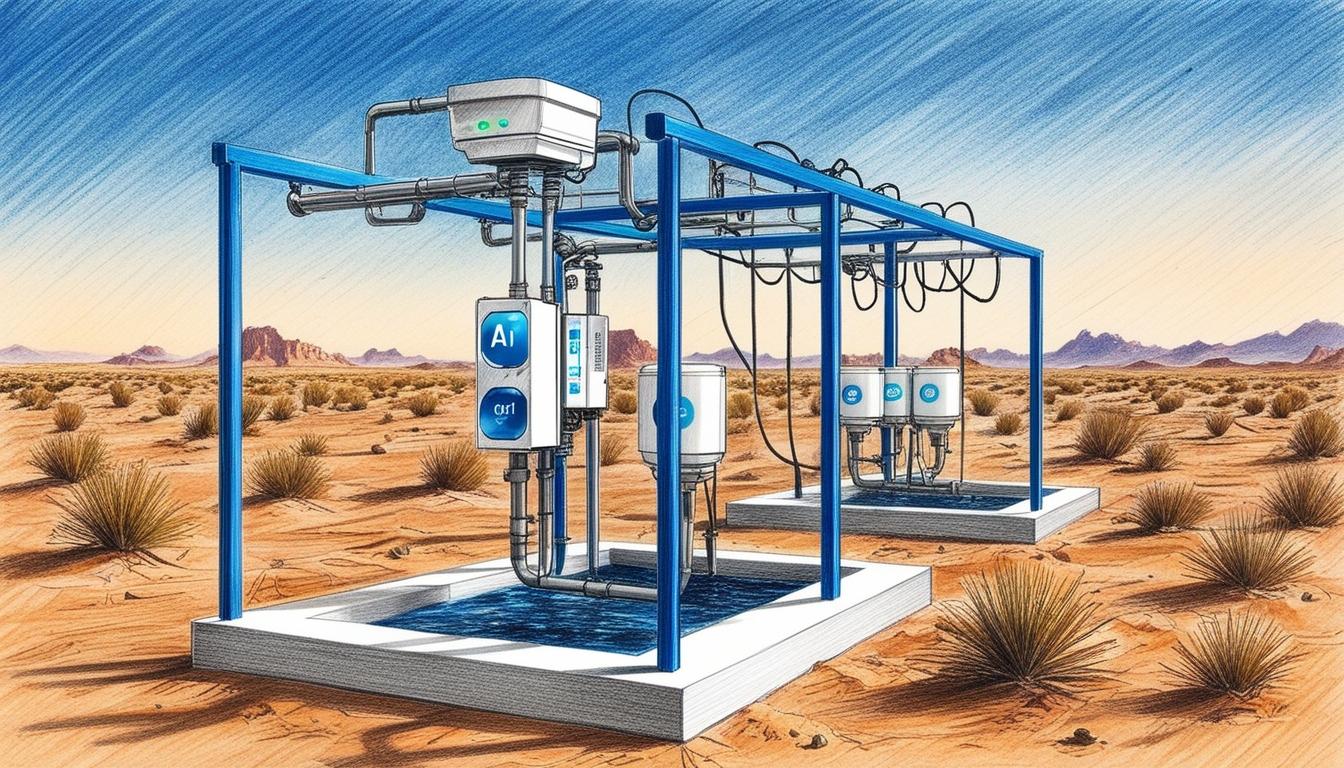
GCC region: Facing acute desertification and scarce arable land, the Gulf Cooperation Council is turning to cutting-edge technologies like AI and biochar, alongside regional collaboration initiatives such as the Middle East Green Initiative, to restore ecosystems and secure water and food resilience amid worsening climate conditions.
Land degradation and desertification pose significant challenges across the globe, yet their impacts are particularly acute in the Gulf Cooperation Council (GCC) region, where extreme climatic conditions exacerbate food security and water resource issues. A recent report by Arthur D. Little underscores the urgent need for innovative, technology-driven solutions tailored to the specific environmental contexts of the GCC, where only 19.5% of land is designated for agriculture, with a mere 1% considered arable. This stark contrast highlights the precariousness of food systems in a region beset by high temperatures and dwindling rainfall, compounded by the broader effects of climate change.
Marielli Bou Harb, a partner at Arthur D. Little, states that “in hyper-arid areas, scaling up innovation and greening technologies is no longer optional — it is essential.” This sentiment reflects a growing consensus among experts that the deployment of these technologies is crucial not just for reversing land degradation but also for securing long-term resilience in water and food systems. Bou Harb advocates for solutions grounded in scientific evidence that can swiftly adapt to the extreme conditions of the region.
The report identifies five transformative technologies with the potential to effect real change: artificial intelligence (AI) systems geared towards precision agriculture, Internet of Things (IoT) sensors for real-time environmental data, biochar for enhancing soil health, decentralised composting for nutrient recycling, and the judicious application of genetic engineering. These options are not only ecologically sound but are also deemed appropriate within the socio-economic framework of the GCC, where initiatives like Saudi Arabia’s commitment to plant 10 billion trees have catalysed innovation and interest in ecological restoration.
The ambitious Middle East Green Initiative (MGI), which aims to rehabilitate 200 million hectares of land, exemplifies the collaborative momentum building in the Gulf. Juan Moreno, another principal at Arthur D. Little, comments on the importance of collaboration: “Innovation flourishes through collaboration — among entrepreneurs, scientists, policymakers, investors, and local communities.” This collective approach is seen as vital to nurturing green technologies that can thrive in the Middle East, thus ensuring a sustainable legacy for future generations.
Early successes are already emerging in the form of AI-enhanced irrigation systems, which have boosted water efficiency by up to 50%, and smart sensor networks that leverage predictive analytics to improve restoration outcomes. These developments underscore a broader trend toward sustainable land management practices in the region, addressing the interrelated issues of food security, water scarcity, and ecological stability.
However, further action is necessary to ensure sustained progress. The report underscores the need for strategic alignment of investment and policy across the GCC, urging countries to collaborate via platforms like the MGI. Additionally, establishing centres for knowledge exchange and expanding regional research and development ecosystems are recommended to adapt global technologies to local conditions. The report advocates mobilising blended finance approaches to facilitate public-private partnerships that can unlock the scaling of these initiatives.
The Arab Coordination Group’s recent pledge of $10 billion by 2030 to combat land degradation echoes the imperative for urgent financial commitment to these efforts. This funding, part of a broader strategy to enhance resilience in the face of climate change, aims to support land restoration initiatives primarily in vulnerable territories throughout the Middle East and North Africa.
It’s evident that without immediate and concerted action, the GCC risks exacerbating its environmental challenges. The convergence of climate pressures and limited natural resources necessitates a pivot from small-scale experiments to large-scale implementation of effective strategies. The findings from Arthur D. Little frame sustainable land management within hyper-arid environments as not merely aspirational, but an urgent ecological, economic, and geopolitical requisite.
In conclusion, the GCC faces an unprecedented crossroads between environmental degradation and innovation-led restoration efforts. The time to scale solutions is indeed now, as the region seeks to forge a sustainable path forward in an era defined by climate unpredictability and resource scarcity.
Reference Map
- Paragraph 1: Sources (1), (2), (5)
- Paragraph 2: Source (1)
- Paragraph 3: Sources (1), (3)
- Paragraph 4: Source (1)
- Paragraph 5: Source (1)
- Paragraph 6: Source (3)
- Paragraph 7: Source (1)
- Paragraph 8: Source (4)
- Paragraph 9: Sources (1), (6), (7)
- Paragraph 10: Sources (1), (6)
Source: Noah Wire Services
- https://mena-forum.com/green-tech-boosts-land-restoration-efforts-gulf/ – Please view link – unable to able to access data
- https://pubs.sciepub.com/jfs/7/5/2/ – This article discusses the challenges faced by the Gulf Cooperation Council (GCC) countries in food production due to natural factors such as scarce water resources, high temperatures, and poor soils. It highlights that only 19.5% of the total land area in the GCC is agricultural land, with only 1% being arable. The article also emphasizes the impact of climate change, including rising temperatures and declining rainfall, which further affect agriculture and food production in the region.
- https://www.aa.com.tr/en/middle-east/arab-funding-group-pledges-10-billion-to-tackle-land-degradation-desertification-drought-by-2030/3412535 – The Arab Coordination Group has pledged $10 billion by 2030 to combat land degradation, desertification, and drought. This commitment was announced during the 16th Conference of the Parties (COP16) of the United Nations Convention to Combat Desertification (UNCCD) held in Riyadh. The funds aim to support land restoration efforts, enhance resilience to climate change, and promote sustainable development in vulnerable areas, particularly in the Middle East, North Africa, and the Sahel region.
- https://arablandinitiative.gltn.net/about/key-themes/land-and-climate-change – The Arab Land Initiative addresses the negative impacts of climate change in the Arab region, including rising sea levels, desertification, land degradation, salinization, and increased natural hazards. The initiative emphasizes the importance of good land governance and land tenure security for sustainable development and recommends setting and monitoring land-related Sustainable Development Goals (SDGs), adopting sustainable land management practices, and promoting climate-resilient urbanization to combat these challenges.
- https://trendsresearch.org/insight/climate-change-and-human-security-in-the-gcc/?srsltid=AfmBOooDsUrhI0AWRA8f2__QQvKNmO2nlHKVBer5HcXa-1iQ3It5mjzE – This article examines the impact of climate change on human security in the Gulf Cooperation Council (GCC) countries. It discusses how factors such as overgrazing, urbanization, and unsustainable agricultural practices contribute to land degradation and desertification. The article also highlights the economic implications of these issues, including the depletion of water resources and the threat to food security, and emphasizes the need for sustainable land management and policy interventions to address these challenges.
- https://www.mdpi.com/2073-445X/13/7/925 – This study analyzes the impact of land use practices on water resources in the Gulf Cooperation Council (GCC) countries. It highlights how agriculture, urbanization, and industrialization contribute to water scarcity and quality degradation. The research indicates a decline in agricultural activities, an increase in urban areas, and depletion of groundwater resources. The study calls for sustainable land use practices and effective water resource management to address these challenges.
- https://www.strategyand.pwc.com/m1/en/strategic-foresight/functional-expertise/sustainability-and-environment/gcc-land-degradation.html – This article discusses the challenges of land degradation in the Gulf Cooperation Council (GCC) countries, emphasizing the need for sustainable grazing models, ecosystem rehabilitation, and coordinated efforts to combat desertification. It highlights the importance of integrating economic, social, and ecological factors in land-use planning and the role of technology, including artificial intelligence, in accelerating restoration efforts. The article also mentions the Saudi Green Initiative and Middle East Green Initiative as part of the region’s efforts to address these issues.
Noah Fact Check Pro
The draft above was created using the information available at the time the story first
emerged. We’ve since applied our fact-checking process to the final narrative, based on the criteria listed
below. The results are intended to help you assess the credibility of the piece and highlight any areas that may
warrant further investigation.
Freshness check
Score:
6
Notes:
The narrative references ongoing initiatives and recent reports but lacks specific dates or events to verify its timeliness. The Middle East Green Initiative and the Arab Coordination Group’s pledge suggest contemporary relevance, though.
Quotes check
Score:
8
Notes:
While the quotes are attributed to specific individuals like Marielli Bou Harb and Juan Moreno, there is no clear online source for the earliest reference. The quotes appear to be original given the context.
Source reliability
Score:
5
Notes:
The narrative originates from a lesser-known platform, which may influence the reliability of the information. It references a report from Arthur D. Little, a reputable consulting firm, but lacks further validation.
Plausability check
Score:
9
Notes:
The claims about the need for green technologies in the GCC region align with global environmental concerns and initiatives. The mention of specific technologies and initiatives like the Middle East Green Initiative supports the narrative’s plausibility.
Overall assessment
Verdict (FAIL, OPEN, PASS): OPEN
Confidence (LOW, MEDIUM, HIGH): MEDIUM
Summary:
The narrative’s plausibility is high due to the relevance of green technologies in the GCC. However, the source is not well-known, and while the quotes seem original, they lack verified provenance. Freshness is moderately scored due to the lack of specific dates or recent events.


