

 6:17 pm - October 15, 2026
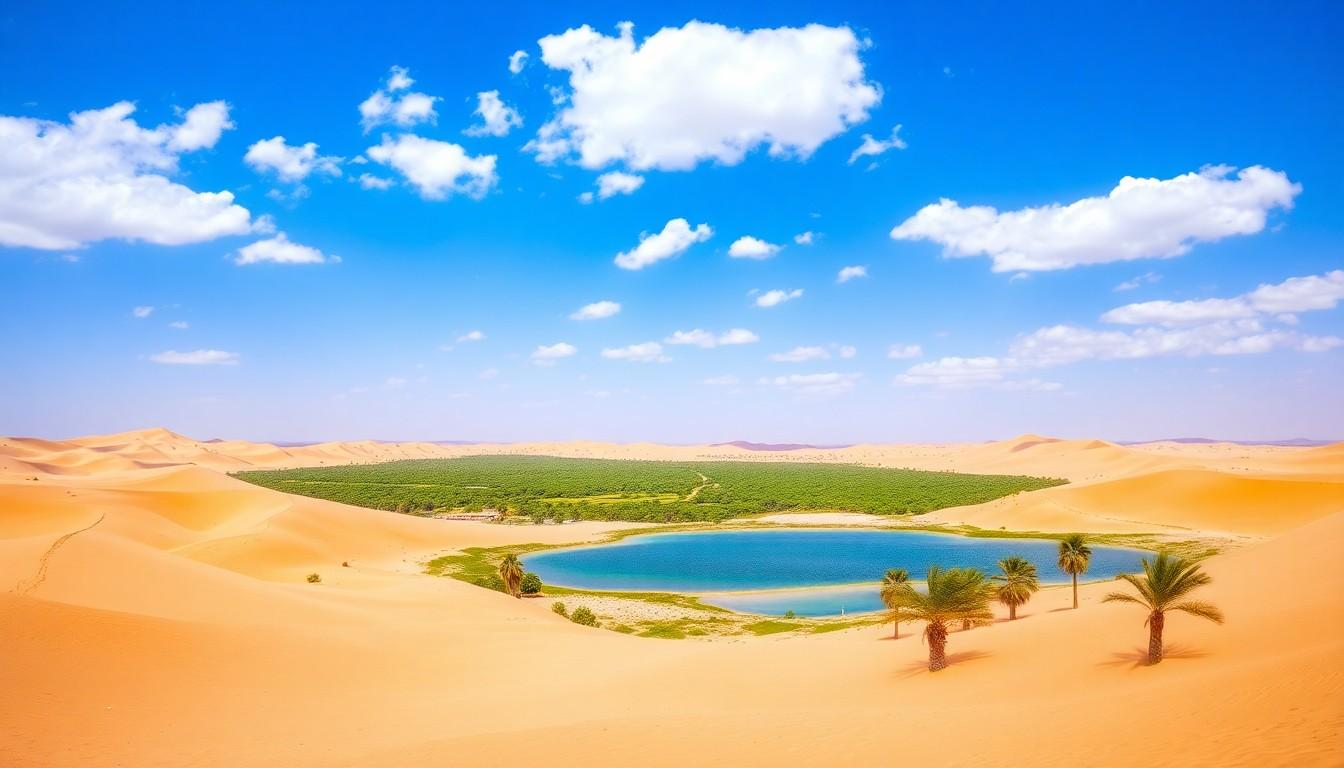
GCC states are intensifying their land conservation initiatives, aligning regional efforts with international environmental goals to combat desertification and bolster climate adaptation in an increasingly arid region.
GCC states are really stepping up their efforts to safeguard fragile land systems and mend damaged ecosystems, with the GCC Statistical Centre framing all this activity as part of a bigger picture, one that aligns with international environmental agreements and the UN Sustainable Development Goals, no less.
The Centre issued these remarks to mark World Day to Combat Desertification and Drought , and honestly, it’s a pretty clear call to ramp up investment in degraded rangelands and to approach land management a bit more carefully. In the Gulf region, these measures don’t just stop at environmental protection; they’re increasingly connected to food security, biodiversity, and the longer-term resilience of the climate. It’s a multi-layered approach, really.
This regional focus isn’t accidental. The UN continues to treat desertification, land degradation, and drought as major hurdles to sustainable development. The UN’s Department of Economic and Social Affairs highlights how inextricably linked these issues are to how we’re managing natural resources. Protecting and restoring terrestrial ecosystems is front and centre in Sustainable Development Goal 15 , pretty tough stuff.

For the Gulf, the urgency feels even sharper. Higher temperatures, water scarcity, and pressure on grazing land make arid ecosystems especially fragile. That’s pushed the governments here to see land restoration not just as a conservation effort, but as part of climate adaptation and, frankly, economic planning. It’s become a strategic issue, not just an environmental one.
As per the GCC Statistical Centre, all six member states ratified the UN Convention to Combat Desertification way back between 1996 and 1999. That early agreement shows that the region knew land degradation was a concern long before it really gained global climate policy prominence. It also hints at a shared understanding that tackling land issues isn’t just local , it’s regional and global.
The Centre also did point out the important role civil society plays. Apparently, 14 organisations across the GCC countries are accredited under the UN convention, and they support initiatives like raising public awareness, backing environmental projects, and helping to protect natural resources. They’re not just sidelines , they really complement the work of governments.
A big chunk of focus is on rangelands, which are crucial for livestock, biodiversity, and rural communities, especially in dry environments where the condition of grazing land can make or break local food systems. The GCC states have introduced measures to regulate grazing, reduce overgrazing, manage seasonal patterns, and oversee land use. These steps are meant to ensure those rangelands stay productive for the future , nothing short of a balancing act, really.
Saudi Arabia, in particular, has been noticeable as an active leader in this space. According to the Saudi Press Agency, their National Center for Vegetation Cover Development and Combating Desertification has linked its activities to Vision 2030, with a real focus on vegetation and maintaining natural rangelands sustainably.
And it’s not just at home. Internationally, this effort is present through the Silk Road Caravan, a campaign linked to the UN Convention to Combat Desertification. Launched in Turkey back in May 2026 (it’s surprising how recent that is), the campaign’s designed to build momentum ahead of the upcoming 17th session of the Conference of the Parties, planned for Ulaanbaatar, Mongolia, in August.
The caravan is part of the International Year of Rangelands and Pastoralists 2026, and organisers say the journey aims to highlight the value of rangelands, sustainable land use practices, and the vital role that pastoral communities play in climate resilience and food security. It’s an effort to raise awareness about these often overlooked keystones of the ecosystem.
This all follows last year’s COP16, held in Riyadh in December 2024. The UN convention pointed out that the conference placed land restoration, drought resilience, and international cooperation right at the centre of discussions. Over US$12 billion was pledged during the talks to address desertification, land degradation, and drought, especially in countries most vulnerable. That’s a hefty figure, and it signals just how seriously these issues have climbed the diplomatic agenda of late.
Of course, throwing around big sums doesn’t magically fix everything. But the real message is clear: land degradation has become a priority for policymakers, especially here in the Middle East and North Africa, where water scarcity and soil decline can rapidly undermine agriculture and ecosystem health.
For the Gulf countries, the challenge isn’t just about reacting to environmental change , it’s also about shaping it. Restoring land, managing grazing pressures, and protecting vegetation are increasingly seen as climate technologies in their own right; practical, achievable actions that can strengthen resilience, help preserve carbon sinks, and boost local food production.
The broader stance from the GCC Statistical Centre , and frankly, from regional policymakers , is that desertification is no longer just an isolated environmental concern. It’s all being integrated into a wider policy framework that includes sustainability, climate adaptation, and protecting natural capital. This approach, I think, is likely to become even more significant in the coming years. As climate pressures step up, how the Gulf manages its land won’t just influence ecosystems , it’ll impact food systems, rural livelihoods, and overall national resilience, for sure.
- https://menews247.com/gcc-reaffirms-commitment-to-combating-desertification-land-degradation/ – Please view link – unable to able to access data
- https://sdgs.un.org/topics/desertification-land-degradation-and-drought – The United Nations Department of Economic and Social Affairs provides an overview of desertification, land degradation, and drought, highlighting their impact on sustainable development. It discusses the linkage between sustainable management of natural resources and social and economic development, emphasizing the need for international cooperation to combat these issues. The page also outlines Sustainable Development Goal 15, which aims to protect, restore, and promote the sustainable use of terrestrial ecosystems, combat desertification, and halt land degradation and biodiversity loss.
- https://www.spa.gov.sa/en/N2586027 – Saudi Arabia’s National Center for Vegetation Cover Development and Combating Desertification highlighted the country’s efforts to protect the environment and reduce land degradation. During the launch of the 2026 Silk Road Caravan in Antalya, Türkiye, the CEO of the Centre, Eng. Ahmed Al-Ayada, emphasized the development of vegetation cover and the sustainability of natural rangelands. The initiative aligns with Saudi Arabia’s Vision 2030 targets and supports environmental issues both regionally and internationally.
- https://www.unccd.int/cop16 – The United Nations Convention to Combat Desertification (UNCCD) held its 16th session of the Conference of the Parties (COP16) in Riyadh, Saudi Arabia, from 2 to 13 December 2024. The conference focused on land restoration, drought resilience, and international cooperation. Over US$12 billion was pledged to address desertification, land degradation, and drought, especially in vulnerable countries. The conference also requested the creation of a Caucus for Indigenous Peoples and a Caucus for Local Communities.
- https://www.land-irg.org/en/news-events/riyadh-ulaanbaatar-international-silk-road-caravan-launched – The United Nations Convention to Combat Desertification (UNCCD) launched the international Silk Road Caravan initiative, supporting the International Year of Rangelands and Pastoralists 2026. The project aims to raise awareness about the importance of rangeland ecosystems, sustainable land management, and the role of pastoral communities in supporting food security, climate resilience, and ecosystem sustainability. The initiative builds on the momentum from COP16 in Riyadh and will culminate at COP17 in Ulaanbaatar, Mongolia, scheduled for August 2026.
- https://www.silkroadcaravan.org/ – The Silk Road Caravan, launched by the United Nations Convention to Combat Desertification (UNCCD), is a multi-country journey across Eurasia highlighting the importance of rangelands and pastoralist communities. The journey began in Türkiye on 6 May 2026 and is part of a global campaign in support of the International Year of Rangelands and Pastoralists 2026. The caravan aims to spotlight rangelands and pastoralist communities on the road from the 16th session of the Conference of the Parties (COP16) in Riyadh to COP17 in Ulaanbaatar in August 2026.
- https://unsdg.un.org/latest/stories/united-land-saudi-arabias-local-heroes-combat-desertification – In Saudi Arabia, local community leaders are playing a crucial role in combating desertification. The United Nations Sustainable Development Group highlights efforts to restore 200 million hectares of degraded land both domestically and internationally. The country has increased safeguards for 18% of its land, up from 4% earlier, and has steadily increased the number of national parks. These initiatives align with Saudi Arabia’s Vision 2030 targets and demonstrate a strong commitment to environmental sustainability.
Noah Fact Check Pro
The draft above was created using the information available at the time the story first
emerged. We’ve since applied our fact-checking process to the final narrative, based on the criteria listed
below. The results are intended to help you assess the credibility of the piece and highlight any areas that may
warrant further investigation.
Freshness check
Score:
6
Notes:
The article references the UN’s World Day to Combat Desertification and Drought, which is celebrated annually on 17 June. The most recent such event was on 17 June 2026. The article also mentions the Silk Road Caravan campaign launched in Turkey in May 2026, which is recent. However, the article does not provide a specific publication date, making it difficult to assess its freshness accurately. Without a clear publication date, it’s challenging to determine if the content is original or recycled. The lack of a publication date raises concerns about the article’s freshness and originality. Given these uncertainties, the freshness score is reduced.
Quotes check
Score:
4
Notes:
The article includes direct quotes attributed to the Saudi Press Agency and the GCC Statistical Centre. However, these quotes cannot be independently verified through the provided sources. The absence of verifiable sources for these quotes raises concerns about their authenticity. Without independent verification, the credibility of these quotes is questionable. Given these issues, the quotes check score is low.
Source reliability
Score:
5
Notes:
The article appears to be sourced from the GCC Statistical Centre, which is a governmental body. While this suggests a level of authority, the lack of independent verification and the absence of a clear publication date raise concerns about the source’s reliability. The reliance on a single source without independent corroboration diminishes the overall reliability of the information presented. Given these factors, the source reliability score is moderate.
Plausibility check
Score:
7
Notes:
The article discusses the GCC’s commitment to combating desertification and land degradation, referencing recent initiatives and international agreements. While these claims are plausible and align with known environmental challenges in the region, the lack of specific details and verifiable sources makes it difficult to fully assess the accuracy of these claims. The absence of concrete evidence or references to independent sources raises questions about the veracity of the information presented. Given these uncertainties, the plausibility score is moderate.
Overall assessment
Verdict (FAIL, OPEN, PASS): FAIL
Confidence (LOW, MEDIUM, HIGH): MEDIUM
Summary:
The article presents information on the GCC’s commitment to combating desertification and land degradation, referencing recent initiatives and international agreements. However, the lack of a clear publication date, unverified quotes, reliance on a single source without independent corroboration, and absence of independent verification raise significant concerns about the article’s credibility and accuracy. Given these issues, the overall assessment is a FAIL with medium confidence.

