





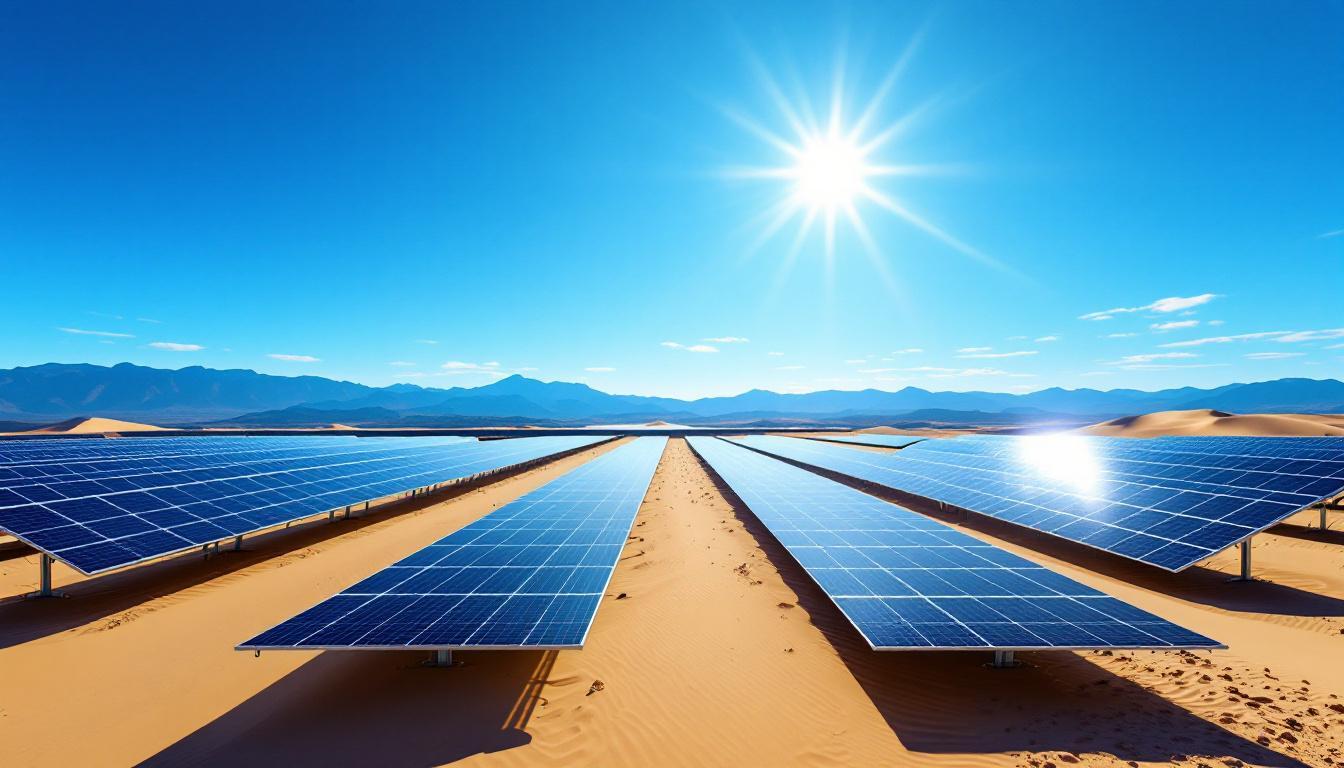
The GCC is sharply shifting its focus towards green energy and renewables, leveraging regional sunshine and wind to diversify economies, boost local industries, and establish itself as a global supplier of green fuels amid ambitious projects and international partnerships.
Based on the original report, the Gulf Cooperation Council (GCC) is now placing a heavy emphasis on green energy and renewables, making it a key part of national strategies across the region. This shift comes as countries try to rebalance their economies, long heavily reliant on oil and gas, toward cleaner sources. The move is described as both practical and strategic. There’s a lot of sunshine and wind in the region, plus rising domestic energy needs and increasing global push for decarbonisation, all of which make renewables both environmentally and economically attractive.
Most of the regional plans seem to focus on three main goals. First, they aim to free up more hydrocarbons for export by using low-cost renewables at home to generate electricity. Second, they want to diversify income sources and create jobs in industries like manufacturing, construction, and services. And third, they aim to position GCC countries as competitive suppliers of new energy carriers, like green hydrogen and ammonia, for international markets.
Saudi Arabia, for example, is big on scale, storage, and local manufacturing. Data shows the country has poured a ton of money into the transition, especially through Vision 2030. They’re rapidly expanding solar and wind capacity and upgrading the grid and storage facilities. Notable projects like Sakaka and Dumat Al-Jandal are now joined by massive solar parks and initial industrial clusters focused on renewable manufacturing.
In addition, reports say the Saudi Power Procurement Company is pushing ahead with contracts for thousands of megawatts of new solar projects. They’ve also started tenders for the country’s first large-scale battery energy storage systems, aiming for about 2,000 MW / 8,000 MWh in total capacity designed to provide four-hour power dispatch at key locations. These storage systems are meant to help stabilize the grid as renewable sources become more prominent and support the Kingdom’s goal of reaching 50% renewable electricity by 2030.
An interesting point is Saudi Arabia’s focus on local manufacturing, especially through joint ventures. Industry sources suggest that localizing helps reduce supply chain risks, builds up domestic industrial capacity, and can even cut project costs over time. By combining large-scale power generation, smarter grid management, and local industry, Saudi aims to create a robust, market-ready renewable sector.
Moving over to the UAE, well, they’ve adopted a rather integrated approach. The report highlights their diverse strategy: huge solar parks, nuclear baseload power at Barakah, and research into green hydrogen. They’re emphasizing systems thinking, pairing solar with storage and long-duration energy solutions, deploying both public procurement and international partnerships.
Their diplomatic and commercial efforts, including a significant role at COP28, show that they believe sustainability and economic growth can go hand in hand. For climate-tech players, this means there’s ongoing demand for advanced solar PV, smart grid controls, hydrogen electrolyzer tech, and innovative financing models that can attract institutional investors.
Now, one of the standout features across the Gulf is green hydrogen. It’s seen as a strategic export opportunity. The region’s high renewable capacity factors, land availability, and existing port infrastructure give GCC countries an early advantage in producing green hydrogen and ammonia for export. Projects in Saudi Arabia, Oman, and the UAE already have international offtake agreements and partnerships lined up. If global demand for low-carbon fuels really takes off, well, the Gulf could potentially leverage its expertise in hydrocarbon trading to become a top supplier of hydrogen-based fuels, provided the costs come down and logistical and certification hurdles are addressed.
Of course, these positive prospects come with challenges. The economic benefits are clear, lower system costs, less domestic fuel use, and new jobs in construction, operations, maintenance, manufacturing, and digital services. International collaboration and transparent procurement are also attracting institutional investors, which can speed things up and make financing cheaper.
But the practical hurdles can’t be ignored. Huge renewable systems will need extensive grid upgrades and sophisticated management tools. Battery storage is crucial, especially long-duration types and hybrid solutions, to balance seasonal variations. Policies need to evolve continuously to incentivise private investment while managing the social and fiscal roles of the traditional oil and gas sectors.
For climate tech companies, these gaps spell opportunity. There’s high demand for smart grids, AI-based asset management, local manufacturing partnerships, and supply chains for green hydrogen. The focus on localization in Saudi Arabia, as well as the UAE’s interest in integrated systems, shows strong market potential for firms that can combine technology with local collaborations and innovative financing.
All in all, this decade is set to define the Gulf’s renewable energy direction. It’s not just about individual projects but a coordinated effort to reshape regional energy systems well before 2030. Success will depend heavily on balancing scale with reliability, deploying generation, storage, and grid tech simultaneously, and on building up local industry capacity.
For those involved in the UAE’s climate tech scene, the message is clear: the Gulf’s shift to renewables creates not only a market but also a valuable platform. Companies offering grid integration, storage, electrolyzers, and manufacturing partnerships stand to benefit a lot. Going forward, policymakers and investors should align regulations, secure financing, and develop skills to make sure the region’s renewables push leads to lasting industrial growth and environmental benefits.
Honestly, it’s pretty exciting to see how this all might unfold, don’t you think?
- https://thegulfentrepreneur.com/green-energy-renewables-pivot-for-2030/ – Please view link – unable to able to access data
- https://news.daleel.gov.sa/energy/saudi-arabias-solar-energy-revolution-2 – Saudi Arabia is making significant progress in renewable energy, especially in solar power, as part of its Vision 2030. The Kingdom aims for 50% of its electricity to come from renewable sources by the decade’s end. To achieve this, it has committed 705 billion riyals (around 188 billion US dollars) to accelerate growth in the sector. In 2023, the Saudi Power Procurement Company launched the qualification process for four major solar projects totaling 3,700 MW. These projects are expected to significantly cut carbon emissions, equivalent to removing 80,000 cars from the roads annually. The Sudair Solar PV Plant, a standout project, recently reached an operational capacity of 1,125 MW, aiming for 1,500 MW.
- https://news.daleel.gov.sa/energy/saudi-arabias-renewable-energy-breakthrough – Saudi Arabia has embarked on a significant renewable energy initiative with the launch of its first battery energy storage system (BESS) projects. This tender involves a substantial 2,000 MW/8,000 MWh capacity, distributed across four projects under a build-own-operate (BOO) model. The Saudi Power Procurement Company (SPPC) has outlined that these projects will be located strategically throughout the Kingdom. Two 500 MW facilities are planned for the Makkah region, while Al-Qassim and Hail provinces will each host similar capacity projects. Each project is designed to provide four-hour storage, crucial for grid stability and enhancing renewable energy integration. This initiative is a core component of Saudi Arabia’s Vision 2030, aiming to achieve a 50% renewable energy share in its electricity mix. By reducing dependency on fossil fuels, the Kingdom seeks to balance renewable energy generation and ensure a reliable power supply.
- https://saudi.tpg.media/saudi-arabias-green-energy-revolution/ – Saudi Arabia is one of the world’s most promising markets for solar power, thanks to its abundant sunlight throughout the year. The Kingdom’s Sakaka Solar Power Plant, producing 300 megawatts, is the first large-scale renewable energy project under Vision 2030. NEOM’s “The Line” city is expected to be powered entirely by solar and other renewables. Saudi Arabia’s first utility-scale wind farm, the Dumat Al-Jandal project in Al-Jouf, generates 400 megawatts, providing energy for over 70,000 homes. With the Kingdom’s diverse topography, wind power is becoming a crucial component of the renewable strategy. Saudi Arabia is leading global efforts to develop and export green hydrogen. NEOM’s $5 billion hydrogen plant, in collaboration with Air Products and ACWA Power, is projected to produce 650 tons of green hydrogen daily by 2026. The hydrogen will fuel sustainable transport solutions, both locally and internationally.
- https://news.daleel.gov.sa/energy/saudi-arabia-s-renewable-energy-revolution-vision-2030-in-action – Saudi Arabia is developing intelligent energy grids that optimise the integration of renewable sources. Opportunities for startups include developing AI-based tools for grid management and predictive maintenance. The global smart grid market is projected to grow to $92 billion by 2030, with Saudi Arabia being a key driver in this sector. Saudi Arabia is also advancing organic beekeeping as part of its broader sustainability goals. More than 15,000 beekeepers now use modern techniques, supported by government funding and certification. Afforestation and native plant restoration efforts have increased honey production by 50% over the past decade, enabling exports to markets in Europe and the United States. The $37 million Saudi Reef programme further supports this sector by funding breeding and disease prevention. International collaboration is at the heart of Saudi Arabia’s renewable push. Projects like Rabigh 2 and Al Sadawi involve partners from France, China, and South Korea, facilitating technology transfer and financing. According to the Associated Press, the solar market is projected to reach $7.72 billion by 2030, drawing in contractors and investors, while transparent procurement processes reduce risk for institutional capital.
- https://news.daleel.gov.sa/energy/saudi-arabia-expands-renewable-energy-manufacturing – The Public Investment Fund (PIF) of Saudi Arabia has entered into three new joint ventures (JVs) aimed at advancing the localisation of renewable energy manufacturing within the Kingdom. These ventures are a strategic move to align with the goals of the Saudi Ministry of Energy and support the nation’s ambitious Vision 2030 plan. The collaborations will bring together PIF’s Renewable Energy Localisation Company (RELC) and global industry leaders to boost the domestic production of solar and wind power equipment. These ventures mark a significant step in Saudi Arabia’s pursuit of becoming a key player in the renewables sector. RELC’s partnerships are designed to meet the increasing demand for renewable energy locally and internationally, while also bolstering the Saudi supply chains. The strategy aims to diversify electricity production sources and reduce reliance on liquid fuels.
- https://scavo.sa/ar/content-hub/5-major-renewable-projects-driving-saudi-arabias-renewable-energy-goals/ – Five major renewable energy projects are shaping Saudi Arabia’s clean energy future and accelerating its progress toward sustainability. The Al Kahfah Solar Plant, with a planned capacity of 1,425 megawatts (MW), is designed to supply electricity to approximately 400,000 homes. It is part of a broader effort to develop 4.55 GW of renewable energy capacity in the country. Once operational, Al Kahfah will play a crucial role in reducing dependency on fossil fuels while cutting carbon emissions and supporting the national grid with clean electricity. The Haden and Al-Muwaih Solar Photovoltaic (PV) projects, both located in the Makkah region, represent one of the most significant solar energy initiatives in Saudi Arabia. With a combined capacity of 4,000 MW, these projects will make a substantial contribution to the national grid. Once completed, these solar plants will significantly boost Saudi Arabia’s efforts to reach its renewable energy capacity target of 130 GW by 2030. The Al-Khushaybi PV Project, located in Qassim Province, is another high-capacity solar power plant adding to Saudi Arabia’s renewable energy mix. With a planned output of 1,500 MW, this solar farm will generate enough clean electricity to power hundreds of thousands of homes, supporting national sustainability goals and reducing the country’s reliance on oil-fired power generation. Large-scale projects like Al-Khushaybi align with Saudi Arabia’s broader energy strategy of developing cost-effective, large-capacity solar installations that maximise efficiency and output.
Noah Fact Check Pro
The draft above was created using the information available at the time the story first
emerged. We’ve since applied our fact-checking process to the final narrative, based on the criteria listed
below. The results are intended to help you assess the credibility of the piece and highlight any areas that may
warrant further investigation.
Freshness check
Score:
7
Notes:
The narrative presents a recent shift in GCC countries towards green energy and renewables, aligning with their Vision 2030 goals. While similar themes have been discussed in prior reports, the specific details and projects mentioned appear to be current. However, the article’s publication date is not provided, making it challenging to assess its exact freshness. The lack of a publication date is a significant concern. Additionally, the article’s URL suggests it originates from a press release, which typically warrants a higher freshness score. However, without confirmation, this remains uncertain. The absence of a publication date and clear sourcing raises questions about the article’s timeliness and origin. ([gulfmagazine.co](https://gulfmagazine.co/gccs-bold-leap-into-renewable-energy-a-greener-t/?utm_source=openai))
Quotes check
Score:
8
Notes:
The article includes direct quotes attributed to industry sources and reports. However, without specific citations or references, it’s difficult to verify the authenticity and originality of these quotes. The lack of verifiable sources for the quotes is a notable concern.
Source reliability
Score:
4
Notes:
The article is hosted on thegulfentrepreneur.com, a website that does not appear to be widely recognized or associated with established news organizations. The absence of a publication date and clear sourcing further diminishes the credibility of the narrative. The lack of verifiable sources and the obscure nature of the website are significant concerns.
Plausability check
Score:
6
Notes:
The claims about GCC countries’ renewable energy targets and projects are plausible and align with known initiatives. However, the lack of specific citations or references makes it difficult to fully verify the accuracy of the information presented. The absence of verifiable sources and the lack of a publication date are notable concerns.
Overall assessment
Verdict (FAIL, OPEN, PASS): FAIL
Confidence (LOW, MEDIUM, HIGH): HIGH
Summary:
The narrative presents plausible information about GCC countries’ renewable energy initiatives. However, the absence of a publication date, clear sourcing, and the obscure nature of the hosting website raise significant concerns about the article’s credibility and timeliness. The lack of verifiable sources and the absence of a publication date are major risks that undermine the overall reliability of the narrative.


