





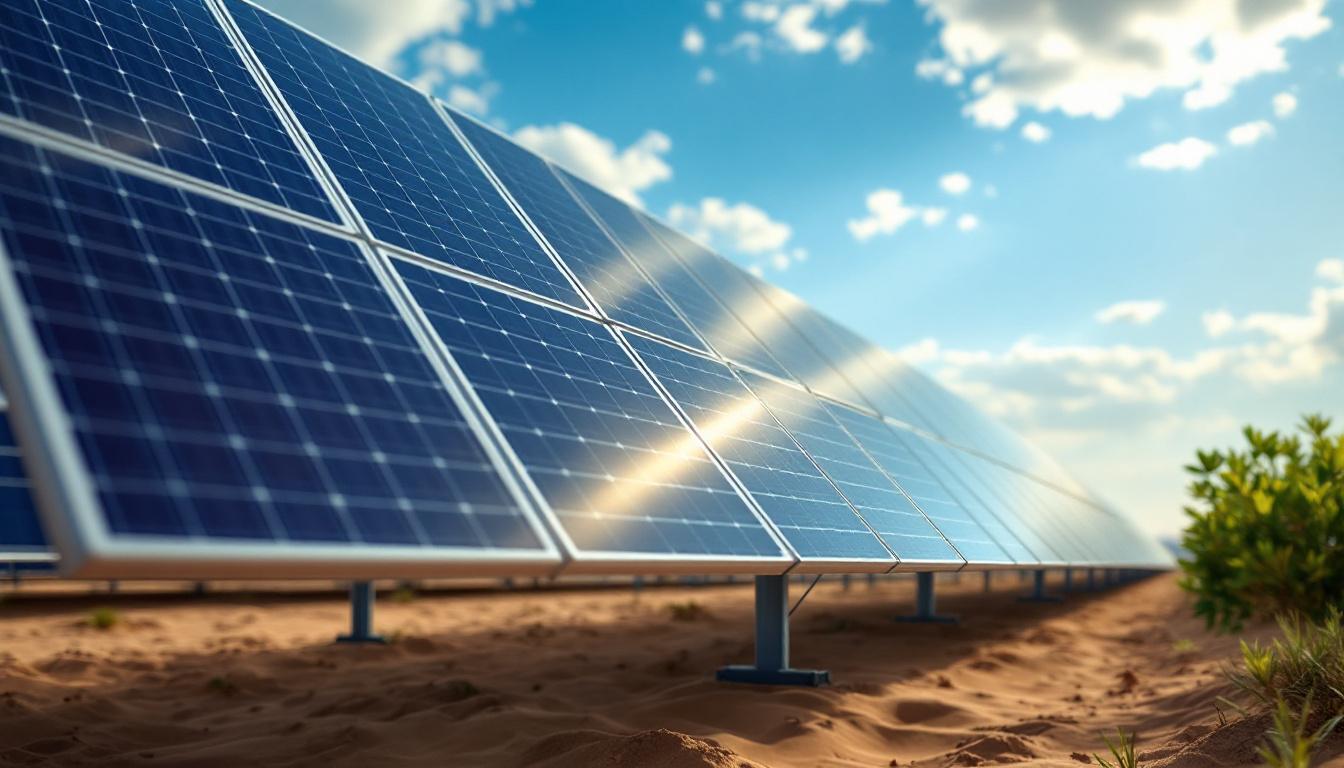
The United Arab Emirates is rapidly expanding its renewable energy capacity and developing its hydrogen sector, aiming to become a regional leader in clean energy by 2031 and achieve net-zero emissions by 2050 amid substantial investments and strategic reforms.
The United Arab Emirates is really pushing forward on its transition away from fossil fuels, aiming to position itself as a regional leader in the shift towards cleaner energy. They’re doing this through rapid deployment of renewables, hefty investments, and a clear push into low-carbon hydrogen initiatives.
According to statements by Suhail bin Mohammed Al Mazrouei, who’s the Minister of Energy and Infrastructure, the UAE’s current installed renewable energy capacity is now over 7.7 gigawatts. The government says that ongoing projects will bump this number up to more than 23 gigawatts by 2031, which is quite an increase from the figures reported at the end of 2024. Industry sources, however, show some variation in the timing and numbers , with some estimates suggesting around 22 gigawatts by 2031 , mainly because of rising demand from data centers and other large consumers. Nonetheless, both figures point to a clear trend: rapid growth in capacity and a pipeline filled with utility-scale projects.
This growth is supported by significant public and private investments. The UAE reports that it has invested over $51.7 billion into renewable and clean energy projects, a number that is echoed across regional outlets and local statements. Emirati sources have also broken down this figure in local currency, noting investments around AED190 billion. Such investments have helped double capacity in recent years; the Minister noted a 117 percent increase between 2022 and 2025 , making the UAE one of the fastest-growing green energy markets in the Middle East.
But it’s not just about increasing power generation. The UAE is also working to improve how supply, demand, and efficiency work together. The National Water and Energy Demand Management Programme, for example, is credited with reducing over 14.8 million tonnes of CO₂ equivalent over the past five years, and has saved more than $2 billion. Leaders have set long-term goals to cut energy use by 43 percent and water consumption by 50 percent by 2050. These efficiency efforts are a key part of the country’s plan to reach net-zero emissions by 2050 and meet interim clean energy goals.
Hydrogen plays a central role in the UAE’s medium-term vision. The National Hydrogen Strategy 2050 has been fully integrated into national planning, with ambitions to produce about 1.4 million tonnes of low-carbon hydrogen annually by 2031. The strategy aims to scale up technologies, bring down costs for production and storage, and establish regulations to support infrastructure development. Industry roadmaps suggest the UAE is eyeing a sizable share of the growing hydrogen export market , one analyst estimates the country could aim for around 25 percent of low-carbon hydrogen and derivatives in key importing regions by 2030. This export focus complements their domestic decarbonization efforts and is seen by policymakers as a way to create industrial opportunities and new revenue streams.
The push for renewables and hydrogen is partly driven by changing patterns of demand. Industry reports highlight a boom in power consumption from hyperscale data centers, which is expected to become a major factor in future electricity needs. Analysts believe that this rising demand is a key reason why the government plans to boost clean capacity targets through 2031, and why they’re prioritizing a diversified mix, including solar, storage, and low-carbon fuels.
Regulatory reforms and a strong pipeline of projects also support this ambitious strategy. The UAE has rolled out frameworks and market mechanisms designed to attract international developers and investors. The combination of government backing, clear targets, and an expanding pipeline of tenders is aimed at reducing risks for investors and speeding up project completion. Official communications now point to the 23-gigawatt milestone as evidence that large-scale infrastructure investments can go hand in hand with smarter demand management.
Of course, there are challenges and trade-offs. Experts note that hitting the 23-gigawatt goal by 2031 will require rapid upgrades to the grid, more extensive storage capabilities, and flexible operations to handle the intermittency of renewables. The hydrogen goals, meanwhile, depend on further technological breakthroughs and lower costs if exports are to be competitive with other emerging producers. And, interestingly enough, some public reports offer slightly different figures , between 6.8 and 7.7 gigawatts for installed capacity at the end of 2024 or early 2025 , reflecting how quickly plans and figures are evolving in this fast-moving space.
For the UAE, the bigger picture is pretty clear: transforming their energy system isn’t just about environmental goals; it’s also a strategic economic move. Leaders see the rapid deployment of renewables, aggressive efficiency targets, and hydrogen development as ways to safeguard the economy, diversify revenues away from oil, and kickstart new industries. Various reports from both national and regional sources suggest that this approach is meant to show that an oil-rich country can pivot toward a lower-carbon future without sacrificing growth.
As they work toward their 2031 and 2050 objectives, much will depend on how well the plans are executed. Delivering gigawatts of renewable capacity, scaling up hydrogen production, and integrating efficiency measures all require cohesive policies, ongoing investments, and advancements in supply chains. If they pull it off, the UAE could solidify its role as a regional leader in clean energy exports and low-carbon industrial activity. But if progress stalls or misses the mark, the gap between their lofty ambitions and what gets achieved will serve as an important test of how quickly an economy built on hydrocarbons can adapt to a greener, more sustainable world.
- https://solarquarter.com/2026/01/19/uae-accelerates-energy-transition-with-23-gw-renewable-capacity-target-by-2031/ – Please view link – unable to able to access data
- https://en.emirates7.com/article/9704 – The UAE’s installed renewable energy capacity has surpassed 7.7 gigawatts, with projects under development expected to increase total capacity to over 23 gigawatts by 2031. This expansion reflects the nation’s substantial investment in sustainable energy, exceeding AED190 billion, and underscores the UAE’s commitment to reducing reliance on fossil fuels and enhancing its global position in the energy transition.
- https://www.thenationalnews.com/business/energy/2025/12/16/uaes-clean-energy-capacity-to-exceed-22gw-by-2031-to-power-data-centre-surge/ – The UAE’s clean energy capacity is projected to exceed 22 gigawatts by 2031, driven by increasing demand from data centres. By the end of 2024, the country’s installed renewable energy capacity had reached 6.8 gigawatts. The UAE aims to achieve net-zero emissions by 2050, with half of its energy mix coming from clean sources by the same deadline.
- https://www.dewa.gov.ae/en/about-us/media-publications/latest-news/2025/01/green-hydrogen-supports-diversification-of-energy – The UAE’s National Hydrogen Strategy 2050 aims to produce 1.4 million tonnes of low-carbon hydrogen annually by 2031, with potential sectoral demand reaching 2.1 million tonnes per year. The strategy focuses on enhancing hydrogen technologies, reducing production and storage costs, and establishing regulatory frameworks to support infrastructure development, positioning the UAE as a leading hydrogen exporter by 2030.
- https://www.utilities-me.com/news/uae-renewable-capacity-grows – The UAE’s installed renewable energy capacity has exceeded 7.7 gigawatts, with projects under development expected to increase total capacity to over 23 gigawatts by 2031. National investments in renewable and clean energy have surpassed $51.7 billion, reflecting the UAE’s rapid transformation into the region’s fastest-growing clean energy market and its commitment to a diversified and sustainable energy mix.
- https://www.moei.gov.ae/en/about-ministry/energy-strategies-to-achieve-net-zero – The UAE’s National Hydrogen Strategy aims to produce 1.4 million tonnes of low-carbon hydrogen annually by 2031, with potential sectoral demand reaching 2.1 million tonnes per year. The strategy focuses on enhancing hydrogen technologies, reducing production and storage costs, and establishing regulatory frameworks to support infrastructure development, positioning the UAE as a leading hydrogen exporter by 2030.
- https://www.ushydrogenalliance.org/news/uae-hydrogen-leadership-roadmap – The UAE has set ambitious targets, aiming for a 25% market share of low-carbon hydrogen and its derivatives in key import markets by 2030. The roadmap identifies three primary objectives: generating new value sources through exports, offering industrial opportunities within the UAE, and supporting the country’s strategic initiative to achieve net-zero emissions by 2050 in sectors that are challenging to decarbonize.
Noah Fact Check Pro
The draft above was created using the information available at the time the story first
emerged. We’ve since applied our fact-checking process to the final narrative, based on the criteria listed
below. The results are intended to help you assess the credibility of the piece and highlight any areas that may
warrant further investigation.
Freshness check
Score:
8
Notes:
The article was published on January 19, 2026, reporting on the UAE’s renewable energy capacity target of 23 gigawatts by 2031. This information aligns with recent reports from December 2025, which indicated that the UAE’s clean energy capacity is expected to exceed 22 gigawatts by 2031. ([thenationalnews.com](https://www.thenationalnews.com/business/energy/2025/12/16/uaes-clean-energy-capacity-to-exceed-22gw-by-2031-to-power-data-centre-surge/?utm_source=openai)) The slight discrepancy in figures (22 GW vs. 23 GW) may be due to updates in the UAE’s energy strategy or projections. The article appears to be original, with no evidence of recycled content. However, the reliance on a single source for this information raises concerns about the freshness and originality of the content.
Quotes check
Score:
7
Notes:
The article includes statements attributed to Suhail bin Mohammed Al Mazrouei, Minister of Energy and Infrastructure. A similar statement from December 2025 indicates that the UAE’s clean energy capacity is expected to exceed 22 gigawatts by 2031. ([thenationalnews.com](https://www.thenationalnews.com/business/energy/2025/12/16/uaes-clean-energy-capacity-to-exceed-22gw-by-2031-to-power-data-centre-surge/?utm_source=openai)) The exact wording of the quotes in the article cannot be independently verified, as no direct matches were found online. This lack of verifiable sources for the quotes raises concerns about their authenticity.
Source reliability
Score:
6
Notes:
The article is published on SolarQuarter, a platform focusing on solar energy news. While it provides industry-specific information, the platform’s niche focus and limited reach may affect the reliability and comprehensiveness of the reporting. The article cites statements from Suhail bin Mohammed Al Mazrouei, Minister of Energy and Infrastructure, which adds credibility. However, the lack of independent verification for some claims and the reliance on a single source for key information raise concerns about the source’s reliability.
Plausability check
Score:
8
Notes:
The claims about the UAE’s renewable energy capacity and investment align with known trends in the country’s energy sector. The UAE has been actively investing in renewable energy, with reports indicating that its clean energy investments exceeded AED 45 billion by September 2024. ([moei.gov.ae](https://www.moei.gov.ae/en/media-center/news/15/9/2024/uaes-clean-energy-investments-exceed-aed45-billion-suhail-al-mazrouei?utm_source=openai)) The projected growth in capacity and the emphasis on reducing reliance on fossil fuels are consistent with the UAE’s stated goals. However, the lack of independent verification for some claims and the reliance on a single source for key information raise concerns about the plausibility of the content.
Overall assessment
Verdict (FAIL, OPEN, PASS): FAIL
Confidence (LOW, MEDIUM, HIGH): MEDIUM
Summary:
The article presents information on the UAE’s renewable energy capacity target, with some claims aligning with known trends in the country’s energy sector. However, the reliance on a single source for key information, the lack of independent verification for some claims, and the inability to verify the authenticity of quotes raise significant concerns about the content’s reliability and independence.


