





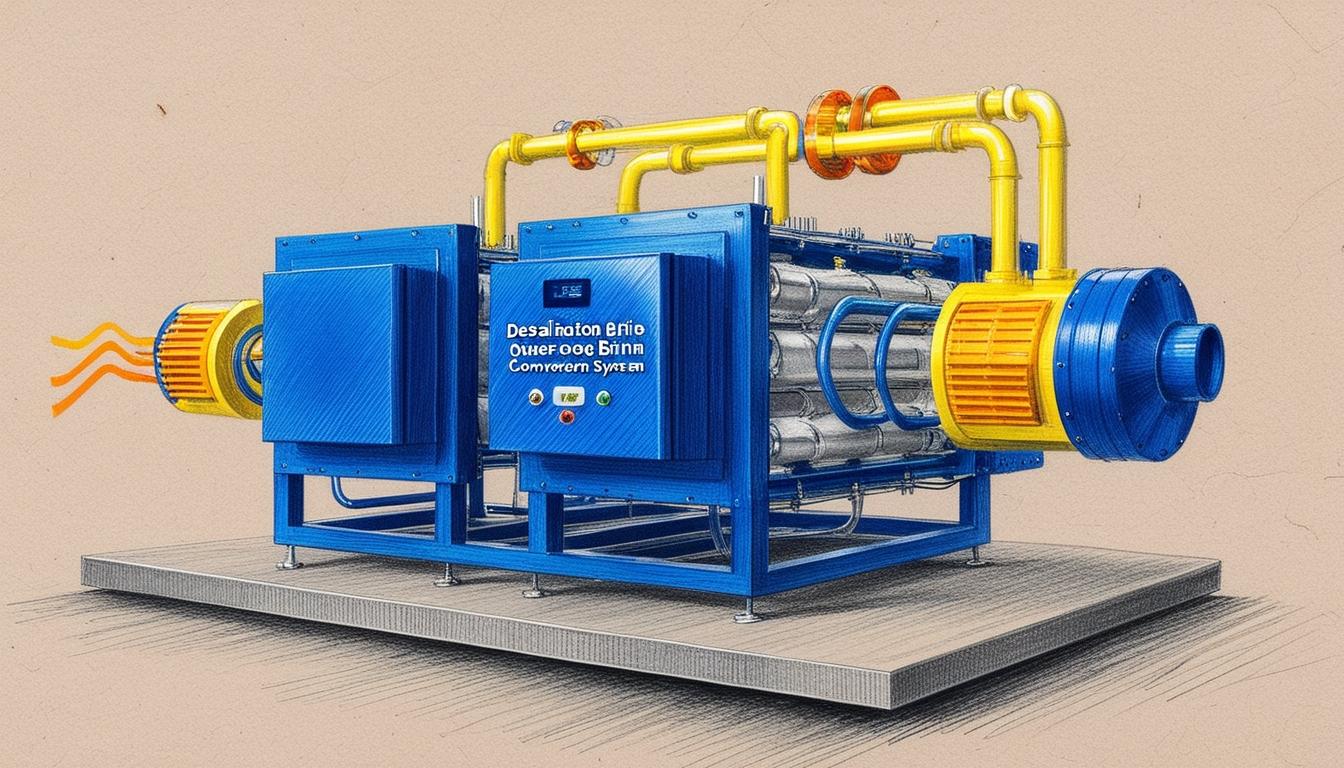
In a significant advancement towards sustainable industrial practices, Singapore-based MediSun Energy has partnered with EMSTEEL to unveil Project Elixir, the first pilot system in the UAE designed to convert desalination brine into renewable blue energy and magnesium carbonate. This initiative, announced on May 23, represents a pivotal movement toward embracing circular economy principles, transforming what would typically be regarded as an industrial byproduct into valuable resources.
The project is supported by a robust AED 100 million fund dedicated to research and development, launched in 2022 by ADQ, a sovereign investment entity focused on enhancing infrastructure and supply chain resilience. As part of the ADQ Growth Lab, this funding aims to foster innovative solutions across vital sectors within the UAE’s economy, underscoring a commitment to advancing technological breakthroughs in water management and energy production.
At the heart of Project Elixir will be the installation of two specialised systems at EMSTEEL’s facility in Abu Dhabi. The WEGen RED System is designed to process 500 cubic metres of brine daily, using Reverse Electrodialysis (RED) to generate blue energy while consuming significantly less energy than traditional desalination methods. Complementing this, the WEGen Green Pilot will process 30 cubic metres of brine per day, capturing carbon dioxide to produce magnesium carbonate, a sustainable substitute for dololime used in steelmaking. Together, these systems exemplify how the byproducts of desalination can not only mitigate waste but also yield renewable power and low-carbon industrial inputs, pivotal for the nation’s decarbonisation goals.
The magnesium carbonate produced through this innovative process will be trialled in EMSTEEL’s electric arc furnace operations, promising a reduction in carbon emissions associated with conventional steel production additives. Engineer Saeed Ghumran Al Remeithi, Group CEO of EMSTEEL, remarked that this partnership with MediSun Energy represents a significant leap in redefining industrial sustainability. He stated, “The ability to convert desalination brine into clean energy and valuable materials directly supports our decarbonisation strategy and aligns with national objectives for circularity and innovation.”
Dusun Kim, CEO of MediSun Energy, echoed this sentiment, emphasising that the pilot project is a breakthrough in industrial sustainability within the UAE. By converting brine waste into clean energy and valuable materials, it sets a precedent for a circular model in future steelmaking. The pilot is scheduled for installation by mid-2025, with MediSun overseeing engineering, installation, and operational aspects, while Emirates Electrical & Instrumentation Company will assist in local integration efforts.
This initiative aligns with a broader trend in the UAE, where multiple ventures are exploring innovative ways to handle brine waste. For instance, in November 2023, Utico, in collaboration with China’s Shandong Tianyi Chemical Corporation, announced plans to extract industrial chemicals from brine waste in Ras Al Khaimah, further highlighting efforts to diminish the environmental impact of brine. Researchers at UAE University are also working on methods to make desalination processes more sustainable by integrating reverse osmosis with reverse electrodialysis, potentially recovering significant energy and reducing CO₂ emissions.
The environmental implications of brine management are critical, given the potential harm it can cause to marine ecosystems if not handled properly. Historically, the discharge from desalination plants has raised concerns about the ecological effects of high salinity water returned to coastal environments. Initiatives like the UAE’s “Rethink Brine” campaign aim to explore innovative solutions for brine discharge, focusing on both environmental sustainability and practical resource recovery.
As such, Project Elixir not only represents an important step towards addressing brine disposal challenges—an issue that resonates through other industrial efforts in the region—but also positions the UAE as a leader in adopting sustainable practices. By transforming a problematic waste product into energy and materials, the project anticipates fostering a more circular economy, setting the stage for future innovations in the management of industrial waste and resource recovery.
Reference Map:
- Paragraph 1 – [1]
- Paragraph 2 – [1], [2]
- Paragraph 3 – [1], [3]
- Paragraph 4 – [1], [4]
- Paragraph 5 – [1], [6]
- Paragraph 6 – [3], [7]
Source: Noah Wire Services
- https://thefinanceworld.com/uae-unveils-first-pilot-to-turn-desalination-brine-into-blue-energy/ – Please view link – unable to able to access data
- https://technicalreviewmiddleeast.com/water-a-environment/utico-to-extract-industrial-chemicals-from-brine-waste-in-ras-al-khaimah – In November 2023, UAE-based utility provider Utico and China’s Shandong Tianyi Chemical Corporation announced a joint venture to extract industrial chemicals from brine waste in Ras Al Khaimah. The project, covering 20,000 square meters with an investment of AED 160 million, aims to produce calcium bromide and sodium bromide from discarded seawater waste, serving industries like oil & gas and pharmaceuticals. This initiative addresses environmental concerns by reducing brine’s salinity before returning it to the sea. ([technicalreviewmiddleeast.com](https://technicalreviewmiddleeast.com/water-a-environment/utico-to-extract-industrial-chemicals-from-brine-waste-in-ras-al-khaimah?utm_source=openai))
- https://www.timeshighereducation.com/research/united-arab-emirates-university/uae-researchers-are-making-desalination-carbon-neutral-and-more-environmentally-friendly – UAE University researchers are working to make desalination processes more sustainable by integrating reverse osmosis with reverse electrodialysis (RED). Their approach aims to recover up to 20% of the energy used in desalination, generating clean energy from brine and reducing CO₂ emissions. This method also decreases brine salinity before discharging it back into the sea, mitigating environmental impacts. ([timeshighereducation.com](https://www.timeshighereducation.com/research/united-arab-emirates-university/uae-researchers-are-making-desalination-carbon-neutral-and-more-environmentally-friendly?utm_source=openai))
- https://www.neom.com/en-us/our-business/sectors/water/infrastructure/brine-processing – NEOM’s Brine Processing Plant focuses on developing a circular water economy by extracting minerals and metals from brine produced during seawater desalination. The initiative aims to create a revenue stream and environmentally sustainable method for handling desalination by-products, addressing the challenge of brine disposal. ([neom.com](https://www.neom.com/en-us/our-business/sectors/water/infrastructure/brine-processing?utm_source=openai))
- https://sacyr.com/en/-/energia-azul-renovable – Sacyr Water leads the Life HyReward project, aiming to generate renewable ‘blue energy’ from brine produced during desalination. By integrating reverse osmosis with reverse electrodialysis (RED), the project seeks to recover up to 20% of the energy used in desalination processes, reducing CO₂ emissions and decreasing brine salinity before returning it to the sea. ([sacyr.com](https://sacyr.com/en/-/energia-azul-renovable?utm_source=openai))
- https://www.gulfconstructiononline.com/Article/1628550/Innovative_technologies_to_bolster_water_security – The UAE has partnered with Montana Technologies and TenX Investment to deploy AirJoule atmospheric water generators, aiming to generate pure distilled water from air and reduce energy consumption for air-conditioning. Additionally, Emirates Electrical & Instrumentation Company (EEIC) and MediSun Energy have collaborated to integrate MediSun’s osmotic (blue) energy technology into desalination processes, enhancing energy efficiency and brine management. ([gulfconstructiononline.com](https://www.gulfconstructiononline.com/Article/1628550/Innovative_technologies_to_bolster_water_security?utm_source=openai))
- https://arabcenterdc.org/resource/the-costs-and-benefits-of-water-desalination-in-the-gulf/ – Desalination in the Gulf, particularly in the UAE, contributes significantly to global brine production, affecting marine ecology. The brine discharge from desalination plants, often at high temperatures and containing various chemicals, can reduce water oxygen content and harm aquatic life. Initiatives like the UAE’s ‘Rethink Brine’ challenge aim to find innovative uses for brine discharge to mitigate environmental impacts. ([arabcenterdc.org](https://arabcenterdc.org/resource/the-costs-and-benefits-of-water-desalination-in-the-gulf/?utm_source=openai))


