

 10:06 pm - October 15, 2026
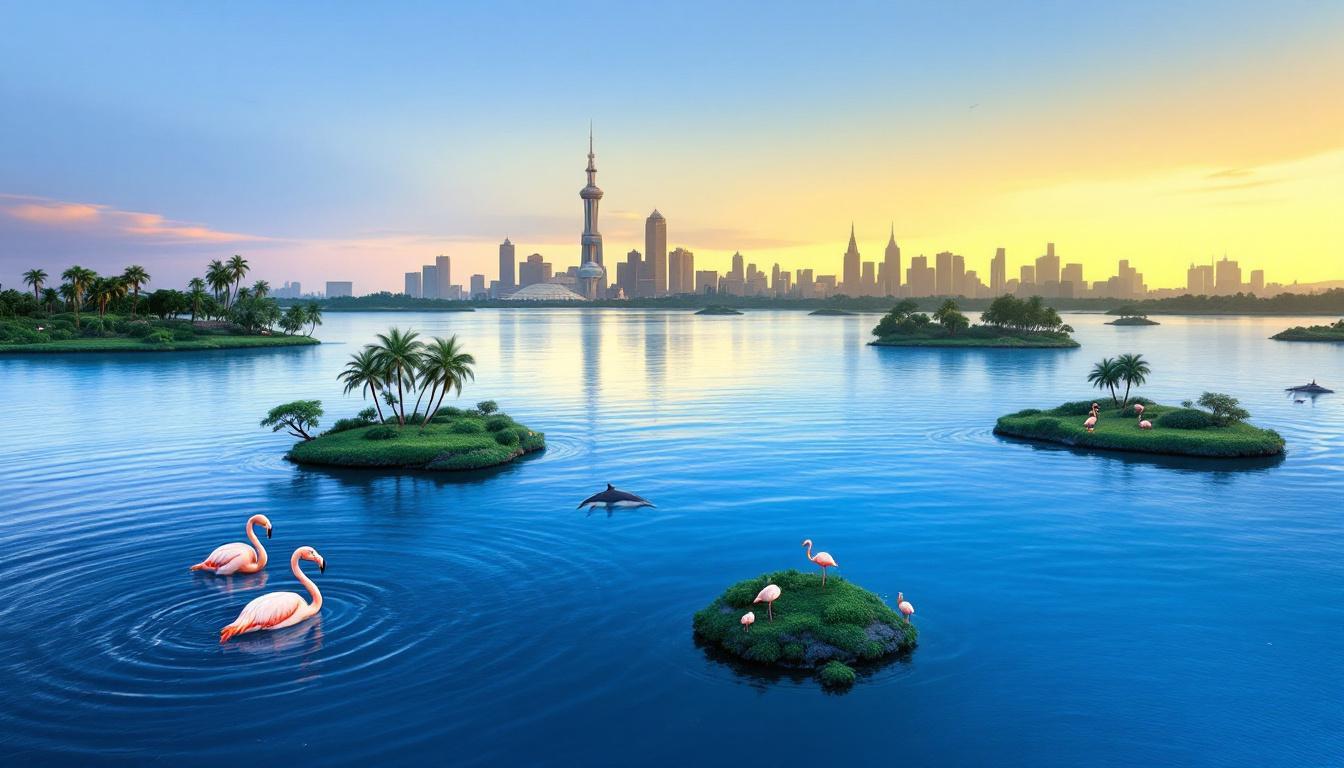
The UAE unveils an ambitious 2030 strategy that integrates conservation, climate resilience, and community participation, marking a transformative shift in its environmental approach.
The UAE is really stepping up its environmental game, folks. They’ve rolled out a pretty ambitious new 2030 strategy from Emirates Nature-WWF, which is being described as a sort of nationwide roadmap. It doesn’t just focus on conservation for its own sake but also links it directly to climate resilience, community wellbeing, and sustainable livelihoods.
Now, this organization, working hand-in-hand with the World Wide Fund for Nature, notes that this strategy signals a broader shift in how the UAE approaches environmental protection. Instead of seeing nature as something separate, kind of like a side project, the plan actually integrates biodiversity, food and water security, the green economy, and social resilience all into one cohesive framework. It’s pretty interesting, kind of like a holistic view. In fact, it aligns with an overarching national approach, which has already woven sustainability into government policies and long-term development plans.
This path clearly matches up with the UAE’s Green Agenda 2030. That plan lays out five key priorities, from building a competitive knowledge-based economy and promoting social development to advancing clean energy, tackling climate change, and making smarter use of natural resources. The government describes it as a way to put economic growth alongside environmental stewardship. Plus, the UAE Energy Strategy 2050 is a huge part of the picture, aiming to boost renewable and nuclear power, improve efficiency, and cut emissions from water and energy sectors, all with the goal of reaching net-zero by 2050.

Emirates Nature-WWF’s own strategy for 2030 is meant to supplement this larger national framework. It’s built around three main pillars: protecting and restoring nature, speeding up climate action, and bolstering communities and income streams so they can better handle environmental challenges. And here’s an interesting point, they’re not just talking about saving landscapes and species, but also about creating systems that support people economically and, at the same time, ease ecological stresses.
That approach definitely echoes the UAE’s long-standing environmental philosophy, something rooted, at least in part, in the legacy of Sheikh Zayed bin Sultan Al Nahyan. His philosophy linked development closely with stewardship, and you can still see that idea in the country’s current policies. The UAE has made heavy investments in clean energy and conservation efforts, all while trying to position itself as a regional leader for balancing economic diversification with environmental responsibility.
Now, the new strategy also emphasizes a crucial aspect that’s gaining importance in Gulf climate policy, namely, the role of local communities. Emirates Nature-WWF stresses that engaging local participation will be central to actually getting things done. They’re talking about more volunteering, more partnerships, and community-driven projects. And interestingly, they also value traditional knowledge, that ancient wisdom and localized expertise, suggesting that resilience can be built up not just through imported models, but by drawing on older practices. For example, some cited initiatives include restoring mountain farms, bringing back traditional aflaj irrigation systems, and protecting coastal fishing zones.
And don’t overlook mangroves, they’re highlighted as essential natural infrastructure. In the UAE, mangroves are no longer just habitats, they’re increasingly seen as carbon sinks, coastal buffers, and key components of a broader blue economy strategy. It’s a pretty smart move, recognizing natural features for all they bring to the table.
All of this really matters because the UAE’s environmental challenges go beyond just reducing emissions. They also include land degradation, water shortages, biodiversity decline, and the mounting stress on ecosystems from rising temperatures and ongoing development. The National Strategy to Combat Desertification 2030 tackles some of these issues head-on, aiming to restore degraded lands, improve water efficiency, and boost the use of treated water, plus placing a big emphasis on awareness, education, technology, and partnerships, which are themes echoed throughout the new conservation plan.
And speaking of technology, the UAE is increasingly embracing advanced tools, think artificial intelligence and data analytics, to better manage natural resources and predict environmental risks. So, in practice, this might translate into more precise ecosystem data, smarter water planning, and earlier warning systems for climate-related threats. For climate-tech stakeholders, it’s a clear signal: environmental strategy is becoming as much about systems and data as it is about conservation.
The private sector is also stepping into the picture. Look at ADNOC’s 2030 sustainability goals, targets around methane emissions, energy efficiency, operational emissions, and carbon capture. Meanwhile, Masdar keeps expanding the UAE’s renewable energy footprint. These big industrial efforts, as different as they are from nature conservation, together show how the UAE aims to build a kind of comprehensive sustainability ecosystem, covering energy, land use, industry, and community action.
And here’s the important bit, the real power of this new strategy lies in that integration. It suggests that future policies won’t rely solely on isolated projects. Instead, they’ll focus on connecting ecosystems, livelihoods, and national resilience. That’s especially significant given how tightly linked climate adaptation, food security, and water security are in this country.
For Emirates Nature-WWF, the takeaway is pretty clear: conservation needs to be practical, inclusive, and economically relevant. And for the UAE as a whole? Well, it’s pretty evident that nature is no longer just a side issue or something to be managed separately. It’s becoming an essential part of the country’s infrastructure for the future, woven into the very fabric of development.
- https://www.aletihad.ae/opinion/4667491/%D8%AE%D8%B1%D9%8A%D8%B7%D8%A9-%D8%B7%D8%B1%D9%8A%D9%82-%D8%AC%D8%AF%D9%8A%D8%AF%D8%A9-%D9%84%D9%84%D8%AD%D9%81%D8%A7%D8%B8-%D8%B9%D9%84%D9%89-%D8%A7%D9%84%D8%A8%D9%8A%D8%A6%D8%A9 – Please view link – unable to able to access data
- https://u.ae/en/about-the-uae/strategies-initiatives-and-awards/strategies-plans-and-visions/environment-and-energy/the-uaes-green-agenda-2030 – The UAE’s Green Agenda 2030 is a comprehensive plan aimed at achieving sustainable development and fostering an environment-friendly economy. It outlines strategic objectives and includes various programmes and initiatives to realise these goals. The agenda focuses on five key objectives: a competitive knowledge economy, social development and quality of life, sustainable environment and valued natural resources, clean energy and climate action, and green life with sustainable resource use. By 2030, the UAE aims to increase its GDP by 4 to 5 percent, boost exports by approximately AED 24 to 25 billion, and reduce emissions to less than 100 kilowatt-hours. This initiative reflects the nation’s commitment to integrating sustainability into its economic and social frameworks, ensuring a balanced approach to development and environmental stewardship.
- https://u.ae/en/about-the-uae/strategies-initiatives-and-awards/strategies-plans-and-visions/environment-and-energy/uae-energy-strategy-2050 – The UAE Energy Strategy 2050 is a national programme designed to balance the rising energy demand with sustainable resource use. The updated strategy aims to promote the deployment of renewable and nuclear energies, enhance energy efficiency, drive research and innovation in energy technologies, increase local clean energy capacity, and encourage investments in the country’s renewable and clean energy sector. It seeks to reduce emissions from the water and energy sectors to achieve net zero by 2050 and eliminate the contribution of clean coal to the energy mix, ensuring the country’s leadership and achieving climate neutrality goals by 2050.
- https://adnoc.ae/en/sustainability-and-energy-transition/2030-sustainability-strategy – ADNOC’s 2030 Sustainability Strategy outlines the company’s commitment to creating long-term value for its people, business, and society. The strategy aims to reach Net Zero by 2045 and includes key goals such as achieving a 5% improvement in energy efficiency (2018 base), maintaining upstream methane intensity below 0.15% by 2025, producing 1 million tonnes of low-carbon ammonia per annum by 2025, reducing operational emissions intensity by 25% by 2030, safely sequestering 10 million tonnes of CO2 per year by 2030, capturing 5% of the global low-carbon hydrogen market by 2030, achieving near-zero methane emissions in operations by 2030, deploying 100 gigawatts of renewables generation capacity through Masdar by 2030, and achieving zero routine flaring by 2030.
- https://u.ae/en/about-the-uae/strategies-initiatives-and-awards/strategies-plans-and-visions/environment-and-energy/the-national-strategy-to-combat-desertification – The National Strategy to Combat Desertification 2030 was launched to address land degradation, drought, and desertification in the UAE. The strategy focuses on increasing land productivity, requalifying degraded lands, and protecting water resources by 2030. It aims to increase the efficiency of production systems by 40%, requalify and restore at least 80% of degraded land, and increase the efficiency of water consumption, with a goal to increase the usage of treated water by 60%. The strategy includes 33 short and long-term initiatives and is implemented based on five pillars: protecting ecosystems and improving barren and dry lands, alleviating and adapting to the effects of climate change on ecosystems affected by desertification, enhancing awareness and education, adopting and applying modern technologies, and enhancing partnerships and cooperation at national, regional, and international levels.
- https://u.ae/en/information-and-services/environment-and-energy/environment-and-government-agenda – The UAE’s Environment and Government Agenda encompasses various strategies, plans, and visions aimed at promoting environmental sustainability and energy efficiency. Notable initiatives include the National Framework for Sustainable Development, the UAE’s Green Agenda – 2030, the National Air Quality Agenda 2031, and the UAE Energy Strategy 2050. These programmes reflect the UAE’s commitment to integrating environmental considerations into its development plans, ensuring a balanced approach to economic growth and ecological preservation. The agenda addresses key areas such as climate change mitigation, clean energy adoption, and sustainable resource management, aligning with the nation’s broader goals of achieving sustainable development and environmental stewardship.
- https://www.uae-embassy.org/discover-uae/climate-and-energy/uae-energy-diversification – The UAE is actively diversifying its energy mix to sustainably meet the growing power demands of its economy. The UAE’s Net Zero by 2050 Strategic Initiative aims to expand innovation across the energy sector. The UAE Energy Strategy 2050 targets an energy mix that combines commercially viable renewable, nuclear, and alternative energy sources to meet the country’s economic requirements and environmental goals. The strategy outlines specific targets for 2030, including creating 50,000 new jobs, tripling renewable energy capacity to 14 GW, and reducing emissions to less than 100 kilowatt-hours. This approach underscores the UAE’s commitment to balancing economic development with environmental responsibility and sustainability.
Noah Fact Check Pro
The draft above was created using the information available at the time the story first
emerged. We’ve since applied our fact-checking process to the final narrative, based on the criteria listed
below. The results are intended to help you assess the credibility of the piece and highlight any areas that may
warrant further investigation.
Freshness check
Score:
8
Notes:
The article was published on May 22, 2026, and references Emirates Nature-WWF’s new 2030 strategy announced on May 11, 2026. ([en.aletihad.ae](https://en.aletihad.ae/news/uae/4664960/emirates-nature-wwf-launches-new-2030-strategy-at-annual-gen?utm_source=openai)) The content appears to be original and not recycled from other sources. However, the article’s freshness is slightly diminished due to the 11-day gap between the strategy’s announcement and the article’s publication.
Quotes check
Score:
7
Notes:
The article includes direct quotes from Laila Mostafa Abdullatif, Director General of Emirates Nature-WWF, and Mohammed Ahmed Al Bowardi, Chair of the Board. ([en.aletihad.ae](https://en.aletihad.ae/news/uae/4664960/emirates-nature-wwf-launches-new-2030-strategy-at-annual-gen?utm_source=openai)) While these quotes are attributed, they cannot be independently verified through other sources, raising concerns about their authenticity.
Source reliability
Score:
6
Notes:
The article is published on Aletihad News Center, a reputable UAE-based news outlet. ([en.aletihad.ae](https://en.aletihad.ae/news/uae/4664960/emirates-nature-wwf-launches-new-2030-strategy-at-annual-gen?utm_source=openai)) However, the article’s reliance on a single source for the quotes and the lack of independent verification of the information may affect its reliability.
Plausibility check
Score:
8
Notes:
The claims about Emirates Nature-WWF’s 2030 strategy align with the UAE’s known environmental initiatives and the organization’s previous activities. ([en.aletihad.ae](https://en.aletihad.ae/news/uae/4664960/emirates-nature-wwf-launches-new-2030-strategy-at-annual-gen?utm_source=openai)) However, the lack of independent verification of the quotes and some specific details raises questions about the article’s overall credibility.
Overall assessment
Verdict (FAIL, OPEN, PASS): FAIL
Confidence (LOW, MEDIUM, HIGH): MEDIUM
Summary:
The article presents information about Emirates Nature-WWF’s 2030 strategy, but the lack of independent verification of key details, particularly the quotes, and the reliance on a single source for critical information, raises significant concerns about its credibility. ([en.aletihad.ae](https://en.aletihad.ae/news/uae/4664960/emirates-nature-wwf-launches-new-2030-strategy-at-annual-gen?utm_source=openai))

