

 10:04 pm - October 15, 2026
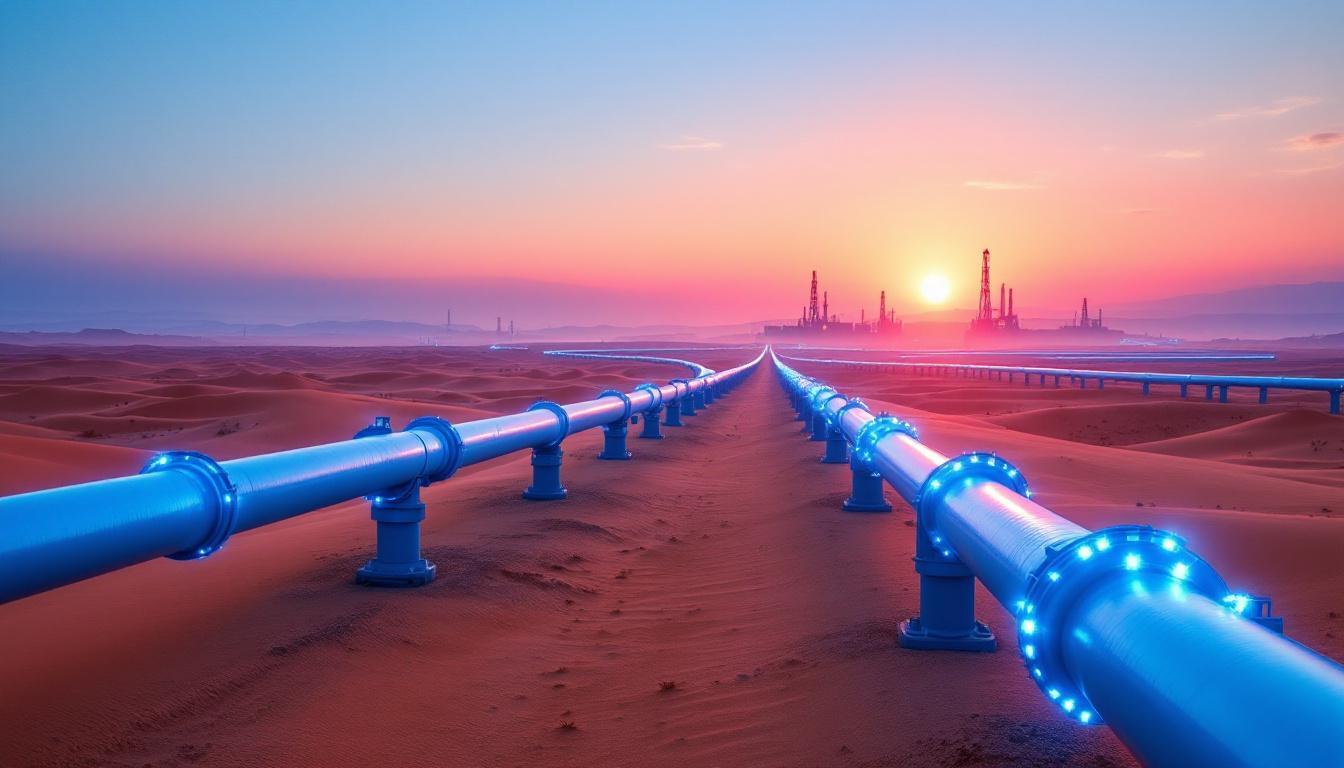
Dr. Sultan Al Jaber highlights the critical need for resilient infrastructure and innovative strategies, including new export routes and AI integration, to safeguard the world’s energy system amidst rising geopolitical tensions and limited spare capacity.
Dr. Sultan Al Jaber took a prominent platform at the Atlantic Council recently to make a pretty compelling argument: the world’s energy system isn’t just being tested by conflicts and geopolitical tensions, but also by a bigger, more fundamental failure , the lack of proper investment in resilience.
He emphasized that governments and companies need to see energy security as more than just counting barrels or ensuring steady production. Instead, it’s about infrastructure routes, storage facilities, spare capacity, and reliable systems. The Strait of Hormuz, for example, remains a real vulnerability for global trade , a choke point that, if disrupted, could set a dangerous precedent for the broader economy.
His comments come at a time when regional conflicts and tensions continue to highlight just how much of the world’s fuel, chemicals, minerals, and manufactured goods still rely on a few narrow maritime chokepoints. According to reports from the Atlantic Council and ADNOC’s own account, the UAE has spent over ten years developing alternative export routes , one notable example being a pipeline to Fujairah that bypasses Hormuz. ADNOC is now rushing to build a second pipeline, which is about halfway finished, with plans to deliver it by 2027.

That project, honestly, has become even more critical given the persistent geopolitical strain on energy markets. Dr. Al Jaber pointed out that the world is dangerously short on spare capacity and that stored reserves have become pretty thin. He warned that the current state of play shows just how quickly supply shocks can ripple out into the wider economy , raising costs for everyone, not just energy consumers but households and businesses too.
He described the situation in clear terms. Hormuz, he said, isn’t just an oil route but also a pathway for liquefied natural gas (LNG), jet fuel, fertilizer, aluminum, helium, critical minerals, plastics, and general cargo. The takeaway? A disruption there wouldn’t just cause fuel shortages; it could impact our food supply, aviation, manufacturing, and even the digital economy.
And it’s not just about energy itself. He tied resilience directly to ADNOC’s investment plans too. The group’s $150 billion five-year budget aims to support current operations, expand capacity, and meet long-term demand. But apparently, the global upstream sector still isn’t investing enough, and the limited spare capacity and storage coverage just aren’t enough for a world that’s so volatile.
Interestingly enough, Dr. Al Jaber also linked energy policy directly to the AI debate. He made the point that artificial intelligence is now a major factor influencing electricity demand and competitiveness, not just some tech story. In effect, he sees the AI race as a kind of “electron race,” where countries that can deliver reliable, scalable, and affordable power will have a big edge.
This approach fits with the broader strategy the UAE has been pushing for a few years now. As the Atlantic Council reported, the country is tying its energy security efforts into industrial policy, high-tech development, and attracting investment. ADNOC, for instance, is broadening its focus beyond traditional hydrocarbons, showing lots of interest in AI infrastructure, data centers, semiconductors, advanced manufacturing, and critical minerals. For the UAE, these aren’t separate agendas but increasingly part of a unified growth model.
Dr. Al Jaber also pointed out that the UAE’s recent departure from OPEC gives it more flexibility to invest and expand. He clarified that this move isn’t about breaking with its partners; rather, it’s about creating long-term value. He believes that global oil demand will stay above 100 million barrels a day into the 2040s, which means the UAE can continue selling low-cost, lower-carbon barrels in new markets.
He further tied this strategy to good US-UAE relations. The two countries, he said, are co-investors in building the economy of the future , covering energy, tech, industry, defense, and trade. Over time, the UAE has poured more than $1 trillion into the US. Today, investments through ADNOC, XRG, and Masdar span across 19 states in America.
Throughout the interview, one of the biggest themes was trust, especially in crises. Dr. Al Jaber stressed that resilience is built beforehand , well before the shocks hit. He pointed to how the UAE has managed to keep energy flowing, airports open, and businesses running, even during recent attacks or regional unrest. These efforts, he said, have boosted investor confidence and reinforced their economic and infrastructure choices.
He also argued that governments can’t just bolt on AI onto existing systems and expect them to handle disruption effectively. AI has to be woven into the core of operations, because speed in analysis and decision-making is critical when supply chains are under pressure. This is especially relevant for Gulf countries, where digital ambitions are growing hand-in-hand with efforts to keep power, logistics, and industry reliable.
The whole discussion was set against a backdrop of concerns about how fragile the global energy system really is. Dr. Al Jaber mentioned how current conflicts have already forced emergency measures worldwide, showing how quickly shocks can ripple through inflation, transport, and fertilizer costs. And, quite frankly, that means every farm, factory, and family feels the effects.
He wrapped up by calling on energy leaders to gather later this year in Abu Dhabi for events like ENACT Majlis and ADIPEC 2026. His message was clear: in an era of conflict, shifting trade routes, and AI breakthroughs, energy security depends just as much on solid infrastructure and redundancy as it does on barrels being in the ground.
- https://www.webwire.com/ViewPressRel.asp?aId=355022 – Please view link – unable to able to access data
- https://www.atlanticcouncil.org/event/the-future-of-energy-in-a-new-geopolitical-order-with-dr-sultan-al-jaber/ – In a virtual AC Front Page conversation, Dr. Sultan Al Jaber, UAE Minister of Industry and Advanced Technology, discussed the impact of geopolitical disruptions on global energy markets. He highlighted the need for nations to build resilient and secure energy systems, emphasizing the UAE’s evolving energy strategy following its departure from OPEC. The discussion also covered the convergence of energy, AI, and advanced technology, as well as the US-UAE partnership in energy security and industrial growth. ([atlanticcouncil.org](https://www.atlanticcouncil.org/event/the-future-of-energy-in-a-new-geopolitical-order-with-dr-sultan-al-jaber/?utm_source=openai))
- https://www.adnoc.ae/en/news-and-media/press-releases/2026/new-investment-ai-and-freedom-of-navigation-key-to-building-a-resilient-energy-system – Dr. Sultan Al Jaber, UAE Minister of Industry and Advanced Technology and ADNOC CEO, emphasized the importance of renewed infrastructure investment and commitment to freedom of navigation through the Strait of Hormuz to enhance global energy resilience. He announced ADNOC’s plan to accelerate the construction of a second pipeline to double export capacity through Fujairah Port, bypassing the Strait of Hormuz. The initiative aims to strengthen the global energy economy by diversifying export routes and ensuring uninterrupted energy supply. ([adnoc.ae](https://www.adnoc.ae/en/news-and-media/press-releases/2026/new-investment-ai-and-freedom-of-navigation-key-to-building-a-resilient-energy-system?utm_source=openai))
- https://www.adnoc.ae/en/adnoc-pipelines/about-us/who-we-are – Abu Dhabi Crude Oil Pipeline LLC (ADCOP), a wholly owned subsidiary of ADNOC, operates a 406 km pipeline transporting crude oil from ADNOC Onshore’s collection center in Abu Dhabi to the Fujairah oil export terminal. This pipeline provides access to international shipping routes, allowing a significant portion of the UAE’s crude oil production to be exported directly to the Arabian Sea. The strategic location of Fujairah Port enables ADNOC to diversify its export routes and enhance energy resilience. ([adnoc.ae](https://adnoc.ae/en/adnoc-pipelines/about-us/who-we-are?utm_source=openai))
- https://www.atlanticcouncil.org/news/transcripts/the-ai-race-is-not-just-about-code-its-about-gigawatts-says-the-uaes-sultan-al-jaber/ – Dr. Sultan Al Jaber, UAE Minister of Industry and Advanced Technology, highlighted the significant energy demands of artificial intelligence (AI) during his speech at the 2025 Global Energy Forum. He noted that AI’s energy consumption is substantial, with a single ChatGPT query using ten times more energy than a Google search. Al Jaber emphasized the need for coordinated efforts to meet this demand, including policy support, infrastructure development, and investment in energy solutions. ([atlanticcouncil.org](https://www.atlanticcouncil.org/news/transcripts/the-ai-race-is-not-just-about-code-its-about-gigawatts-says-the-uaes-sultan-al-jaber/?utm_source=openai))
- https://www.atlanticcouncil.org/news/press-releases/atlantic-council-to-host-ninth-global-energy-forum-in-washington-dc/ – The Atlantic Council announced the ninth Global Energy Forum, scheduled for June 17–18, 2025, in Washington, DC. The forum aims to bring together top energy and policy leaders to discuss global energy strategy, focusing on energy security and economic competitiveness. Senior government officials, including US Secretary of Energy Chris Wright and UAE Minister of Industry and Advanced Technology Dr. Sultan Ahmed Al Jaber, are expected to participate. ([atlanticcouncil.org](https://www.atlanticcouncil.org/news/press-releases/atlantic-council-to-host-ninth-global-energy-forum-in-washington-dc/?utm_source=openai))
- https://www.atlanticcouncil.org/commentary/transcript/dr-sultan-al-jaber-speaks-at-the-opening-of-abu-dhabi-sustainability-week-and-world-future-energy-summit/ – At the opening of Abu Dhabi Sustainability Week and the World Future Energy Summit in January 2018, Dr. Sultan Al Jaber, UAE Minister of State and ADNOC CEO, emphasized the critical goal of ensuring sustainable development. He highlighted the rapid pace of technological innovation and its impact on the energy sector, stressing the importance of adapting to these changes to meet the world’s growing energy needs. ([atlanticcouncil.org](https://www.atlanticcouncil.org/commentary/transcript/dr-sultan-al-jaber-speaks-at-the-opening-of-abu-dhabi-sustainability-week-and-world-future-energy-summit/?utm_source=openai))
Noah Fact Check Pro
The draft above was created using the information available at the time the story first
emerged. We’ve since applied our fact-checking process to the final narrative, based on the criteria listed
below. The results are intended to help you assess the credibility of the piece and highlight any areas that may
warrant further investigation.
Freshness check
Score:
8
Notes:
The article was published on May 20, 2026, and reports on Dr. Sultan Al Jaber’s recent statements at an Atlantic Council event. ([adnoc.ae](https://www.adnoc.ae/en/news-and-media/press-releases/2026/new-investment-ai-and-freedom-of-navigation-key-to-building-a-resilient-energy-system?utm_source=openai)) Similar information has been reported by other reputable sources, such as Gulf News and Investing.com, indicating that the content is current and not recycled. ([gulfnews.com](https://gulfnews.com/business/energy/adnoc-ceo-says-hormuz-bypass-pipeline-nearly-50-complete-1.500547573?utm_source=openai))
Quotes check
Score:
7
Notes:
The article includes direct quotes from Dr. Al Jaber, such as: “Right now, too much of the world’s energy still moves through too few chokepoints.” ([adnoc.ae](https://www.adnoc.ae/en/news-and-media/press-releases/2026/new-investment-ai-and-freedom-of-navigation-key-to-building-a-resilient-energy-system?utm_source=openai)) These quotes are consistent with those found in other reputable sources, suggesting they are accurately reported. However, without access to the original speech or transcript, full verification of the quotes’ authenticity is not possible.
Source reliability
Score:
6
Notes:
The article originates from WebWire, a press release distribution service. ([adnoc.ae](https://www.adnoc.ae/en/news-and-media/press-releases/2026/new-investment-ai-and-freedom-of-navigation-key-to-building-a-resilient-energy-system?utm_source=openai)) While press releases can provide timely information, they may lack independent verification. The content is corroborated by other reputable sources, such as Gulf News and Investing.com, which enhances its reliability. ([gulfnews.com](https://gulfnews.com/business/energy/adnoc-ceo-says-hormuz-bypass-pipeline-nearly-50-complete-1.500547573?utm_source=openai))
Plausibility check
Score:
8
Notes:
The claims made in the article align with known developments in the UAE’s energy sector, including the construction of a second pipeline to bypass the Strait of Hormuz. ([gulfnews.com](https://gulfnews.com/business/energy/adnoc-ceo-says-hormuz-bypass-pipeline-nearly-50-complete-1.500547573?utm_source=openai)) The emphasis on AI and infrastructure investment to enhance energy resilience is consistent with current industry trends. ([adnoc.ae](https://www.adnoc.ae/en/news-and-media/press-releases/2026/new-investment-ai-and-freedom-of-navigation-key-to-building-a-resilient-energy-system?utm_source=openai))
Overall assessment
Verdict (FAIL, OPEN, PASS): PASS
Confidence (LOW, MEDIUM, HIGH): MEDIUM
Summary:
The article provides current information on Dr. Sultan Al Jaber’s statements regarding the UAE’s energy infrastructure and resilience. While the content is corroborated by other reputable sources, the reliance on a press release as the primary source introduces potential bias. The quotes are consistent with those found in other sources, but full verification is not possible without access to the original speech or transcript. Given these factors, the overall assessment is a PASS with MEDIUM confidence.

